
Defibrillator for individuals: choosing the right AED for your home
Thinking of a defibrillator at home? Anyone may buy one in France. Here is how to choose a device that is easy to use, where to keep it, what it costs over time, and what it does not replace.
- No obligation, a considered choice
- Voice-guided, usable without training
- Upkeep costs known in advance
Is a defibrillator at home useful?
Regulations focus on public places, and that is where defibrillators have multiplied. Homes are outside these obligations, yet cardiac arrest can also happen in a living room or kitchen, far from any publicly accessible device.
Equipping your home is entirely optional: it is a personal decision. It mostly arises in certain situations: a family history of heart problems, an elderly person living alone, a remote home several minutes from emergency services, intense sport practised by a household member.
One point is essential: a defibrillator does not replace calling emergency services (15 or 112 in France), chest compressions or medical advice. It comes in addition, to gain precious minutes while help is on its way.
Home defibrillator: what French law says
Private individuals have no obligation, and nothing stops them from equipping themselves. The rules that apply:
| Your situation | Defibrillator required? |
|---|---|
| Buying a defibrillator for your home | Free: no prescription, authorisation or prior declaration. |
| Using it without being a doctor or first-aider | Allowed: anyone, even a non-doctor, may use an automated external defibrillator (article R. 6311-15 of the Public Health Code). |
| Coming to someone’s aid with the device | Protected: law no. 2020-840 of 3 July 2020 created the status of “citizen rescuer” for people who step in voluntarily. |
| Registering the device in GéoDAE | Required for devices installed in an ERP, not for a private device at home. |
| Maintaining the device | No regulatory obligation for an individual, but a device with expired pads is useless: watch the indicator and the dates. |
A defibrillator does not replace calling 15 or 112, nor chest compressions: it comes on top, to gain minutes while waiting for the emergency services.
Read our guide: is a home defibrillator worth it?Which defibrillator for a private individual?
At home, the person using the device is not necessarily trained and will be under stress. The criteria that count:
Fully automatic, to avoid hesitation
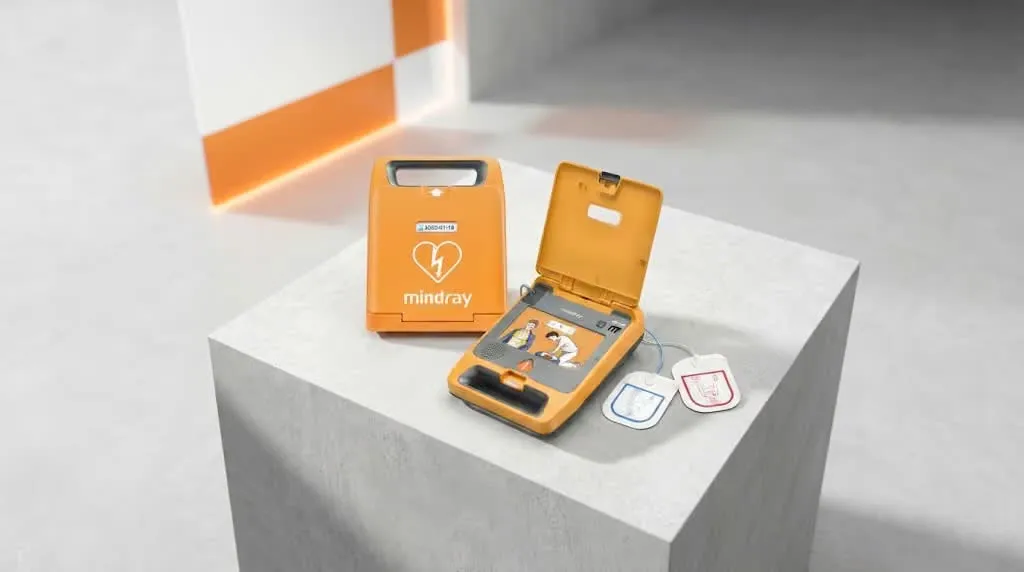
A fully automatic AED delivers the shock on its own after analysing the heart rhythm; a semi-automatic one asks you to press a button. For family use, fully automatic limits hesitation. The Mindray C1A in our pack is fully automatic.
Clear voice guidance
The device announces each step out loud: where to place the pads, when to stand clear, when to resume compressions. Nobody needs to know the procedure by heart.
Who lives in the home
If there are young children at home, check that a paediatric mode or paediatric pads exist for the chosen model. We tell you what is available before you buy.
The cost over several years
Pads and battery have an expiry date. On the Mindray C1A: pads to replace every 3 years and after each use, battery every 5 years. Their prices are shown below.
Where to keep the defibrillator at home?
Somewhere central and known to everyone in the household: hallway, corridor or landing, rather than an isolated upstairs room or a locked cupboard. On the day it is needed, nobody should have to look for it.
Avoid places where temperature and humidity vary a lot, such as a bathroom or an unheated garage: they shorten the life of the battery and pads. Regularly remind everyone who lives in or looks after the home where it is.
- A central spot, at adult height
- Never locked away
- Protected from damp and cold
- Known to relatives, carers and babysitters
Buy or rent, and plan for upkeep
You can buy the device and handle replacing the pads and battery yourself, or rent it with upkeep and consumables included. Here are the prices.
Purchase
€1,090 excl. VAT
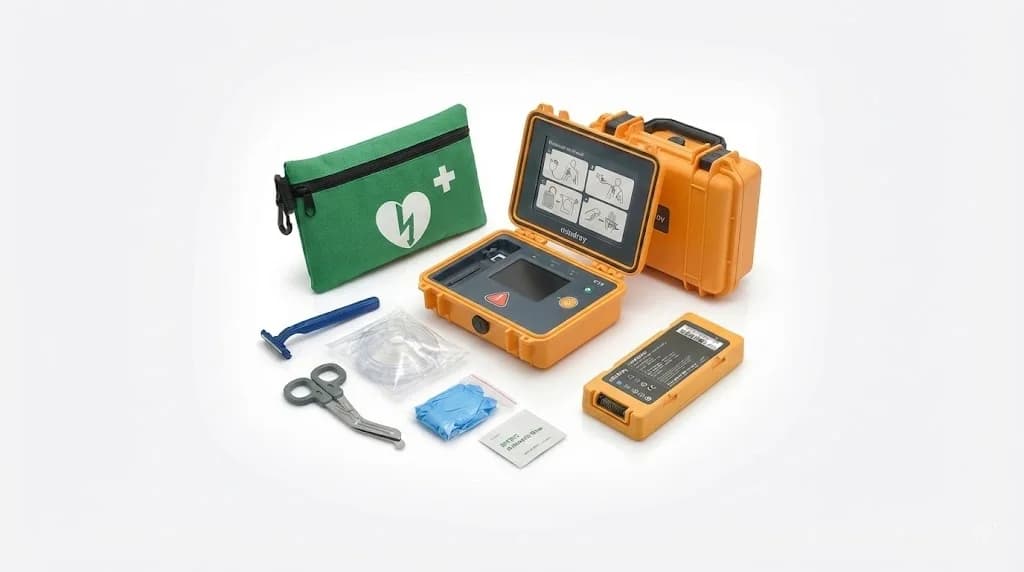
Mindray C1A AED pack: automatic defibrillator, wall cabinet, signage, first-aid kit and maintenance label.
See defibrillatorsConsumables
€69 · €179 excl. VAT
Mindray MR62 pads to replace every 3 years and after each use, battery every 5 years.
See padsRental
From €48 excl. VAT/month
Device, maintenance and consumables included, with a minimum 6-month commitment.
Discover rentalHome defibrillator price: buying or renting
For an individual, the cost of a defibrillator does not stop at purchase: pads and battery are replaced on fixed dates. At home, installation and maintenance are optional. Here is the five-year budget with all services, and the rental alternative.
Purchase, over 5 years
- Pack DAE Mindray C1a
- €1,090
- Installation and commissioning by a technician
- €99
- Replacement pads (at 3 years)
- €69
- Replacement battery (at 5 years)
- €179
- Annual maintenance × 5 years, travel included
- From €590
- Total purchase cost over 5 years
- From €2,027 excl. VAT
Rental, over 5 years
- Annual subscription × 5 years
- €2,750 excl. VAT
- or monthly subscription × 60 months
- €2,880 excl. VAT
- Maintenance and consumables
- Security deposit
- €600
Prices excl. VAT. Equipment follows our online catalogue; maintenance is shown as a “from” price, the exact rate depends on the number of devices.
Devices and consumables for the home
The device alone or in a pack with case and signage, and the two consumables to renew over the years.


Situations where the question arises
A relative with a heart history
The family lives with a known risk. A device kept in the hallway, and adults who have taken a basic life-saving course, make it possible to act without waiting.
A remote house
Several minutes from emergency services and far from a public device, the time for help to arrive weighs more: a device within reach shortens the time without defibrillation.
An elderly parent at home
The spouse or carer must know where the device is, and that they only need to follow the voice prompts after calling emergency services.
A shared building or neighbours
A device shared in a hallway or common room can serve several households, as long as it stays accessible to all and someone looks after it.
What to know before buying
The equipment obligation set by law no. 2018-527 and article R. 157-1 of the French Building and Housing Code only covers establishments open to the public. Private individuals have no obligation: neither to equip their home nor to register or have their device inspected.
The device must still stay in working order: watch the self-test indicator and replace pads and battery before their expiry date, or after any use.
Faced with a cardiac arrest: call 15 or 112, start chest compressions, then switch on the defibrillator and follow its instructions. Many associations offer life-saving skills sessions open to everyone.
Frequently asked questions
Can you have a defibrillator at home?
Yes. An individual may freely buy and keep a defibrillator at home, with no prescription or authorisation. No law requires or forbids it. We deliver throughout France.
Is a private individual allowed to use a defibrillator?
Yes: anyone, even a non-doctor, is entitled to use an automated external defibrillator under French law (article R. 6311-15 of the Public Health Code), whether automatic or semi-automatic. Law no. 2020-840 of 3 July 2020 also protects citizens who come to someone’s aid.
How much does a home defibrillator cost?
The Mindray C1 and the Mindray C1A pack are shown on this page with their catalogue prices. Over time, add pads every 3 years and after each use, and a battery every 5 years. Rental, from €48 excl. VAT per month, includes maintenance and consumables.
Do you need training to use a defibrillator at home?
No: the device guides you by voice, step by step. A life-saving skills session, offered by many associations, mainly helps you stay calm and practise chest compressions.
Automatic or semi-automatic AED for a household?
A fully automatic device delivers the shock itself after analysis; a semi-automatic one asks you to press a button. Anyone can use either, but the automatic one removes hesitation under stress. The Mindray C1A in our pack is fully automatic.
Is it complicated to use?
No. Once switched on, the device guides you by voice: it shows where to place the pads, analyses the heart rhythm and, if automatic, delivers the shock itself when needed. Anyone can use it; a life-saving skills session mainly helps you stay calm.
Where should you keep the defibrillator at home?
In a central place known to everyone, such as the hall or a corridor, never locked away, and away from damp and large temperature swings, which damage the battery and pads.
Do you have to register or maintain a home defibrillator?
No registration is required for a private device, and the regulatory maintenance obligation targets devices installed in ERP. Simply watch the self-test indicator and the consumables’ expiry dates; you can also entrust this follow-up to our maintenance contract.
Should an individual buy or rent a defibrillator?
Buying costs less over several years if you track the consumables yourself. Rental, with a 6-month minimum commitment, suits a temporary need, such as a relative returning home, and includes maintenance and consumables.
Can it be used on a child?
It depends on the model: some have paediatric pads or a paediatric mode that adjusts the shock energy. If children live in the household, ask before buying: we tell you what exists for the chosen device.
Further reading
Defibrillators by sector
A question before equipping your home?
Tell us who lives in the home and how it is laid out: we help you choose the device, the spot and the formula, purchase or rental, with no obligation.