Defibrillators in Apartment Buildings: Rules and Best Practices
Written by Cyrille GAGNAIRE, France Défibrillateur. Published on 15 August 2026.
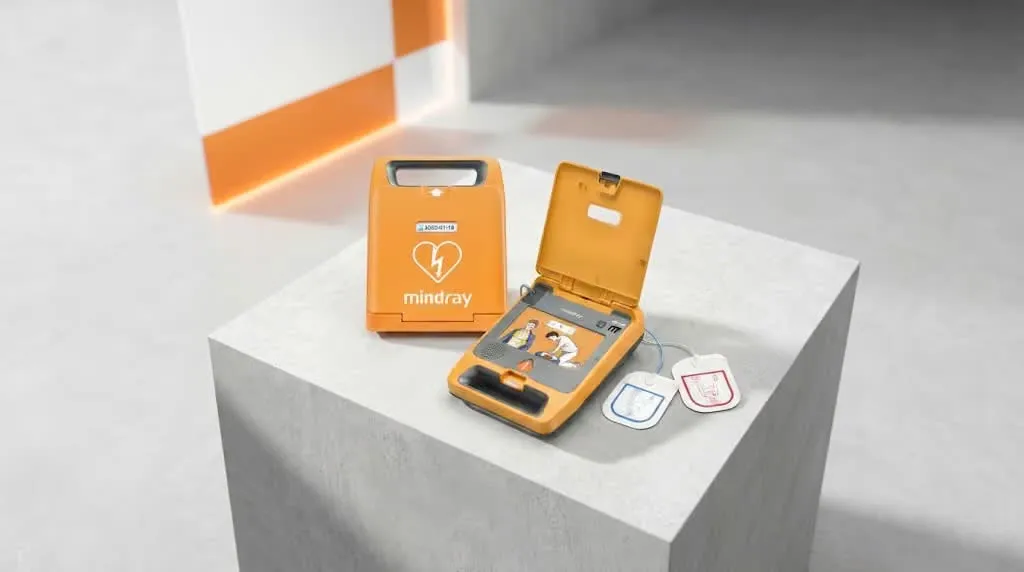
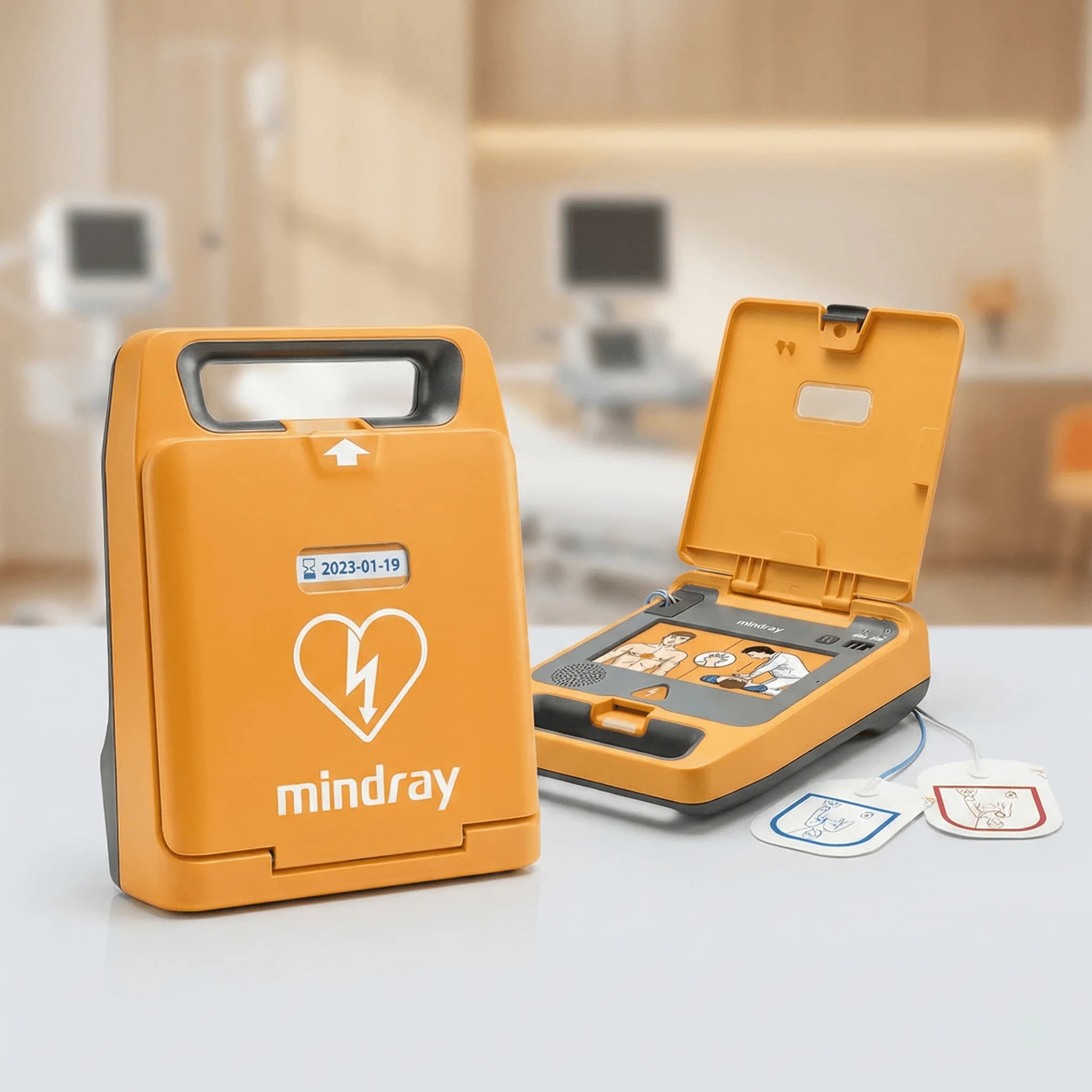
A residential apartment building is unlike any other site fitted with a defibrillator. No opening hours, no reception staff, but residents who are sometimes elderly and common areas open day and night. The question comes up regularly at owners' meetings: should a co-owned building equip itself, and if so, how should the purchase, installation and upkeep of the device be organised.
A purely residential building falls outside the legal timeline
The schedule set by law 2018-527 and its implementing decree 2018-1186 applies to establishments open to the public (ERP in French), classified into categories according to their capacity. A purely residential building, where only residents and their visitors use the common areas, generally does not fall under this classification and is therefore not bound by the same equipment obligation as a shop or a town hall.
The picture changes as soon as the building hosts premises open to a wider public: ground-floor shops, a shared room rented out to third parties, a pool or fitness room accessible to people outside the co-ownership. In that case, those premises may fall under a separate ERP category with its own deadlines, regardless of the residential status of the rest of the building. The owners' council should check this point before concluding too quickly that no obligation applies.
Equipping the building anyway is a defensible choice
The absence of a legal obligation does not mean the device is without value. A residential building often concentrates an ageing population, with staircases, a lift that can be out of order, and an entry code that all slow down the arrival of outside emergency services. Out of the roughly 50,000 cardiac arrests recorded each year in France, every minute lost before defibrillation cuts survival chances by about 10 percent, a gap that a building's vertical layout can widen if no device is available on site.
Many co-owned buildings therefore choose to equip the entrance hall on a voluntary basis, in the same way they install video surveillance or an entry code system. The move reassures residents and can be highlighted when a unit is sold or rented out, even though no regulation requires it.
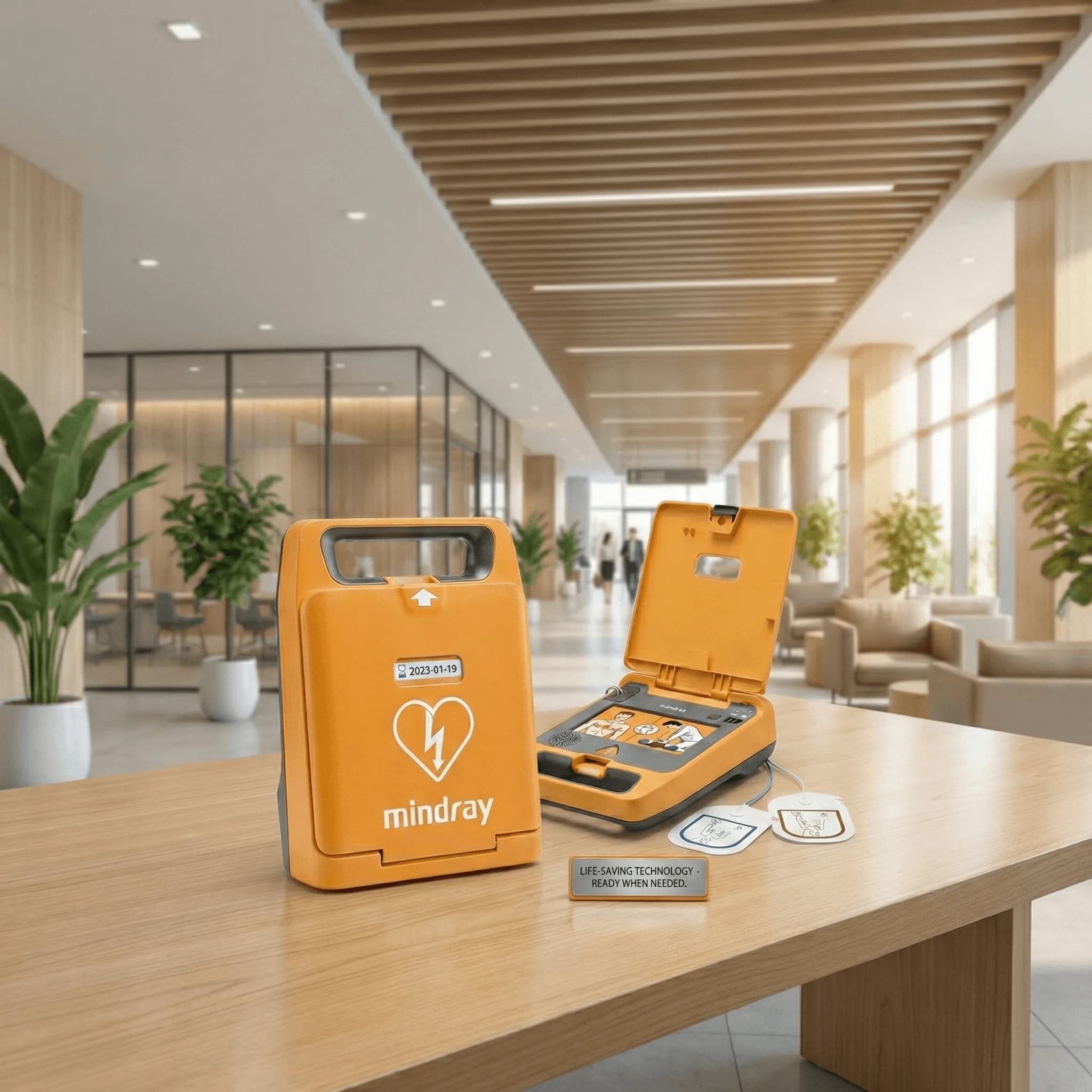
Putting the installation to a vote at the owners' meeting
Buying a defibrillator for the common areas is a collective equipment expense, which follows the same decision process as any other shared investment. The managing agent adds the item to the agenda of the general meeting, presents one or more quotes, and the co-owners vote on the installation and how its cost is allocated among the common charges.
A quote obtained within 24 hours makes it possible to prepare this resolution with a precise budget, including the device, its cabinet and initial training for volunteer residents. Some buildings present two options at the meeting, purchase and rental, so owners can weigh a one-off investment against a recurring monthly charge.
Choosing the right location and cabinet for the entrance hall
A building's entrance hall stays accessible to residents at all hours, even when the front door is locked with a code or a badge. An indoor wall-mounted cabinet, placed prominently near the mailboxes or the lift, suits most co-owned buildings as long as the hall is heated and sheltered from the weather.
For a building whose main entrance remains outdoors, or for a residence with several blocks served by a shared open-air access, a heated, alarmed outdoor cabinet protects the device from temperature swings, which can damage the battery and the electrode pads.
| Hall configuration | Recommended cabinet | Price incl. VAT |
|---|---|---|
| Heated hall, code or badge access | ARKY indoor metal cabinet | EUR 99.00 |
| Busy hall, alert needed | Wall cabinet with alarm and key | EUR 94.99 |
| Shared outdoor access across several blocks | ARKY outdoor cabinet with alarm | EUR 359.00 |
| Unstaffed residence, exposed to frost | AIVIA 210 heated outdoor cabinet | EUR 619.99 |
Who becomes the operator under the regulations
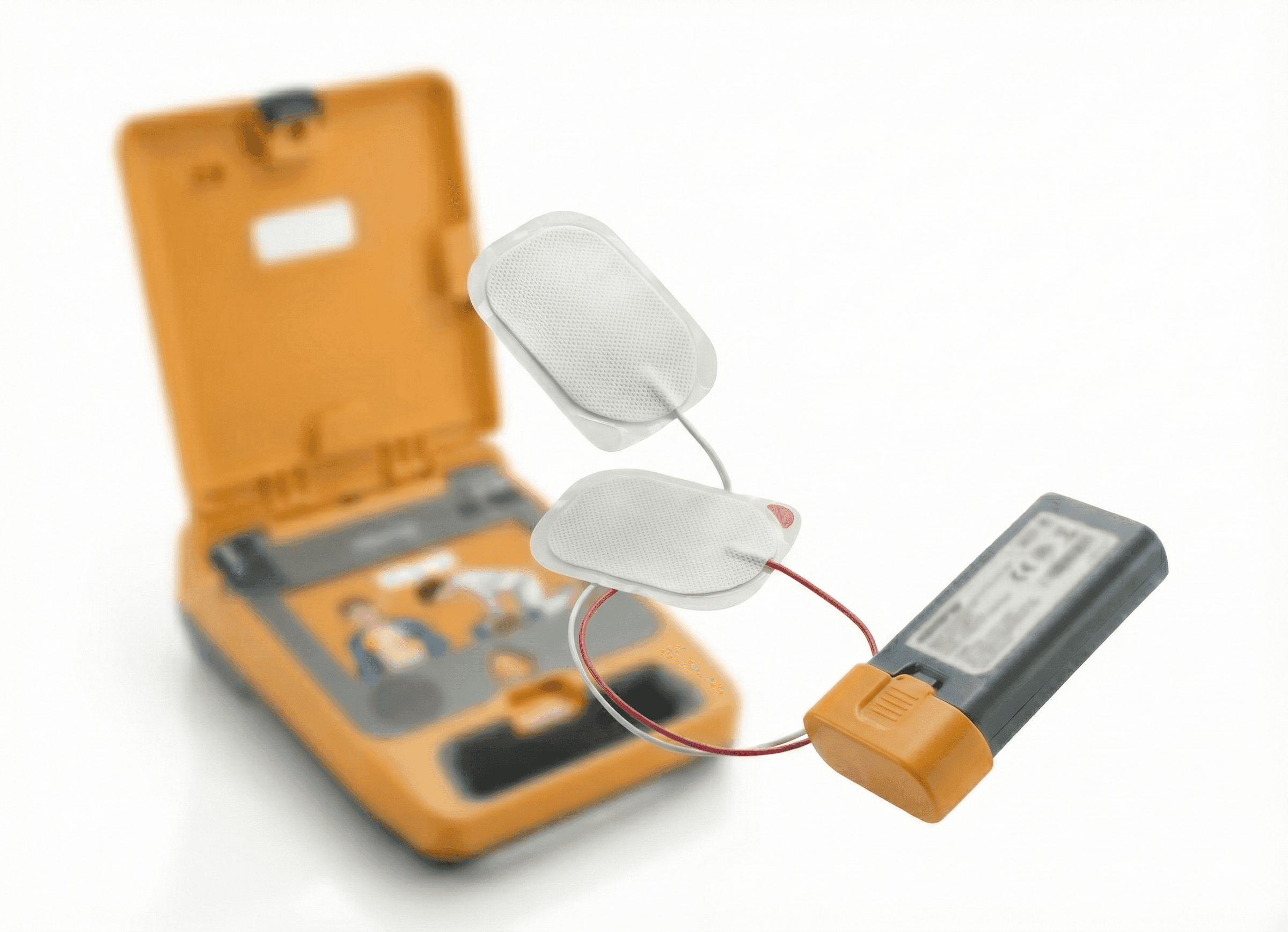
As soon as a defibrillator is installed in the common areas, the co-ownership becomes its operator within the meaning of article R. 5212-25 of the French public health code (Code de la sante publique), even though the building falls outside ERP scope. This status brings the same follow-up obligations as for any other device: regularly checking the self-test indicator, replacing the electrode pads every two to five years and the batteries every three to five years, and keeping a safety log that co-owners can consult.
The managing agent is the natural party to handle this follow-up, but the task can be assigned to a member of the owners' council or outsourced to a maintenance provider. Registering the device with GeoDAE, the French national defibrillator directory, remains advisable even without an ERP obligation, since it lets emergency dispatchers direct a bystander to the nearest device in case of an emergency in the neighbourhood.
Rental or purchase, a budget choice for the co-ownership
Rental, from 50 euros excl. VAT per month with maintenance included, fits easily into the annual operating budget voted by the co-owners, without straining the syndicate's cash flow at installation time. Purchase, backed by a five-year warranty and delivery within two to five business days, is often cheaper over time for a stable building, but requires upfront funds approved at the meeting.
Some syndicates split the cost between an existing works fund and a dedicated special assessment, an option worth discussing with the managing agent before the vote to avoid later disputes over how the cost is shared among units.
Frequently asked questions
Is a co-owned building legally required to install a defibrillator?
No, a purely residential building generally falls outside the legal schedule that applies to establishments open to the public. Installation remains voluntary, unless the building hosts premises open to a wider public, such as a shop or a room rented to third parties, which may carry their own obligations.
Who decides to buy a defibrillator for the common areas?
The decision rests with the co-owners meeting in general assembly, on a proposal from the managing agent who puts the item on the agenda along with a quote. Once approved, the cost is allocated among the common charges under the building's usual rules.
Who handles maintenance once the device is installed?
The co-ownership becomes the device's operator and must ensure its follow-up, generally through the managing agent or a designated member of the owners' council. This includes checking self-tests, replacing electrode pads and the battery before they expire, and keeping a safety log.
Does a co-ownership have to register its defibrillator with GeoDAE?
Nothing legally requires it for a building outside ERP scope, but registration is strongly recommended. It allows emergency dispatchers to locate the device during an emergency call in the neighbourhood, including for a medical event occurring right next to the building.
Is it worth including pediatric electrode pads in a residential building?
It depends on who lives in the building. A building with several families with young children may justify buying a set of pediatric electrode pads as a supplement, stored in the same cabinet as the main device so it stays available when needed.
Planning an AED project?
Purchase, rental from 50 EUR excl. VAT per month, installation with GéoDAE registration, servicing and training: our team replies within 24 hours.