Lifespan of a defibrillator, its electrode pads and batteries
Written by Cyrille GAGNAIRE, France Défibrillateur. Published on 28 July 2026.
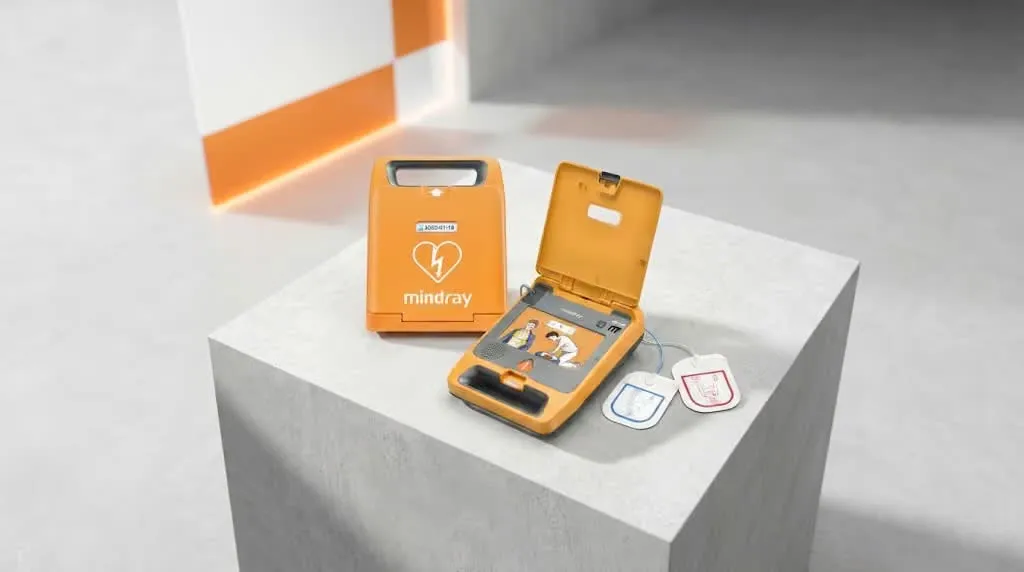
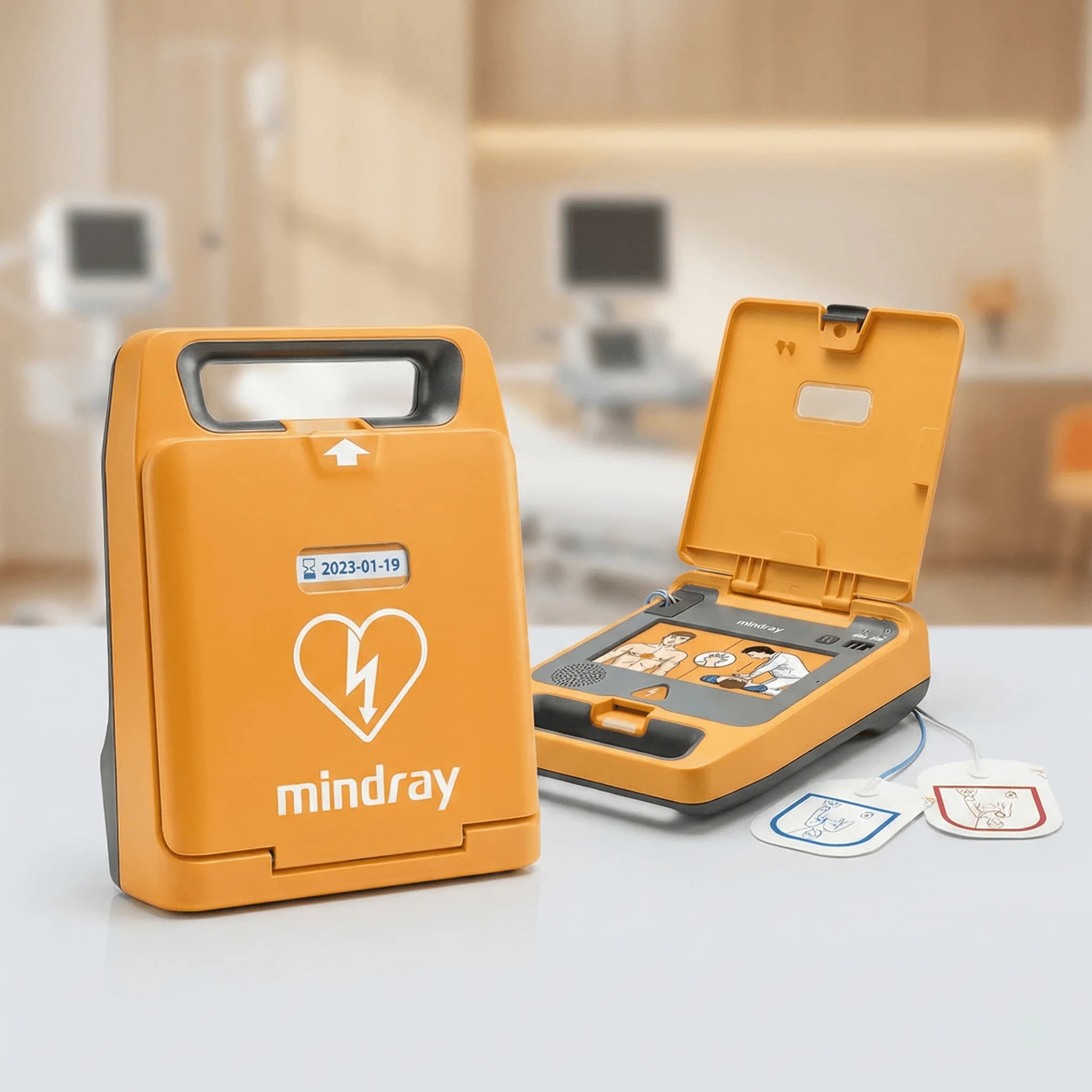
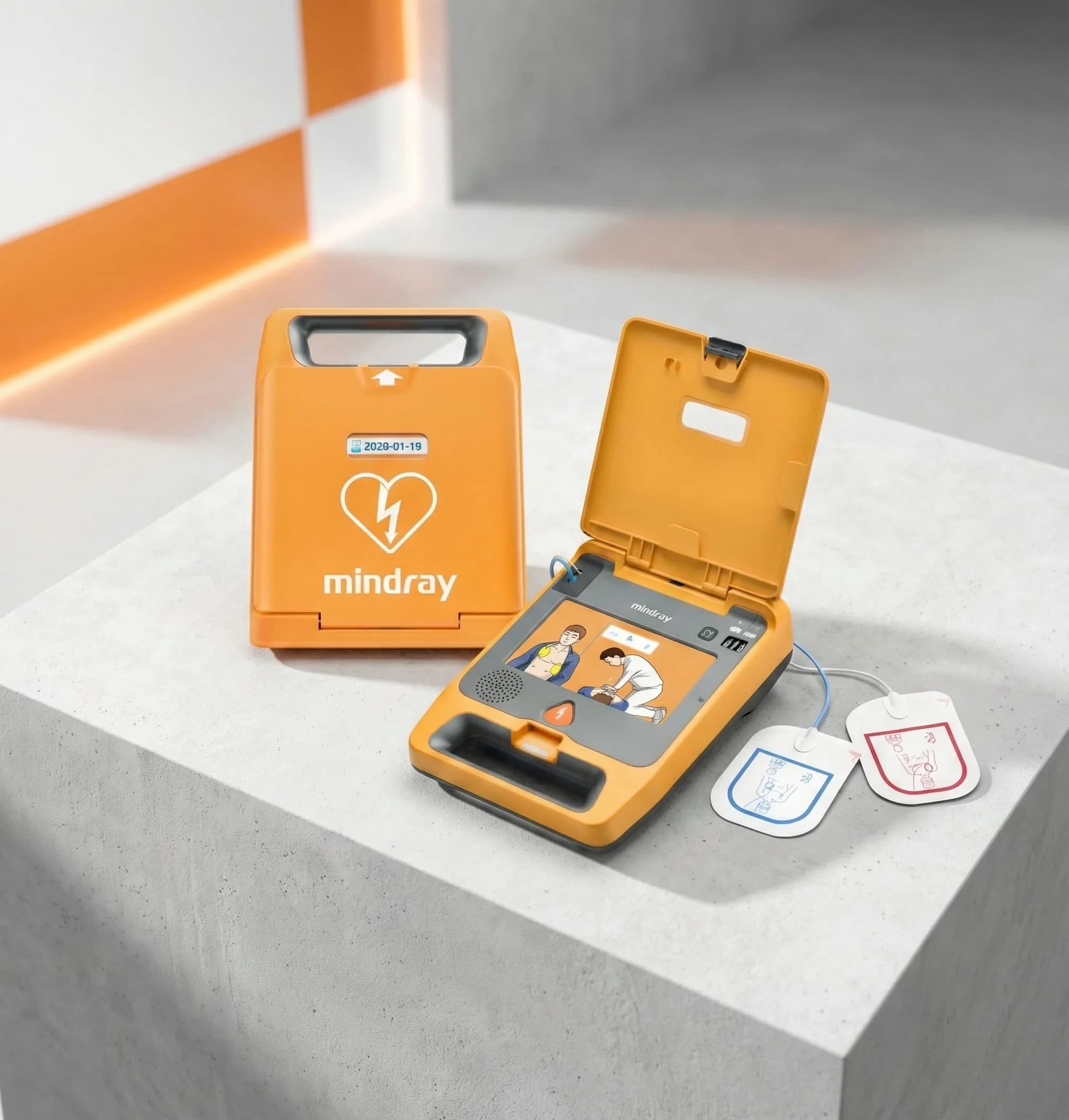
A DAE (AED), an automated external defibrillator, stands guard in silence, sometimes for years, before it is ever used once. For it to work on the day a life depends on it, every component must remain operational: the unit itself, its electrode pads and its battery. Yet these parts age even if they are never used. Here are their indicative lifespans, how to read the self-test indicators, the right moment to replace each consumable, the real cost of upkeep and the obligations that fall on the operator.
Lifespans that vary widely from one component to another
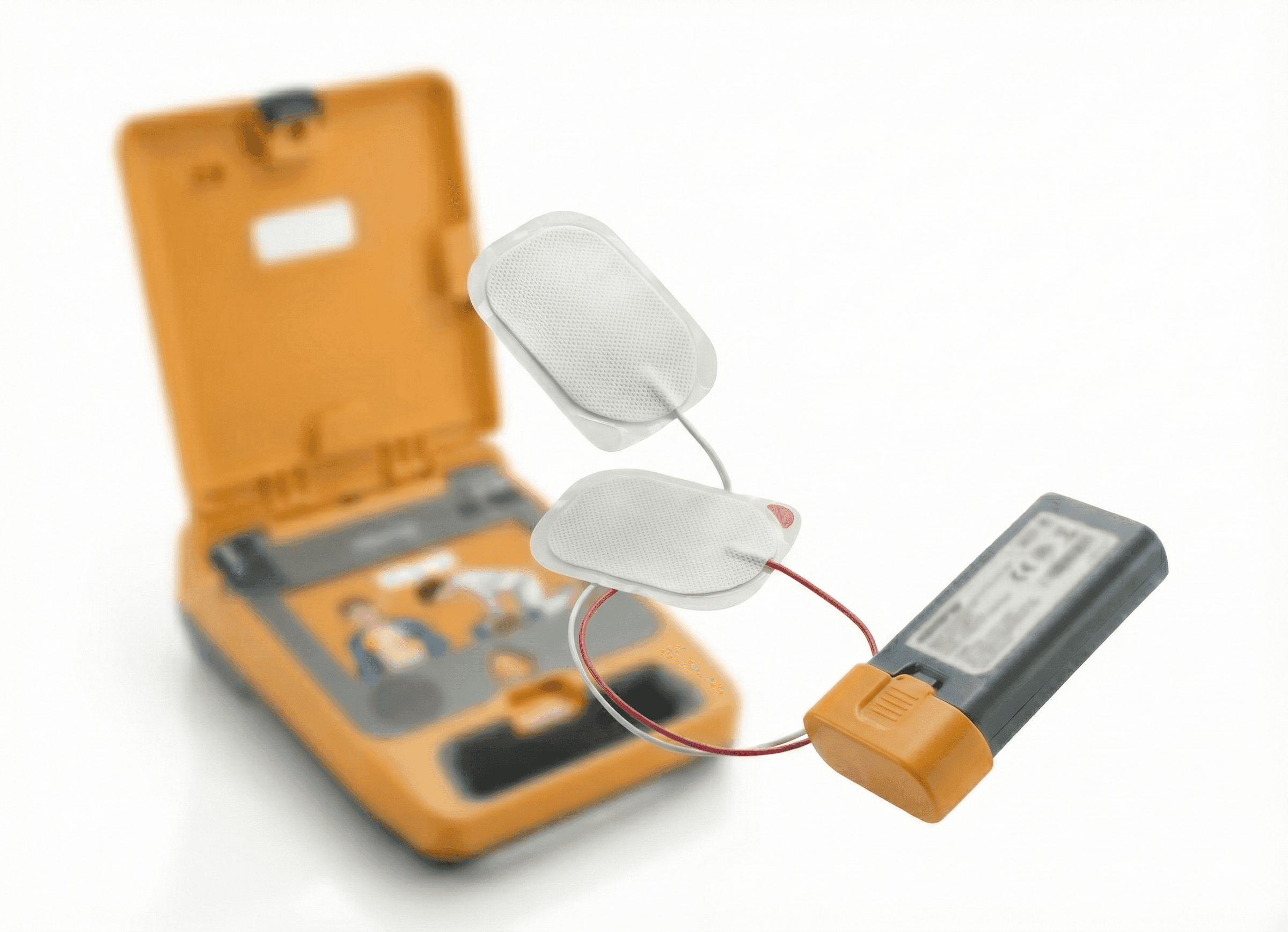
A DAE is not a single monolithic device. The electronic housing, built to last, relies on two consumables with a limited service life: the adhesive electrode pads and the battery. Properly maintained, a defibrillator works for 8 to 10 years, and often longer. The pads, however, must be replaced every 2 to 5 years depending on the model, and the battery every 3 to 5 years.
On the budget side, the prices recorded in our catalogue give clear benchmarks: a DAE costs between 350 and 2,395 euros incl. VAT, with a median price of around 1,090 euros. Pads range from 14 to 239 euros (median around 99 euros) and batteries from 10 to 499 euros (median close to 259 euros).
| Component | Indicative lifespan | Observed prices (incl. VAT) |
|---|---|---|
| DAE (complete unit) | 8 to 10 years and beyond if well maintained | 350 to 2,395 euros, median ~1,090 euros |
| Electrode pads | 2 to 5 years depending on the model | 14 to 239 euros, median ~99 euros |
| Battery | 3 to 5 years | 10 to 499 euros, median ~259 euros |
Why consumables expire even when never used
Electrode pads contain a conductive gel that ensures they stick to the skin and transmit the shock properly. Even in sealed packaging, this gel dries out over time: once the expiry date printed on the sachet has passed, electrical contact is no longer guaranteed, even if the packaging has never been opened.
The battery, for its part, discharges slowly as it powers the self-tests the unit runs at regular intervals. A DAE on standby draws little power, but it draws it continuously. That is why a battery reaches the end of its life after 3 to 5 years, whether or not a shock has ever been delivered. Extreme storage conditions, particularly in terms of temperature, can shorten these deadlines further.
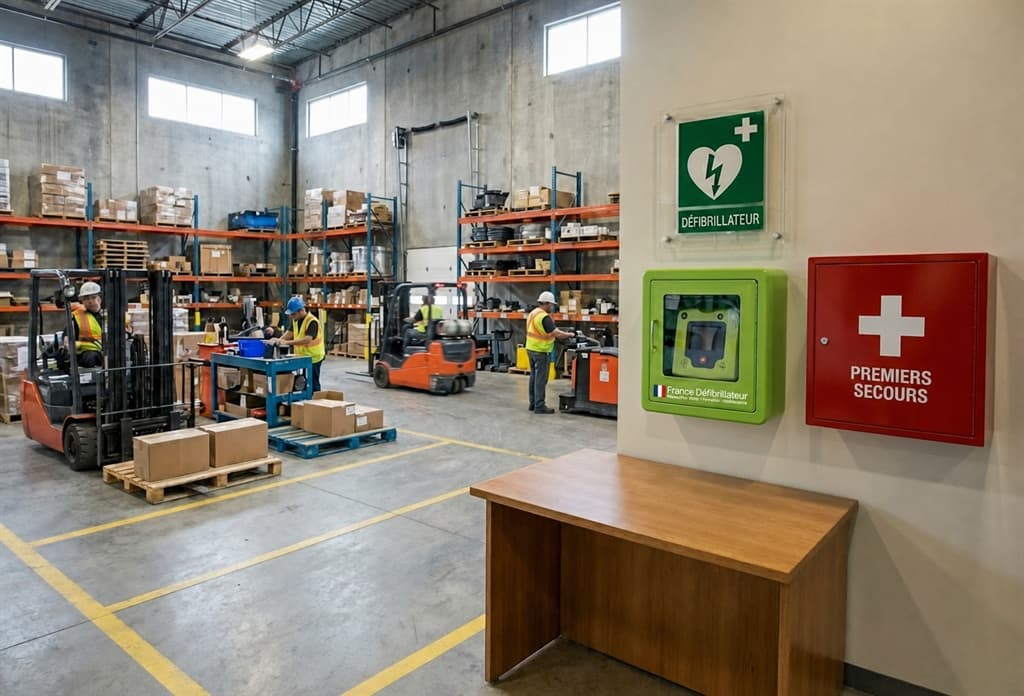
Reading the self-test indicators
All recent DAE units, whether fully automatic (DEA) or semi-automatic (DSA), run periodic self-tests: battery status, internal circuits and, depending on the model, pad connection. The result appears on a status indicator, usually a light visible on the front of the unit.
The rule is simple: a green light or a validity symbol means the unit is ready for use. A red light, a cross, a repeated audible signal or a blank display should raise the alarm immediately. Checking this indicator visually on a regular basis is the simplest and most effective verification an operator can carry out.
When to replace each part
Three situations call for a replacement. The first: the expiry date of the pads or the battery has been reached. These dates appear on the consumables themselves; note them down as soon as the unit is installed and order replacements a few weeks before the deadline.
The second: the DAE has been used. After any use, the used pads must be replaced without delay and the battery status checked. The third: the self-test reports a fault. Finally, beyond 8 to 10 years in service, even a unit that still works deserves a review with a view to renewal, especially if the manufacturer no longer supports the model.
The cost of upkeep over time
The budget for a defibrillator therefore goes well beyond the initial purchase. With pads to renew every 2 to 5 years and a battery every 3 to 5 years, the operator should plan for several sets of pads and at least one spare battery over a decade: a recurring consumables line to factor in from the outset.
The observed medians, around 99 euros for a set of pads and 259 euros for a battery, make it possible to estimate this maintenance cost. It remains modest given what is at stake, but it must never be put off: a DAE with expired consumables is a potentially unusable device on the day when every minute counts. Without defibrillation, the chances of survival fall by roughly 10 per cent per minute.
Maintenance contract or rental: delegating the vigilance
A maintenance contract entrusts monitoring to a professional: preventive visits, checks on the indicators, replacement of consumables before they expire. For the operator, it is a guarantee of staying compliant without having to keep a schedule, and therefore without any risk of forgetting.
Rental takes this logic all the way. At France Défibrillateur, it starts from 50 euros excl. VAT per month, maintenance and consumables included, with replacement of the unit after use. For outright purchase, our DAE units come with a 5 year warranty, are delivered within 2 to 5 working days, and every quotation request receives a reply within 24 hours. Installation includes the regulatory signage and registration on the national GéoDAE database, and we also offer training in how to use the device.
The operator's obligations
Loi n° 2018-527 and décret n° 2018-1186 (the French law and implementing decree on defibrillators) made the DAE compulsory in premises open to the public: French public-access buildings (ERP) in categories 1 to 3 from 1 January 2020, category 4 from 1 January 2021 and certain category 5 ERP from 1 January 2022. Every unit must be registered on the national GéoDAE database and signposted in line with the arrêté du 29 novembre 2018 (the ministerial order of 29 November 2018).
Above all, article R. 5212-25 du Code de la santé publique (the French public health code) places maintenance on the operator: it is the operator who answers for the unit being in good working order. With around 50,000 sudden cardiac arrests every year in France, that responsibility is anything but theoretical. For local authorities, funding routes such as the DETR, the DSIL or inter-municipal matched funding are worth checking on a case by case basis.
Frequently asked questions
What is the lifespan of a defibrillator?
A well maintained DAE works for 8 to 10 years, and often longer. Its consumables have shorter deadlines: 2 to 5 years for the pads depending on the model, 3 to 5 years for the battery. The real longevity of the unit depends directly on keeping up with these replacements and monitoring the self-tests.
Do the pads need changing even if the defibrillator has never been used?
Yes. The conductive gel in the pads dries out over time, even in sealed packaging. Once the expiry date has passed, adhesion and shock transmission are no longer guaranteed. The pads must therefore be replaced by the stated date, generally every 2 to 5 years, whether or not they have been used.
What should be done after a DAE has been used?
Replace the pads immediately, as they are single use, then check the battery status and the self-test indicator before putting the unit back into service. With a rental from France Défibrillateur, replacement after use is included: the unit is restored to operational condition at no extra cost.
Is defibrillator maintenance compulsory?
Yes. Article R. 5212-25 du Code de la santé publique (the French public health code) places maintenance on the operator, who must ensure the DAE works properly. A preventive maintenance contract, or a rental with consumables included, makes it possible to meet this obligation without managing the deadlines yourself.
DEA or DSA: is the lifespan different?
No. The DEA (fully automatic) delivers the shock after a voice prompt, whereas the DSA (semi-automatic) requires a button to be pressed. Both analyse the heart rhythm and only shock when necessary. Units, pads and batteries follow the same orders of magnitude in terms of lifespan.
Planning an AED project?
Purchase, rental from 50 EUR excl. VAT per month, installation with GéoDAE registration, servicing and training: our team replies within 24 hours.