Renting or buying a defibrillator: which option should you choose?
Written by Cyrille GAGNAIRE, France Défibrillateur. Published on 28 July 2026.
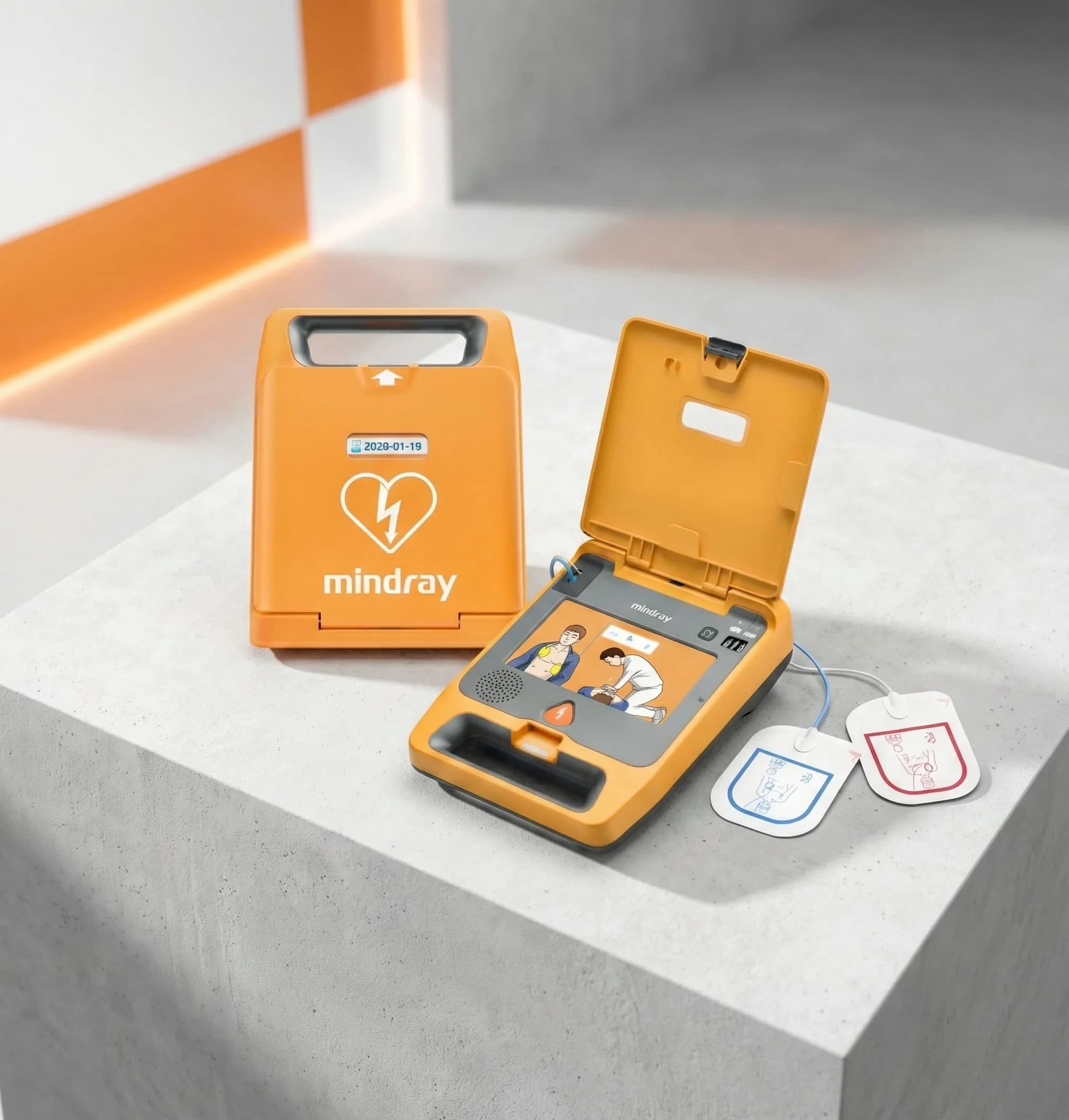
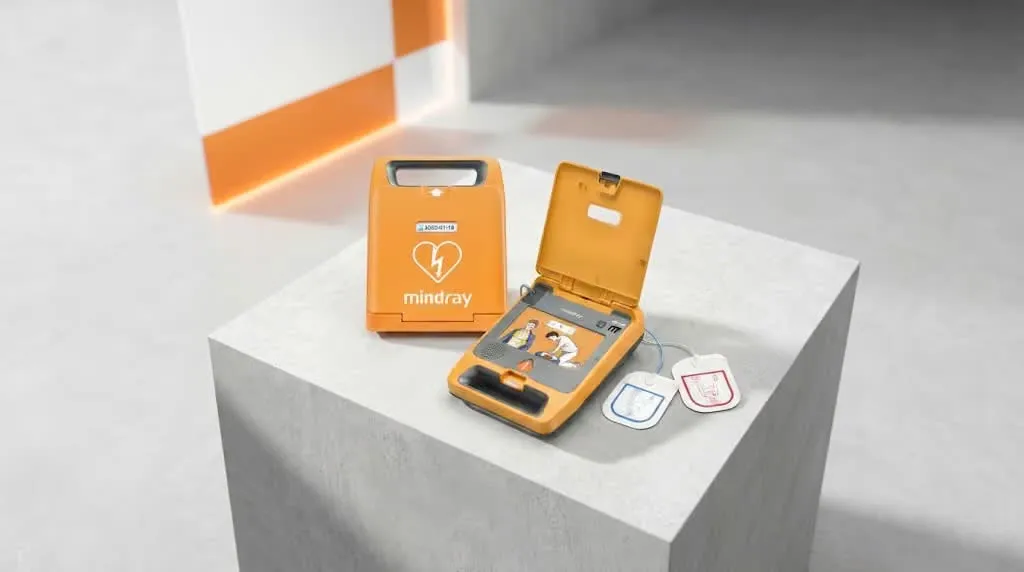
Every year, around 50,000 people suffer a sudden cardiac arrest in France, and every minute without defibrillation cuts the chances of survival by roughly 10 per cent. Fitting your premises with a DAE (AED, or automated external defibrillator) is therefore far more than a compliance exercise: it is a life-saving investment. That leaves one very practical question: should you buy your defibrillator or rent it? Here is an honest comparison of the two options, with indicative figures to help you decide with confidence.
A regulatory framework that already makes equipment mandatory
Since loi 2018-527 (the French law on defibrillators) and its implementing decree, decret 2018-1186, the obligation to install an automated external defibrillator has been phased in: ERP (French public-access buildings) in categories 1 to 3 have had to be equipped since 1 January 2020, category 4 premises since 1 January 2021, and certain category 5 premises since 1 January 2022. The question is no longer whether to install a device, but how.
The obligation does not end once the unit is on the wall. The operator must register the DAE on the national GeoDAE database, put up the signage required by the arrete du 29 novembre 2018 (the French order on defibrillator signage) and maintain the device, a duty that remains theirs under article R. 5212-25 du Code de la sante publique (the French Public Health Code). That last point weighs heavily in the choice between renting and buying.
Buying or renting: a point-by-point comparison
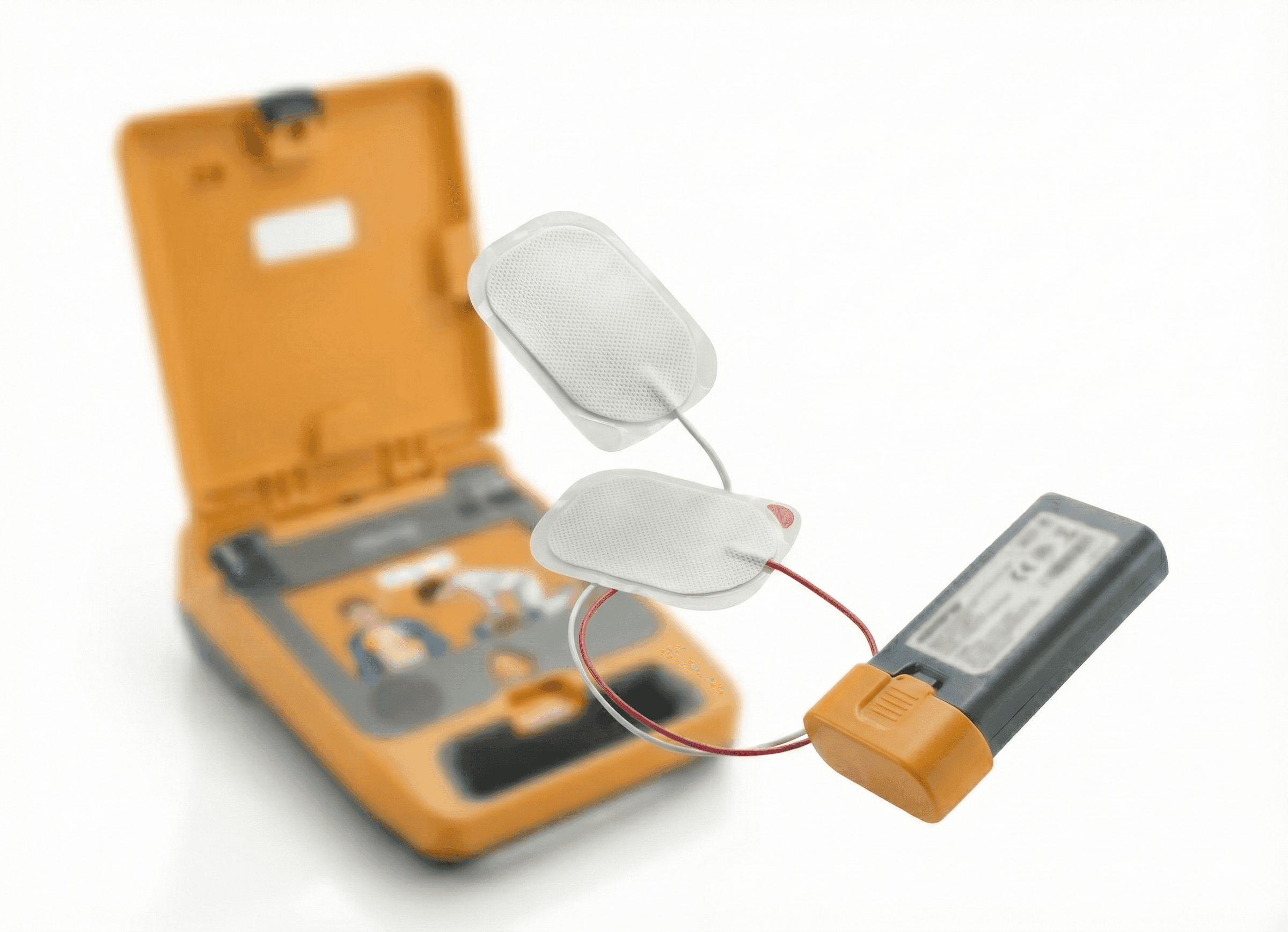
For outright purchase, the prices in our catalogue range from 350 to 2,395 euros incl. VAT depending on the model, with a median of around 1,090 euros. You then need to budget for consumables: electrode pads costing between 14 and 239 euros (median around 99 euros), to be replaced every 2 to 5 years depending on the model, and a battery costing between 10 and 499 euros (median around 259 euros), with a service life of 3 to 5 years.
Rental, available from 50 euros excl. VAT per month, works as an all-inclusive package: maintenance, consumables and replacement of the unit after use are all covered. The investment becomes a predictable operating cost, with no unpleasant budget surprises.
| Criterion | Purchase | Rental |
|---|---|---|
| Initial outlay | 350 to 2,395 euros incl. VAT depending on the model (observed median: around 1,090 euros) | None, packages from 50 euros excl. VAT per month |
| Consumables | At your expense: electrode pads from 14 to 239 euros (median around 99 euros), batteries from 10 to 499 euros (median around 259 euros) | Included in the monthly fee |
| Maintenance | The operator's responsibility (article R. 5212-25 du Code de la sante publique, the French Public Health Code) | Included and handled by the provider |
| Replacement after use | New electrode pads to buy, and sometimes a new battery | Included |
| Commitment | None once purchased, with a usable life of 8 to 10 years or more | A term contract, with monthly payments for as long as the service runs |
The five-year cost, in round figures
Take a mid-range purchase scenario. A DAE at around 1,090 euros, one or two replacement sets of electrode pads (around 99 euros at the median) and one battery replacement (around 259 euros at the median) add up to roughly 1,450 to 1,550 euros over five years, excluding any maintenance services. Since a well-maintained device will run for 8 to 10 years or more, the investment is written off well beyond that point.
With rental from 50 euros excl. VAT per month, expect at least 3,000 euros excl. VAT over the same period. On raw figures, purchase therefore comes out ahead, provided you set that against everything rental includes: expiry-date tracking, regulatory maintenance, consumables and replacement after an actual deployment. For an organisation with no one dedicated to that follow-up, this integrated service often makes all the difference.
Typical profiles: the right option for each organisation
For a small association, cash flow is often the deciding factor. Finding more than 1,000 euros in one go can be difficult, whereas a monthly payment from 50 euros excl. VAT slots easily into an operating budget. Rental also brings genuine peace of mind: no one has to remember expiry dates or arrange the mandatory maintenance.
A large ERP with its own technical department will see things differently. With several units to deploy and staff able to look after them, purchase is written off over the working life of the equipment, that is 8 to 10 years or more for a well-maintained DAE. Our five-year warranty on defibrillators covers the first half of that period.
Local authorities and public bodies can also look into funding options such as the DETR or the DSIL rural and local investment grants for municipalities, or intermunicipal matching funds. These schemes vary from one area to another, so check with your prefecture or your intermunicipal authority before making a decision.
The right questions to ask before deciding
Start by clarifying your budget capacity. Would you rather make a one-off investment or spread the cost across monthly payments? Next, ask yourself who will look after the device over time: routine checks, replacing the electrode pads every 2 to 5 years and the battery every 3 to 5 years, and keeping the GeoDAE registration up to date. Without someone clearly assigned to that task, the all-inclusive option almost picks itself.
Give some thought to the type of device as well. A DEA (fully automatic defibrillator) delivers the shock itself after a voice prompt, whereas a DSA (semi-automatic defibrillator) asks the user to press a button. Both analyse the heart rhythm and shock only when it is needed; the choice mainly depends on who is likely to step in. Finally, consider your time horizon: long-term occupation of the premises argues for buying, while a temporary situation points towards renting.
Full support, whichever option you choose
France Defibrillateur offers both sales and rental, with installation that covers regulatory signage and GeoDAE registration, preventive maintenance and training for your teams. Defibrillators sold come with a five-year warranty and are delivered within 2 to 5 working days. To compare the two options for your own situation, request a quote: we reply within 24 hours.
Frequently asked questions
Does renting a defibrillator work out more expensive than buying one?
Over five years, rental from 50 euros excl. VAT per month comes to at least 3,000 euros excl. VAT, compared with roughly 1,450 to 1,550 euros for a mid-range purchase including consumables. Rental does remain all-inclusive, however: maintenance, electrode pads, batteries and replacement after use, with no management time for your teams.
Who is responsible for maintaining a defibrillator that has been bought outright?
The operator. Article R. 5212-25 du Code de la sante publique (the French Public Health Code) places responsibility for maintaining the DAE on whoever operates it. You need to track the expiry dates of the electrode pads (2 to 5 years) and batteries (3 to 5 years) and keep the GeoDAE registration up to date. With rental, the provider handles all of this.
What happens after the DAE has been used?
After a deployment, the used electrode pads must be replaced and the battery may have been heavily drained. If you own the device, those costs fall to you: allow a median of around 99 euros for a set of electrode pads and around 259 euros for a battery. With rental, replacement after use is included in the monthly fee.
Should you choose a DEA or a DSA?
The DEA, a fully automatic defibrillator, delivers the shock by itself after a voice prompt, while the DSA, a semi-automatic model, asks the user to press a button. Both analyse the heart rhythm and deliver a shock only when it is needed. The choice depends on who uses your premises, not on how you finance the device: both types are available to buy and to rent.
Is there any funding available for a defibrillator?
There is no single national scheme, but several avenues are worth exploring: the DETR or the DSIL investment grants for municipalities, along with intermunicipal matching funds. Conditions vary from one area to another, so check with your prefecture or your intermunicipal authority before finalising your budget.
Planning an AED project?
Purchase, rental from 50 EUR excl. VAT per month, installation with GéoDAE registration, servicing and training: our team replies within 24 hours.