How to choose a defibrillator: the complete buyer's guide
Written by Cyrille GAGNAIRE, France Défibrillateur. Published on 28 July 2026.
France records around 50,000 sudden cardiac arrests every year, and every minute without defibrillation cuts the chances of survival by roughly 10 per cent. Buying an automated external defibrillator, known in France as a DAE (AED), is therefore not a purchase like any other. Fully automatic or semi-automatic, indoor or outdoor use, real budget, legal obligations, servicing: this guide reviews every criterion so you can decide with confidence and avoid the classic mistakes.
Fully automatic (DEA) or semi-automatic (DSA): what is the difference and which one should you choose?
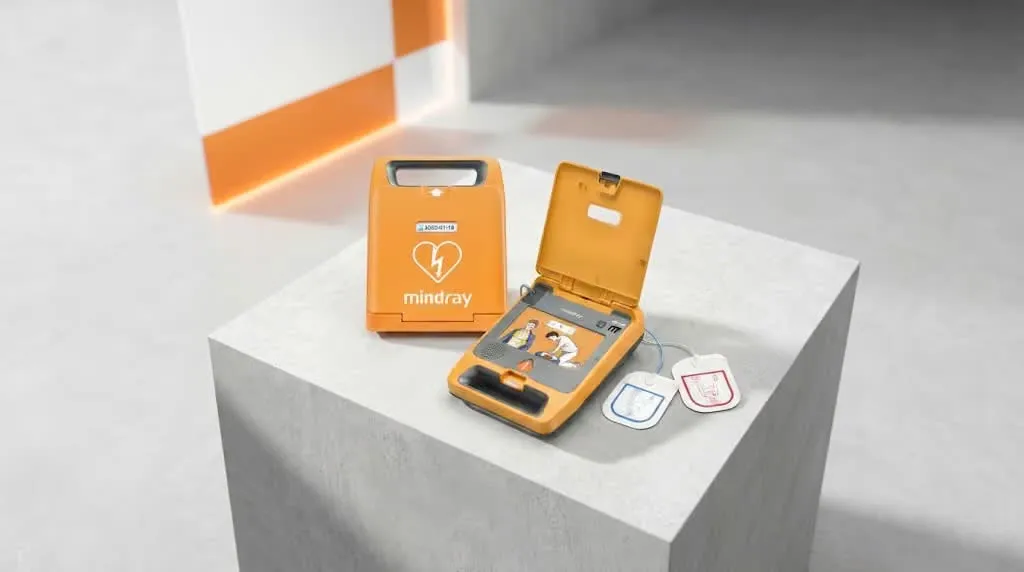
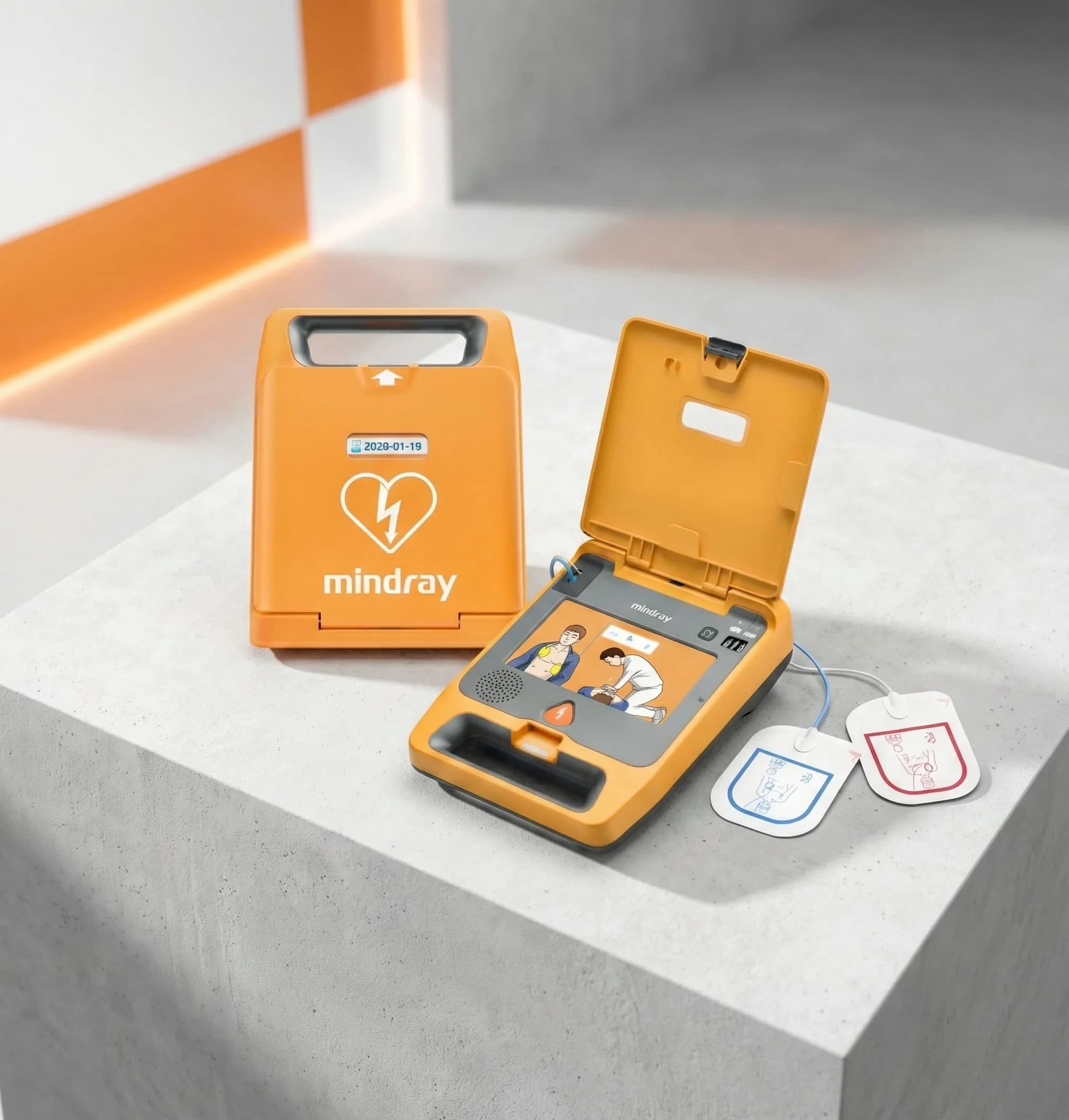
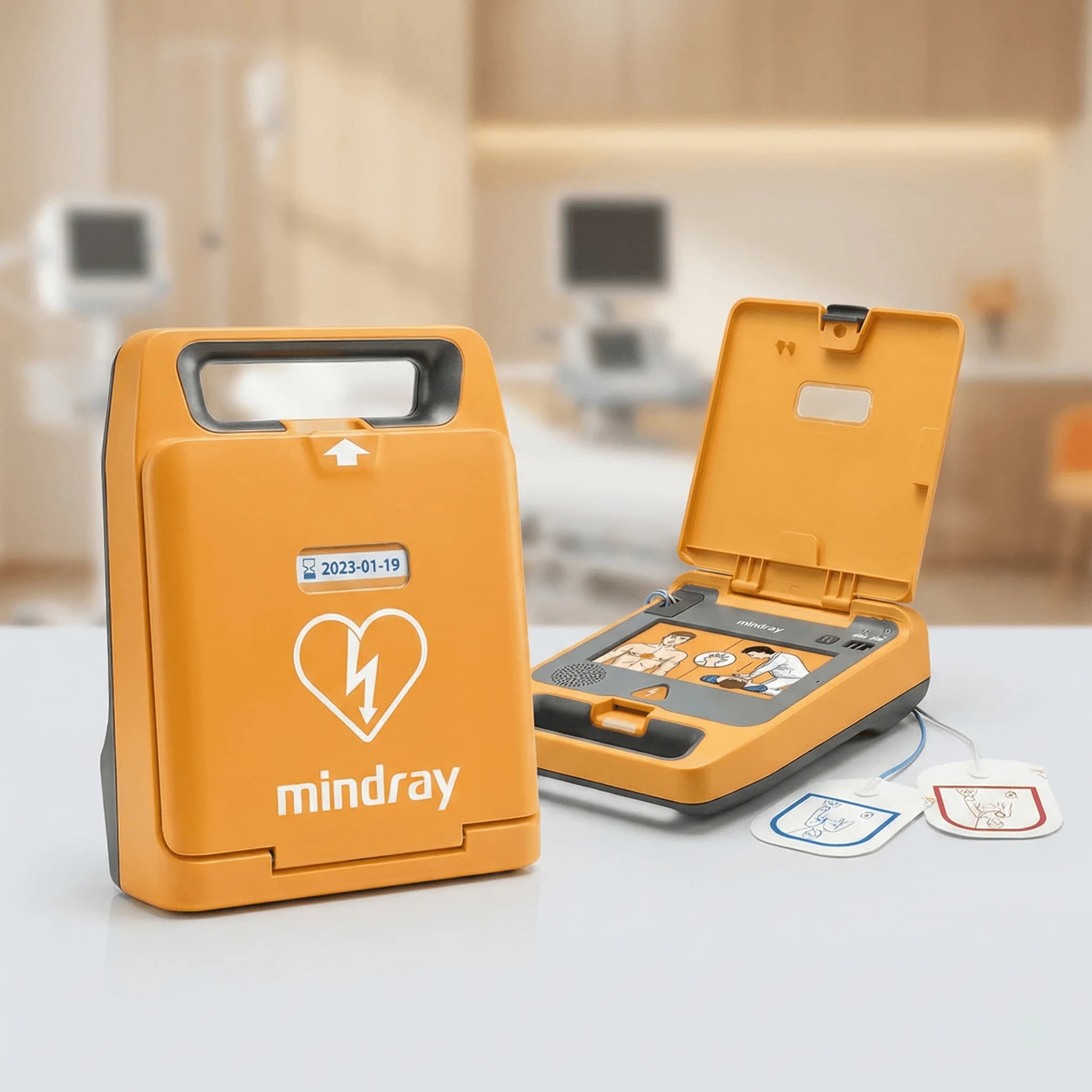
DAE (automated external defibrillator) is the generic French term covering two families of device. The DEA, fully automatic, delivers the shock by itself after a voice announcement. The DSA, semi-automatic, asks the user to press a button to trigger the shock. In both cases the device analyses the heart rhythm and only delivers a shock when one is needed.
For a site open to the general public, the fully automatic DEA is often preferred: under stress, it removes any hesitation on the bystander's part at the moment of pressing the button. The semi-automatic DSA still has its supporters in organisations with trained staff, who prefer to keep control over the moment the shock is delivered. Neither choice is wrong: it all depends on the setting and the people involved.
Indoors, outdoors, footfall: the environment dictates the equipment
Indoors, a wall bracket or a simple cabinet is generally enough, placed somewhere visible, permanently accessible and known to everyone. Outdoors, a suitable cabinet becomes essential: it protects the device, its electrode pads and its battery from cold, heat, damp and vandalism. This point is often overlooked, yet it determines whether the DAE will actually be available on the day it is needed.
How busy the site is also weighs in the balance, since the regulations require many public-access buildings to be equipped: French public-access buildings (ERP) in categories 1 to 3 since 1 January 2020, category 4 since 1 January 2021 and certain category 5 buildings since 1 January 2022 (loi 2018-527 and décret 2018-1186, the French law and implementing decree on defibrillators).
Do you welcome children? Consider the paediatric mode
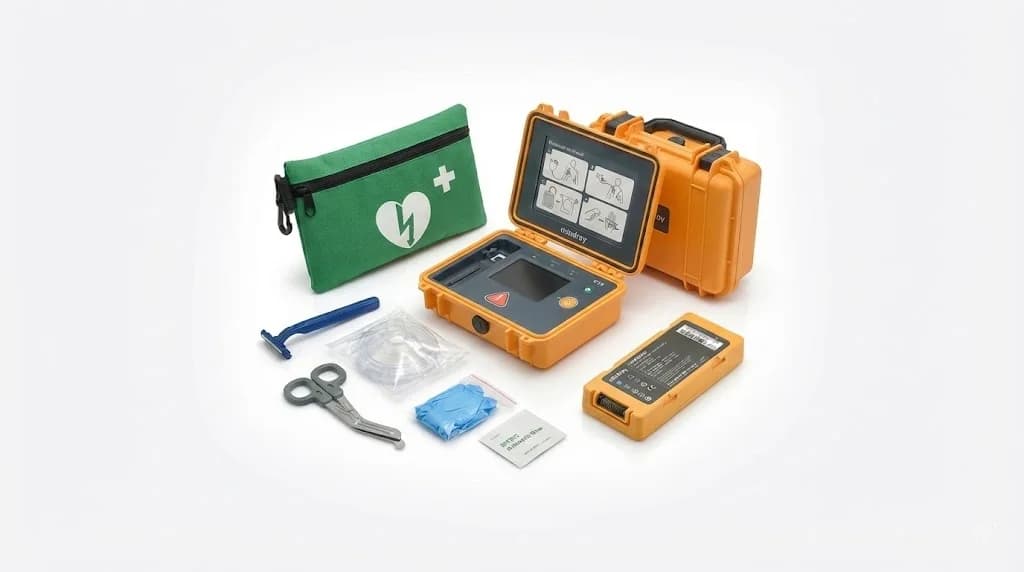
Schools, nurseries, sports clubs, swimming pools: if your site welcomes young children, check that the model you choose caters for paediatric use. Depending on the manufacturer, this takes the form of dedicated child electrode pads or a paediatric mode that adjusts the energy delivered. Factor this criterion in from the outset: it shapes both the choice of model and the budget for consumables.
The real budget: far more than the price of the device
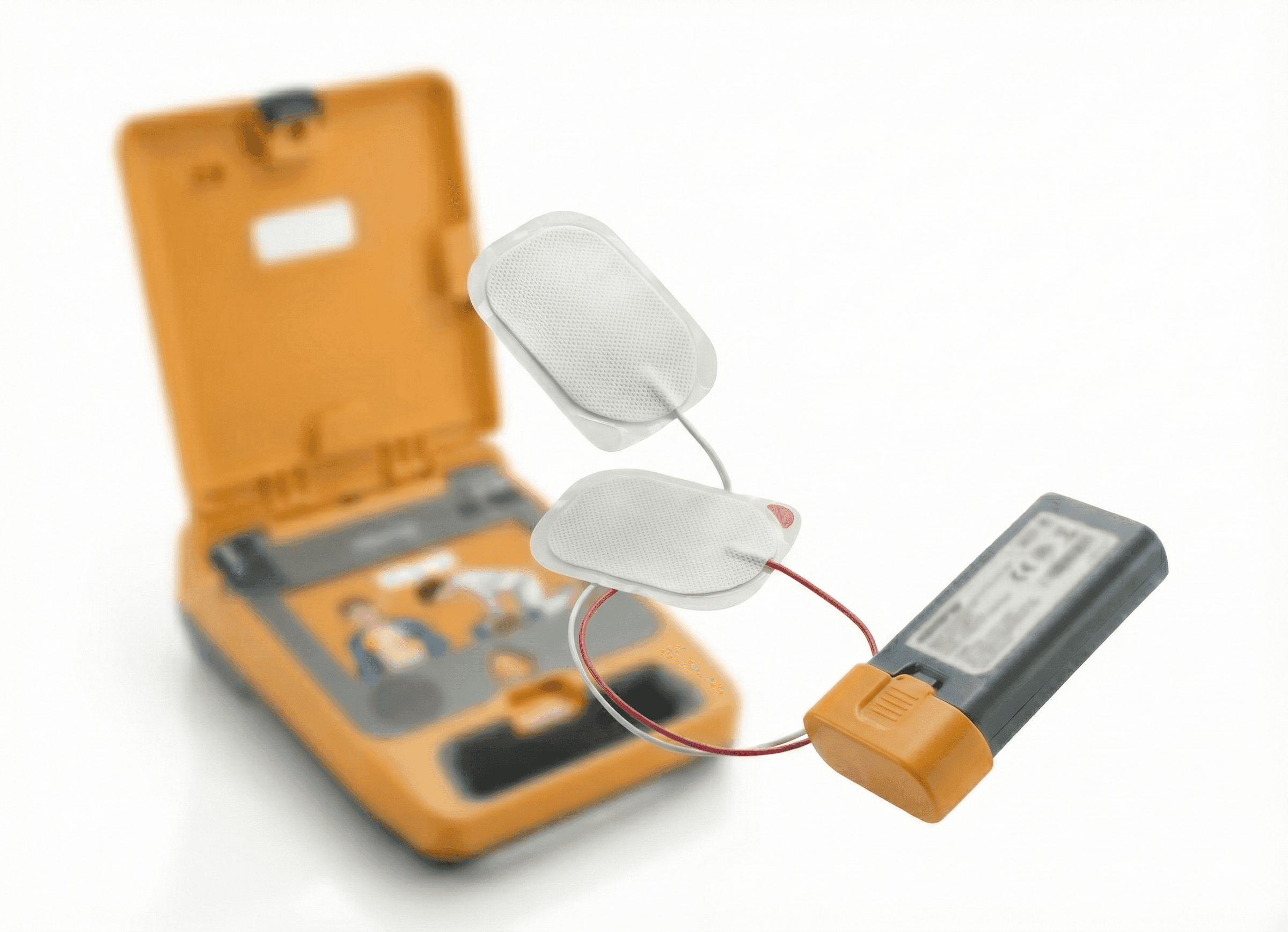
In the France Défibrillateur catalogue, DAE units range from 350 to 2,395 euros incl. VAT, with a median price of around 1,090 euros. Judging on purchase price alone would be a mistake, however: a well maintained defibrillator works for 8 to 10 years or more and consumes electrode pads and batteries throughout its life. Electrode pads cost between 14 and 239 euros (median around 99 euros) and are replaced every 2 to 5 years depending on the model; batteries range from 10 to 499 euros (median around 259 euros) and last 3 to 5 years.
Add the cabinet, especially outdoors, the signage and any maintenance contract: it is this total cost of ownership that should be compared between two models, because a cheap device with expensive consumables can work out dearer over ten years.
| Cost item | Observed range (incl. VAT) | Median price | Indicative service life |
|---|---|---|---|
| Defibrillator (DAE) | 350 to 2,395 euros | approx. 1,090 euros | 8 to 10 years or more if well maintained |
| Electrode pads | 14 to 239 euros | approx. 99 euros | 2 to 5 years depending on the model |
| Battery | 10 to 499 euros | approx. 259 euros | 3 to 5 years |
Renting, an alternative with no nasty surprises
To spread the cost and hand over the upkeep, the DAE rental offered by France Défibrillateur starts from 50 euros excl. VAT per month, with maintenance and consumables included and replacement of the device after any use. Local authorities and businesses appreciate this predictable budget. Where a local council buys outright, funding routes exist: grants such as the DETR or the DSIL, or joint funding from the local authority grouping, to be checked with the prefecture and the intercommunal body.
Pitfalls to avoid
First pitfall: buying at the lowest price without looking at the cost of consumables, which make up the real bill over time. Second pitfall: second-hand or imported devices with no serious warranty or after-sales service, whereas an established distributor such as France Défibrillateur guarantees its DAE units for 5 years. Third pitfall: installing an indoor device outdoors without a suitable cabinet.
Then come the regulatory oversights: failing to register the device on the national GeoDAE database when this is compulsory, neglecting the signage required by the arrêté du 29 novembre 2018 (the French order of 29 November 2018), or treating maintenance as optional when article R. 5212-25 du Code de la santé publique (the French Public Health Code) places it squarely on the operator. A DAE with expired electrode pads is not a defibrillator: it is a decorative box on the wall.
Installation, GeoDAE registration, training: the trio that makes the device useful
The location must be visible, accessible and signposted in line with the arrêté du 29 novembre 2018. Registering on GeoDAE then allows the emergency services and citizen responder apps to locate your device: an unregistered DAE is invisible to the very people who might need it nearby. Finally, even though a DAE talks any bystander through the process, a trained team acts faster and with greater composure.
France Défibrillateur supports its customers across the whole chain: purchase or rental, installation with signage and GeoDAE registration, preventive maintenance and training. The DAE units come with a 5-year warranty, are delivered within 2 to 5 working days, and every quotation is issued within 24 hours.
Final checklist before ordering
Before ordering, go through these points one by one: the type of device (fully automatic DEA or semi-automatic DSA) matches the people using the site; the paediatric option is provided for if you welcome children; the cabinet suits indoor or outdoor use; the cost of electrode pads and batteries over ten years has been compared; the warranty and after-sales service are well established; the regulatory signage is included; GeoDAE registration is planned; maintenance is organised; team training is scheduled. If every box is ticked, you are no longer simply choosing a device: you are putting a genuine chain of survival in place.
Frequently asked questions
What is the difference between a DEA and a DSA?
The DEA (fully automatic) delivers the shock by itself after a voice announcement, whereas the DSA (semi-automatic) asks the user to press a button. Both analyse the heart rhythm and only deliver a shock when one is needed. The term DAE covers both families of device.
Is my establishment required to have a defibrillator?
Loi 2018-527 and décret 2018-1186 (the French law and decree on defibrillators) require a DAE in French public-access buildings (ERP) of categories 1 to 3 since 1 January 2020, category 4 since 1 January 2021 and certain category 5 buildings since 1 January 2022. The device must then be registered on the national GeoDAE database and properly signposted.
What total budget should I plan for a defibrillator?
Allow 350 to 2,395 euros incl. VAT for the device (median around 1,090 euros), plus the cabinet and consumables: electrode pads from 14 to 239 euros every 2 to 5 years, batteries from 10 to 499 euros every 3 to 5 years. Rental from 50 euros excl. VAT per month, with maintenance and consumables included, smooths out this budget.
Do you need training to use a defibrillator?
No, a DAE is designed to guide any bystander by voice, and it only delivers a shock if the heart rhythm calls for one. Training is strongly recommended nonetheless: a trained team recognises cardiac arrest sooner and acts without hesitating, at a time when every minute without defibrillation cuts the chances of survival by roughly 10 per cent.
Who is responsible for maintaining the defibrillator?
Article R. 5212-25 du Code de la santé publique (the French Public Health Code) places maintenance on the operator of the DAE. In practice, this means tracking the expiry dates of the electrode pads and batteries and checking the condition of the device regularly. A preventive maintenance contract or an all-inclusive rental agreement lets you delegate that responsibility.
Planning an AED project?
Purchase, rental from 50 EUR excl. VAT per month, installation with GéoDAE registration, servicing and training: our team replies within 24 hours.