How a defibrillator decides whether to shock
Written by Cyrille GAGNAIRE, France Défibrillateur. Published on 26 September 2026.

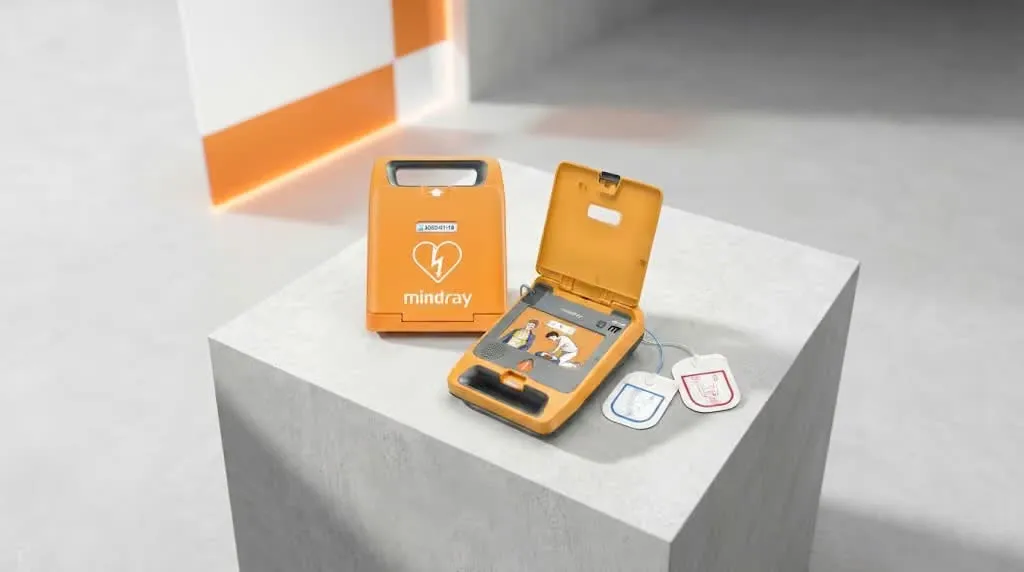
Facing an automated external defibrillator, occasional rescuers often ask the same question: how does the device know a shock is needed? As soon as the pads are attached, the unit analyses the heart's electrical activity within seconds and compares the signal to known rhythms. It only delivers a shock if that rhythm matches ventricular fibrillation or pulseless ventricular tachycardia (AED, automated external defibrillator). This mechanism explains why the device stays safe even when used by someone who has never taken a first aid course.
An automatic diagnosis before any decision
The term automated external defibrillator describes a device able to make its own diagnosis from the heart's electrical activity, without outside medical input. Once the pads are stuck to the victim's bare chest, the device asks for chest compressions to stop during a silent analysis, usually under ten seconds. This step does not depend on any action from the rescuer: the unit alone calculates whether a shock is necessary.
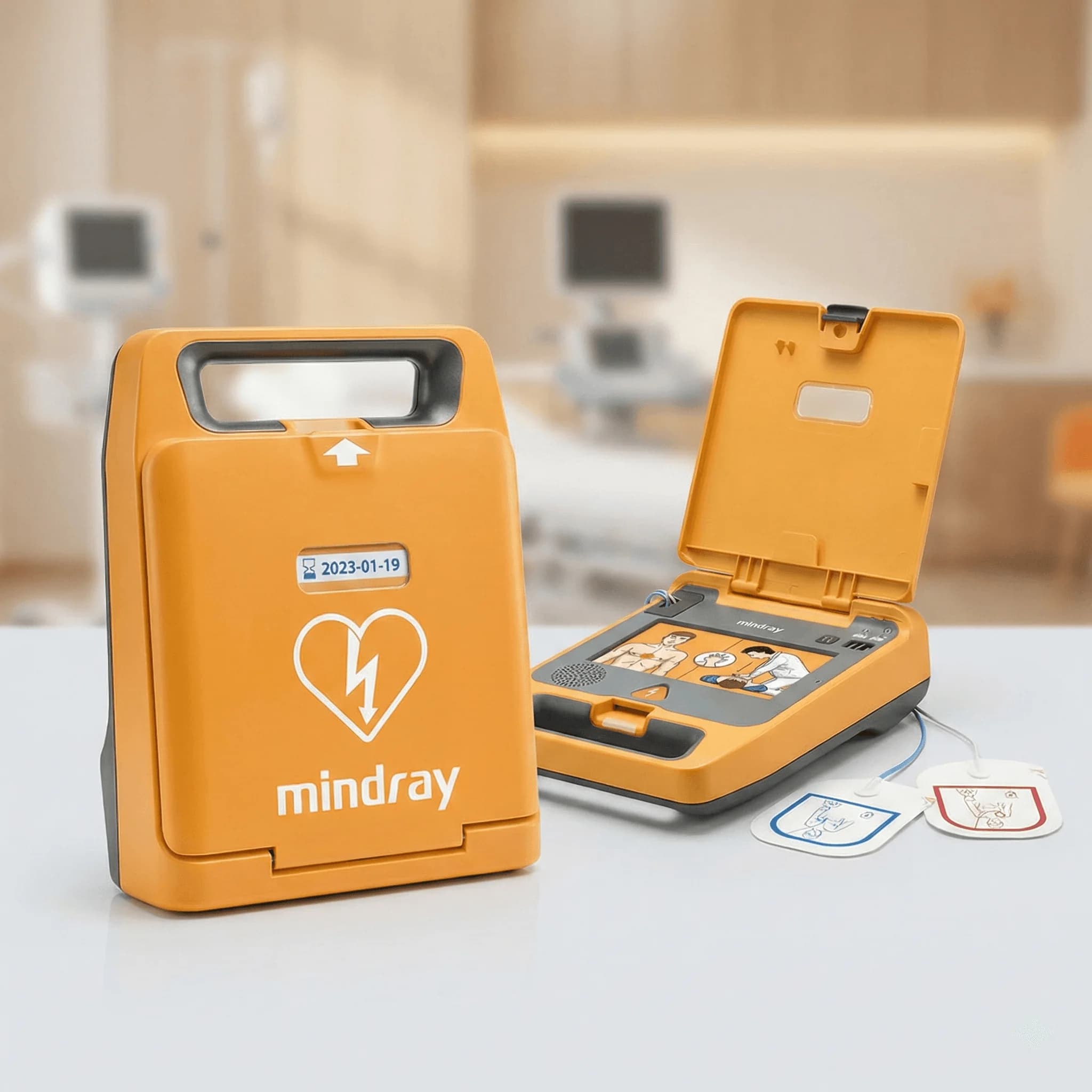
This design reassures people who have never taken a first aid course. The device guides every step by voice, from placing the pads to pressing the button on a semi-automatic model, or all the way to the shock delivered on its own on a fully automatic model. The rescuer stays responsible for compressions and calling for help, but never for the diagnosis itself. This division of roles explains why a defibrillator can be installed in a town hall corridor, a gym or an office lobby without a healthcare professional present at all times.
How the device reads the heart's electrical activity
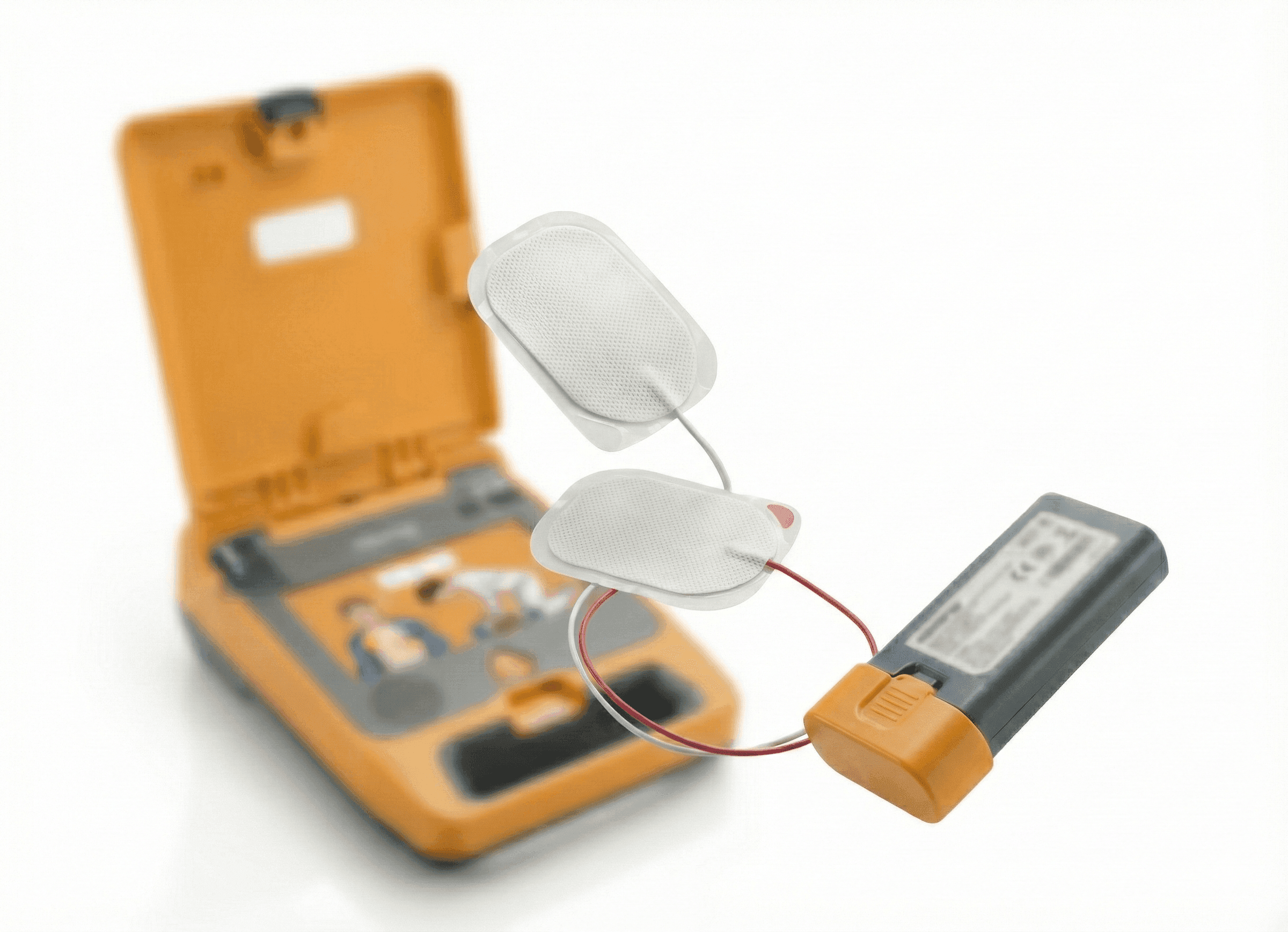
The pads do not just deliver the shock: they also pick up the electrical signal produced by the heart with every beat, much like a simplified electrocardiogram. The defibrillator turns this signal into a waveform it compares against known rhythm families, classified by shape, amplitude and regularity.
This comparison relies on validated algorithms fitted to every device sold in Europe, regardless of brand. The result therefore does not depend on a human judgement made on the spot: the machine applies the same reading grid to every victim, which sharply limits the risk of a diagnostic error. These algorithms are tested before each model reaches the market and are never adjusted on site, neither by the manufacturer nor by the operator of the site where the device is installed.
Shockable rhythms and rhythms that are not
Two families of heart rhythm call for a shock: ventricular fibrillation, where the heart trembles chaotically without pumping blood, and pulseless ventricular tachycardia, a racing heart that no longer circulates blood effectively. In both cases, an electrical shock can interrupt this chaos and let the heart resume a normal rhythm.
Conversely, asystole, meaning a complete absence of electrical activity, or pulseless electrical activity do not respond to a shock. Chest compressions then remain the only useful action, until the rhythm turns into a shockable form or emergency responders arrive with medication.
| Detected rhythm | Defibrillator response |
|---|---|
| Ventricular fibrillation | Shock advised |
| Pulseless ventricular tachycardia | Shock advised |
| Asystole (no electrical activity) | No shock, chest compressions continue |
| Pulseless electrical activity | No shock, chest compressions continue |
| Normal heart rhythm | No shock, voice prompt to check contact |
Why the device never shocks a normally beating heart
The defibrillator applies a deliberately strict safety margin. If the captured signal does not clearly match a shockable rhythm, the device announces that no shock is advised and prompts the rescuer to resume chest compressions. This caution prevents any shock being wrongly delivered to a heart that is still working normally.
Movement of the victim, an ongoing transport or a poorly attached pad can temporarily disturb the reading. In that case, the device asks that nobody touch the victim for a few seconds and restarts an analysis rather than shocking on an uncertain signal. This safety rule always takes priority over the speed of the decision, even when bystanders grow impatient waiting for emergency responders.
The rescuer's role during analysis and the shock
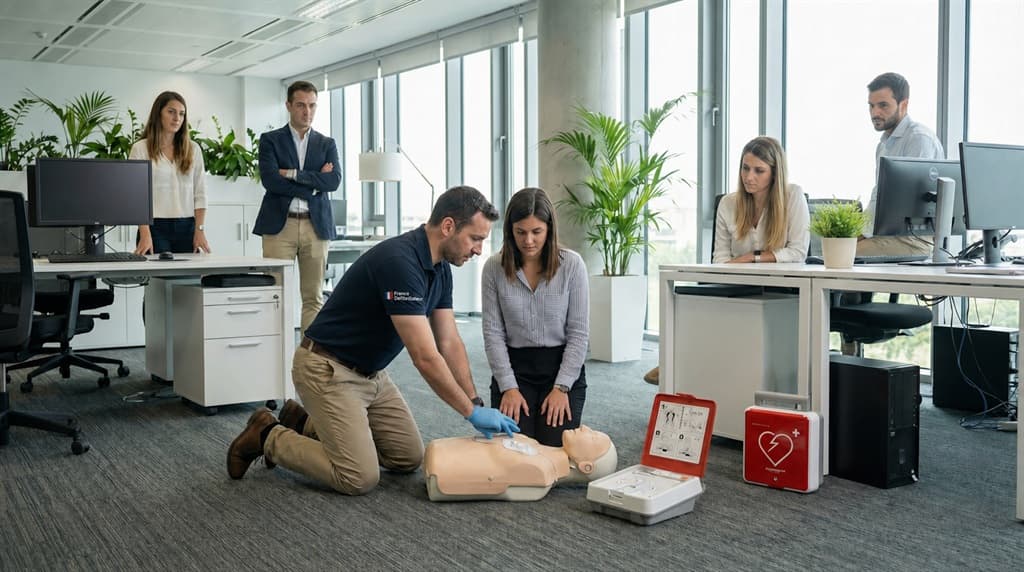
During analysis, all contact with the victim must stop, including chest compressions, so as not to disturb the signal reading. The device repeats this instruction by voice every time, and some models even refuse to continue as long as movement is detected on the pads.
If a shock is advised, the rescuer must make sure nobody touches the victim before triggering it, or before it fires on its own on a fully automatic model. Either way, chest compressions resume immediately afterwards, without waiting for any sign of waking, until the device's next scheduled analysis or the arrival of emergency responders. This cycle of compressions and analyses repeats as many times as needed, with no limit set in advance by the device.
Frequently asked questions
Can a defibrillator shock a heart that is beating normally?
No. The device only delivers a shock if the analysed signal clearly matches ventricular fibrillation or pulseless ventricular tachycardia. Faced with a normal or uncertain rhythm, it refuses the shock and asks the rescuer to resume chest compressions, which makes it safe to use even without prior training.
How long does the heart rhythm analysis take?
The analysis usually takes under ten seconds once the pads are attached to bare skin. This delay can vary slightly between models, but it always stays short so as not to delay resuming chest compressions when no shock is advised.
Should chest compressions stop while the device analyses?
Yes, all contact with the victim must stop during the few seconds of analysis, otherwise the electrical signal reading can be disturbed. The device announces this by voice, and it is enough to follow its instructions to let the diagnosis run correctly.
What is the difference between a shockable and a non-shockable rhythm?
A shockable rhythm, such as ventricular fibrillation, is chaotic electrical activity that a shock can reorganise. A non-shockable rhythm, such as asystole, is an absence of useful electrical activity, which only chest compressions can support while waiting for emergency responders.
What should be done if the defibrillator says no shock is advised?
Chest compressions should resume immediately and continue in cycles until the device's next scheduled analysis or the arrival of emergency responders. This message never means the victim is fine, only that a shock is not the useful action at that particular moment.
Planning an AED project?
Purchase, rental from 50 EUR excl. VAT per month, installation with GéoDAE registration, servicing and training: our team replies within 24 hours.