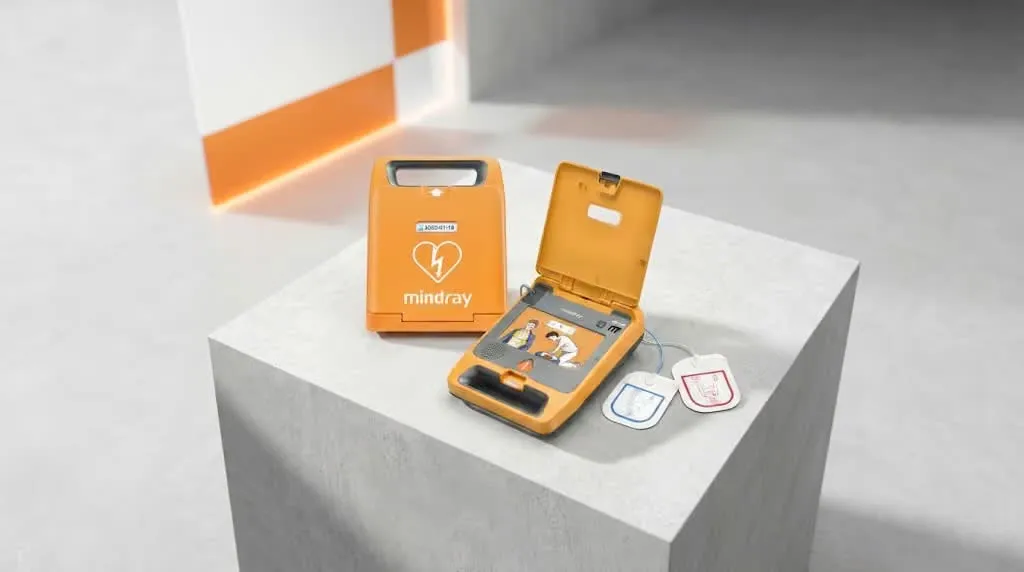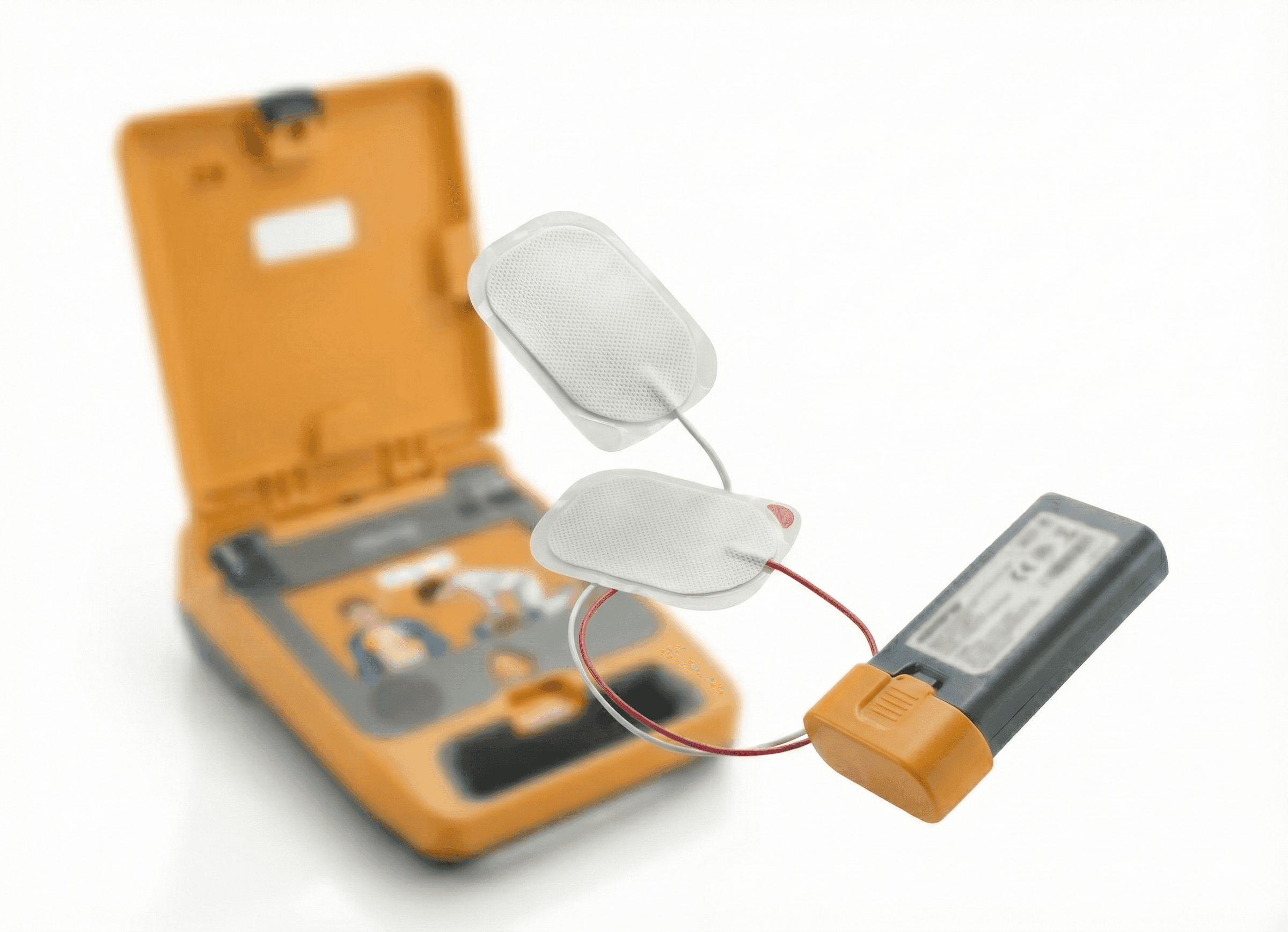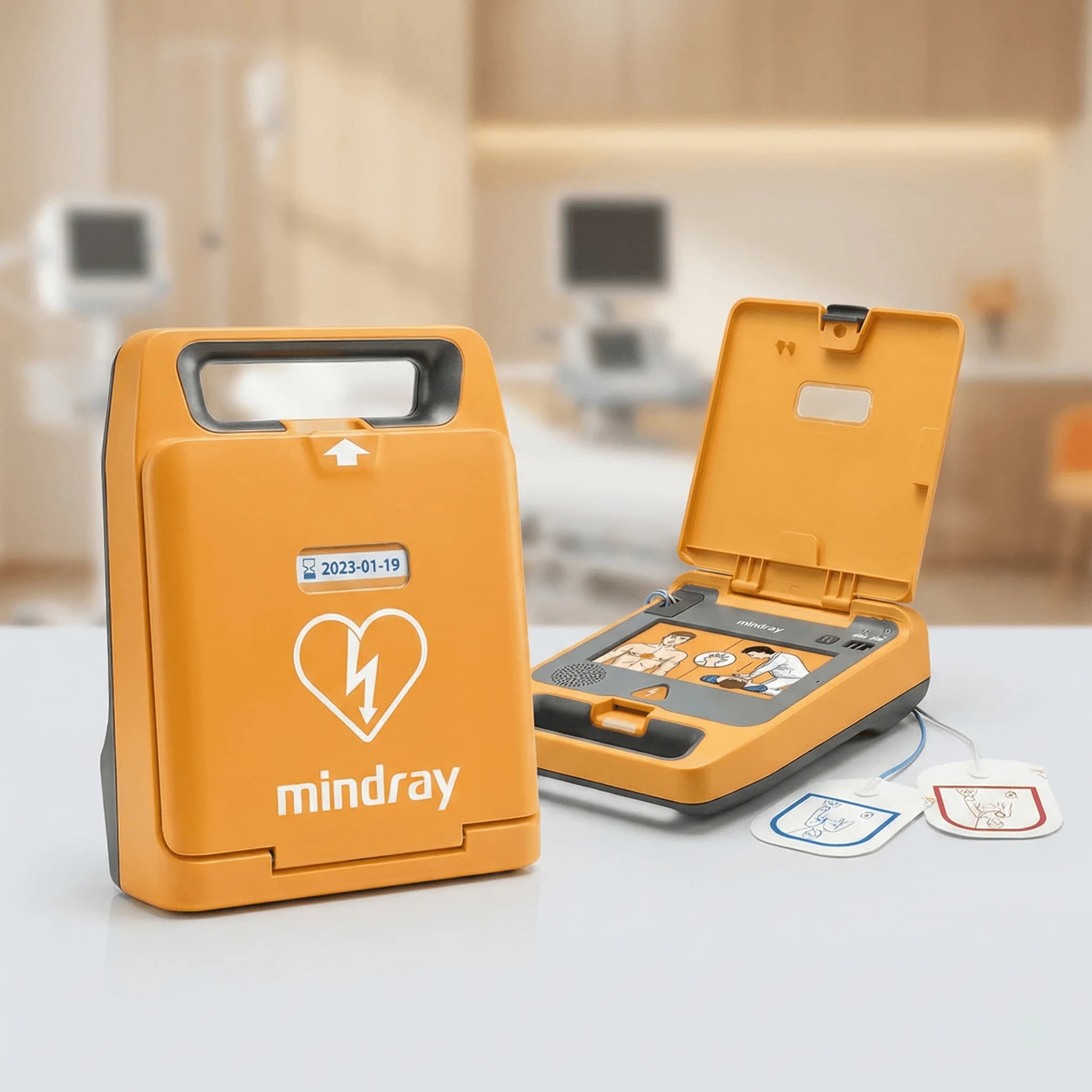
Connected defibrillator: what changes vs a standard model
Written by Cyrille GAGNAIRE, France Défibrillateur. Published on 18 August 2026.
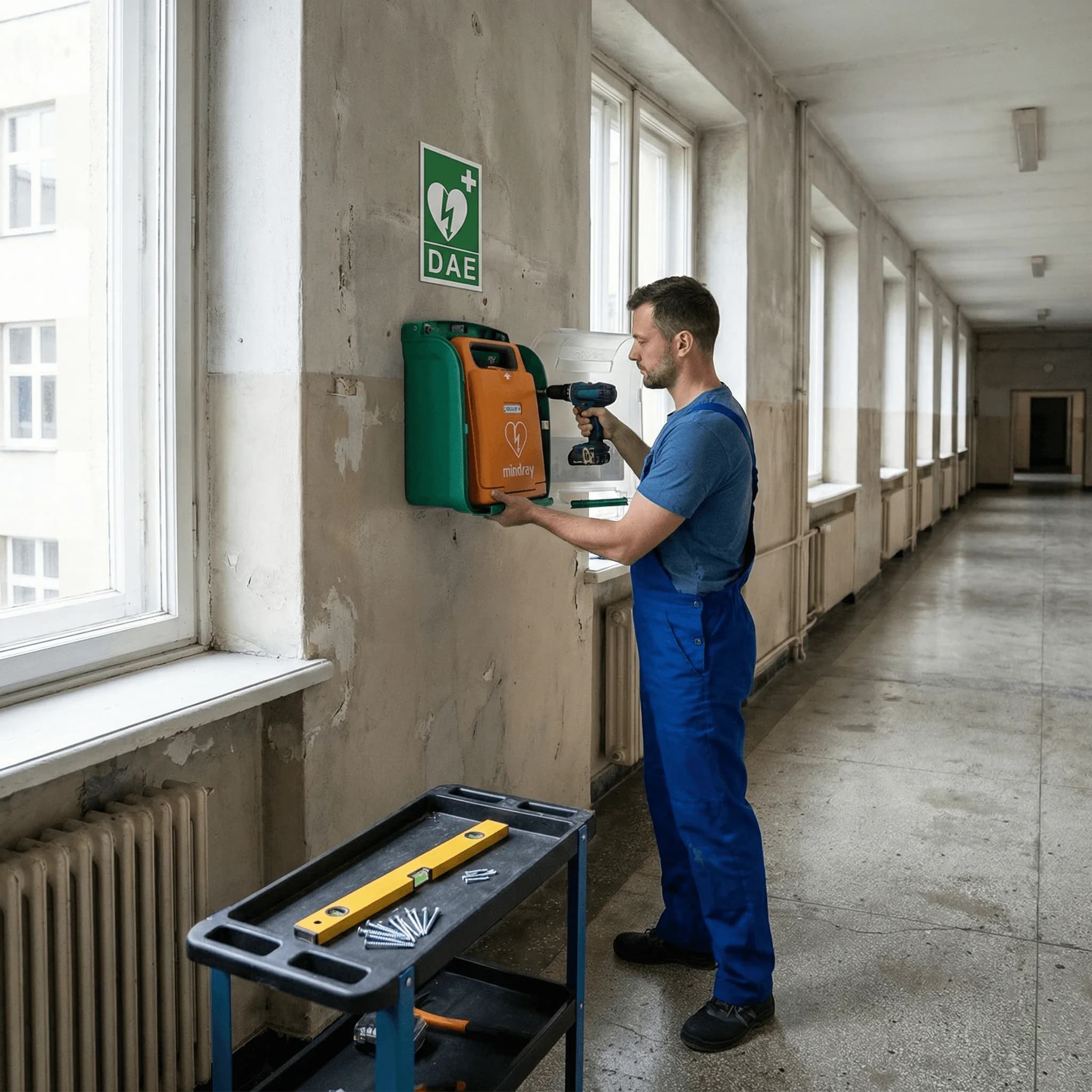
More and more defibrillators now offer an internet connection, either through Wi-Fi or a GSM module added to the case. This feature changes the way the device is monitored day to day, without replacing the human checks required by regulation. It is particularly useful for operators managing several sites or several devices at once. Here is what actually sets a connected model apart from a standard defibrillator, and when this choice truly makes sense.
What is a connected defibrillator
A connected defibrillator includes a Wi-Fi or GSM chip, sometimes built in from the factory, sometimes added later as an external module plugged into the case. This connection continuously sends the device's status to a remote server: the result of the latest self-test, battery charge level, electrode expiry date, and whether the defibrillator is present in its wall bracket.
Some modules go further and allow intervention data to be retrieved after use, or send a direct notification to the person in charge of the site whenever the daily self-test detects an anomaly. This information usually reaches a web interface or an app, accessible from a computer or a phone, so there is no need to travel on site to know the device's status.
What the connection brings in practice
On a standard defibrillator, only the indicator light shows the device's status. Someone has to walk up to the case to check it, which relies on a regular inspection by a person designated within the site. On a connected model, the alert is sent automatically, by email or text message depending on the configuration chosen.
This mainly reduces the risk of an oversight on sites where no one is practically in charge of the visual check, or where the defibrillator sits in a rarely visited outdoor cabinet. It also makes it easier to keep the safety register, since time-stamped alerts can be logged there without re-entering the data by hand. For an operator overseeing several buildings, this avoids relying entirely on one person's vigilance at each site.
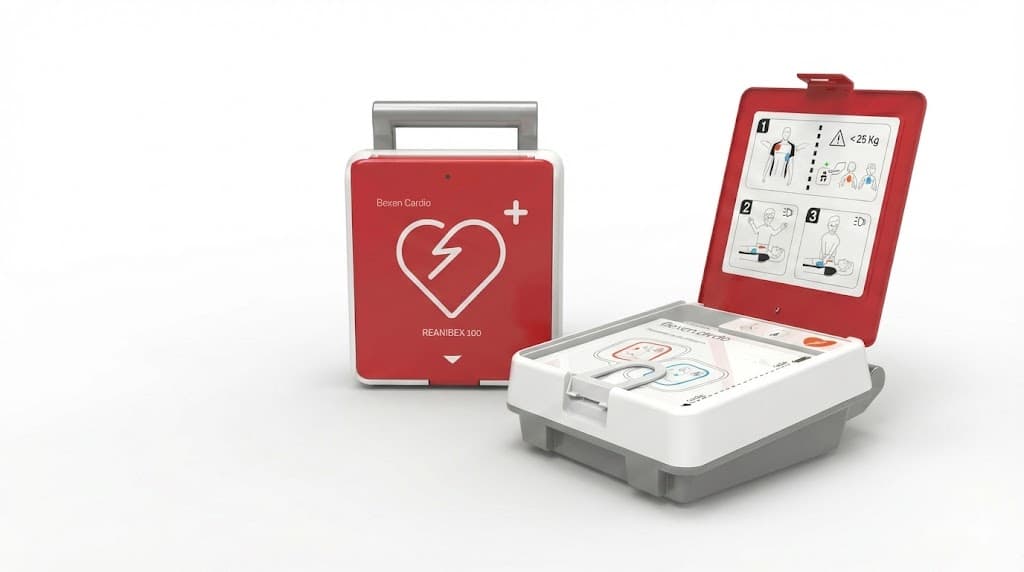
Connected versus standard defibrillator: a comparison
The table below sums up the main differences between the two options, aside from the defibrillation itself, which works identically in both cases.
| Criterion | Standard defibrillator | Connected defibrillator |
|---|---|---|
| Self-test check | Visual, on site | Remote, in real time |
| Alert in case of anomaly | Indicator light on the case | Notification to the person in charge |
| Consumables tracking | Manual, via the register | Automated, with reminders |
| Purchase or rental cost | Standard | Often higher due to the module |
| Maintenance obligation | Same, art. R. 5212-25 (French Public Health Code) | Same, art. R. 5212-25 (French Public Health Code) |
Which sites benefit most from this choice
The connection makes the most sense for operators managing several sites, a town hall with different municipal buildings, a retail chain with several shops, or a group of care homes. Centralising the monitoring of dozens of devices from a single dashboard avoids multiplying inspection visits and helps prioritise interventions according to the real urgency of each alert.
For a single site with one defibrillator, where one person is clearly designated for the weekly check, a standard model is usually enough to meet regulatory obligations. The choice therefore depends mainly on internal organisation rather than on the size of the site. A small, well-organised structure does not necessarily need connectivity, while an isolated site with little foot traffic can genuinely benefit from it.
Cost and rental as a middle-ground solution
A connection module adds an extra cost on top of the defibrillator and its electronics. Rental spreads this expense out: it starts at 50 euros excl. VAT per month, maintenance included, which covers electrode and battery replacement without any upfront outlay.
Whether the model is connected or not, the manufacturer's warranty is generally five years, delivery takes two to five working days, and a quote can be obtained within 24 hours to compare both options on an actual case. This costed comparison remains the best way to weigh the extra cost of connectivity against the time actually saved on monitoring the device.
The regulatory obligations stay the same
Connected or not, a defibrillator remains subject to the same rules. Maintenance stays the operator's responsibility under article R. 5212-25 of the French Public Health Code (Code de la santé publique), registration with Géo'DAE remains compulsory from the moment of installation, and signage must comply with the arrêté du 29 novembre 2018 (French ministerial order of 29 November 2018).
Connectivity makes it easier to meet these obligations, it does not replace them. A module that sends a low-battery alert does not exempt anyone from registering it and arranging for a provider to carry out the replacement.
Frequently asked questions
Does a connected defibrillator replace human checks?
No. The connection reports the device's status remotely, but the person designated within the site remains responsible for monitoring it and keeping the safety register. It makes spotting an anomaly easier, but it does not remove the need for the internal organisation set up to respond to it, or for a provider's intervention when a replacement is needed.
Is a remote connection compulsory for a defibrillator?
No, no legal obligation requires a connected model. Regulation covers the presence of the device, its maintenance, its signage and its registration with Géo'DAE, whatever monitoring method the operator chooses to check the defibrillator's status day to day.
How much does a connection module cost for an existing defibrillator?
The price depends on the defibrillator model and the type of module, Wi-Fi or GSM. It adds to the purchase price or to the monthly rental fee. A tailored quote, obtained within 24 hours, makes it possible to compare the extra cost for a given site.
Is a connected defibrillator harder to use in an emergency?
No. The connection only concerns monitoring and maintenance of the device. The voice prompts and the steps of an intervention on a casualty remain identical to those of a standard defibrillator, with no extra step for the rescuer at the moment of acting.
Can a connected defibrillator be rented instead of bought?
Yes. Rental, from 50 euros excl. VAT per month with maintenance included, is available for both standard and connected models. It allows an operator to test the value of remote monitoring before considering a final purchase, without tying up investment budget from the start.
Planning an AED project?
Purchase, rental from 50 EUR excl. VAT per month, installation with GéoDAE registration, servicing and training: our team replies within 24 hours.