Where to install a defibrillator for fast access
Written by Cyrille GAGNAIRE, France Défibrillateur. Published on 17 August 2026.
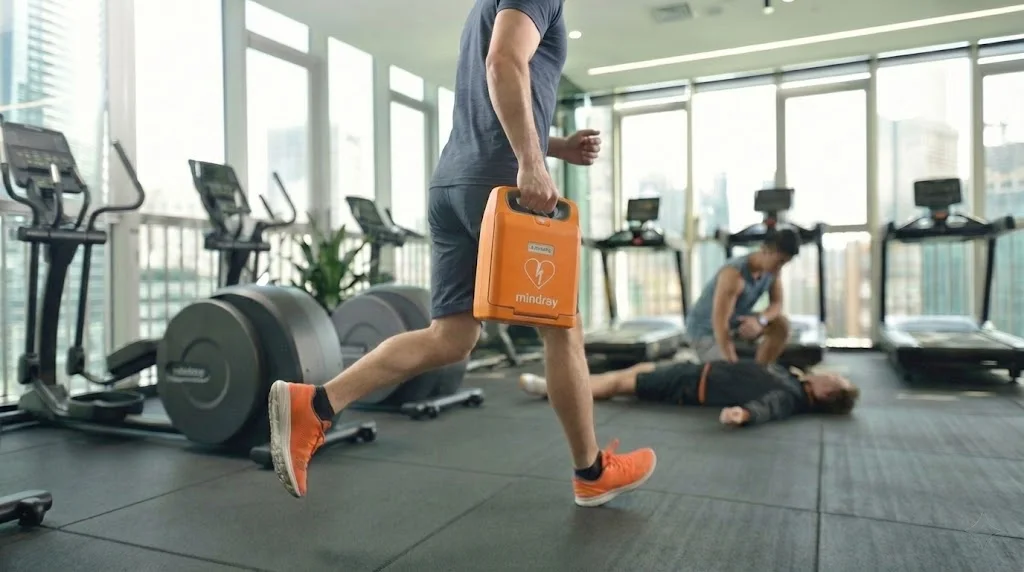
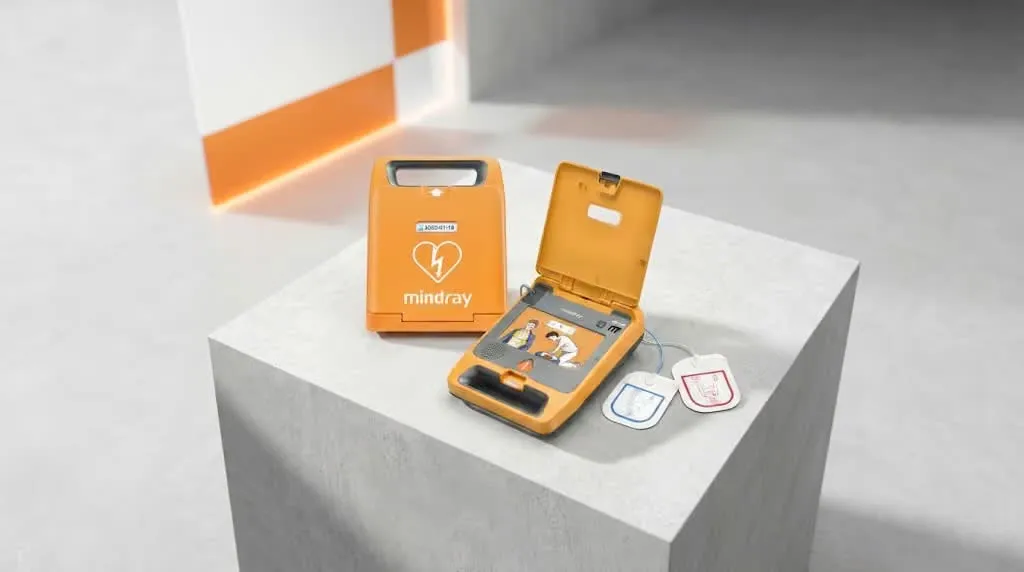
A high performance defibrillator (AED) is useless if it stays out of sight or locked away when it is needed. Its location directly determines the delay before the first defibrillation, a factor that weighs more on survival than the model itself. Here are the practical criteria for placing the device in the right spot, whether the site is a single building or spans several buildings and floors.
Location, a factor that weighs on survival
Every minute without defibrillation reduces the chances of survival by about 10 percent. A defibrillator that is poorly placed, hard to spot, or locked inside a closed office delays the response almost as much as having no defibrillator at all. The performance of the device never makes up for a poorly thought out location, and a simple model placed in the right spot will always serve better than a sophisticated one tucked away in a quiet corridor.
Choosing the location is the operator's responsibility, just like maintaining the device. It should be planned from the moment of purchase or rental, taking into account how the premises are actually used rather than their floor area alone. A map of how visitors, staff and deliveries actually move around often gives better clues than a plain architectural plan.
Criteria for a good location
A defibrillator must remain accessible at all times, including outside opening hours if the site is still in use. It belongs in a busy area, visible without effort, such as an entrance hall, a reception desk or a main corridor, rather than an office, a storeroom or a locked technical room.
Installation height matters too: the case must remain within reach of anyone, without having to climb or bend down excessively. A well lit spot, sheltered from impacts and extreme temperature swings, extends the life of the device and its consumables.
The visual cue matters as much as the position itself. A green case mounted at height, paired with a compliant sign, can be spotted within seconds even by someone unfamiliar with the premises, which matters as much for staff as for a passing visitor.
How long does it take to reach the defibrillator?
The goal is to limit the round trip between any point in the building and the defibrillator. The longer that trip, the longer the delay before the first shock, while professional emergency services generally take several minutes to arrive on site.
In a large building or one with several floors, a single device is usually not enough. It is better to spread several defibrillators across strategic points than to spend the whole budget on one high end model that is poorly placed. A simple exercise is to time the walk from the most remote point of the site, closed doors included, to check that the device is genuinely reachable in an emergency.
Matching the layout to the premises
The layout of the site directly shapes how many devices are needed and where they go. A few practical benchmarks by type of premises:
| Layout of the premises | Placement recommendation |
|---|---|
| Single storey building, open plan | One AED, central and visible from reception or the main entrance |
| Multi storey building | One AED per floor, near the stairs or the lift |
| Several buildings on one site | One AED per building, signposted from the outdoor access points |
| Site used outside staff hours | A heated outdoor cabinet, accessible without a code or a key |
Locations to avoid
A defibrillator locked inside a cabinet, kept in a staff only room that the public cannot reach, or placed in an office that closes in the evening loses much of its value. The principle remains free and immediate access, with no code to ask for and no key to hunt for in an emergency.
Locations exposed to strong heat, damp or direct frost without suitable protection should also be ruled out, along with spots where a sign could not be seen from the main circulation routes. A cluttered shelf, a locked fire door or a poorly lit recess are all obstacles that cost precious seconds.
Indoor or outdoor: a question of opening hours
An indoor defibrillator suits sites where access remains possible at all times. As soon as the building closes while members of the public or nearby residents might still need the device, a heated outdoor cabinet becomes worth considering, since it stays reachable from the public way.
This choice is made case by case, weighing the site's real occupancy hours against the surrounding footfall, rather than applying one rule to every building. A town hall (mairie) open to the public during the day but surrounded by housing may justify an outdoor cabinet, while an office with no evening traffic can do without one.
In every case, the chosen location should be reviewed whenever the premises change: a refit, an extension, a new entrance or new opening hours are all good moments to check that the defibrillator is still in the right spot.
Frequently asked questions
Do you need one defibrillator per floor?
It is not a blanket requirement, but it is advisable as soon as relying on a single device makes the trip from the upper floors too long. In a multi storey building, spreading defibrillators near the stairs or the lift shortens the response time for everyone on site.
Can a defibrillator sit in an office that is closed at night?
No, if the site is still used after office hours, for example by security rounds, nearby residents or an evening activity. The device must remain accessible without a key or a code at that time, or it loses its purpose exactly when it would be needed.
Does the location need to be declared in Géo'DAE?
Yes, the exact address and access conditions of the defibrillator must appear in the Géo'DAE declaration, the French registry that lets emergency services guide a bystander to the nearest device. Any change of location, even within the same building, must be reflected in that declaration without delay to stay useful in a real situation.
How can you tell if the current location works?
By walking the route yourself from the most distant parts of the building, during normal opening hours and outside them too. If the defibrillator is still hard to find, if access is blocked by a locked door, or if the walk takes more than a few dozen seconds, it is time to rethink the layout before an incident exposes the problem.
Does an outdoor location expose the device to extra risks?
A suitable outdoor cabinet protects the defibrillator from cold, heat and damp through built in temperature regulation. The main remaining risk is vandalism or theft, which a visible, well lit spot, sometimes under video surveillance, helps to limit.
Planning an AED project?
Purchase, rental from 50 EUR excl. VAT per month, installation with GéoDAE registration, servicing and training: our team replies within 24 hours.