How to use a defibrillator: step by step
Written by Cyrille GAGNAIRE, France Défibrillateur. Published on 23 September 2026.
In cardiac arrest, the first minutes decide the victim's chances of survival. An automated external defibrillator (AED) talks the rescuer through every step, no medical training required. This article walks through each action: recognising the situation, calling emergency services, starting chest compressions, placing the pads and running the device until help arrives.
Recognise cardiac arrest and raise the alarm
A person in cardiac arrest suddenly loses consciousness and does not respond to voice or touch. Breathing stops or becomes abnormal, sometimes with spaced-out gasps that should not be reassuring. When both signs are present, call emergency services immediately and switch the phone to speaker to keep both hands free.
The dispatcher then guides the next steps, confirms the diagnosis and sends a team while the rescue gestures begin on site. Give the exact address, a landmark and mention any AED nearby, without delaying the start of chest compressions.
Start chest compressions without delay
While one bystander goes to fetch the nearest defibrillator, another starts chest compressions right away, on a firm surface with the chest bare. Hands at the centre of the chest, arms straight, push hard and fast, at around one hundred compressions per minute, letting the chest rise fully between compressions.
These compressions keep a minimal blood flow to the brain and heart before the device is even connected. They should only stop for as long as strictly needed to place the pads or let the defibrillator analyse the rhythm.
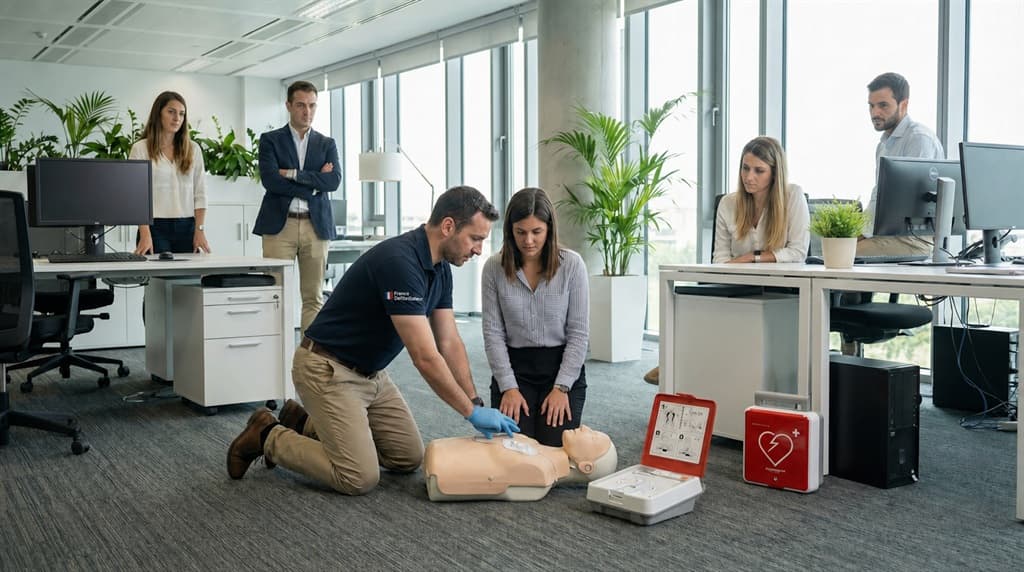
Turn on the defibrillator and follow its instructions
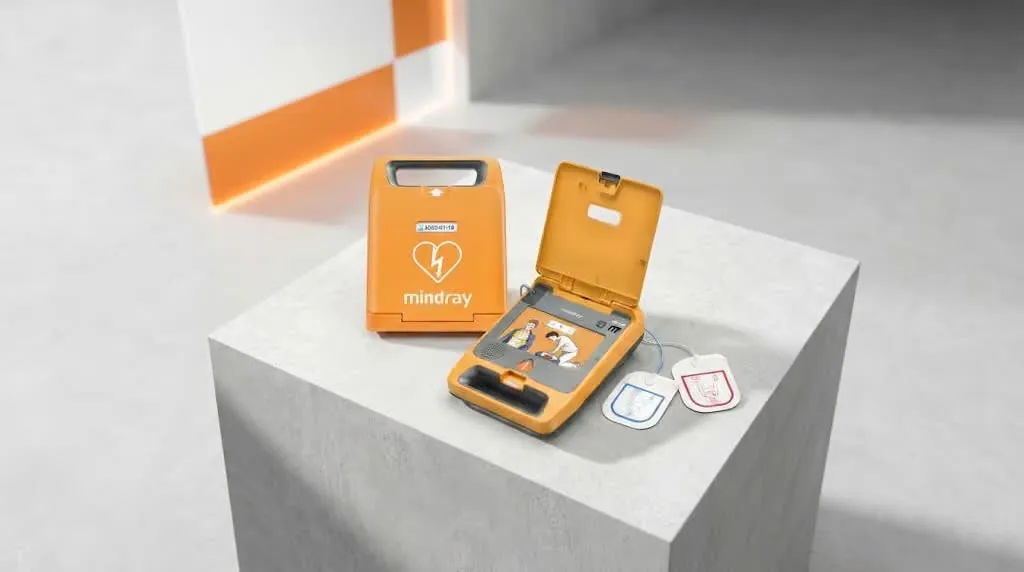
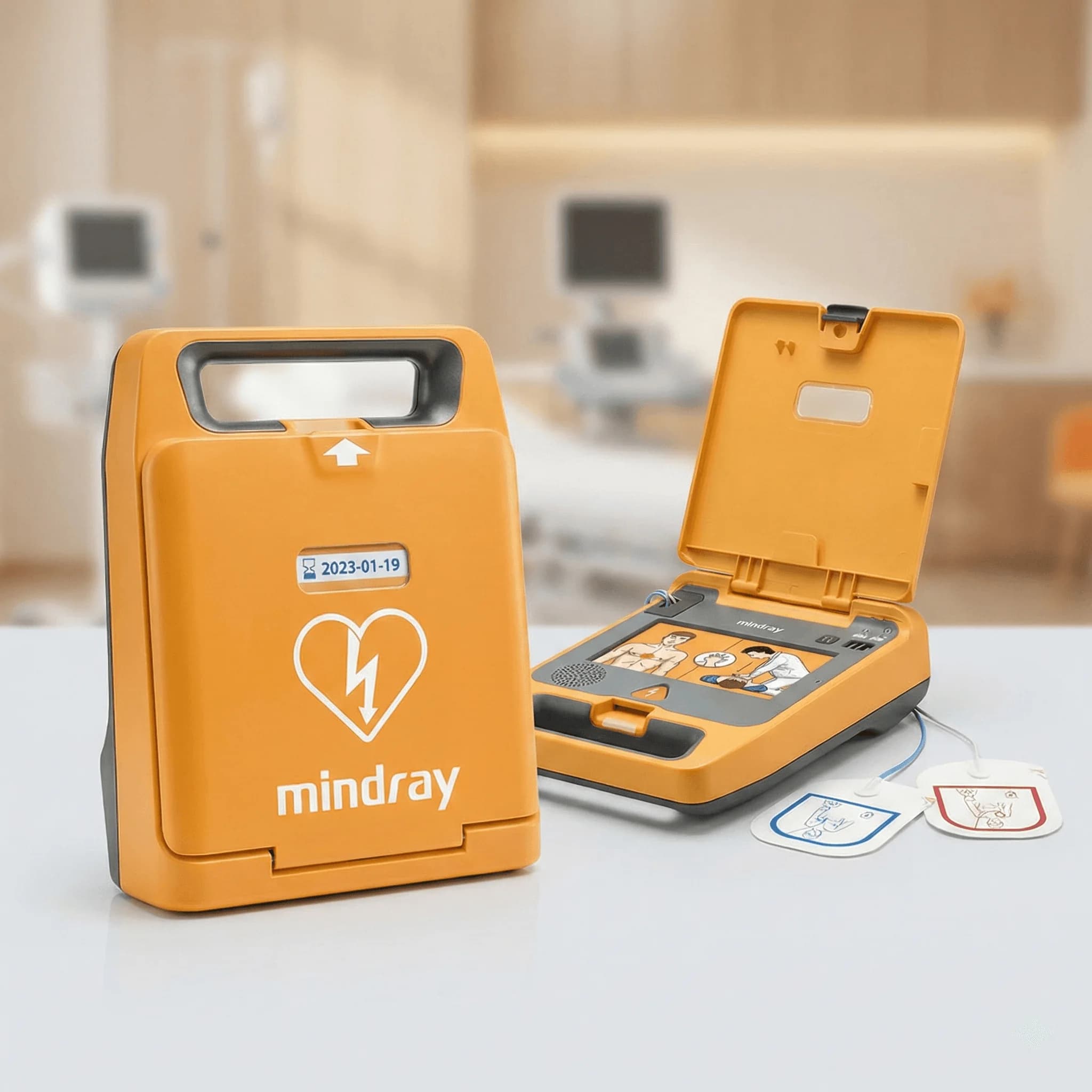
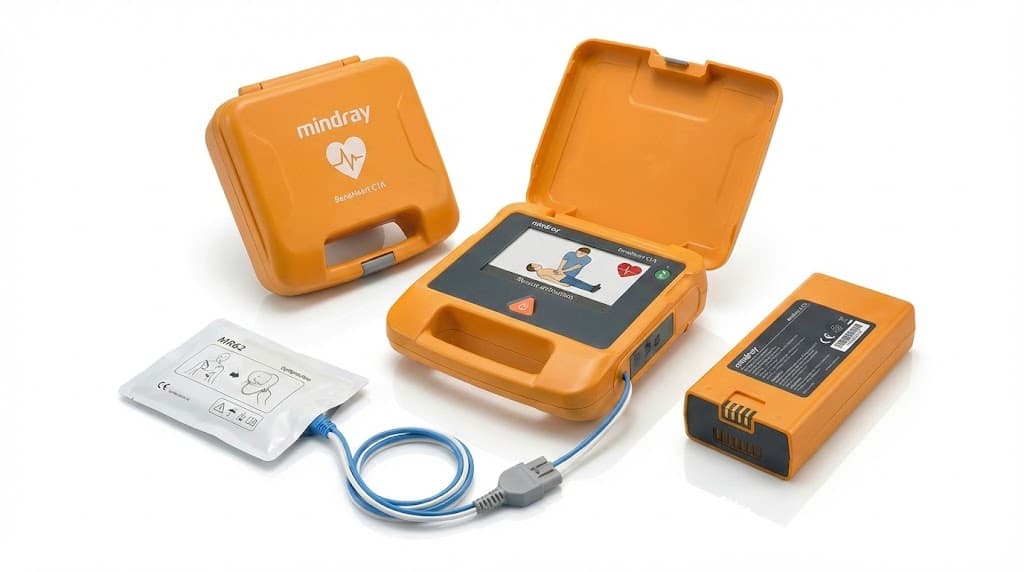
As soon as the device arrives, turn it on, either by pressing the power button or simply by opening its lid, depending on the model. A voice then guides every step without interruption, from unpacking the pads to the shock itself. Just listen to the prompts and follow them in order, without trying to anticipate or skip a step.
Chest compressions continue until the device explicitly asks to stop so the pads can be attached. A second bystander can prepare the victim's chest while the first keeps compressing.
Place the pads correctly
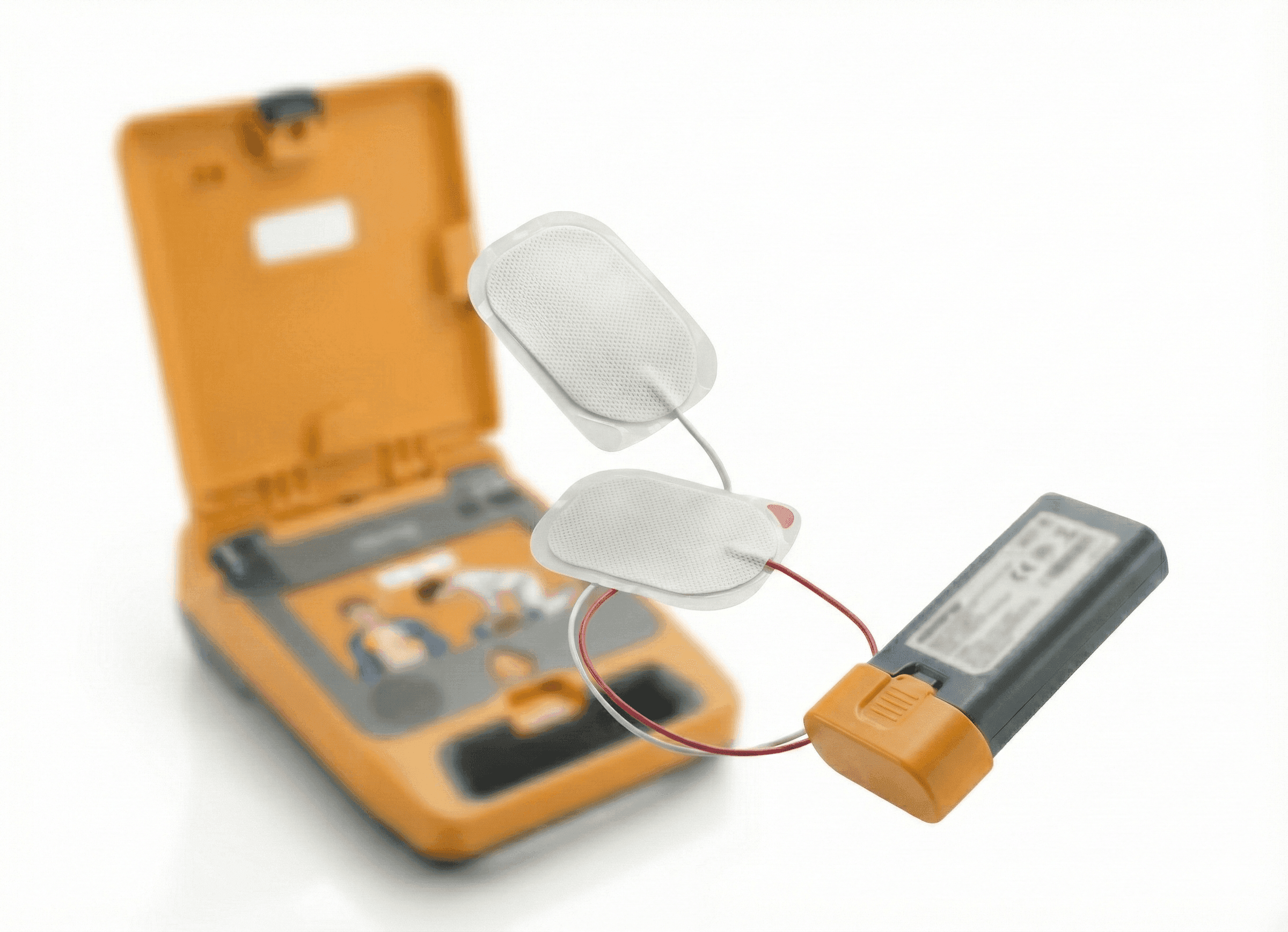
The pads stick onto bare, dry skin, one below the right collarbone, the other on the left side of the chest, below the armpit, as shown by the pictograms printed on them. Remove metal jewellery and any medicated patches under where the pads will sit, dry the skin if wet, and shave a very hairy chest with the razor included in the kit.
A pad must never sit directly on a pacemaker visible as a small bump under the skin: place it a few centimetres away instead. For women, the left pad slides under the breast rather than on top of it, to keep good contact with the skin.
Let the device analyse and deliver the shock
Once the pads are attached, the defibrillator asks that no one touch the victim while it analyses the heart rhythm. This analysis takes about ten seconds and requires no movement around the body, otherwise the reading can be inaccurate and the device restarts it.
If a shock is needed, a semi-automatic device asks the rescuer to press a flashing button, while a fully automatic model delivers it on its own after warning bystanders out loud to stand clear. Either way, no one should touch the victim at the exact moment of the shock.
What about a child, water or metal?
For a child under eight years old or under twenty-five kilograms, paediatric pads reduce the shock intensity; failing that specific set, adult pads can be used as a last resort, but never stacked one on top of the other. If the victim is in water or lying on a wet surface, move them out or dry the area before attaching the pads, since water conducts electricity.
Likewise, move the victim away from a metal floor or surface whenever possible, without ever delaying the rescue gestures for this reason. Pregnancy is never a reason to withhold the defibrillator.
Continue resuscitation after the shock
Whether or not a shock was delivered, chest compressions resume as soon as the device allows it, following a cycle of thirty compressions to two rescue breaths if the rescuer knows how, or continuous compressions otherwise. The defibrillator reanalyses the rhythm roughly every two minutes and guides each restart by voice.
These gestures continue without interruption until the victim regains consciousness and breathes normally, or until the emergency team fully takes over on site. The pads stay attached and the device stays on throughout.
Frequently asked questions
Do you need training to use a defibrillator?
No, the law allows anyone, even without training, to use an automated external defibrillator on a person in cardiac arrest. The device talks the rescuer through every step and will not deliver a shock unless the heart rhythm calls for it. First aid training remains useful for confidence and speed, but it is not a legal requirement to act.
Can you get it wrong when using a defibrillator?
The device analyses the victim's heart rhythm itself and only delivers a shock if it detects a rhythm that calls for one. It is therefore impossible to shock someone whose heart is beating normally. The main risk is losing time by hesitating or misplacing the pads, both of which the voice guidance corrects at every step.
What if the victim has a pacemaker?
Having a pacemaker does not rule out using a defibrillator. Simply spot the small bump under the skin, usually below the collarbone, and place the pad a few centimetres away from it rather than directly on top. The rest of the procedure, alerting, compressions and analysis, stays exactly the same.
Can a defibrillator be used outdoors or in the rain?
Yes, an automated external defibrillator can be used outdoors, including in light rain, as long as the victim's skin is dried before the pads are attached. Avoid using it while the victim is submerged or lying in a large puddle; move them to dry, sheltered ground first.
How long does the analysis take before a possible shock?
Rhythm analysis usually takes about ten seconds, during which no one should touch the victim so the reading is not affected. This short pause only briefly interrupts chest compressions, which resume as soon as the device indicates, whether or not a shock was delivered.
Planning an AED project?
Purchase, rental from 50 EUR excl. VAT per month, installation with GéoDAE registration, servicing and training: our team replies within 24 hours.