How to run a cardiac arrest simulation drill at work
Written by Cyrille GAGNAIRE, France Défibrillateur. Published on 27 September 2026.
First aid training teaches the theory, but nothing replaces a real drill to check that everyone knows how to react when the moment comes. A cardiac arrest simulation drill recreates, without risk, the minutes following a sudden collapse in a corridor, an open office, or a locker room. Spotting the situation, calling for help, starting chest compressions, fetching the defibrillator (AED): these actions are rehearsed as a group, with a role for everyone, then discussed together once the drill ends.
Why classroom training is not always enough
A first aid training session delivers solid knowledge about calling for help, chest compressions, and using an automated external defibrillator. It leaves little room, however, for the real stress of a moment when a colleague collapses without warning and several people look at each other, unsure who should act first. This brief but very real freeze explains why precious minutes can slip away before the first actions begin.
The simulation drill fills that gap between theory and action. By recreating a believable scene, with one person playing the victim and colleagues reacting as they truly would, the organisation can see exactly where hesitation creeps in: how easily the defibrillator can be reached from the workstation involved, how fast someone thinks to ask a bystander to call emergency services, or the order in which actions follow once chest compressions start. These points are only fixed properly after being seen once in practice.
Preparing the drill before running it on site
A successful drill is prepared in advance, led by someone who already knows first aid, whether a designated first aider or simply someone recently trained. The location is chosen to match the real site: a busy corridor, a locker room, a break room, an isolated post at the far end of a building. The scenario stays simple, with no dramatic staging, so it remains close to something plausible in that exact setting.
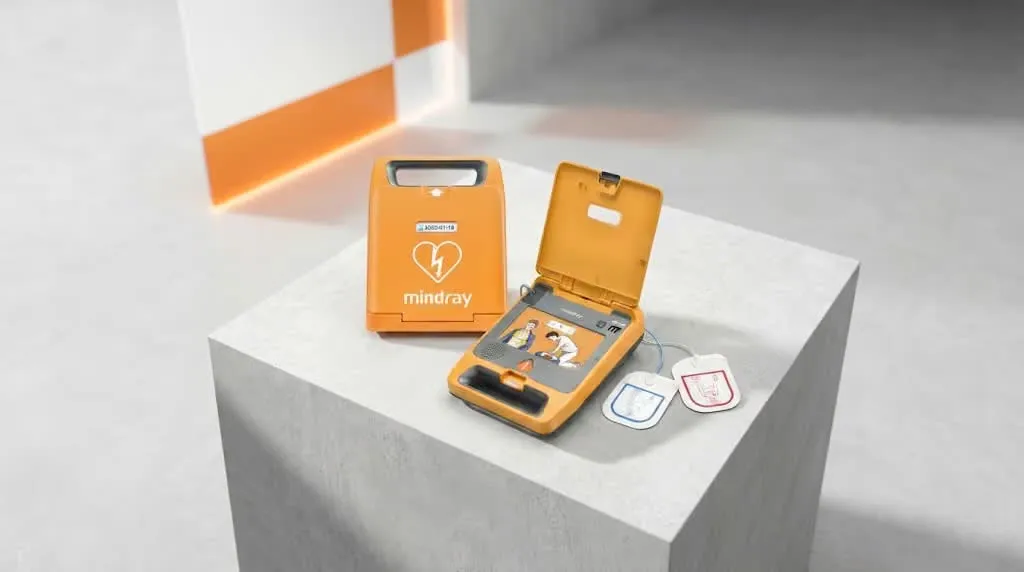
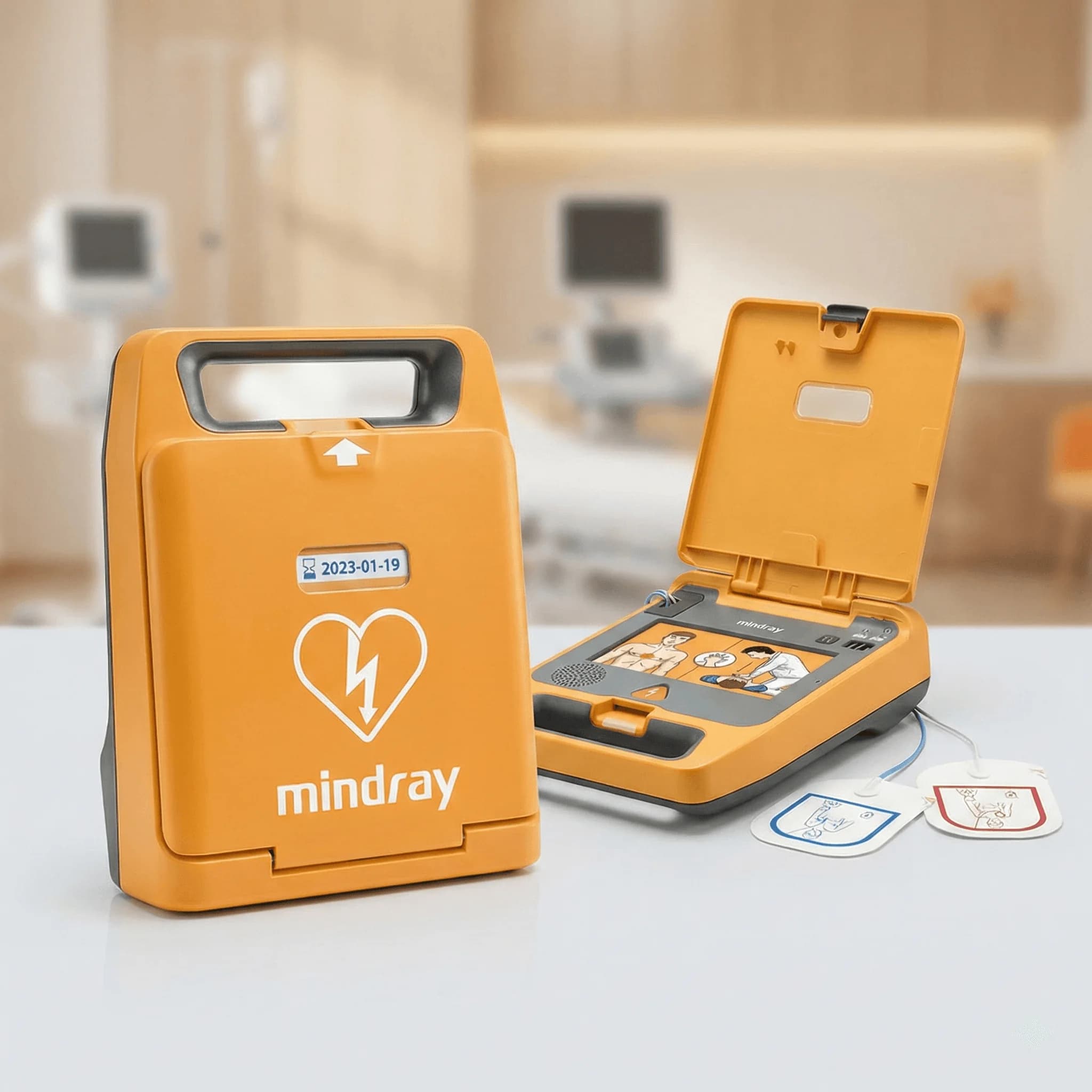
Mock equipment avoids any confusion with the real thing: a training defibrillator, with no electrodes or active battery, or, failing that, the real unit clearly announced as being used for a dry run before the drill starts. Letting people on site know in advance, even without revealing the scenario, reduces the risk of a bystander outside the drill genuinely calling emergency services, believing it to be a real emergency.
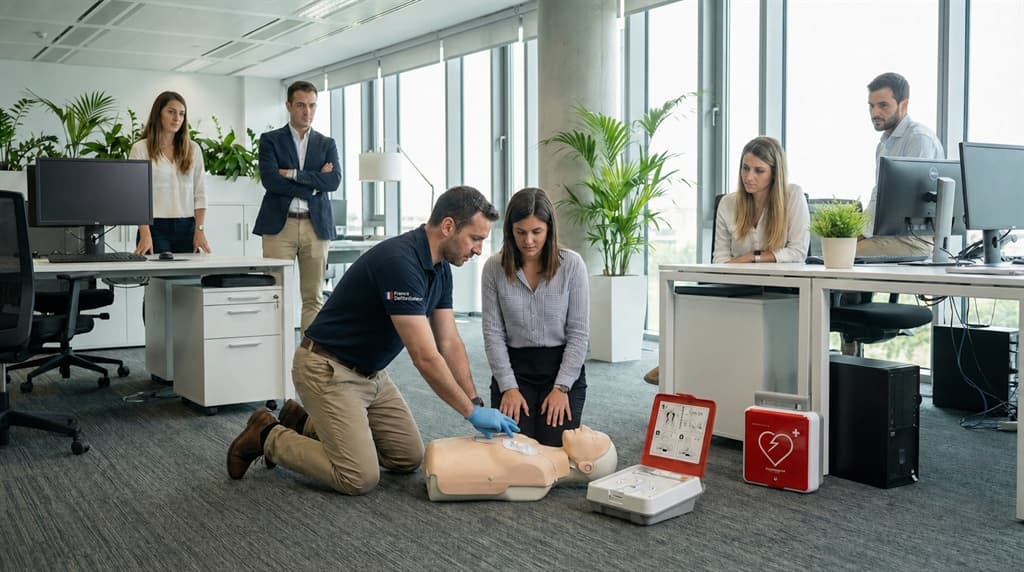
Roles to assign during the simulation
Assigning clear roles before starting the drill avoids general improvisation and allows each function to be observed separately. The simulated victim stays passive once the drill is under way, neither helping nor hindering the group. The first bystander spots the situation and raises the alarm, while a second rescuer fetches the defibrillator as chest compressions begin. Someone outside the scene, tasked with observing and timing, gathers material for the debrief that follows.
| Role during the drill | Assigned task |
|---|---|
| Simulated victim | Stays still once the drill is under way, without helping the group |
| First bystander | Spots the situation, raises the alarm and starts chest compressions |
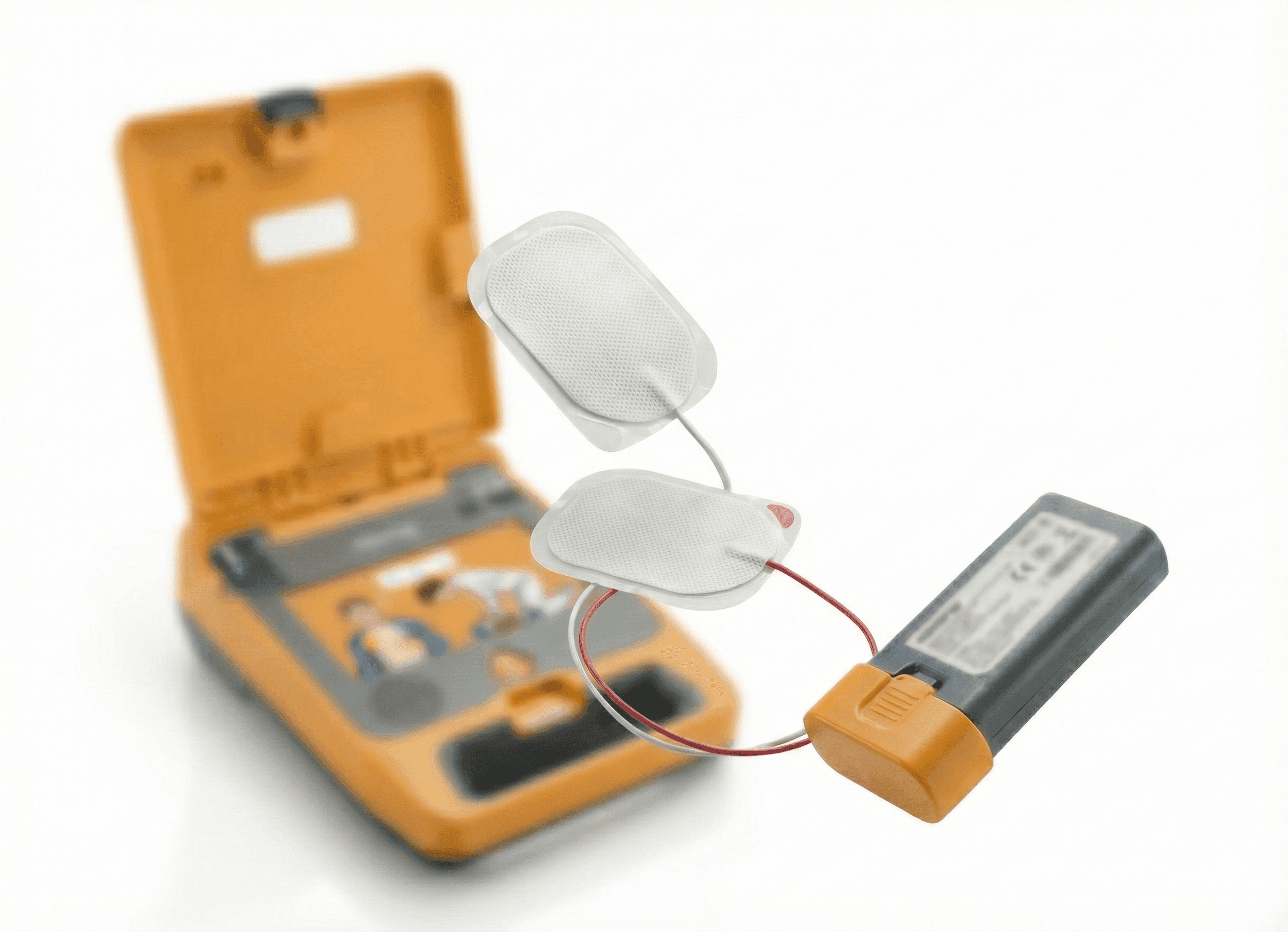
| Second rescuer | Fetches the defibrillator and prepares the electrode pads |
| Observer | Times the drill and notes points to raise during the debrief |
How a simulated cardiac arrest drill unfolds
The drill begins without telling participants the exact time, as far as the site's organisation allows, to come closer to a spontaneous reaction rather than a rehearsed one. The simulated victim collapses, the first bystander reacts based on what they retained from training, and the rest of the group organises around them without further instruction from the facilitator.
The facilitator lets the scene play out without stepping in, except in case of a genuinely risky action, such as mistaking the mock equipment for a real, connected unit. Once chest compressions are under way and the simulated defibrillator is in place, the drill stops: there is no need to act out the arrival of emergency services in full for the learning to be complete.
The debrief, the key moment for learning
The drill itself matters less than the discussion that follows. The debrief goes back over the sequence minute by minute: the time elapsed before the alarm, where the defibrillator was found, how clear the instructions were for the person who called emergency services. Everyone can share what they felt, including that initial freeze, without judgment on their reactions.
This step turns the drill into concrete improvements for the site: moving the defibrillator if access proved too slow, reviewing signage if no one knew where to look, or simply reassuring a participant about an action they thought they had performed incorrectly when it actually matched what is taught in training. The drill's summary can also feed into the site's safety register.
How often to repeat the drill over time
A single drill leaves a strong impression at the time, but its effect fades if nothing renews it. Aligning it with the pace of first aid training refreshers, or with staff turnover in the teams concerned, helps maintain a consistent level of reaction without multiplying the occasions that interrupt the site's activity.
Varying the location and scenario from one session to the next, rather than repeating the same situation every time, helps test access to the defibrillator from several points in the building. In a site with several posts or several buildings, this rotation ensures that the reaction observed on a given day does not depend solely on the team most used to the exercise.
Frequently asked questions
Should the real defibrillator be used during the drill?
No, it is better to use a training unit, with no electrodes or active battery, to avoid any confusion with equipment meant for a real emergency. If no training unit is available, the real one can be used, provided all participants are clearly told beforehand that it is being used for a dry run.
Who can lead a cardiac arrest simulation drill?
Anyone recently trained in first aid can lead the drill, whether a designated first aider or simply a volunteer from the team. What matters is that they know the expected sequence, can assign roles before the scene starts, and are able to stop the drill if a real action puts a participant at risk.
How many people are needed to run the drill?
Four people are enough for a full drill: a simulated victim, a first bystander, a second rescuer who fetches the defibrillator, and an observer in charge of the debrief. Other colleagues can join the scene as it unfolds, much as would likely happen in a real situation in a busy area.
What if a participant reacts poorly during the drill?
Hesitation or a mistake during the drill is entirely normal, and it is exactly what the simulation is meant to reveal before a real situation arises. The debrief addresses it without blame, explaining the expected action and, if needed, offering a targeted refresher on that specific point with the person concerned.
Does the drill replace first aid training?
No, the drill complements the training, it does not replace it. The precise techniques for chest compressions, placing electrode pads, or using a defibrillator are still learned in supervised training. The simulation then checks that these actions flow correctly together under pressure, with the stress and group coordination that theory alone cannot reproduce.
Planning an AED project?
Purchase, rental from 50 EUR excl. VAT per month, installation with GéoDAE registration, servicing and training: our team replies within 24 hours.