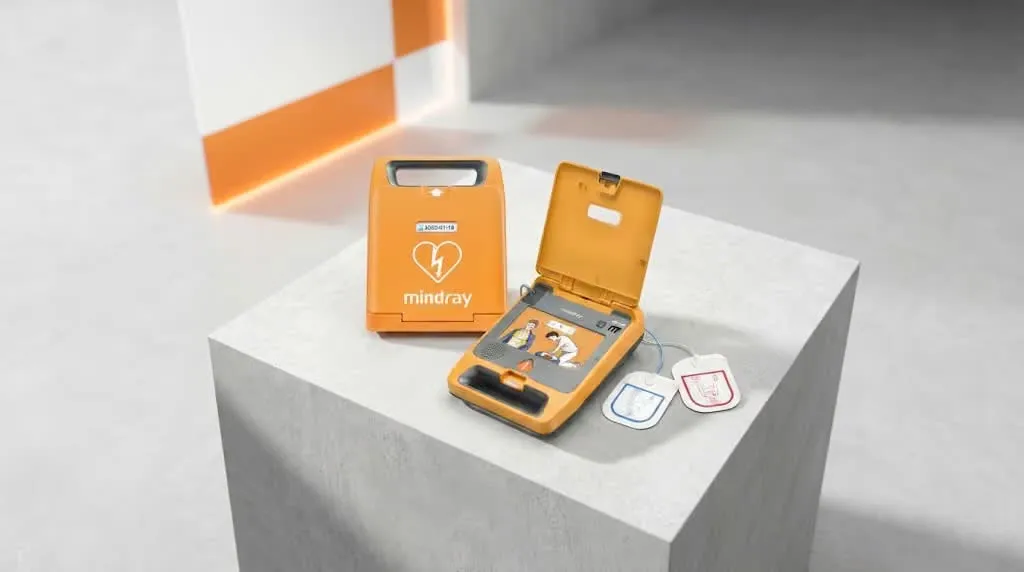
Defibrillator at Home: Is It Worth It, and How to Choose
Written by Cyrille GAGNAIRE, France Défibrillateur. Published on 24 August 2026.
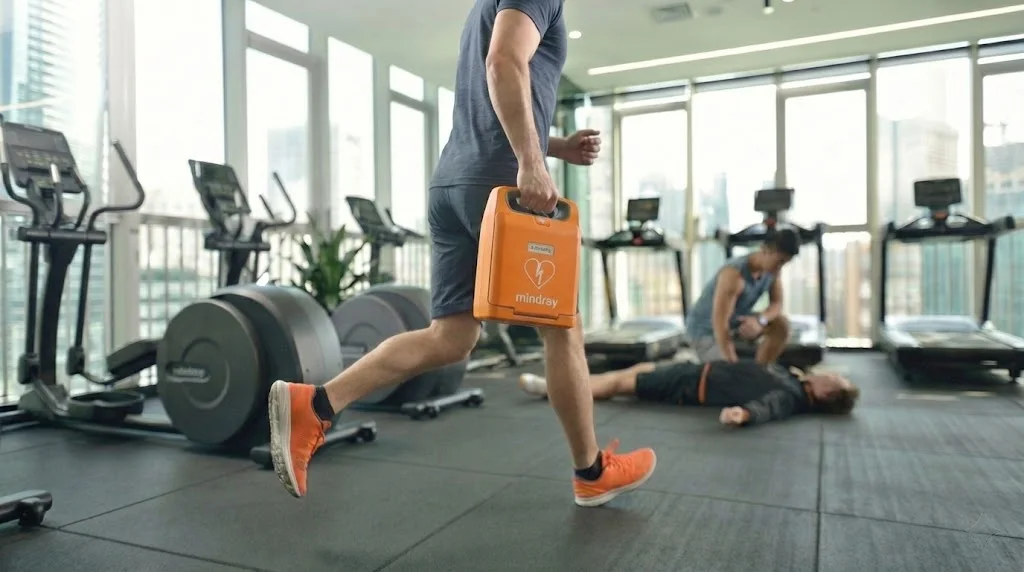
In France, around 50,000 sudden cardiac arrests occur every year, and every minute without defibrillation cuts the chances of survival by roughly 10%. While the law requires a defibrillator in many buildings open to the public, nothing obliges a private individual to have one at home. For a family with a vulnerable relative or an isolated house, the question is still worth asking. This guide looks at how useful a home defibrillator really is, how to choose one and what to keep in mind.
The home, a blind spot in the chain of survival
Prevention campaigns and regulations focus on public places: town halls, shops, gyms, schools. Many of these premises now have a visible, clearly signposted automated external defibrillator, or DAE (AED). The home, by contrast, falls outside these obligations, even though a cardiac arrest can happen at any moment, including in a living room or a kitchen, far from any publicly accessible device.
The principle stays the same everywhere: start chest compressions without waiting for help to arrive, and defibrillate as early as possible. At home, the people nearby become the first responders, often without formal training and without equipment on hand unless someone made that choice beforehand.
No legal obligation, but a decision worth weighing
Loi 2018-527 (the 2018 French act) and décret 2018-1186 (its implementing decree) require a defibrillator in buildings open to the public according to their category, along with mandatory registration on the GéoDAE database so that emergency services and local residents can find the device. A private home falls outside this framework: no law obliges an individual to have one, and buying a unit is entirely a personal choice, with no prescription or medical authorisation needed.
That freedom shifts the decision to common sense. A family history of heart disease, an elderly person living alone, a home some distance from emergency services, or intensive sport practised at home all weigh more heavily in the decision than any legal text.
Which type of device suits a family
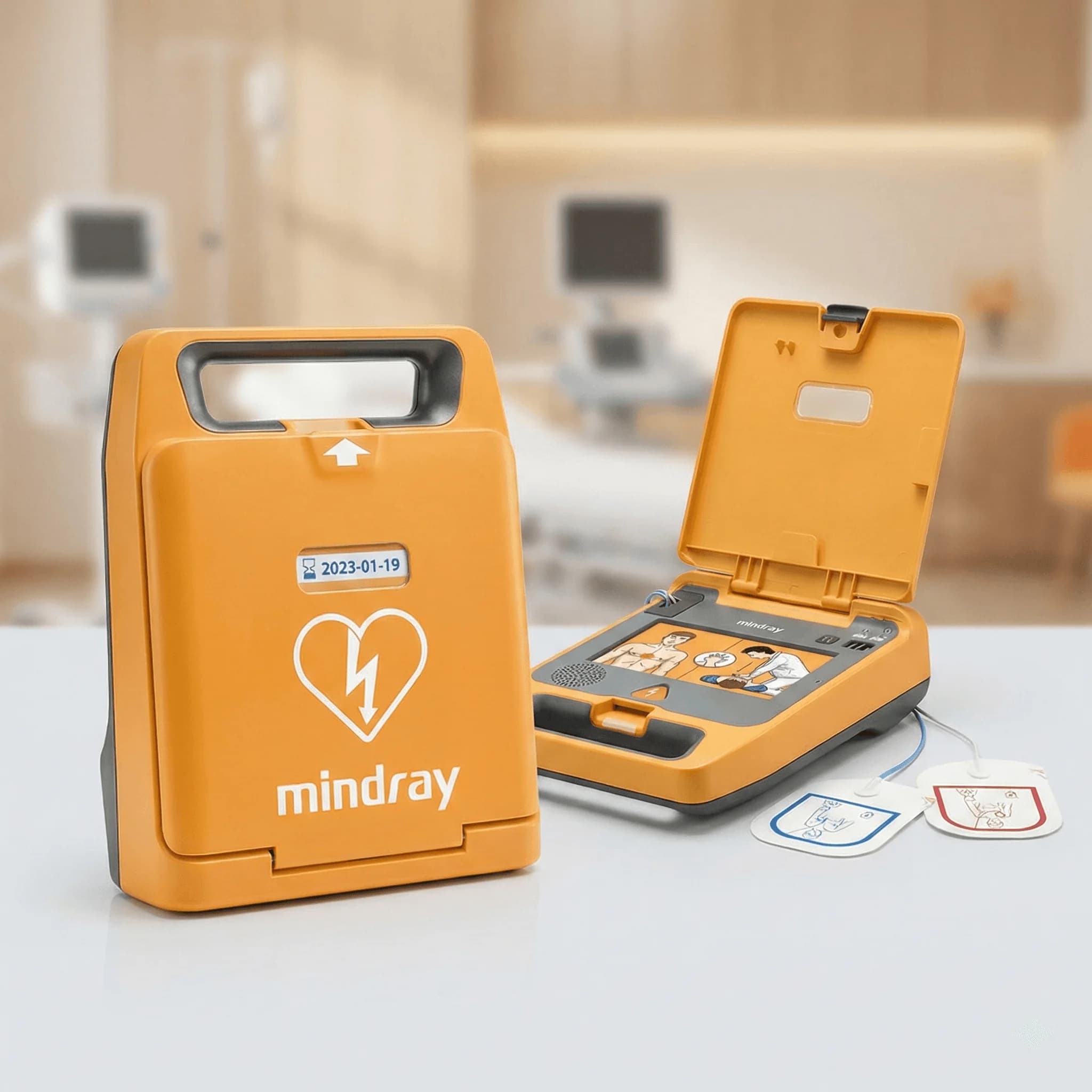
The DAE comes in two families. The DEA, fully automatic, delivers the shock by itself once it has analysed the heart rhythm. The DSA asks the user to press a button once the shock is announced. For a family setting, where the person present is not necessarily trained in first aid, the DEA reduces hesitation at the critical moment.
The device should also match the household. A home with young children benefits from a unit offering a paediatric mode or paediatric pads, which adjust the shock intensity for a smaller body.
Budget, upkeep and lifespan to plan for
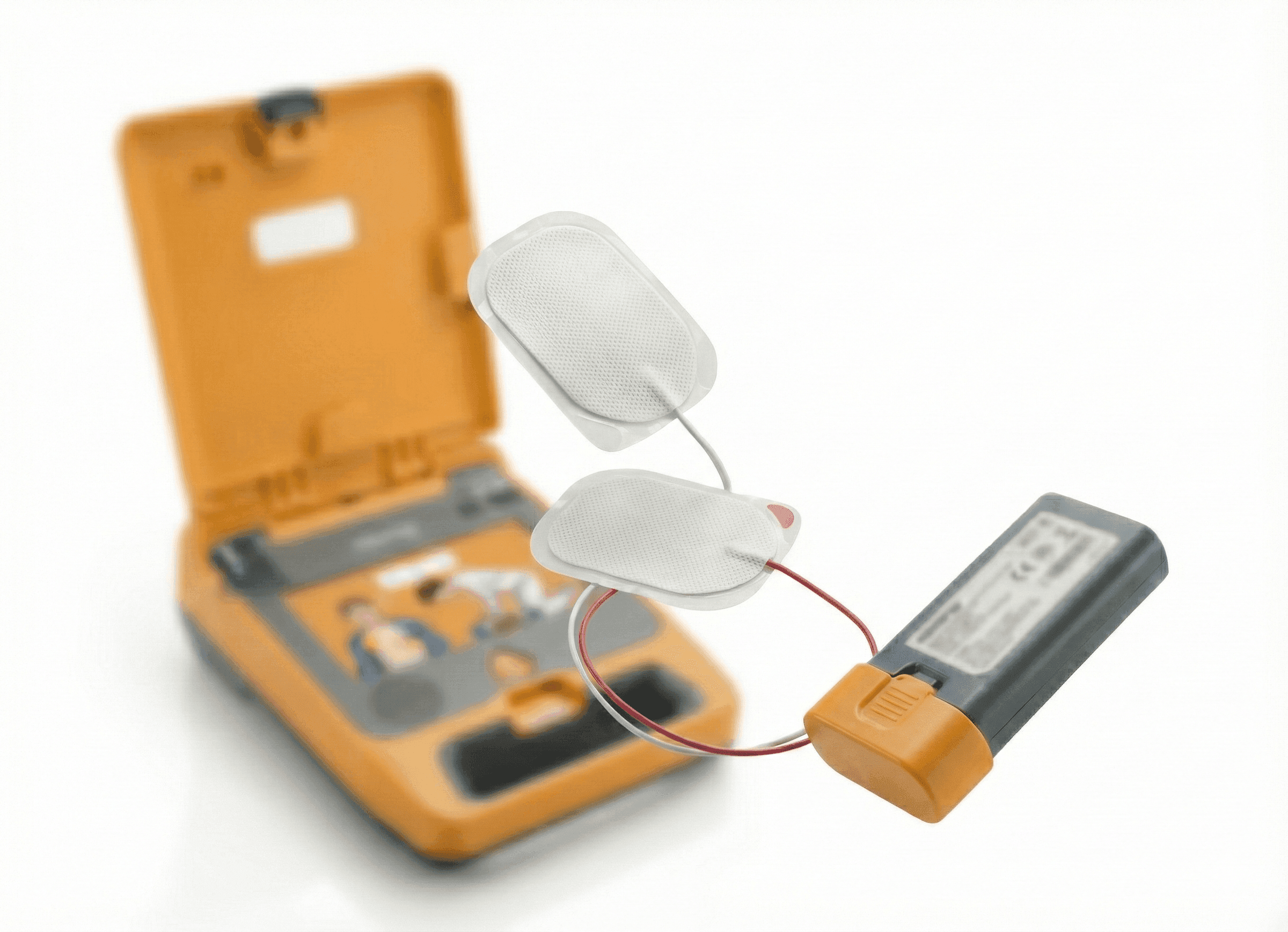
Unlike a building open to the public, an individual has no regulatory maintenance obligation, but the device still needs to work on the day it is needed. Pads are replaced every 2 to 5 years, the battery every 3 to 5 years, and the unit itself typically lasts 8 to 10 years or more with regular upkeep.
On the budget side, rental starts from 50 euros excl. VAT per month, maintenance included, a formula that spares you the task of tracking consumables yourself. Whether bought or rented, the warranty runs for 5 years, delivery takes 2 to 5 working days, and a quote can be provided within 24 hours.
| Consumable | Typical lifespan |
|---|---|
| Pads | 2 to 5 years |
| Battery | 3 to 5 years |
| Full unit | 8 to 10 years or more |
Where and how to install the device at home
A defibrillator locked away in a cupboard loses much of its point on the day it is actually needed. It is better placed somewhere central and known to everyone in the household, such as an entrance hall, a corridor or a landing, rather than tucked away in an upstairs room.
Temperature and humidity matter too: an unheated bathroom or garage exposes the battery and pads to swings that shorten their lifespan. A stable storage spot, combined with a regular reminder of where the device is kept for everyone who lives in or looks after the home, completes the setup.
Training remains the best guarantee it will work
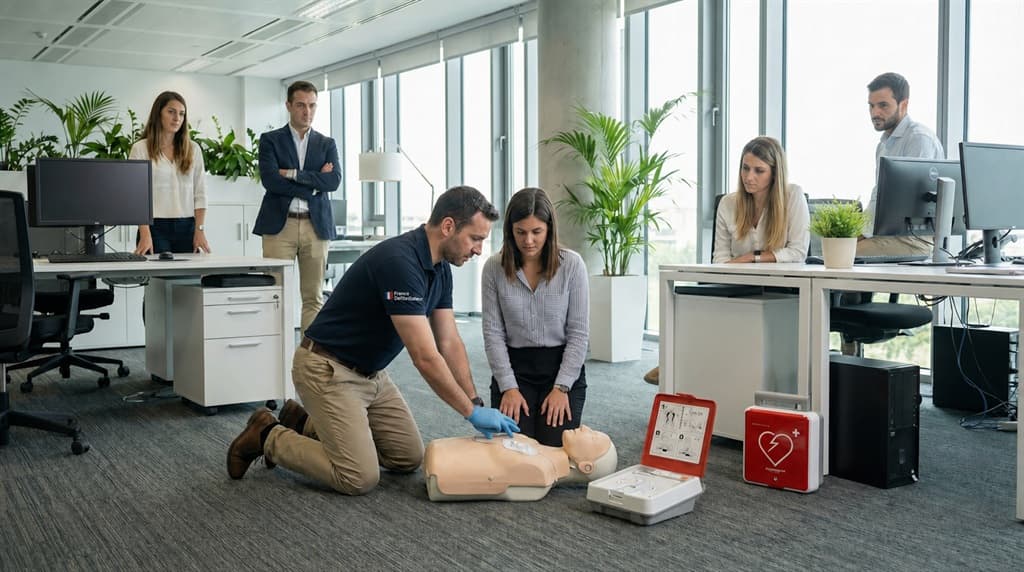
A defibrillator never replaces chest compressions or calling emergency services. It talks the user through every step, but even brief first aid training changes how a relative reacts under the stress of a cardiac arrest.
Many associations and training bodies run public awareness sessions, sometimes lasting just a few hours. For a family investing in a personal device, having every adult in the household take that training rounds out the equipment logically.
Frequently asked questions
Is a defibrillator compulsory at home?
No. The obligations under loi 2018-527 (the 2018 French act) and décret 2018-1186 (its implementing decree) apply to buildings open to the public according to their category, not to private homes. An individual remains entirely free to buy one or not, depending on their family situation, health and distance from emergency services.
Do you need training to use a defibrillator at home?
No training is legally required: the device talks the user through every step out loud. First aid training is nonetheless recommended, since it prepares people to perform chest compressions and reduces hesitation when it is time to deliver the shock.
Can you rent a defibrillator for personal use?
Yes, rental is not reserved for businesses. It starts from 50 euros excl. VAT per month, maintenance included, which spares you the task of tracking pad and battery replacements yourself. The warranty runs for 5 years and delivery usually takes 2 to 5 working days after the quote.
Is the defibrillator suitable for children living in the home?
Most DAE units suit children thanks to a paediatric mode or paediatric pads, which lower the intensity of the shock delivered. This is worth checking before buying if young children live in the home, and asking the seller if the spec sheet does not make it clear.
Does a personal defibrillator need to be registered on GéoDAE?
GéoDAE lists devices accessible to the public so that emergency services can be directed to them. A strictly private defibrillator kept inside a home has no reason to appear there, unless the household wants to make it identifiable in case neighbours might need to use it.
Planning an AED project?
Purchase, rental from 50 EUR excl. VAT per month, installation with GéoDAE registration, servicing and training: our team replies within 24 hours.