CPR chest compressions: the technique that saves a life
Written by Cyrille GAGNAIRE, France Défibrillateur. Published on 25 August 2026.
Chest compressions are the gesture that keeps a minimal flow of blood reaching the brain when the heart stops beating. About 50,000 cardiac arrests occur every year in France, most of them outside hospital, and every minute without resuscitation lowers the chances of survival by around 10 percent. Done properly, this simple gesture, taught in a few hours, can change the outcome before rescue teams or a defibrillator even arrive. Here is how to perform it correctly, alone or while waiting for the device.
Why this gesture matters before help arrives
When a heart stops, blood stops circulating and the brain begins to run short of oxygen within minutes. Chest compressions do not replace the heart, but they keep enough blood flowing to delay brain damage. That gained time, minute after minute, is what allows rescue teams or an automated external defibrillator (AED) to step in with better chances of success. A bystander who compresses the chest while waiting for help does not replace a medical team, but plays a role no one else can fill at that exact moment.
Recognising cardiac arrest before you start
Before starting compressions, make sure the situation calls for them. A person in cardiac arrest does not respond when spoken to or touched, and is not breathing normally, or not breathing at all. Irregular, noisy gasps in the first seconds should not delay action, this misleading sign often accompanies the onset of arrest. The reflex to follow is simple. Call emergency services straight away, have someone fetch a defibrillator if one is available on site, then begin compressions without waiting for a medical confirmation that will not come in time.
Where to place your hands and how to push
The victim must be lying on their back, on a firm surface. The rescuer places the heel of one hand at the centre of the chest, on the lower half of the sternum, and lays the other hand on top, interlacing the fingers. Arms stay straight, shoulders directly above the hands, using body weight rather than arm strength alone.
Pushing must be firm and steady, with a full release between compressions to let the chest wall return to its shape. Compressions that are too gentle, out of fear of hurting the victim, lose much of their effectiveness. Broken ribs remain possible but they heal, unlike the brain damage caused by insufficient compressions. The rhythm should stay steady and sustained, without unnecessary pauses, from the start until rescue teams take over or the rescuer becomes exhausted.
Mistakes that reduce the effectiveness of compressions
Some habits limit the effect of chest compressions without the rescuer noticing. Stopping too often to check breathing or pulse lets blood pressure drop each time. Pushing too softly, misplacing the hands, or letting the chest sag towards the end of an effort also reduces the amount of blood pushed with each compression. Fatigue sets in fast, often before the rescuer even feels it, which is why it helps to switch with another person roughly every two minutes when possible, without interrupting the gesture beyond the time it takes to swap.
Keeping compressions going once a defibrillator is available
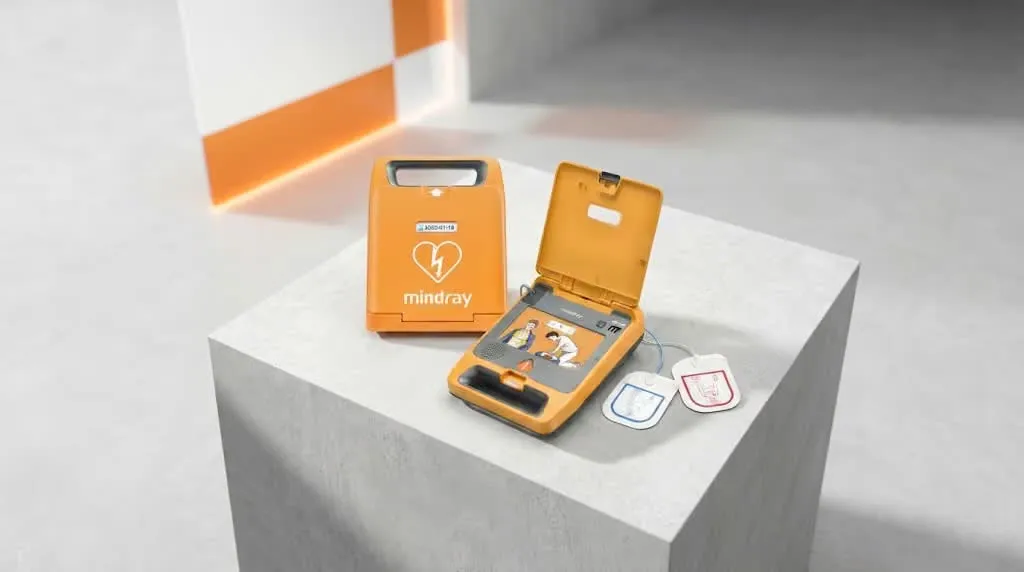
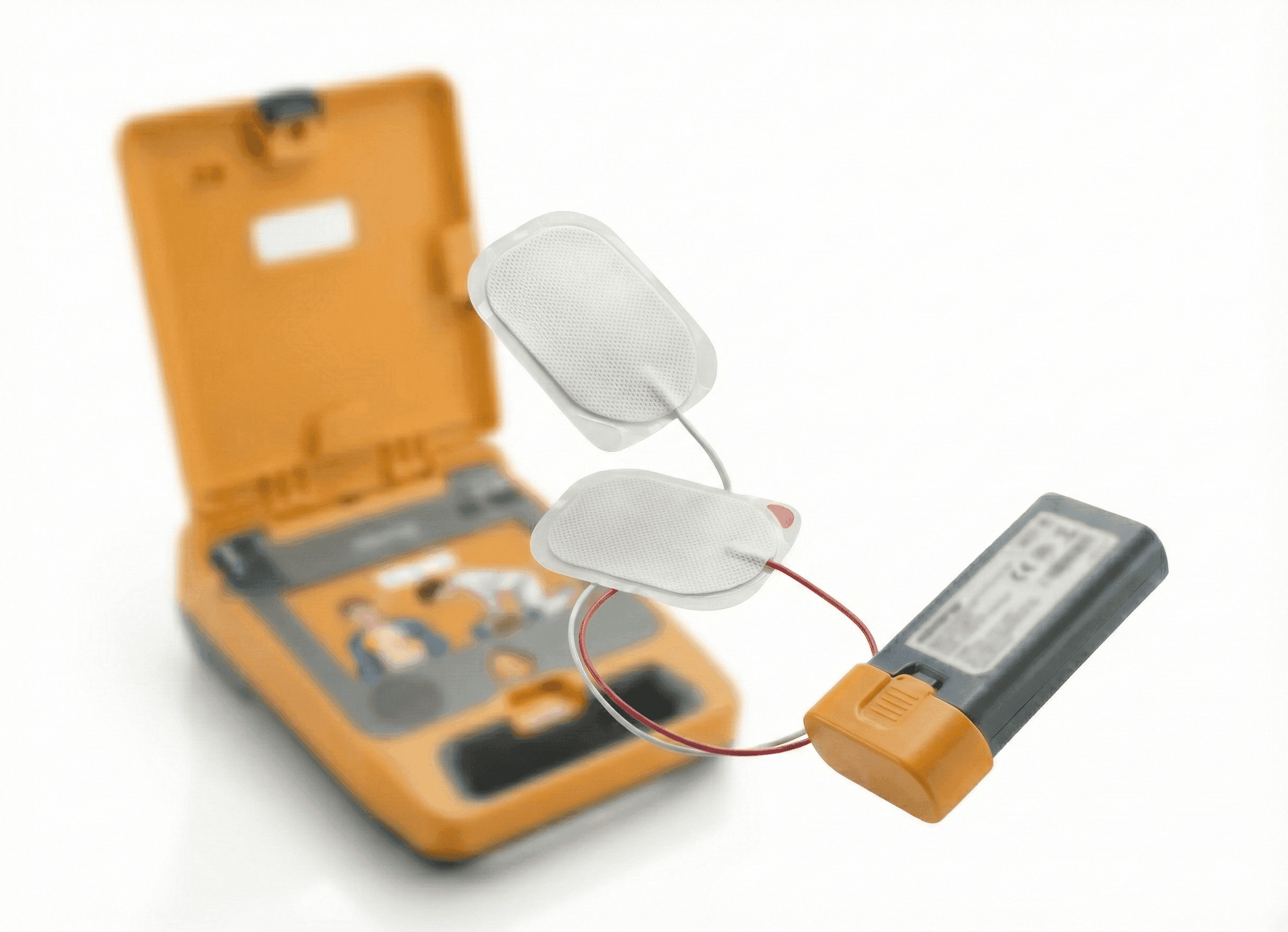
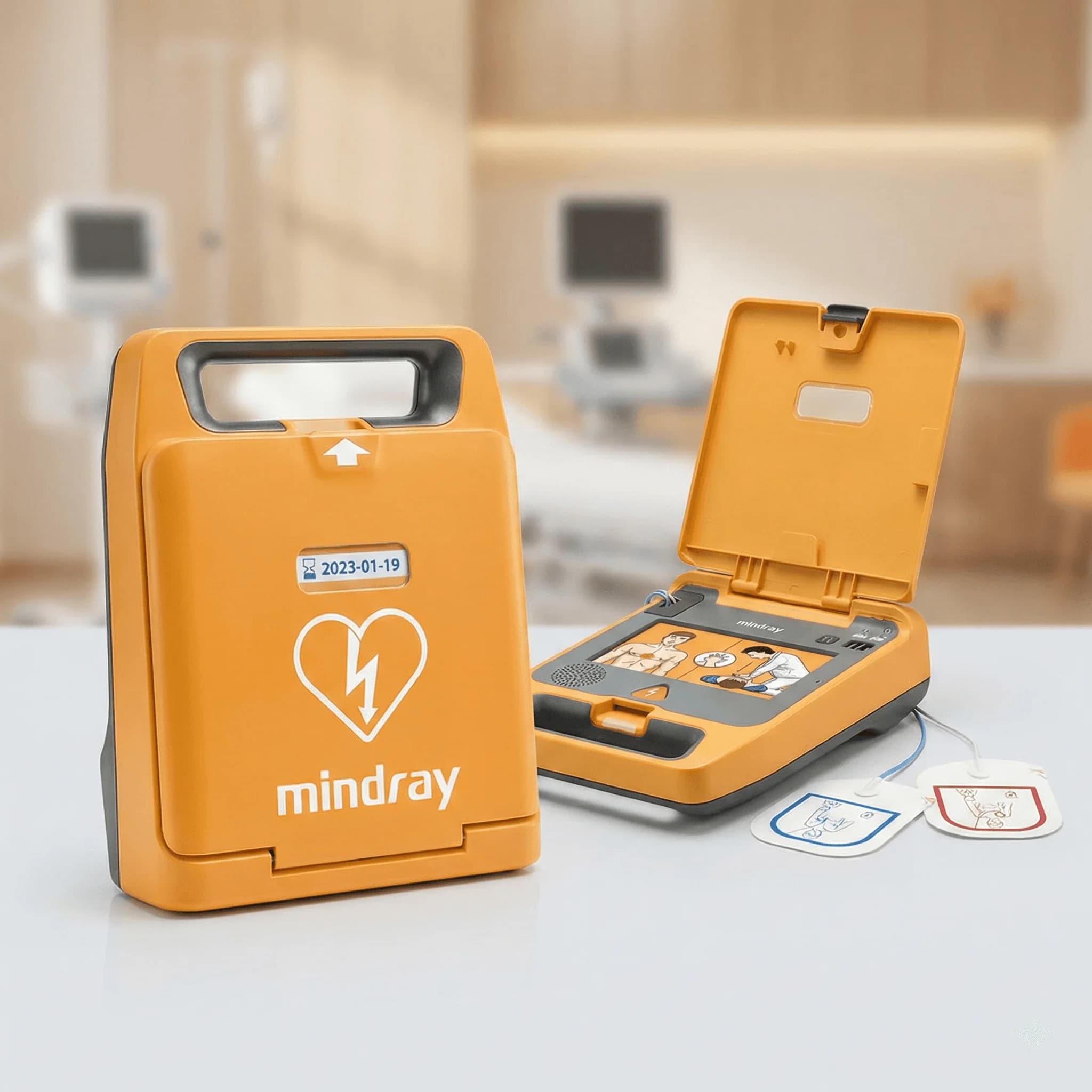
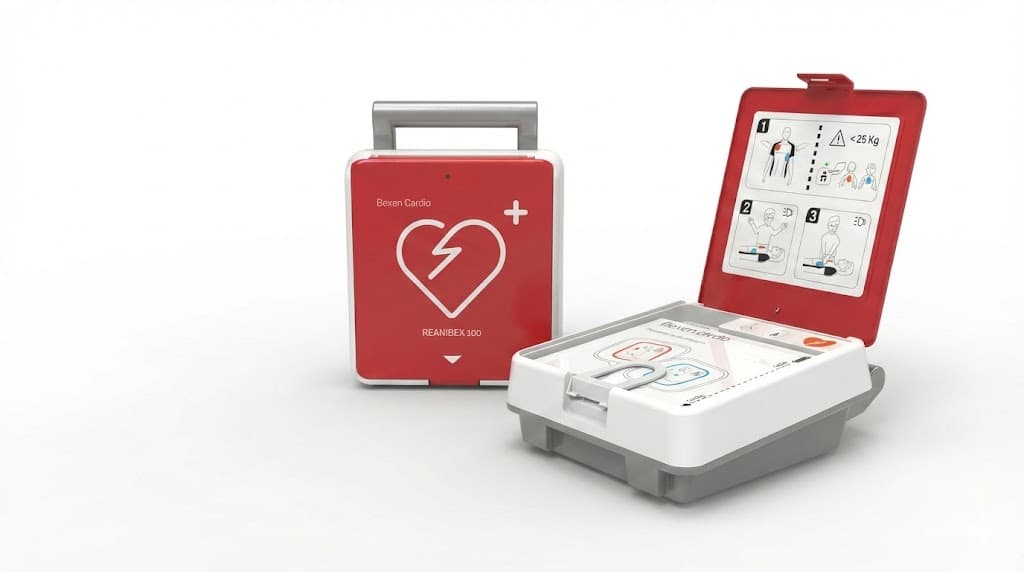
Chest compressions and the automated external defibrillator (AED) work together, they do not replace one another. As soon as the device arrives, switch it on and follow the voice prompts while continuing compressions, which only stop for the time needed to attach the pads and let the device analyse the heart rhythm. If a shock is advised, the device says so clearly and no one should touch the victim during analysis or while the shock is delivered. Compressions resume immediately afterwards, following the device's instructions, until professional rescuers take over.
Adapting the gesture for children and pregnant women
The technique adjusts to the victim. For a child, one hand is often enough to compress the chest to the right depth, depending on their build. For an infant, two fingers placed at the centre of the chest replace the palm of the hand. For a pregnant woman, compressions are performed the same way, tilting the victim slightly onto her left side if several rescuers are present, to reduce pressure on the abdominal vessels. In every case, the principle stays the same, push hard and fast, without waiting for ideal conditions that will not come.
Frequently asked questions
How long should compressions continue before help arrives?
Compressions continue without prolonged interruption until professional rescuers take over, or until an automated external defibrillator advises and delivers a shock. If several people are present, switching helps keep an effective rhythm over time. A lone, exhausted rescuer should keep going as best they can rather than stop completely, because every compression counts.
Can pushing too hard injure the victim?
Broken ribs or a fractured sternum are possible, especially in older people, but they heal and are not life threatening. Compressions that are too weak, on the other hand, deprive the brain of oxygen for longer and clearly reduce the chances of survival. Faced with a confirmed cardiac arrest, firmness of the gesture always comes before fear of causing harm.
Do you need training to perform chest compressions?
No qualification is required to act in the face of cardiac arrest, and the basic gesture remains accessible without prior training. A few hours of awareness training still improve how quickly cardiac arrest is recognised, how well the hands are positioned, and how confidently a defibrillator is used. Many organisations offer this training to their teams to strengthen the chain of survival on site.
Should compressions stop once the defibrillator arrives?
No, compressions continue while the device is set up and switched on. They only pause for the time needed to attach the pads and let the defibrillator analyse the heart rhythm, a phase during which no one should touch the victim. As soon as the analysis ends, compressions resume following the device's voice prompts, whether or not a shock is delivered.
Can compressions alone be enough without a defibrillator?
Chest compressions maintain minimal circulation but do not, on their own, restore a normal heart rhythm in most cardiac arrests of cardiac origin. The defibrillator remains the only gesture able to correct certain chaotic heart rhythms. The two actions complement each other, compressions buy time, the device treats the cause when the rhythm allows it.
Planning an AED project?
Purchase, rental from 50 EUR excl. VAT per month, installation with GéoDAE registration, servicing and training: our team replies within 24 hours.