Heart Attack or Cardiac Arrest: Key Differences
Written by Cyrille GAGNAIRE, France Défibrillateur. Published on 29 August 2026.
Heart attack and cardiac arrest are often used as if they meant the same emergency. They are in fact two distinct events, with different signs and different responses. A heart attack affects the blood supply to the heart while it keeps beating, whereas a cardiac arrest stops its electrical activity altogether. France records around 50,000 cardiac arrests every year, which makes it essential to recognise each situation and act quickly.
Two cardiac emergencies, two different mechanisms
A heart attack, or myocardial infarction, happens when a coronary artery becomes blocked, usually by a clot forming on a fatty plaque. The heart muscle keeps contracting, but part of its cells lose oxygen and start to suffer. The person stays conscious, keeps breathing and still has a pulse, even if the pain can be severe.
Cardiac arrest, or more precisely cardiopulmonary arrest, is a sudden stop of the heart's electrical activity, most often a ventricular fibrillation. The heart stops pumping blood, the person loses consciousness within seconds and stops breathing normally. Without immediate intervention, brain damage sets in within minutes.
The warning signs to watch for
The signs of a heart attack often build up gradually: a tight, oppressive pain in the centre of the chest, which can spread to the left arm, the jaw or the back, along with sweating, nausea or shortness of breath. The person stays awake and can describe what they feel. Cardiac arrest, by contrast, shows up as a sudden loss of consciousness: the person collapses, stops responding and stops breathing normally, or breathes in an irregular, gasping way with long pauses between breaths.
When in doubt, it is safer to act as if it were a cardiac arrest: check for a response by speaking loudly and tapping the shoulders, watch the chest for a few seconds to check breathing, and call emergency services straight away if the person does not respond or breathes abnormally.
| Sign | Heart attack | Cardiac arrest |
|---|---|---|
| Consciousness | Preserved | Lost within seconds |
| Breathing | Present, sometimes short | Absent or abnormal |
| Pulse | Present | Absent |
| Pain | Often tight and located in the chest | Absent, the person no longer reacts |
| Progression | Gradual over several minutes | Sudden and immediate |
Why the two situations get confused
The confusion largely comes from the fact that a heart attack can turn into a cardiac arrest. The lack of oxygen in the heart muscle destabilises its electrical activity and can trigger ventricular fibrillation at any moment, including within minutes of the first symptoms. A poorly managed heart attack is in fact one of the main causes of cardiac arrest in adults.
This shift explains why vigilance still matters even when the person seems stable after the first signs. A bystander should never leave someone who has just described chest pain while waiting for help, since their condition can worsen very quickly.
The right response for each situation
Facing signs of a heart attack, the priority is to call emergency services without waiting for the pain to ease, to have the person rest in a semi-sitting position and to avoid giving them anything to eat or drink. The medical dispatcher takes over from there and can send a team able to unblock the artery quickly.
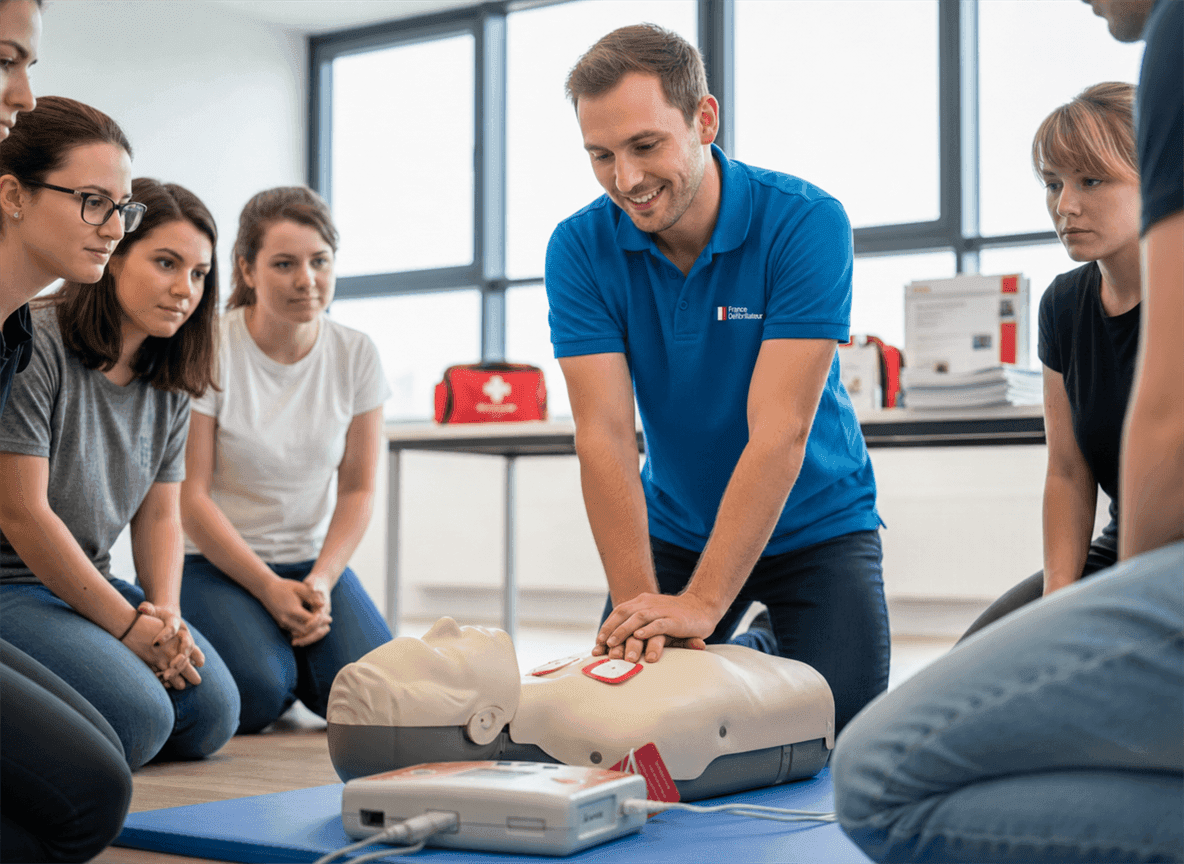
Facing a cardiac arrest, the timeline changes: call emergency services, start chest compressions immediately by pressing hard and fast in the centre of the chest, and ask another bystander to fetch a nearby defibrillator. Every minute without defibrillation lowers the chances of survival by around 10 percent, which makes alternating between compressions and placing the pads decisive.
The defibrillator: useful in one case, useless in the other
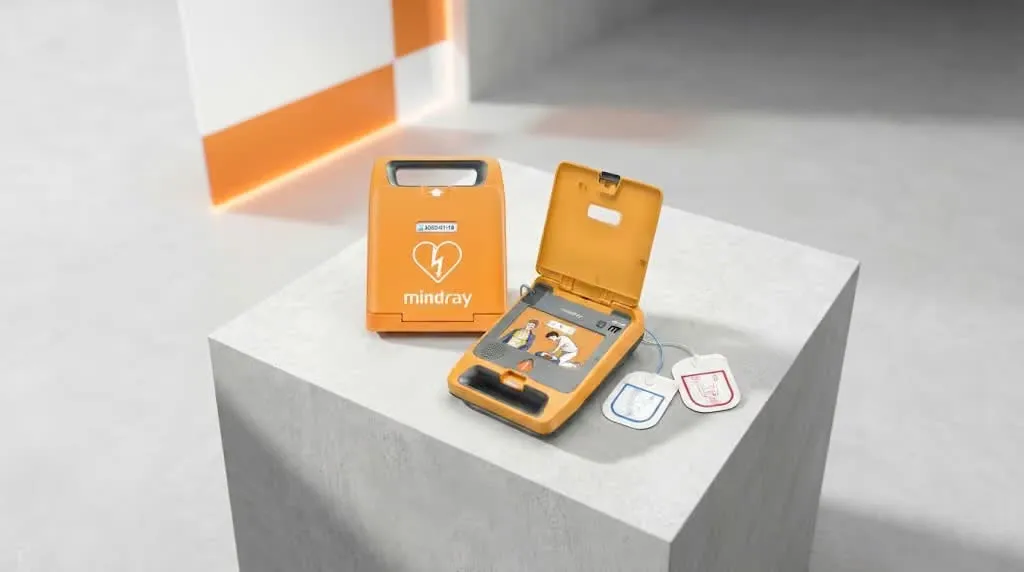
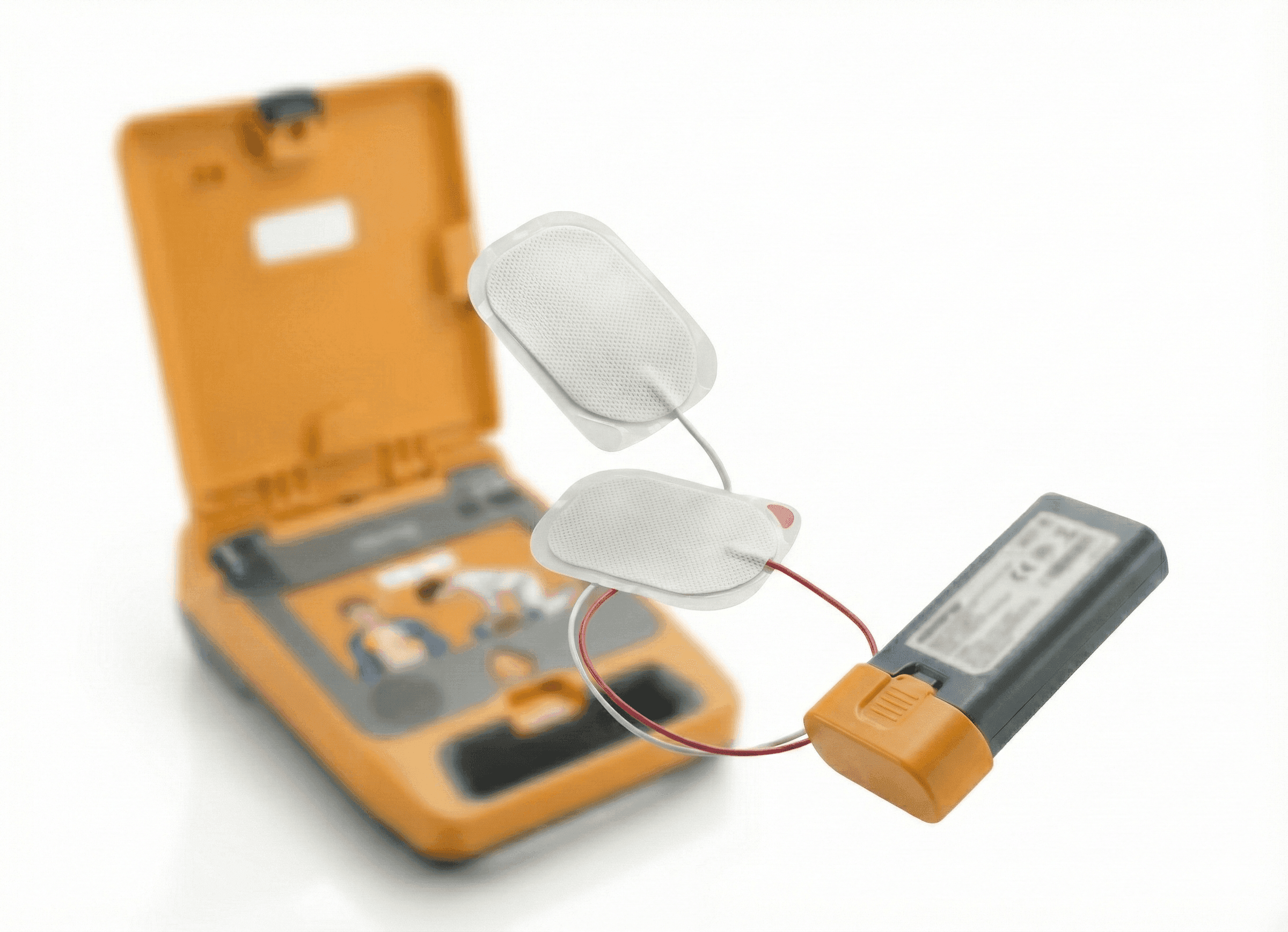
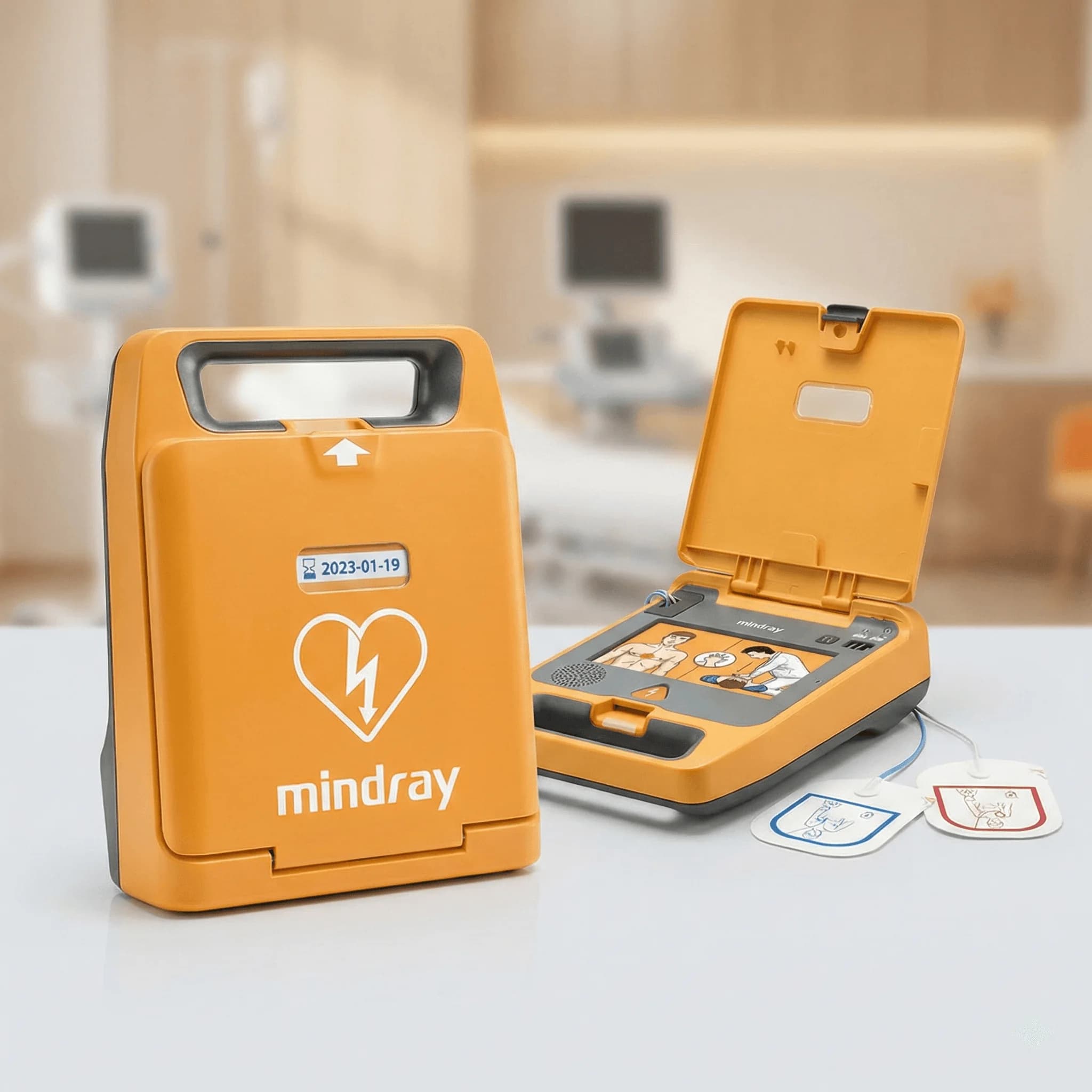
An automated external defibrillator (AED) reads the heart's rhythm and only delivers a shock if it detects ventricular fibrillation or pulseless ventricular tachycardia, the rhythms typical of cardiac arrest. Placed on someone having a heart attack while still conscious and with a pulse, the device has no reason to shock: it never replaces calling emergency services for an ongoing heart attack.
On the other hand, as soon as someone collapses, loses consciousness and stops breathing normally, the defibrillator should be brought without delay, even if the exact cause is unknown. The device gives voice guidance at every step and checks its own readings before shocking, which lets an untrained bystander use it without risking further harm.
Preparing collectively for both emergencies
In places that welcome the public, the best response combines training and accessible equipment: staff or volunteers able to recognise the signs, an emergency number clearly displayed and a defibrillator that is signposted and reachable at all times. This preparation does not replace professional emergency services, but it shortens the delay before the first actions, the delay that weighs most heavily on the outcome.
Regularly training staff in life saving actions, checking that the defibrillator stays operational and reminding everyone of the emergency numbers in shared spaces are simple measures that save precious time, whether the situation is a worsening heart attack or a sudden cardiac arrest.
Frequently asked questions
Can a heart attack be mistaken for a panic attack?
Yes, a panic attack can cause chest tightness, palpitations and shortness of breath that resemble the first signs of a heart attack. The difference often lies in duration and intensity: chest pain that lasts more than a few minutes, spreads to the arm or jaw, or comes with cold sweats should always lead to calling emergency services, just to be safe.
Can a heart attack happen without chest pain?
Yes, some people, especially women, people with diabetes or older adults, mainly feel unusual fatigue, shortness of breath, nausea or pain localised in the back or jaw, without a clear tightness in the chest. These atypical forms sometimes delay the call for help, even though fast treatment remains just as decisive.
Should the defibrillator be used when the cause of the collapse is unclear?
Yes, as soon as the person is unconscious and not breathing normally, the defibrillator should be placed without waiting to know the exact cause. The device analyses the heart rhythm itself and only delivers a shock if it is warranted, which makes its use safe even in uncertain cases.
How much time is there to act during a heart attack?
The faster the treatment, the more limited the damage to the heart muscle, with intervention ideally happening within two hours of the first symptoms. This window should never be used as a reason to wait: every minute counts, and emergency services should be called as soon as the first signs appear.
Is chest compression useful for a heart attack without cardiac arrest?
No, as long as the person is breathing and still has a pulse, chest compressions are not appropriate and could even be harmful. They become necessary only if the person loses consciousness and stops breathing normally, a sign that the heart attack has turned into a cardiac arrest.
Planning an AED project?
Purchase, rental from 50 EUR excl. VAT per month, installation with GéoDAE registration, servicing and training: our team replies within 24 hours.