Defibrillators in factories and industrial sites: obligations and organisation
Written by Cyrille GAGNAIRE, France Défibrillateur. Published on 12 October 2026.
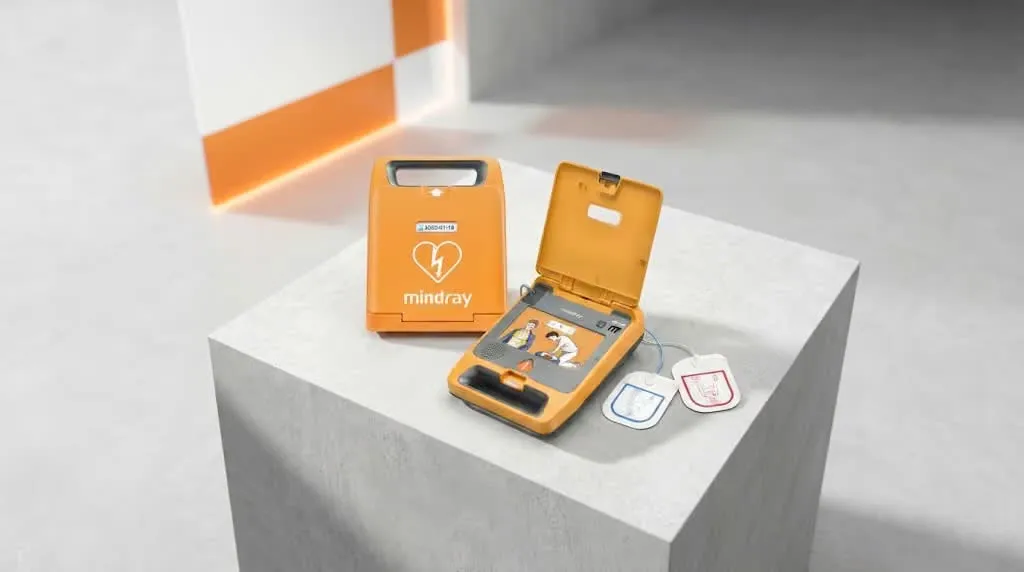
In a factory, a collapse can go unnoticed for several minutes: noisy machines, isolated workstations, night shifts, buildings far from one another. Yet every minute without defibrillation lowers the chances of survival by about 10%. Here is how to equip an industrial site, place the devices in the right spots, train employees and keep the equipment operational over time.
Why a factory is a special case
Around 50,000 cardiac arrests occur in France every year, and the workplace is no exception. On an industrial site, several factors delay care: noise drowns out a call for help, operators often work alone on a line, and night or weekend teams are small.
Site size matters too. Between a production workshop, a storage warehouse and an office building, the distance can exceed several minutes of travel, lifts and fire doors included. A single device at reception then covers only part of the staff.
What the regulations say
The equipment obligation set by loi 2018-527 and décret 2018-1186 (French law and decree) applies to ERP (établissements recevant du public, buildings open to the public) according to category: categories 1 to 3 since 1 January 2020, category 4 since 2021, and some category 5 ERP since 2022. A factory closed to the public is in principle not an ERP, but areas open to visitors, such as a factory shop or a reception area, may be.
Even without a strict obligation, the employer must organise first aid for employees. An automated external defibrillator (AED, DAE in French) fits naturally into this prevention approach and into the site's risk assessment. Once installed, the device must be registered in GéoDAE, signposted according to the arrêté du 29 novembre 2018 (French order on signage), and its maintenance falls to the operator under article R. 5212-25 of the Code de la santé publique (French Public Health Code).
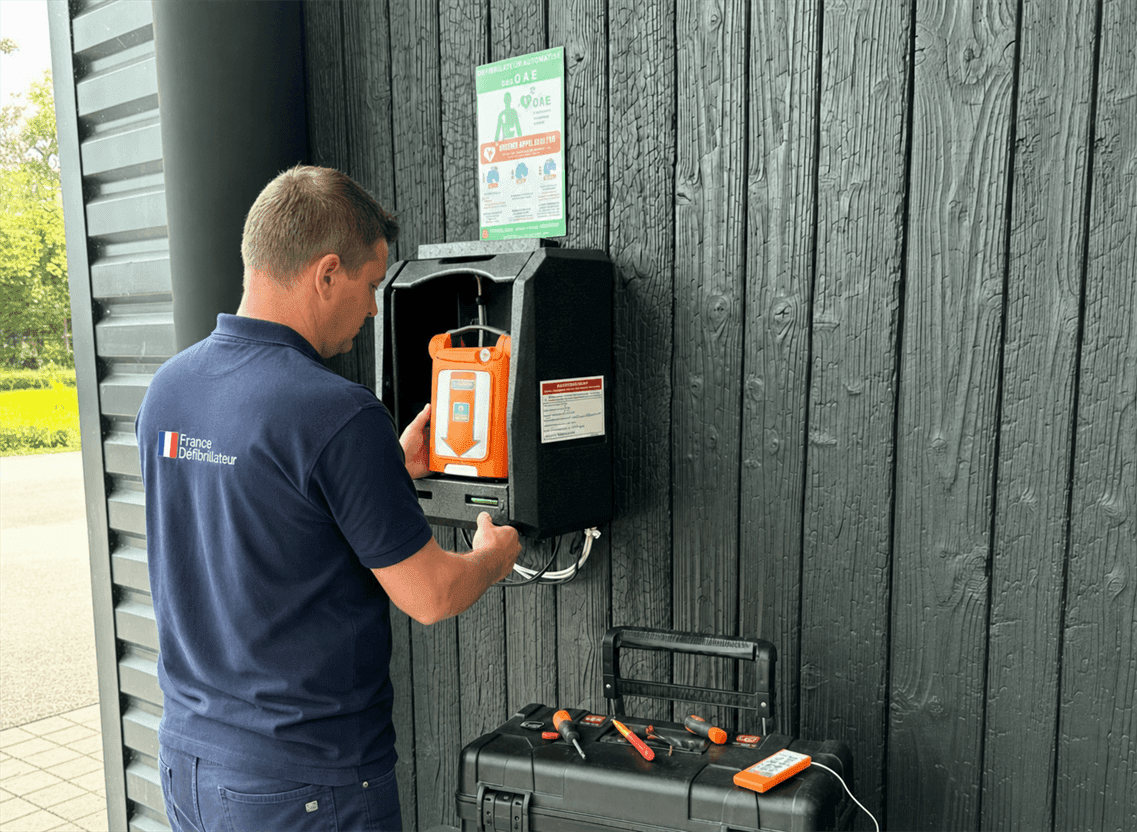
Placing the devices across the site
The right location is measured in real travel time, round trip included, from the most distant workstation. Time the route in normal conditions, with doors, vehicle traffic areas and stairs. These are the areas to study first.
| Area | Point to consider |
|---|---|
| Reception and office building | Visible, accessible device, useful for visitors and office staff |
| Production workshop | Central location, away from vehicle traffic, with signage visible from afar |
| Warehouse and loading docks | Handling area where staff are often isolated, to be covered by a dedicated device |
| Break or catering room | Busy gathering place at every shift |
| Security post or first-aid room | Permanently staffed point, useful for night teams |
Harsh environments and choice of equipment
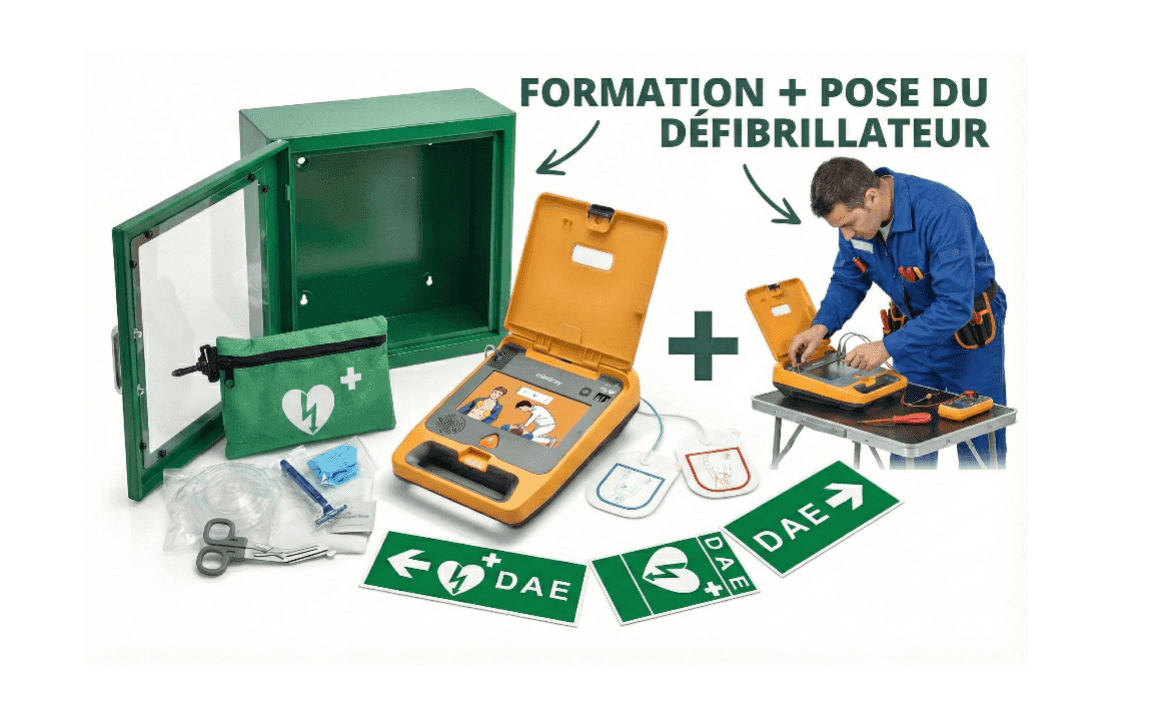
Dust, humidity, heat, vibrations: a workshop puts equipment to the test. Check the manufacturer's instructions for operating and storage temperature ranges and for dust and water protection. A suitable cabinet protects the device and makes it easier to find.
In a very noisy environment, choose a model whose voice prompts remain audible, and train users to follow the visual indications too. Paediatric pads are only useful if children visit the site, for example during tours.
Training teams and organising the alert
An AED guides the user step by step, and anyone can use it. It is still preferable to train workplace first aiders, security staff, team leaders and, if possible, one employee per workstation, with regular refreshers, so that every team has at least one person comfortable with chest compressions.
Plan a written procedure: who calls 15 or 112, who brings the device, who waits at the entrance to guide the emergency services to the right building. Large sites benefit from numbering their access points and giving a map to the emergency services. An annual simulation exercise, including at night, tests this organisation.
Maintenance, rental and purchase
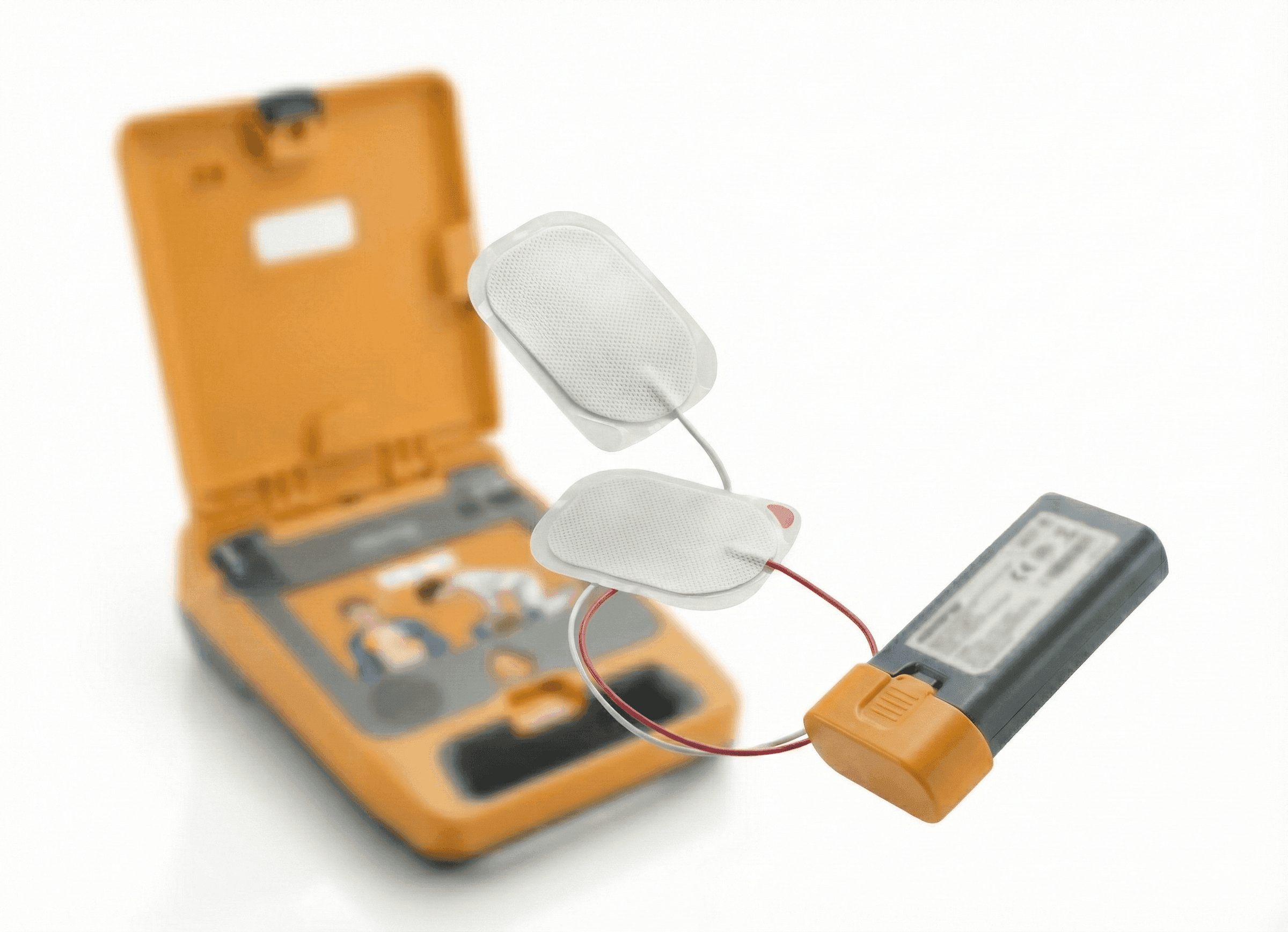
The operator must make sure every device is operational at all times. Pads are replaced every 2 to 5 years, batteries every 3 to 5 years, and the AED itself lasts 8 to 10 years and more. With several devices spread across the site, a check register avoids missing a deadline.
To delegate this follow-up, rental starts from €50 excl. VAT per month, maintenance included. When buying, the warranty is 5 years, delivery takes 2 to 5 working days and a quote is provided within 24 hours. France Défibrillateur can help you size the fleet according to your site plan.
After any use, check the device, replace the pads and record the intervention, so that the site is never left without an operational defibrillator.
Frequently asked questions
Is a factory required to have a defibrillator?
The legal obligation applies to ERP according to their category. A factory closed to the public is in principle not covered, but areas open to visitors may be. The employer must organise first aid in any case, and an AED is a consistent answer to that requirement.
How many defibrillators does a large industrial site need?
The law sets no number. The goal is that a device can reach any workstation within a few minutes, round trip included. Time the routes from the most distant areas, then add devices in workshops, warehouses and isolated buildings.
Must night teams also be covered?
Yes. A cardiac arrest can happen at any time, and staffing is lower at night. The device must remain accessible at all times, and at least one trained person per night team makes care easier before the emergency services arrive.
Who handles defibrillator maintenance in a company?
Maintenance is the operator's responsibility under article R. 5212-25 of the Code de la santé publique. It includes monitoring self-tests, replacing pads and batteries when due, and keeping a register. A rental contract can include this follow-up.
Planning an AED project?
Purchase, rental from 50 EUR excl. VAT per month, installation with GéoDAE registration, servicing and training: our team replies within 24 hours.