Defibrillators in climbing gyms and trampoline parks
Written by Cyrille GAGNAIRE, France Défibrillateur. Published on 23 October 2026.
Bouldering gyms and trampoline parks attract a young, athletic crowd, but also families, birthday parties and school groups. Effort is intense, jumps and falls are frequent, and staffing is sometimes limited to a few people. This article covers the equipment obligation, the right location for the device, maintenance and staff training.
Short, intense, repeated efforts
Climbing a boulder problem, chaining jumps or taking a group class puts the heart under sudden strain. An adult returning to activity after months away, a teenager pushing their limits or a parent following their children on the trampolines can all feel unwell with no warning sign.
In these venues, noise, music and foam or net partitions often hide a person lying on the floor. About 50,000 cardiac arrests occur each year in France, and every minute without defibrillation reduces the chance of survival by about 10%. The device must therefore be within immediate reach of participants.
The equipment obligation depends on how the venue is classified
The obligation rests on law 2018-527 and decree 2018-1186 (French legislation on AED equipment). It applies to établissements recevant du public, or ERP (public-access buildings), according to their category: categories 1 to 3 have been required to be equipped since 1 January 2020, category 4 since 2021, and some category 5 venues since 2022.
A climbing gym or trampoline park is most often treated as a covered sports facility, but its exact classification depends on capacity, audience and layout. The operator should check with the safety commission or the town hall.
Even where the obligation does not apply to your venue, the question of liability remains: an operator welcoming the public for physical activity has every interest in having a device. It is also a mark of trust for families and groups.
Choosing the location: visible, central, never locked away
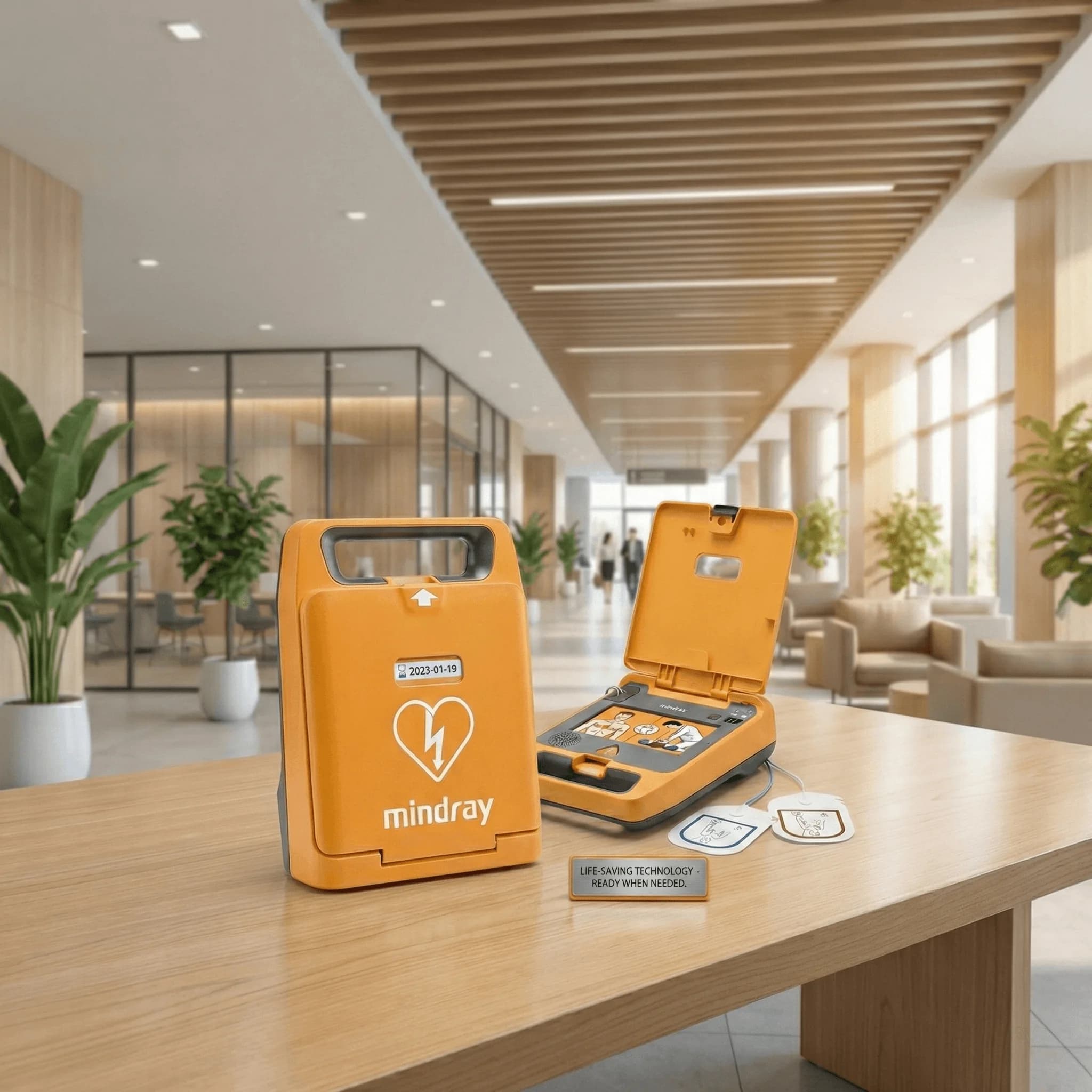
The defibrillator goes where people see it without searching: near reception, at the entrance of the activity area or at the counter where staff are based. It must never be stored in a closed office or behind a staff-only door.
Signage follows the arrêté du 29 novembre 2018 (French ministerial order on AED signage). In a large bouldering hall or a park split into zones, arrows from every area save precious seconds. The cabinet should also stay away from landing and bouncing zones so it is not hit.
| Area | Point of attention | Suitable response |
|---|---|---|
| Reception and till | Staff present at all times | Preferred location, visible from the entrance |
| Bouldering or climbing area | Soft flooring, noise, dense traffic | Wall cabinet outside the fall zone, visible signage |
| Trampoline zone | Rebounds, nets, children | Device near the zone exit, clear access |
| Party room and snack bar | Families, large groups | Clear route to the device |
Adults, children and injuries: do not mix them up
These venues see many minor or traumatic injuries: sprains, falls, knocks. Someone complaining about an ankle does not need the defibrillator. By contrast, an unresponsive person who is not breathing normally must be treated as a cardiac arrest victim, even after a fall.
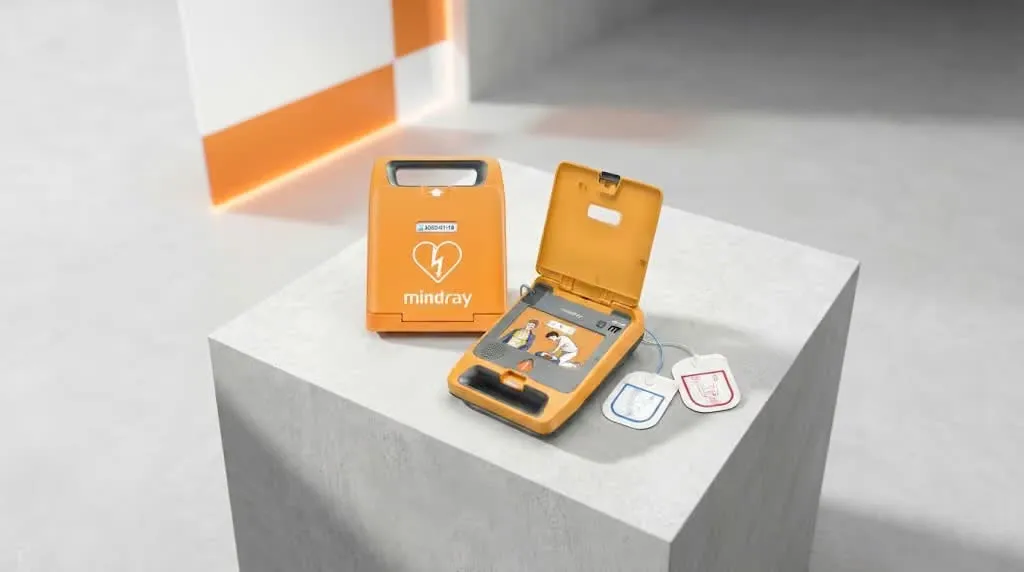
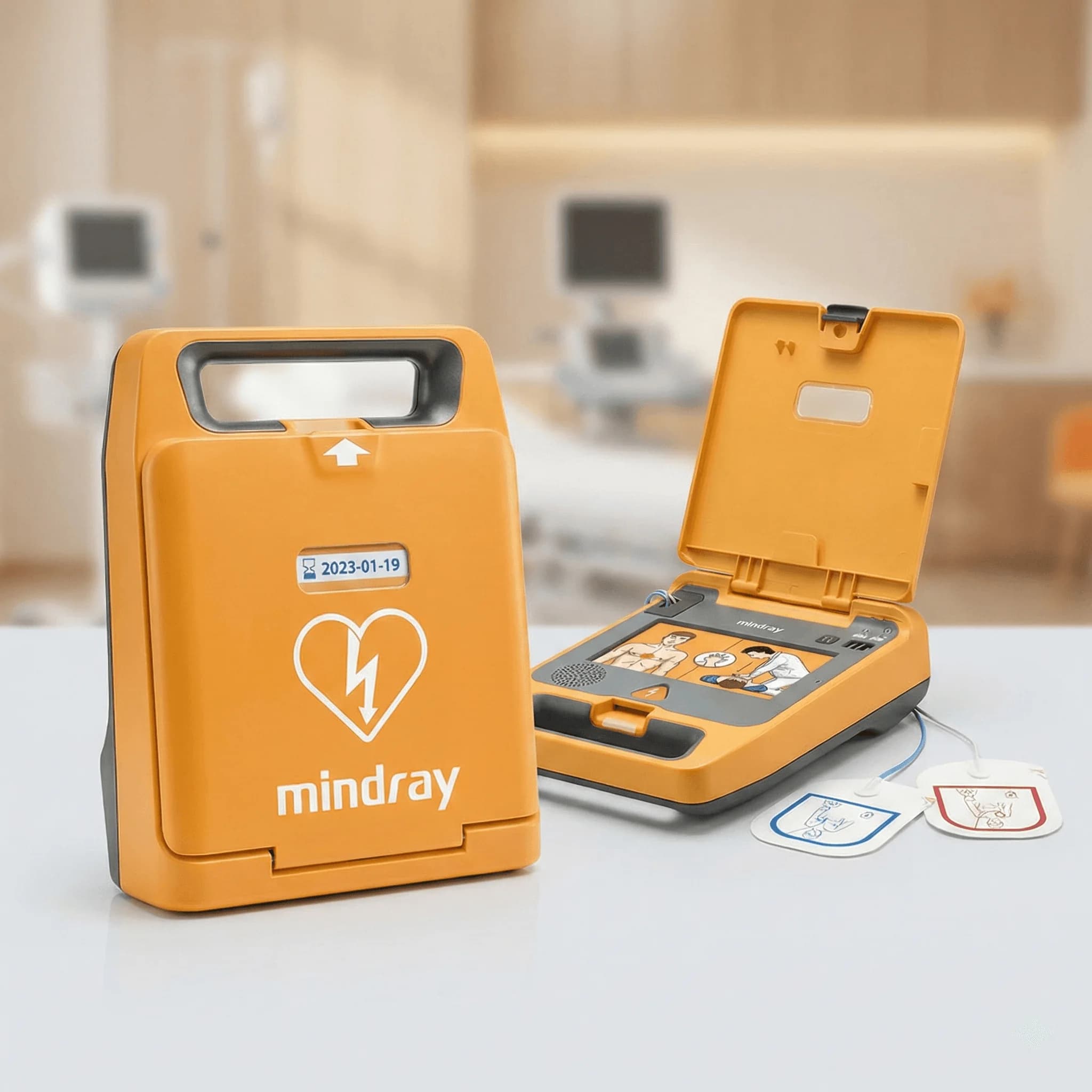
The device guides by voice and its heart rhythm analysis decides alone whether a shock is useful, so a staff member can use it without fear of making a mistake. For a young audience, check at purchase whether paediatric pads or a child mode are available, and store them with the device. Remember to dry the chest before placing the pads.
Maintenance, rental and staff training
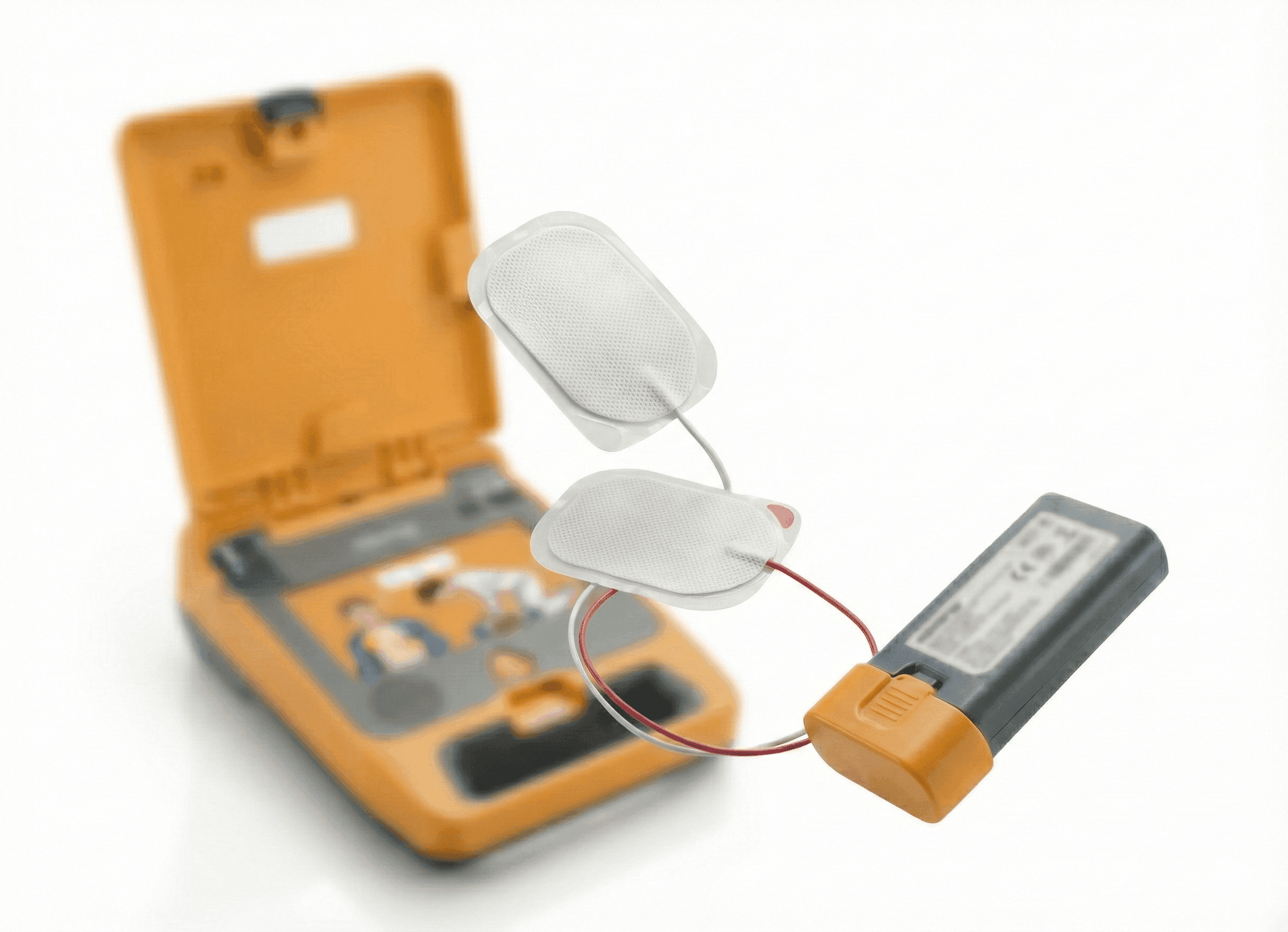
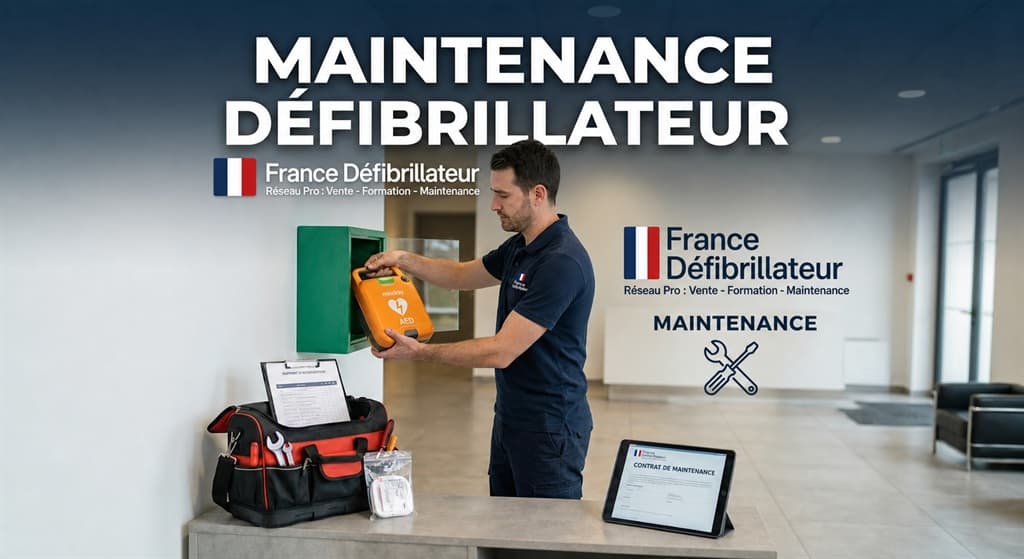
Maintenance is the operator's responsibility under article R. 5212-25 du Code de la santé publique (French Public Health Code). The operator monitors the self-test indicator and replaces consumables on time: pads last 2 to 5 years, batteries 3 to 5 years, and the device 8 to 10 years and more. Declaration in GéoDAE is mandatory.
Rental, from 50 € excl. VAT per month with maintenance included, avoids tracking deadlines yourself. The warranty is 5 years, delivery takes 2 to 5 working days and a quote is provided within 24 hours.
Floor staff, instructors, entertainers and reception agents are the first on the scene. Awareness training in life-saving skills teaches them to call 15, perform compressions and use the device. A simple drill once a year checks who calls, who brings the device and how activity is stopped around the victim.
Frequently asked questions
Does a climbing gym have to have a defibrillator?
It depends on its ERP classification. Categories 1 to 4 are concerned, as well as some category 5 venues since 2022. Classification takes capacity into account. The safety commission or town hall can confirm it.
Where should a trampoline park place its defibrillator?
Near reception or the exit of the rebound zone, out of reach of falls, with signage from every area. It must remain reachable within a few dozen seconds, with no locked door or stairs.
Are paediatric pads needed in this type of venue?
If many children visit, it is an option to check at purchase. Depending on the model, the device offers paediatric pads or a child mode. Store them with the defibrillator so they can be found at once.
Who handles maintenance of the defibrillator?
The operator, under article R. 5212-25 du Code de la santé publique. They check the self-test, replace pads and battery when due, and can delegate this to a provider through a rental with maintenance included.
Should instructors be trained to use the device?
Training is not always mandatory, but it is strongly recommended. Awareness training lets staff alert emergency services, perform chest compressions and use the device without hesitation during a medical emergency.
Planning an AED project?
Purchase, rental from 50 EUR excl. VAT per month, installation with GéoDAE registration, servicing and training: our team replies within 24 hours.