Defibrillators in restaurants and bars: rules to know
Written by Cyrille GAGNAIRE, France Défibrillateur. Published on 3 September 2026.
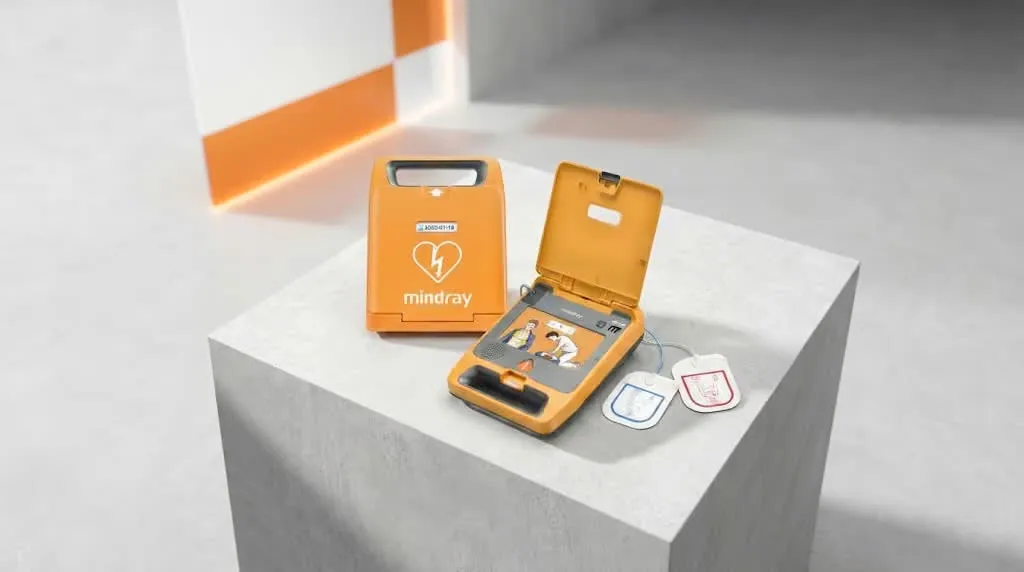
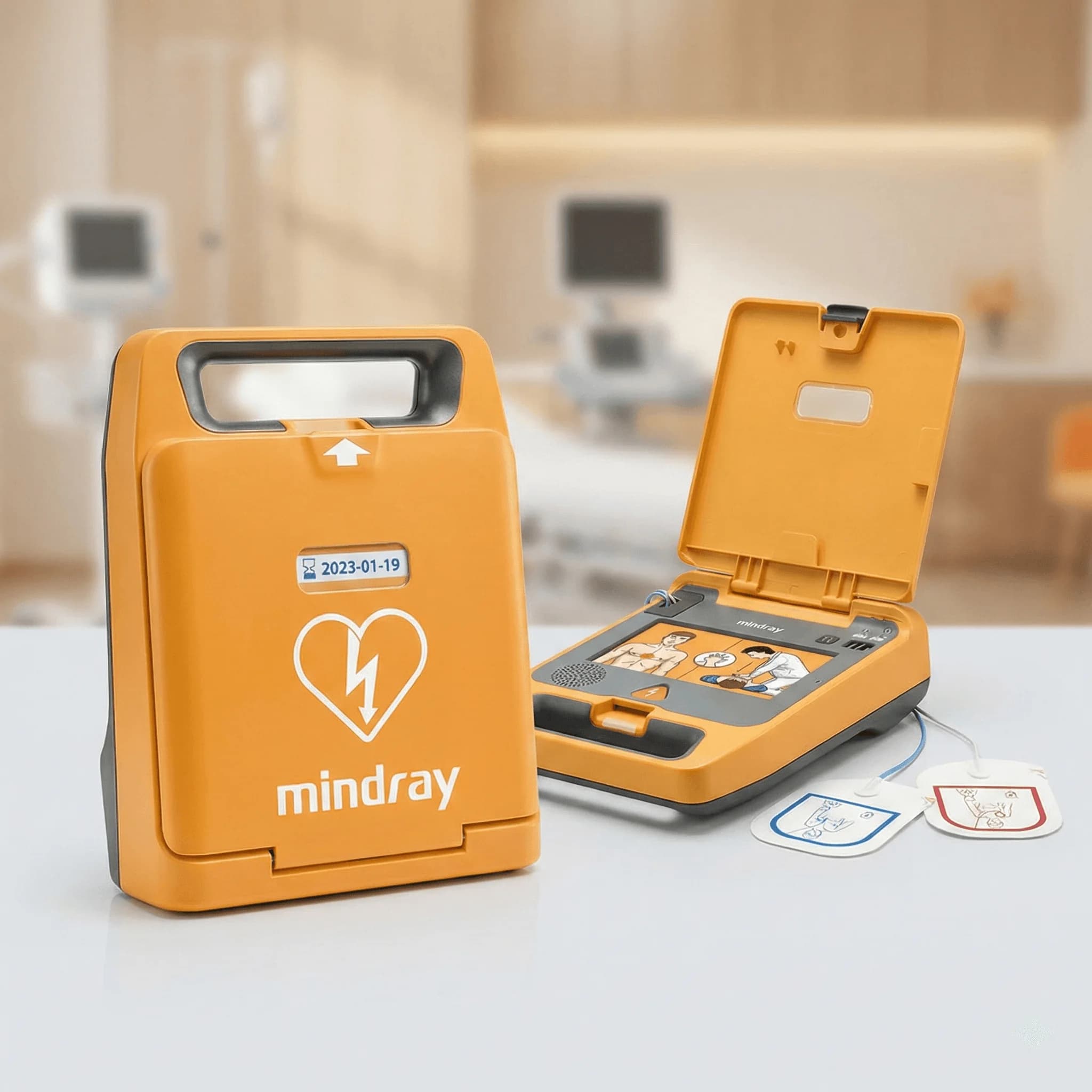
A busy lunch service, a bar packed on a Friday night: restaurants and bars bring together varied crowds, often for long stretches at a time. A cardiac arrest can happen there without warning, and alcohol or the rush of service can make the first signs harder to spot. Many establishments open to the public, restaurants and bars included, are already required to have a defibrillator on site. Here is how to check your situation, equip your dining room and terrace, and train a team that changes often.
A welcoming venue that is not free of cardiac risk
A restaurant or bar dining room mixes very different crowds: families, groups of friends, solo customers, sometimes older diners in for a weekday lunch. Alcohol served at the bar can delay recognition of a cardiac arrest, since the first signs are easily mistaken for simple intoxication. In the kitchen, heat and a fast service pace also put staff through intense physical effort, sometimes for hours without a real break.
In France, around 50,000 cardiac arrests occur every year, most of them outside a hospital. Every minute without defibrillation cuts survival chances by about 10 percent, a delay that a packed room or loud bar music can stretch further before anyone notices what is happening. Having an accessible device and a team trained to spot the signs makes all the difference in those first minutes.
What the rules say for a restaurant or a bar
A restaurant or bar open to customers counts as an establishment open to the public (ERP in French regulation), just like a shop or a town hall. French law 2018-527 and its implementing decree 2018-1186 require a defibrillator in category 1 to 3 public establishments since 1 January 2020, in category 4 since 2021, and in certain category 5 establishments since 2022. The exact category depends on capacity as set by the local safety commission, not something an owner decides alone.
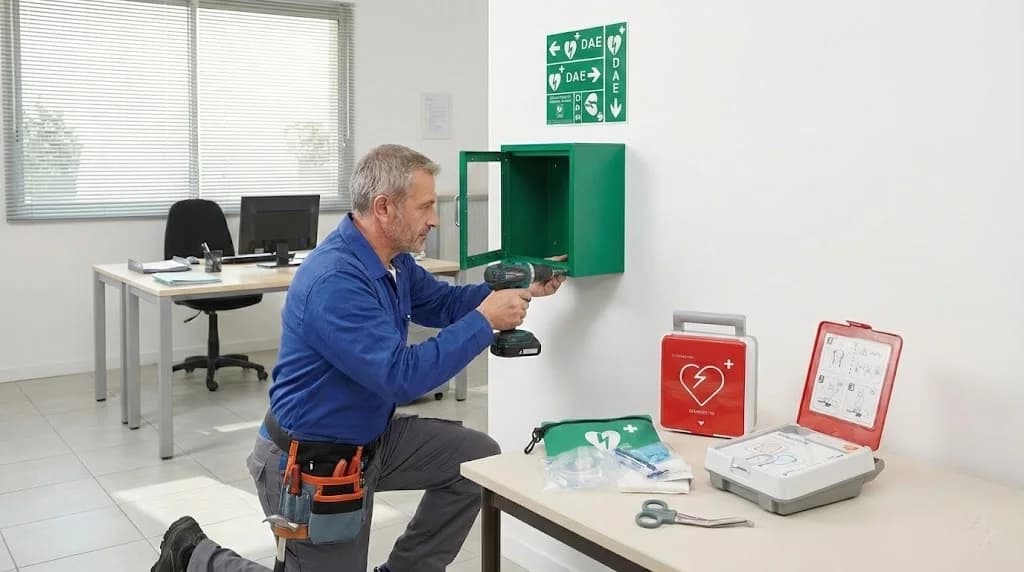
Once installed, the device must be registered in the Geo'DAE database (France's national defibrillator directory), so emergency services can locate it quickly. Signage must also follow the French order of 29 November 2018, visible from the entrance as well as from the dining room. For a restaurant chain or a group of bars, the requirement applies site by site: each address must be equipped and registered separately, a shared brand does not exempt any single location.
Choosing a location, terrace included
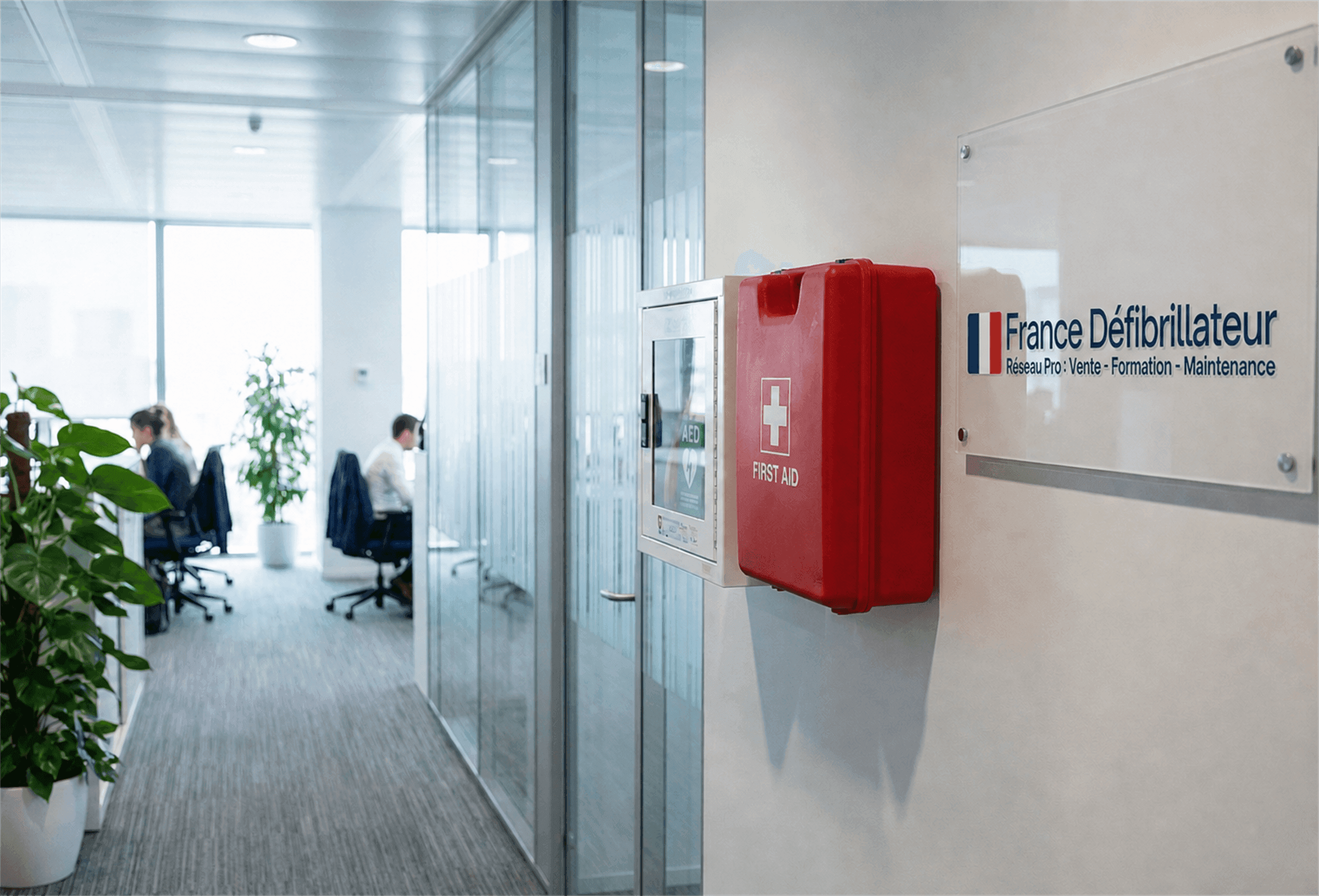
In a restaurant, the device most often sits near the host stand or the till, somewhere visible from the dining room and reachable without crossing a busy kitchen during peak service. A bar may prefer placing it near the main entrance, where both customers and the staff closing up late at night pass through. In every case, the chosen model's technical sheet lists its operating temperature range, worth checking if the device sits close to a kitchen that runs hot.
Many restaurants and bars run a terrace for part of the year, which raises the question of a second access point or a heated outdoor cabinet protecting the device from frost and high heat. That choice depends on the distance between the terrace and the indoor space: beyond a few dozen metres, or a flight of stairs away, a device dedicated to the terrace saves time that matters when every minute counts.
Training a team that turns over often
Restaurants and bars see high staff turnover: weekend extras, summer seasonal workers, apprentices on work-study contracts. Training the team in place only once, at the time the defibrillator is bought, does not stay effective for long, since part of that trained staff will have left within a few months. A short awareness session on lifesaving gestures, repeated at the start of each new season or hiring wave, keeps this risk under control.
Naming one or two contacts among the permanent staff, an owner, floor manager or an experienced bartender, helps pass on good habits to newcomers between official sessions. These contacts know exactly where the device is kept, where the maintenance log is stored, and can guide a less confident colleague on the day a customer collapses in the dining room.
Budget and maintenance suited to a small business
For an independent restaurant or a neighbourhood bar, renting a defibrillator, available from 50 euros excl. VAT per month with maintenance included, avoids a large upfront cost and spreads the expense over time. The rental plan usually includes check-up visits, which simplifies follow-up for an owner already busy running daily service. A quote is generally ready within 24 hours, and delivery takes two to five working days once the order is placed.
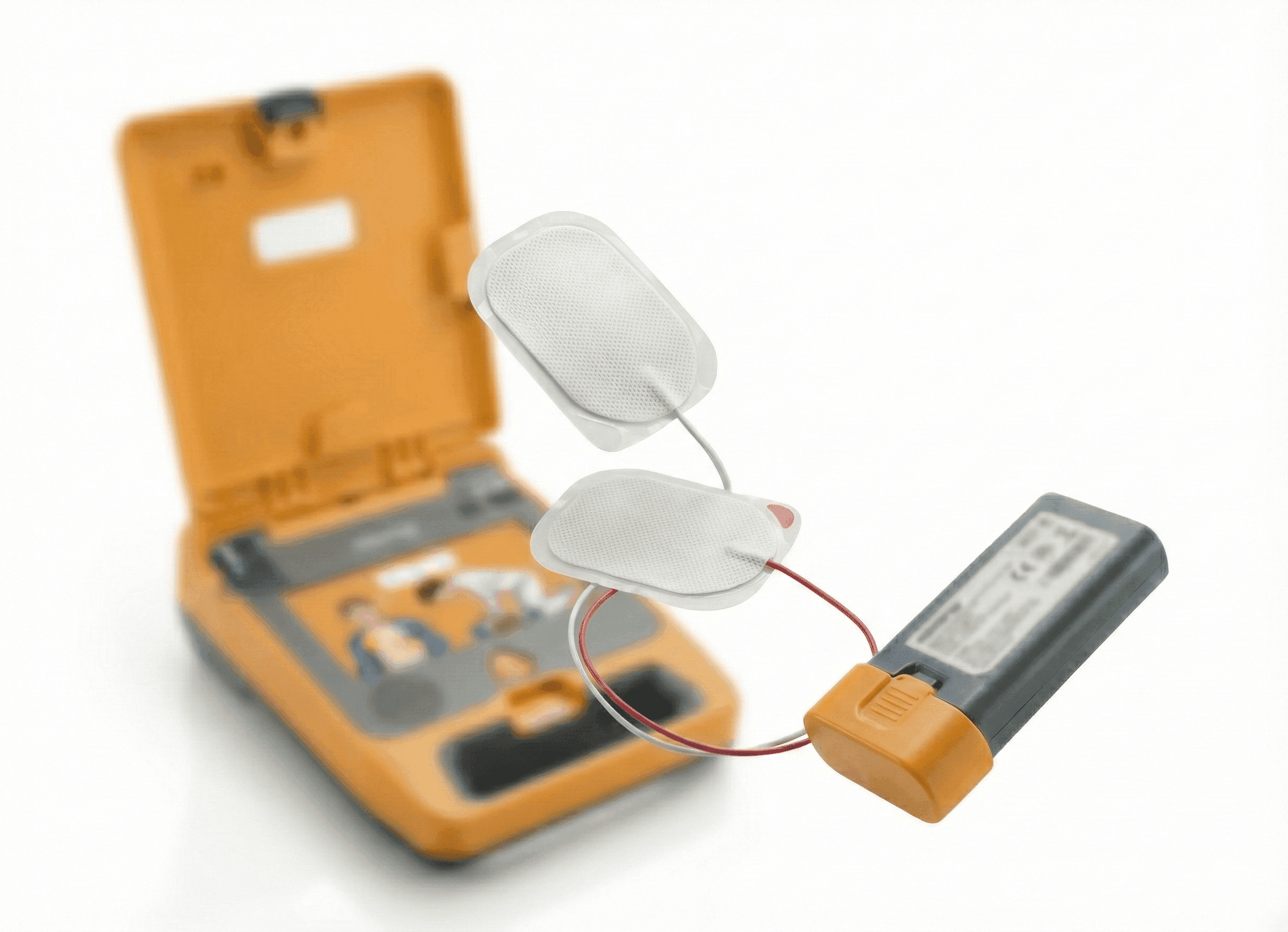
Whether the device is rented or bought with a five-year warranty, maintenance remains the operator's responsibility, under French Public Health Code article R. 5212-25. That means checking the self-test regularly, watching for warning lights, and replacing electrode pads every two to five years and the battery every three to five years, while the device itself typically lasts eight to ten years or more depending on the model.
Frequently asked questions
Is a restaurant always required to have a defibrillator?
Not automatically. The requirement depends on the establishment's public category, set according to capacity by the local safety commission. Categories 1 to 3 have been required to comply since 2020, category 4 since 2021, and certain category 5 establishments, including some small restaurants and bars, since 2022. It is worth checking the exact category before assuming there is no obligation.
Does a bar open late at night need a different defibrillator?
The device itself stays the same, but its accessibility should account for opening hours. A bar that closes late, sometimes with a reduced staff, benefits from placing the defibrillator near the main entrance and making sure closing staff know how to use it, even when only one employee remains on site at the end of service.
Where should the defibrillator go if the restaurant has a terrace?
If the terrace sits close to the dining room, one well-signposted device near the entrance is usually enough. Beyond a few dozen metres, or a floor away, a heated outdoor cabinet dedicated to the terrace avoids losing precious time in an emergency, especially during the season when the terrace draws the biggest crowds.
Who should train restaurant staff to use the defibrillator?
The operator organises the training, with no requirement for everyone to complete a full first-aid certification course. A short awareness session on lifesaving gestures, open to waitstaff, kitchen staff and front-of-house employees, covers most of the team. It simply needs repeating each new season, given how often staff turn over in this sector.
How much does a defibrillator cost for a small restaurant or bar?
Rental starts from 50 euros excl. VAT per month, maintenance included, which suits an independent business looking to spread out the cost. Buying outright is also an option, backed by a five-year warranty on the device. Either way, a quote is ready within 24 hours and delivery takes two to five working days.
Planning an AED project?
Purchase, rental from 50 EUR excl. VAT per month, installation with GéoDAE registration, servicing and training: our team replies within 24 hours.