AEDs in Senior Residences in France: Rules and Practice
Written by Cyrille GAGNAIRE, France Défibrillateur. Published on 6 September 2026.
Independent living residences (foyers-logements, residences autonomie) and senior service residences house an elderly population that lives independently, without the medical team present around the clock in a nursing home (EHPAD). This lack of medical staffing does not exempt the operator from safety duties, and cardiac arrest can strike at any time, including at night with reduced staff. This article covers the rules by facility category, the criteria for choosing equipment, and how to organise staff so they know how to react.
Independent living residence, senior service residence: different statuses
An independent living residence, often called a foyer-logement, offers self-contained flats with optional collective services such as catering or activities. Residents live at home, without organised medical care on site. A senior service residence follows the same principle, with a commercial status and more extensive hospitality services. In both cases, the facility receives the public within the meaning of French safety regulation (ERP, etablissement recevant du public) and differs clearly from a nursing home, where medical presence is continuous.
This distinction matters, because it determines the ERP category and therefore the applicable obligations. A small foyer-logement may fall into category 5, while a large facility with an open restaurant and communal rooms can move into category 3 or 4. The operator needs to know its exact category before deciding on DAE equipment.
An obligation that depends on the facility category
French law 2018-527 and its implementing decree 2018-1186 require a DAE (AED), an automated external defibrillator, in ERP facilities under a phased schedule: categories 1 to 3 since 1 January 2020, category 4 since 2021, and some category 5 facilities since 2022. An independent living or senior service residence that reaches the category 4 threshold must therefore equip itself, just like a category 5 foyer-logement welcoming the public in identified communal spaces.
Even when the regulatory threshold is not reached, the operator remains responsible for the safety of residents and staff. Installing a DAE beyond the strict legal minimum is a precautionary decision many managers choose, given the profile of the occupants.
A higher cardiac risk in this type of facility
France records around 50000 cardiac arrests a year, and every minute without defibrillation reduces the chances of survival by around 10 percent. In a senior residence, the age of the occupants and the sometimes greater distance from emergency services make these minutes especially precious. A device reachable in under three minutes, combined with an immediate call to emergency services, concretely changes the outcome of a cardiac event.
Communal spaces, the restaurant, the activity room or the reception area, concentrate most of the collective life and therefore most of the statistical risk. That is where the DAE's location should be planned first, without neglecting the corridors leading to private flats.
Choosing and positioning the device
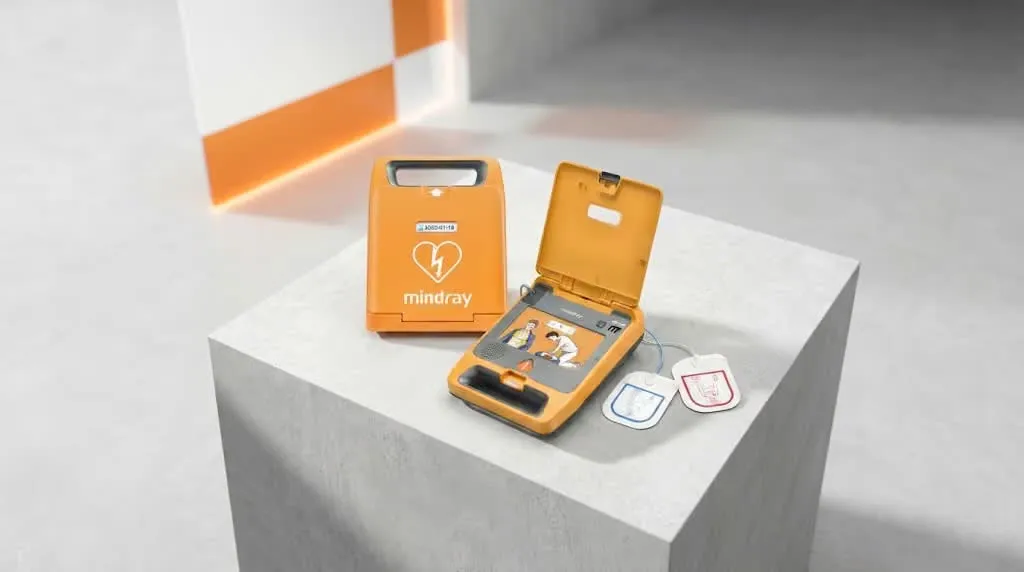
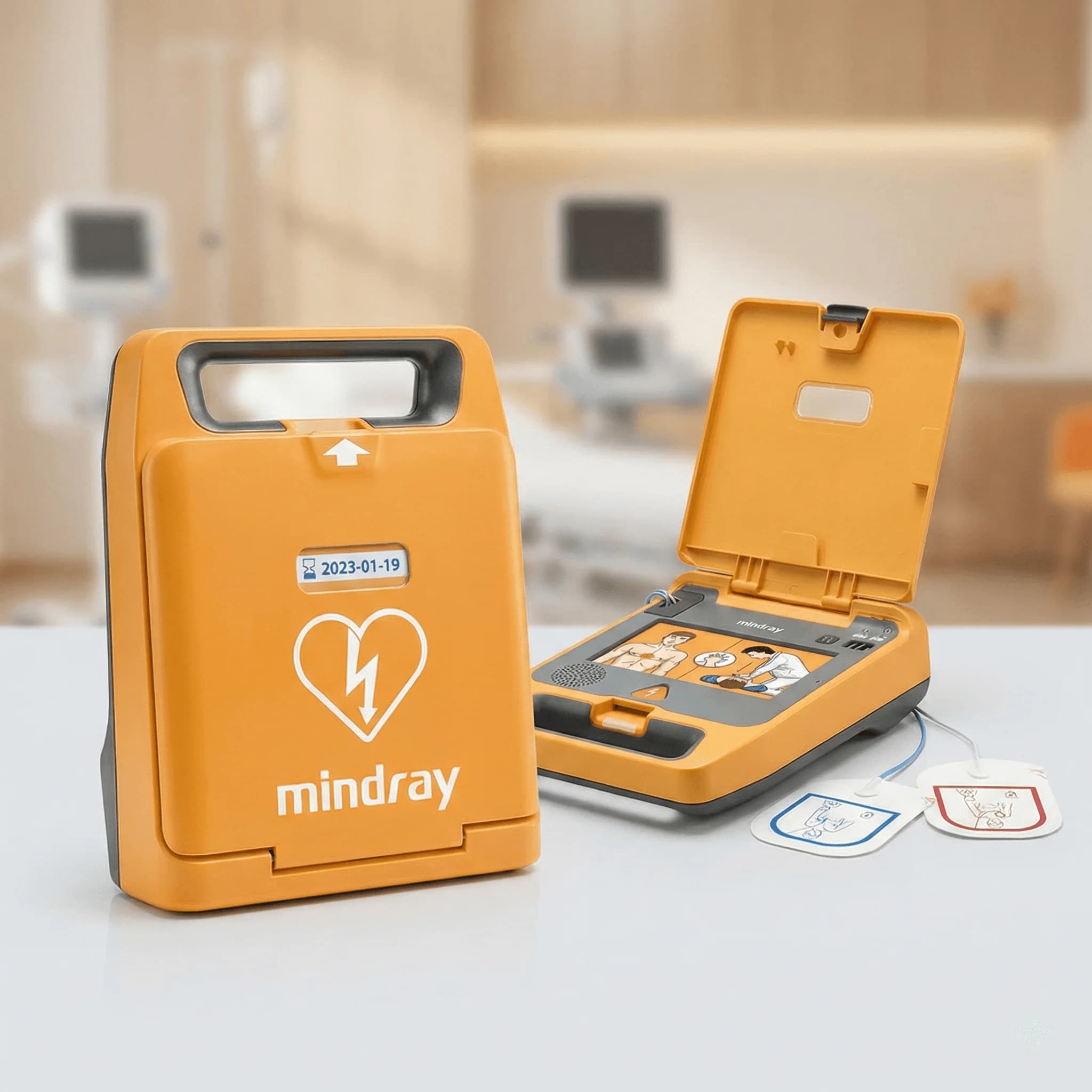
A DAE with clear voice guidance and a measured instruction pace suits an environment where first witnesses are sometimes elderly people themselves, neighbours or visitors. Regular self-tests and readable status indicators also make maintenance easier for staff who are not always trained in technical matters.
The location must remain accessible at all times, including at night and at weekends when reception is closed: an unlocked entrance hall, a clearly marked wall cabinet, or a staff room if a night warden is present. An outdoor cabinet is justified when no indoor space is accessible around the clock.
Training staff present day and night
Reception staff, activity leaders, catering staff and night wardens all benefit from awareness training in life-saving actions, including DAE use. This training should cover unusual hours, since a cardiac event gives no warning and the night warden is sometimes alone facing the situation before emergency services arrive.
Periodic refresher training keeps the reflexes sharp, in particular chest compressions and a structured emergency call. Raising awareness among families and mobile residents about the device's existence and location also strengthens the chain of survival while staff are on their way.
Maintenance, log book and budget
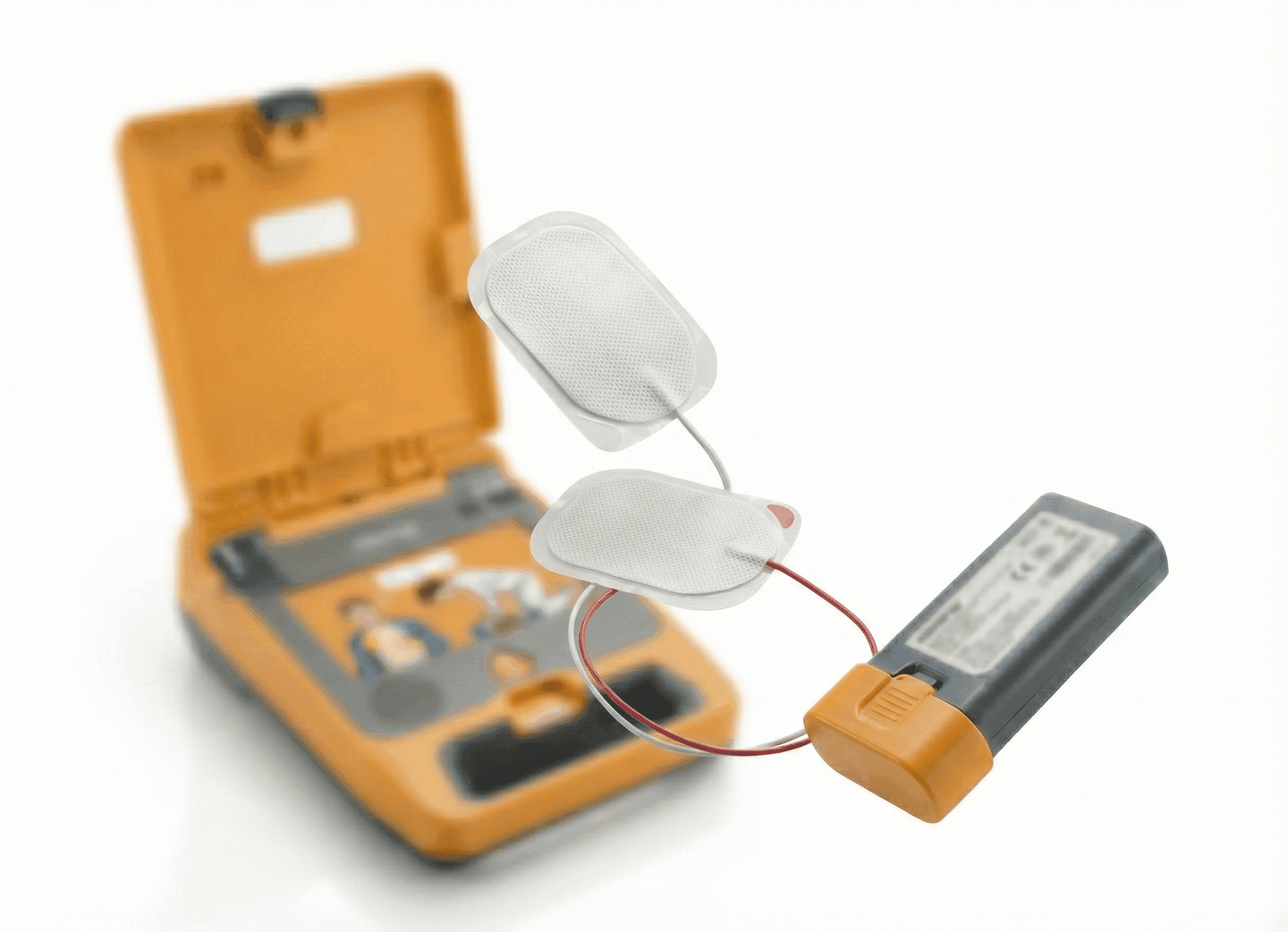
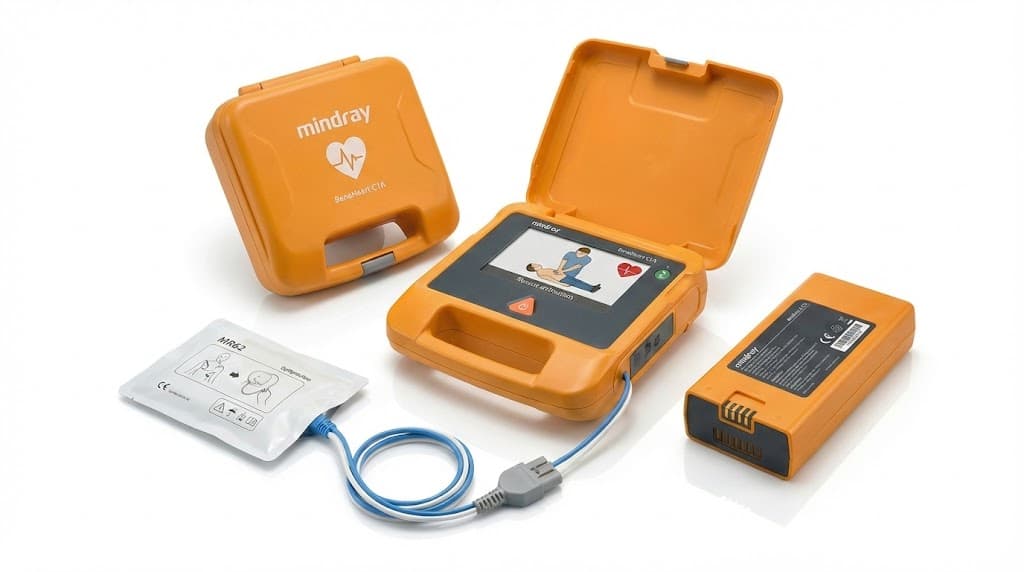
Maintaining the DAE remains the operator's responsibility, under article R. 5212-25 of the French public health code. Electrode pads are replaced every two to five years depending on the model, and the battery every three to five years. A maintenance log, kept up to date by designated staff, records self-tests, expiry dates and interventions.
On the budget side, rental starts at around 50 euros excl. VAT per month, maintenance included, a formula that suits facilities that prefer not to tie up capital in a purchase. Buying remains an option, with a five year warranty on new devices and delivery within two to five working days. A quote can be obtained within 24 hours to compare both options according to the size of the facility.
| Facility status | Medical presence | Typical DAE threshold |
|---|---|---|
| Independent living / foyer-logement | Not medicalised | ERP category 4 or 5 |
| Senior service residence | Not medicalised | ERP category 3 or 4 |
| Nursing home (EHPAD) | Medicalised, nursing staff present | ERP category 3 or 4 |
Frequently asked questions
Is an independent living residence legally required to install a DAE?
It depends on its ERP category. Categories 1 to 3 have been required since 2020, category 4 since 2021, and some category 5 facilities since 2022, under law 2018-527 and decree 2018-1186. A large independent living residence with an open restaurant or communal room often crosses the category 4 threshold.
Does a senior residence need a different DAE from a nursing home?
The certified equipment is the same, but the context of use differs. In an independent living residence, first witnesses are more often residents or neighbours than nursing staff. Clear voice guidance and visible self-tests make it easier for people without technical training to use the device.
Who should be trained in a senior residence?
Reception staff, activity leaders, catering staff and night wardens are the first concerned, since they are present continuously. Awareness training in life-saving actions, including DAE use, usefully complements the mandatory training already followed by some staff members.
Where should the DAE be placed if reception closes at night?
It must stay accessible at all times: an unlocked hall, a clearly marked wall cabinet near constant foot traffic, or the night warden's room. An outdoor cabinet is justified if no indoor space is accessible outside reception opening hours.
What budget should a medium sized residence plan for?
Rental starts at around 50 euros excl. VAT per month, including maintenance and consumables, a formula suited to facilities that prefer to spread the cost. Buying remains possible with a five year warranty, delivery within two to five working days, and a quote within 24 hours.
Planning an AED project?
Purchase, rental from 50 EUR excl. VAT per month, installation with GéoDAE registration, servicing and training: our team replies within 24 hours.