Defibrillators in Mountain Huts and Hiking Sites
Written by Cyrille GAGNAIRE, France Défibrillateur. Published on 18 October 2026.

At altitude, exertion, cold and remoteness combine. A hiker who collapses in front of a mountain hut may wait a long time for help, sometimes by helicopter and only if the weather allows. Each minute without defibrillation reduces the chances of survival by about 10%. Here is how the manager of a hut, a hostel or a tourist site can equip the place and get organised.
Why remoteness changes everything
Around 50,000 cardiac arrests occur in France every year, and the mountains are no exception. Uphill walking, altitude and cold put strain on the heart, even for people who think they are fit. Hikers are often older than the average sports participant, and groups mix very different profiles.
The decisive factor is delay. In a town, an ambulance arrives within minutes. Near a mountain hut, you must count the time to raise the alarm, to locate the casualty, then to reach the site, which depends on terrain and conditions. During this wait, only the bystanders present can act: chest compressions and defibrillation.
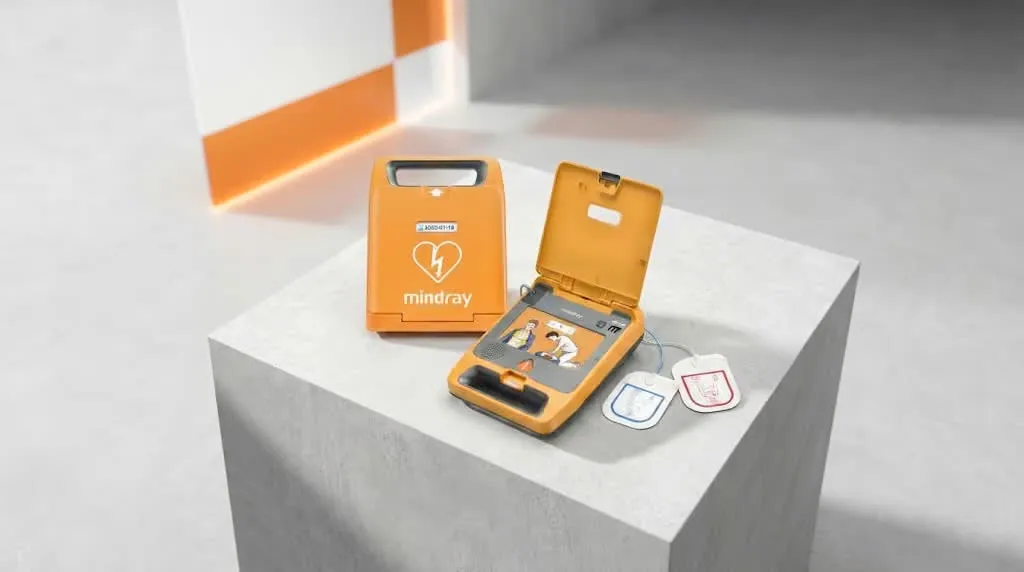
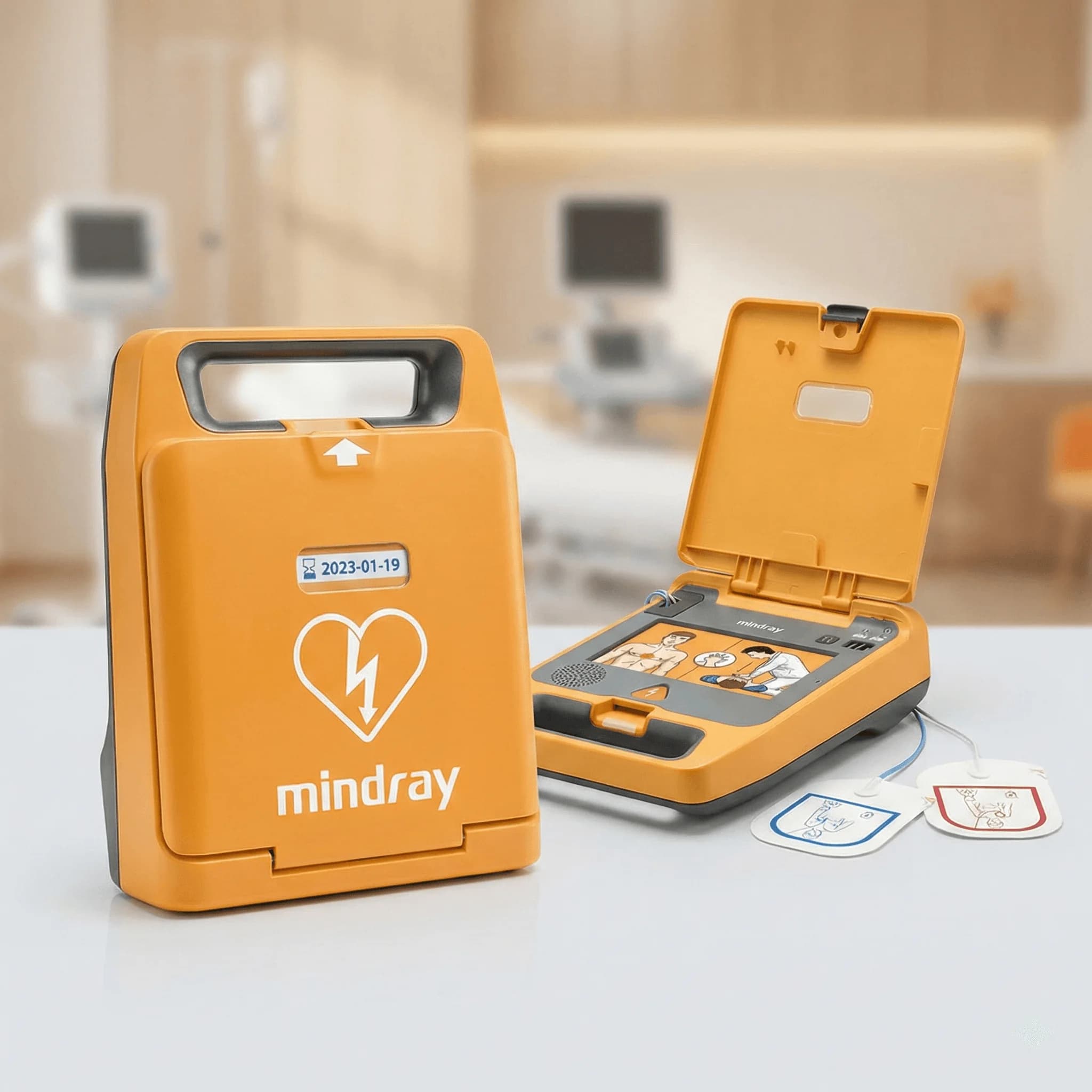
The warden, seasonal staff and hikers on site are therefore the first links in the chain of survival. An automated external defibrillator (AED, known in France as DAE) on the premises gives them a real chance to act before the emergency services arrive.
What the regulations say
The equipment requirement rests on loi 2018-527 and décret 2018-1186 (French law and decree). It applies to public-access buildings (ERP, établissements recevant du public) according to their category: categories 1 to 3 equipped since 1 January 2020, category 4 since 2021 and certain category 5 buildings since 2022. A mountain hut or hostel is generally classed as an ERP, but its category depends on its capacity and must be confirmed with the town hall or the safety commission.
Even where the requirement does not apply, equipping the site is strongly recommended. A manager who hosts dozens of people in high season, far from everything, has every reason to be equipped. Local authorities that run a trailhead car park or a tourist office can also install a device accessible to the public.
In every case, registration with GéoDAE (the French national AED database) is mandatory and maintenance is the operator's responsibility, under article R. 5212-25 of the Code de la santé publique (French Public Health Code). An up-to-date database lets emergency services guide a bystander to the nearest device.
Where to place the device and how to protect it
The right location is visible, accessible at all hours and close to the main entrance, where hikers pass. In a staffed hut, the common room or the entrance hall works well. In an unstaffed hut, the question is different: an unattended device must be protected from theft and weather.
Signage follows the arrêté du 29 novembre 2018 (French ministerial order). Signs must be legible from outside as well as inside, and the directions must guide someone who does not know the place, possibly at night or in bad weather.
A suitable cabinet protects the AED from humidity and temperature swings. The choice between an indoor and an outdoor cabinet depends on how exposed the site is. Also check the operating and storage temperature ranges given by the manufacturer, as they vary from one model to another.
| Situation | Recommended location | Point to watch |
|---|---|---|
| Staffed hut | Common room or entrance | Brief every seasonal team |
| Unstaffed hut | Protected cabinet at the entrance | Resistance to weather and theft |
| Trailhead | Signposted outdoor cabinet | GéoDAE registration and regular upkeep |
Upkeep in and out of season
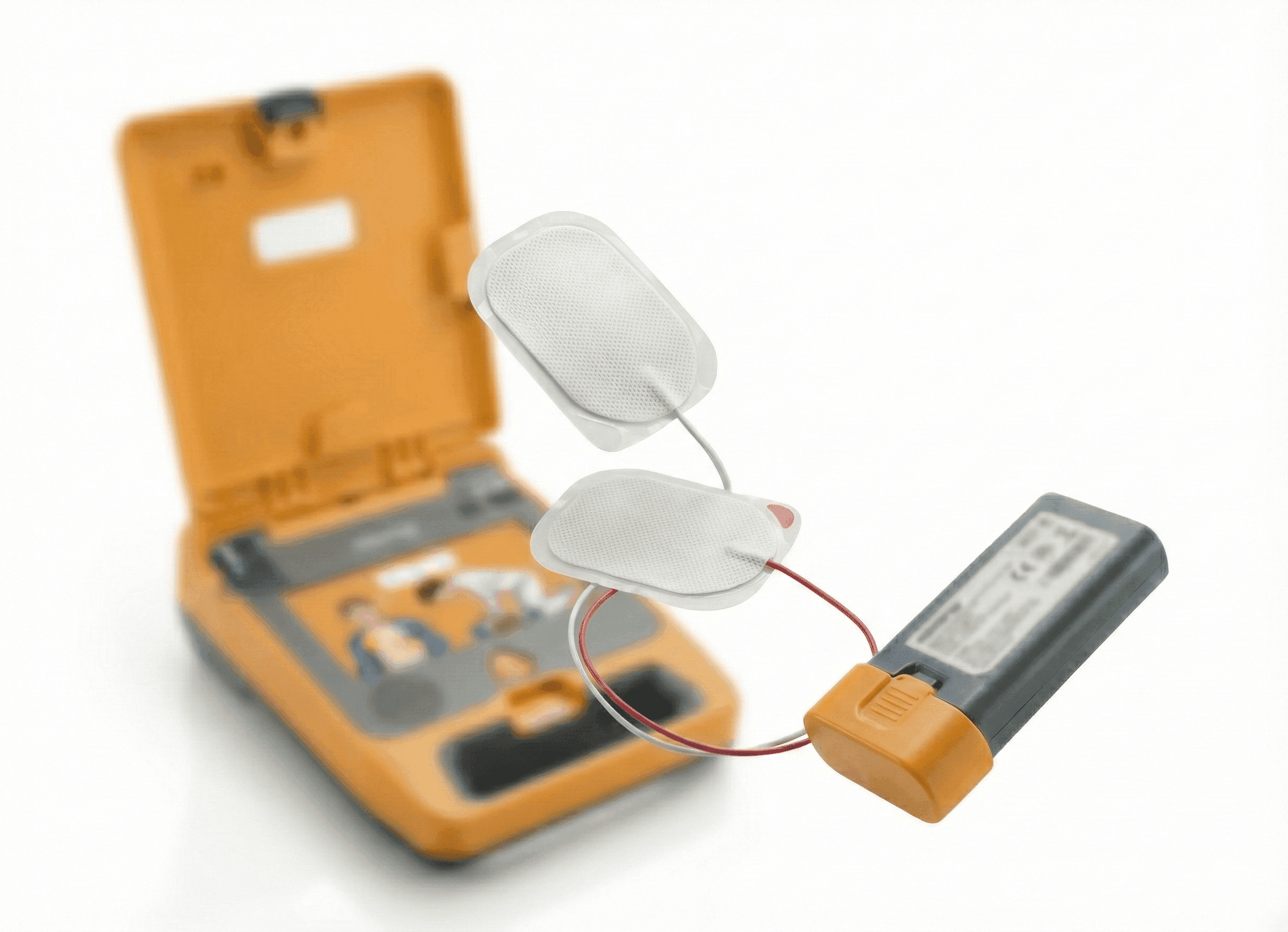
A hut often runs by season, and the device goes through closed periods. Before opening, check the self-test indicator, the expiry date of the pads and that of the battery. Pads last 2 to 5 years, batteries 3 to 5 years, and the AED itself 8 to 10 years and more.
Record every check in a safety register: date, person, indicator status, any replacement. This traceability protects the manager and eases the handover between two wardens. If the hut closes in winter, agree on where the device is stored, following the manufacturer's conditions.
After use, replace the used pads, have the device checked and inform the manufacturer or distributor. Plan the logistics too: ordering consumables for a site reachable only on foot takes some lead time.
Training the team and informing visitors
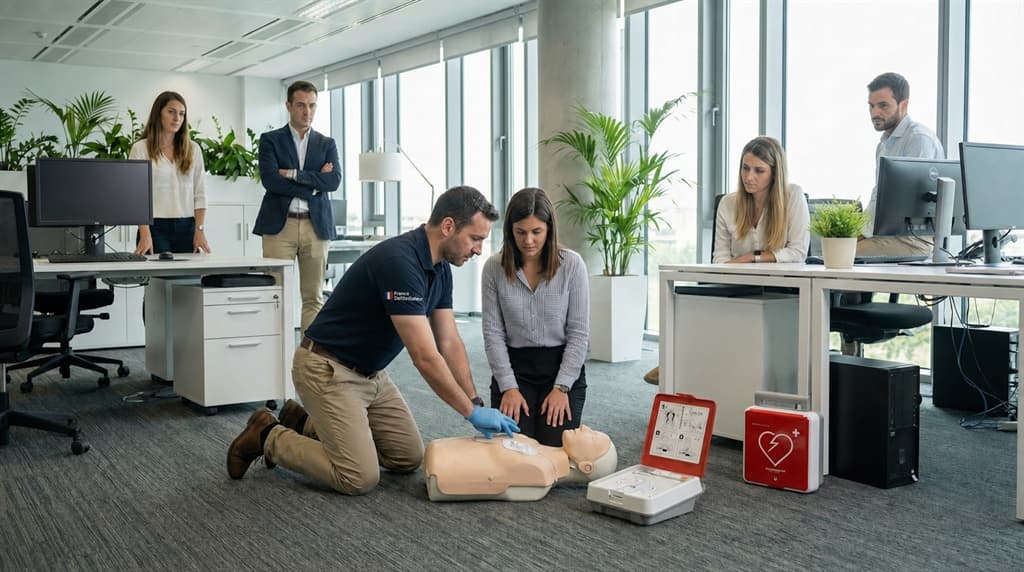
A warden trained in life-saving skills reacts faster and reassures those around. An awareness session on cardiac arrest and AED use suits the whole team, and fuller training can be reserved for those who lead groups. Repeat this training before each season for new arrivals.
A simple briefing at reception is enough to inform visitors: where the device is, which number to call and how the alert is passed on from a site where mobile coverage is sometimes weak. This instruction deserves to be displayed near the telephone or the radio equipment.
France Défibrillateur offers the sale and rental of AEDs, with rental from €50 excl. VAT per month, maintenance included, and a 5-year warranty. Delivery takes 2 to 5 working days and the quote is provided within 24 hours, which lets you get organised before the season opens.
Frequently asked questions
Is a mountain hut required to have a defibrillator?
It depends on its classification as an ERP (public-access building) and its category, set by capacity. Categories 1 to 4 are subject to the requirement, as are certain category 5 buildings since 2022. Confirm the classification with the town hall or the safety commission, and equip the site even without an obligation.
Does the AED withstand cold at altitude?
Each model states its operating and storage temperature ranges. Read the manufacturer's manual before buying and choose a cabinet suited to the site's exposure. Avoid leaving the device in an unprotected place during freezing periods.
Must the device be registered in GéoDAE?
Yes, GéoDAE registration is mandatory. It allows emergency services to locate the nearest defibrillator and guide a bystander to it. Remember to update the record if the device is moved or removed.
Who must maintain a mountain hut's defibrillator?
Maintenance is the operator's responsibility, under article R. 5212-25 of the Code de la santé publique (French Public Health Code). It includes monitoring the self-test, replacing pads and battery when due, and keeping a register. A maintenance contract can relieve the warden of this task.
Can an untrained hiker use the AED?
Yes, the device guides the user by voice and decides on its own whether to deliver a shock. Call the emergency services, start chest compressions, then follow the instructions. Training remains useful to build confidence, but it is not a prerequisite.
Planning an AED project?
Purchase, rental from 50 EUR excl. VAT per month, installation with GéoDAE registration, servicing and training: our team replies within 24 hours.