Defibrillator in Swimming Pools and Aquatic Centers: Obligations and Best Practices
Written by Cyrille GAGNAIRE, France Défibrillateur. Published on 21 August 2026.
Municipal swimming pools, aquatic centers and water parks with slides combine several particular conditions: intense physical effort, temperature swings, prolonged immersion and sometimes the aftereffects of a near drowning. These facilities welcome the public and therefore fall under the regulations for ERP (a French public access building category). Installing an AED (automated external defibrillator) here serves a dual purpose: regulatory compliance and a gesture that can save a life within minutes, in an environment where humidity and chlorine call for specific equipment choices.
A cardiac risk specific to aquatic environments
Swimming places heavy demands on the heart, with heart rate swings sometimes more pronounced than on dry land. Intense effort, cold water or a thermal shock when leaving the pool can trigger a rhythm disorder in a vulnerable person, without any warning signs beforehand.
A drowning itself can cause cardiac arrest from lack of oxygen, even after the person has left the water and received initial resuscitation. In both cases, every minute without defibrillation reduces the chances of survival by about 10 percent, which makes fast access to the device just as important as watching the pool itself.
This risk affects adult swimmers as much as older people attending aqua fitness or rehabilitation sessions, two groups increasingly present outside school holiday periods. The ambient heat of indoor pools, combined with sustained effort, places an extra strain on the heart that does not exist in an ordinary gym.
Regulatory obligations for aquatic facilities
Indoor pools, aquatic centers with slides and outdoor pools open to the public are all classified as ERP (French public access buildings) and fall under the timetable set by law 2018-527 and decree 2018-1186, the French rules requiring AEDs in public buildings: categories 1 to 3 equipped since 1 January 2020, category 4 since 2021, and some category 5 facilities since 2022 depending on their activity and capacity.
The operator, whether a municipality, a public service delegate or a private company, remains responsible for registering the device in GeoDAE and for signage compliant with the order of 29 November 2018, the French rule on AED signposting, just as for any other public access building.
This responsibility does not stop at purchasing the equipment: it also covers keeping it in working order and informing the public of its exact location, two points regularly checked during safety commission visits specific to pools and supervised bathing areas.
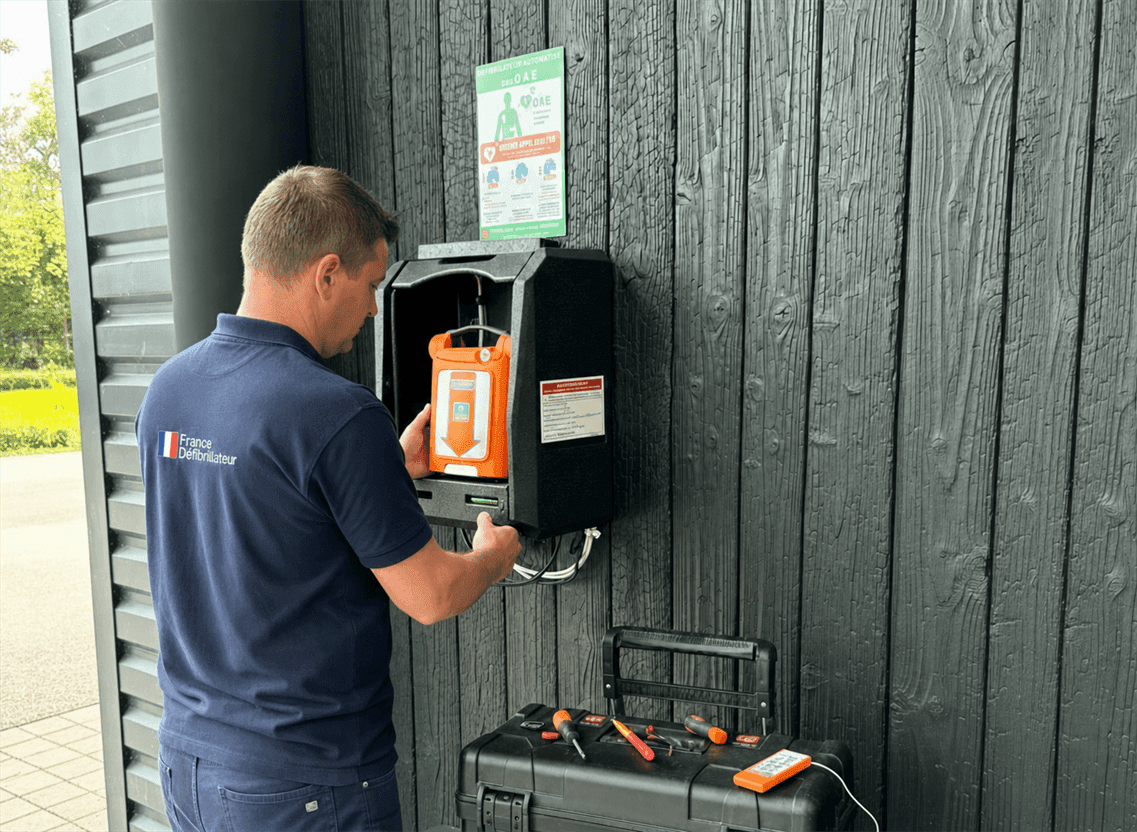
A cabinet built to resist humidity and chlorine
A pool atmosphere constantly exposes the defibrillator to humidity, chlorine vapors and sometimes direct splashing. A cabinet with a high protection rating against water and dust limits corrosion of the electrical contacts and extends the device's useful life, generally between 8 and 10 years or more.
The electrode pads and battery remain the most sensitive parts in this particular climate: a visual check more frequent than usual, in addition to the automatic self test, helps spot a trace of condensation or a pad starting to peel before it becomes unusable.
Positioning the device without exposing it directly to the pool
The cabinet must stay out of reach of splashing water and dripping from bathers leaving the pool, while remaining accessible within three minutes' walk from any point in the swimming area. A wall recess sheltered from direct sun and splashes works better than a spot right at the poolside.
The lifeguard station, reception area and communal changing rooms are strategic spots depending on the site layout. In a large aquatic center with several pools, a second device may be necessary to meet this access time across the whole site.
Training lifeguards and all staff
Lifeguards holding a lifesaving qualification already receive first aid training that includes cardiopulmonary resuscitation, but a regular refresher on the precise use of the defibrillator remains useful, particularly when a model is replaced or an internal protocol is updated.
Reception, till, cleaning or catering staff on site, however, generally have no initial training of this kind. Training these teams in lifesaving gestures, including seasonal staff hired before summer, shortens the time between the alert and the first action.
A short awareness session, held just before the season opens, is enough to familiarize a team with the exact location of the defibrillator and the basic gestures, complementing the lifeguards' already solid resuscitation skills.
Maintaining the device in a humid environment
The daily self test signaled by the cabinet's indicator light must be checked with the same rigor as in any other facility, adding a check of the cabinet's water tightness and of any trace of corrosion on metal fittings exposed to chlorine.
These checks, along with the replacement dates for the pads and battery, must appear in the facility's safety register, a responsibility of the operator under article R. 5212-25 of the French Public Health Code.
| Site area | Point of attention |
|---|---|
| Sports pool and swimming lanes | Intense effort, cardiac arrest possible while swimming |
| Paddling pool and children's area | Young audience, pediatric pads recommended |
| Outdoor deck and sun terrace | Exposure to sun and heat, keep the cabinet in the shade |
| Changing rooms and restrooms | Area outside lifeguards' line of sight, reinforced signage |
Frequently asked questions
Can a defibrillator be installed right at the edge of the pool?
No, it must stay out of reach of direct water splashes while remaining accessible within three minutes' walk from any point in the swimming area. A nearby wall recess, sheltered from sun and splashes, offers the best balance between protection and quick access.
What type of cabinet should be chosen for a chlorinated environment?
A cabinet with a high protection rating against water and dust limits corrosion caused by chlorine and ambient humidity. This choice extends the cabinet's lifespan and reduces the risk of malfunction in electrical contacts constantly exposed to this particular atmosphere.
Are lifeguards already trained to use a defibrillator?
Their initial training includes cardiopulmonary resuscitation, but regular refreshers on the installed model remain advisable. Reception, cleaning or catering staff on site, however, generally have no initial training and must be trained separately in lifesaving gestures.
Does an outdoor pool open only in summer face the same obligations?
Yes, as soon as it welcomes the public it falls under the same regulatory timetable based on its ERP category. Since staff are often seasonal, lifesaving training must be renewed before each opening rather than assumed to carry over from one season to the next.
Are several defibrillators needed for an aquatic center with multiple pools?
It depends on the walking distance between areas: if any point on the site is more than three minutes from the single device, adding a second cabinet becomes worthwhile. The layout of the premises, more than the surface area alone, guides this decision.
Planning an AED project?
Purchase, rental from 50 EUR excl. VAT per month, installation with GéoDAE registration, servicing and training: our team replies within 24 hours.