Defibrillator in a Pharmacy: Obligations and Best Practices
Written by Cyrille GAGNAIRE, France Défibrillateur. Published on 31 August 2026.
A pharmacy counter sees elderly customers, patients on heart medication and people feeling faint or unwell pass through every day. This particular profile, combined with extended hours during night and weekend duty shifts, puts a pharmacy in a different position than an ordinary shop when it comes to the risk of cardiac arrest. Installing a defibrillator then takes on a double meaning, part regulatory duty to check, part role as a rescue point for the whole neighbourhood.
A pharmacy remains a public-facing establishment
Like any shop open to customers, a pharmacy falls under the classification of establishments open to the public and is assigned an ERP category (établissement recevant du public, a public-facing establishment) based on the number of people it can accommodate. French law 2018-527 and its implementing decree 2018-1186 made an automated external defibrillator (AED) compulsory for ERP categories 1 to 3 from 1 January 2020, then for category 4 from 2021, and for some category 5 establishments from 2022.
Most neighbourhood pharmacies, given their limited sales floor, fall into category 5 and are not automatically covered by the duty to equip. A large drugstore, a shop attached to a shopping centre, or a pharmacy with several service counters may instead fall into a higher category. The owner has every interest in checking this classification rather than assuming it, since it determines whether the equipment is mandatory or only recommended.
A rescue point for the surrounding neighbourhood
The pharmacist and their team hold a particular place in the local healthcare pathway. Someone feeling unwell in the street often pushes open the pharmacy door before thinking of calling an emergency number, because the place is recognised as a source of health expertise open without an appointment. This spontaneous trust from the public is a good reason to think about the defibrillator beyond the strict regulatory question.
An on-duty pharmacy amplifies this effect. When most surrounding shops close for the evening, the weekend or a public holiday, the pharmacy that stays open sometimes becomes the only access point to a healthcare professional within several streets. A defibrillator available at that address, properly registered, can then benefit residents who would otherwise have no quick access to the device before emergency services arrive.
Choosing a device suited to pharmacy work
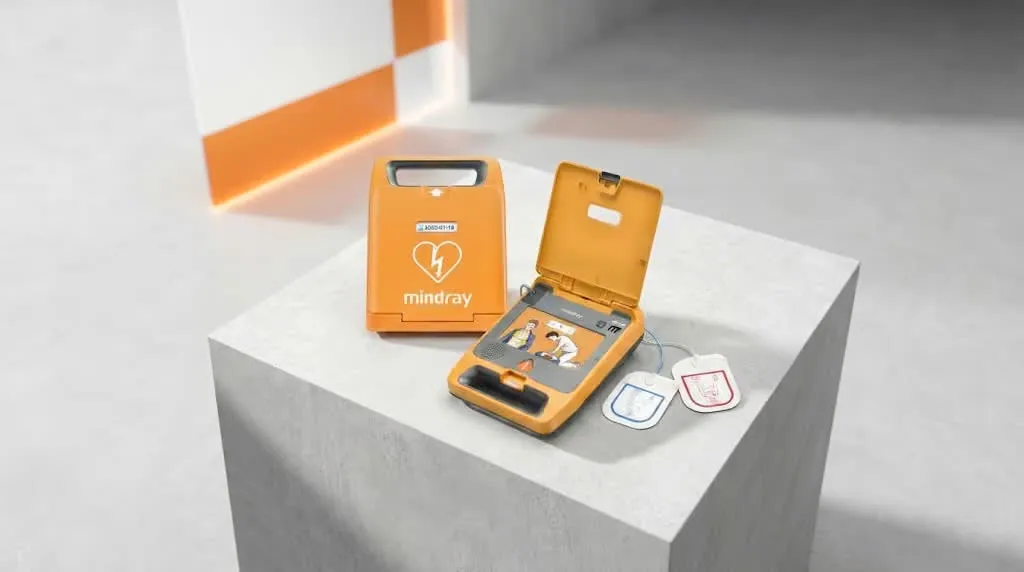
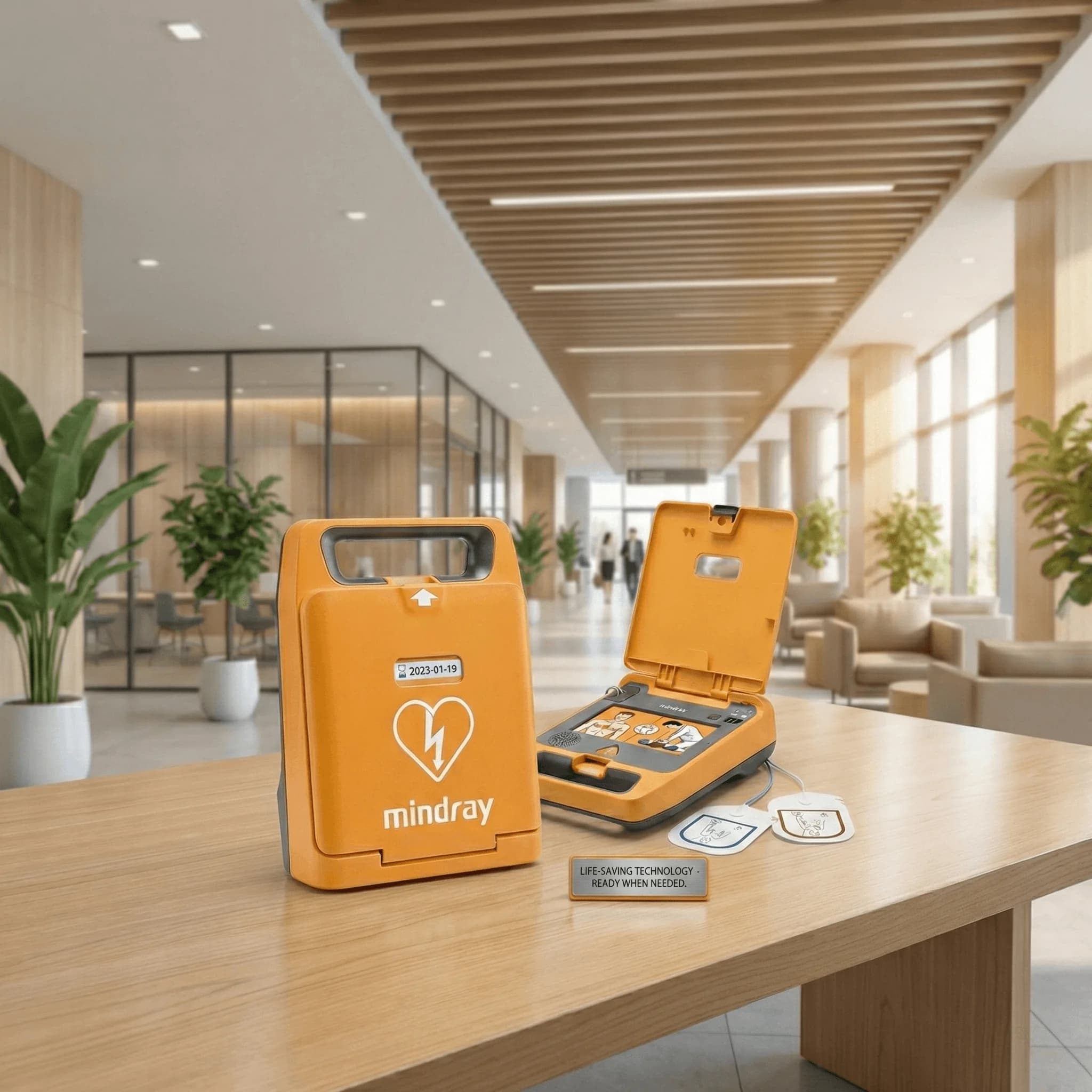
A pharmacy combines a busy counter area with a less visible storeroom. The defibrillator must stay in the part of the premises open to the public, never kept behind the counter or in the back room, otherwise the precious minutes that make all the difference to survival chances are lost. A fully automatic device suits a team that includes trainees or temporary staff not all trained in first aid, since it delivers the shock on its own once the analysis is complete.
A pharmacy's customers are mostly adults, but a pharmacy near a school or a leisure centre may see more children accompanied by their parents. Keeping a pair of paediatric pads or an energy attenuator key alongside the adult pads is then a simple precaution, easily added to the equipment already present in the pharmacy.
A tracking habit the pharmacy already masters
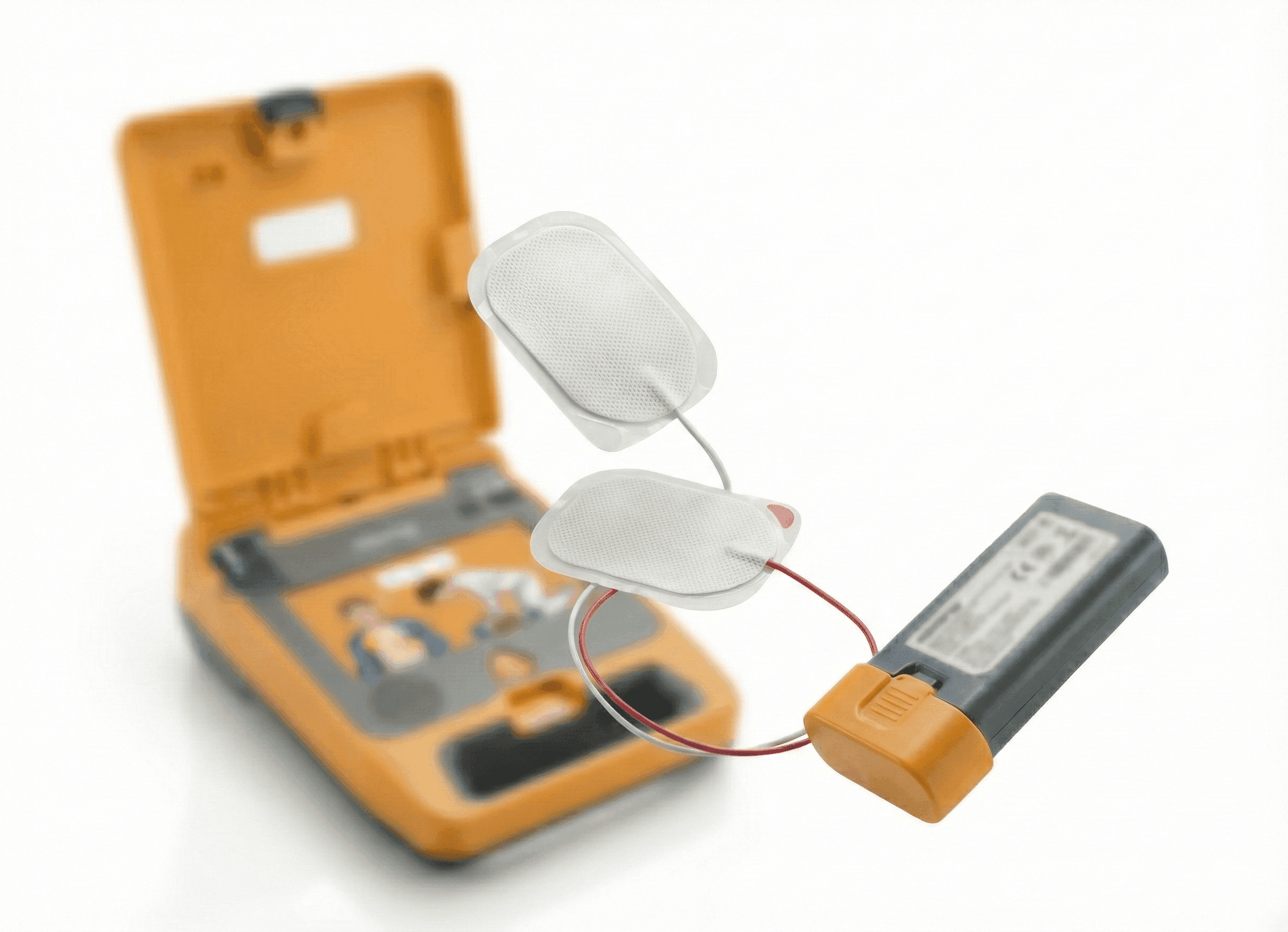
Tracking expiry dates is part of daily life in a pharmacy, which constantly checks medicine batches before they run out. The same habit applies to the defibrillator's consumables: pads need replacing every 2 to 5 years depending on the model, the battery every 3 to 5 years, and the device itself remains usable for 8 to 10 years or more as long as its self-test stays green. Folding this check into the stock routine already in place only takes an extra reminder in the team's schedule.
Maintaining the defibrillator remains the operator's responsibility, under article R. 5212-25 of the French Code de la santé publique, whatever the establishment's category. A maintenance contract or a rental solution that includes this follow-up, available from 50 euros excl. VAT per month, frees the pharmacy team from managing replacement deadlines on top of their usual work.
| What to monitor | Typical frequency |
|---|---|
| Device self-test light | regular visual check |
| Pads | replaced every 2 to 5 years |
| Battery | replaced every 3 to 5 years |
| Whole device | lifespan of 8 to 10 years or more |
Registering and signposting the device properly
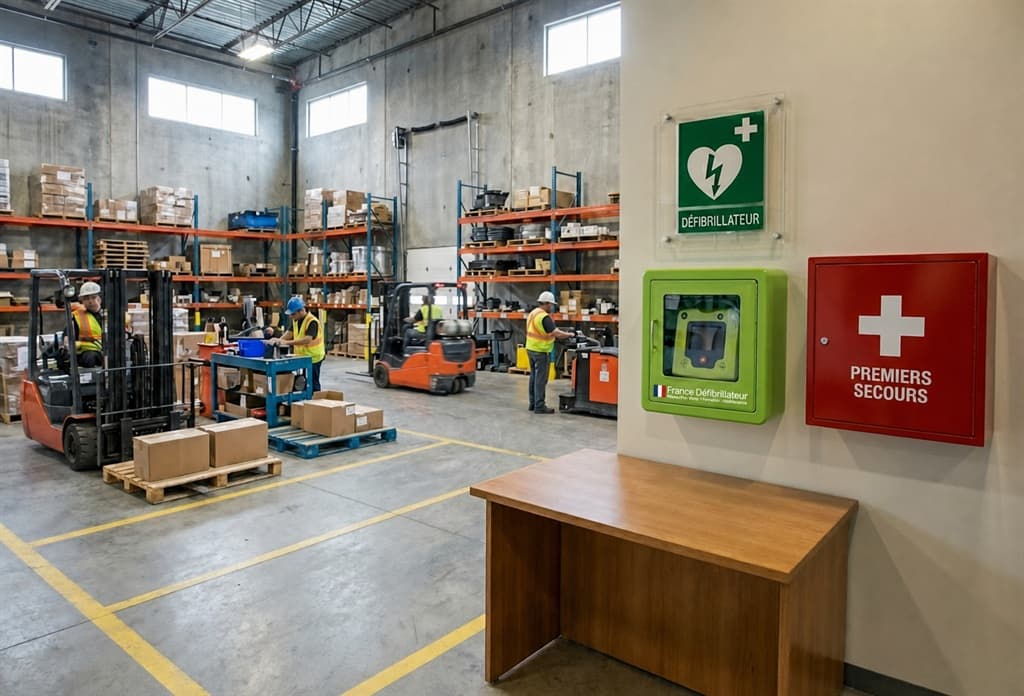
Every defibrillator installed in a place accessible to the public must be registered in the national GéoDAE database, so that emergency services can locate the nearest device when a call comes in. This registration matters even more for an on-duty pharmacy, since its night-time address is not always the one a resident knows by heart. The signage displayed in the window must follow the model set by the ministerial order of 29 November 2018 (arrêté du 29 novembre 2018), visible both from inside and from the pavement.
Staff on duty should mention the device to the emergency dispatcher when calling the emergency number, so a bystander can be directed to the pharmacy if it happens to be closer than the usual rescue point. This simple coordination strengthens the role the pharmacy already plays as a neighbourhood landmark.
Training the whole team, not just the owner
A pharmacy often employs a mix of profiles, owner, associate pharmacists, dispensing assistants, trainees and front-desk staff, with schedules that rarely overlap much. Training only the owner leaves the equipment without a trained user for a good part of opening hours. A short, regularly refreshed course in life-saving actions lets everyone behind the counter react without waiting for the manager to return.
The device talks the user through every step, which remains a valuable safety net for a trainee who has only recently joined. That guidance does not replace regular practice of chest compressions, still the decisive action even before the pads are applied, and best practised by as many team members as possible.
Frequently asked questions
Is a pharmacy required to install a defibrillator?
It depends on its category as a public-facing establishment, calculated from the number of people it can accommodate. Most neighbourhood pharmacies fall into category 5 and are not automatically covered by the duty, unlike a large drugstore that may fall into a higher category. When in doubt, the owner can check this classification with the relevant authorities.
What type of defibrillator suits a pharmacy?
A fully automatic model suits a team that includes trainees or temporary staff with little experience, since it delivers the shock without manual validation. The device must stay in the area open to the public, never locked behind the counter, with a pair of paediatric pads available if the customer base includes children.
Does an on-duty pharmacy need different signage at night?
Signage that follows the ministerial order of 29 November 2018 must stay visible at all times, including during night duty shifts. Registration in the GéoDAE database becomes especially important then, since the pharmacy may become the closest rescue point for a resident once other shops have closed.
Who can use a pharmacy's defibrillator in an emergency?
Any bystander, trained or not, can use an automated external defibrillator, since the device talks the user through every step and only delivers a shock if it detects a heart rhythm that requires one. Training the whole pharmacy team is still recommended to gain speed and confidence when acting.
How can defibrillator tracking fit into a pharmacy's routine?
Checking the expiry dates of pads and the battery can be added to the routine already used for medicines, with a reminder in the team's schedule. A maintenance contract or a rental option that includes this follow-up, available from 50 euros excl. VAT per month, takes this task off the pharmacy's daily workload.
Planning an AED project?
Purchase, rental from 50 EUR excl. VAT per month, installation with GéoDAE registration, servicing and training: our team replies within 24 hours.