AED at an ice rink: obligations and best practices
Written by Cyrille GAGNAIRE, France Défibrillateur. Published on 22 October 2026.
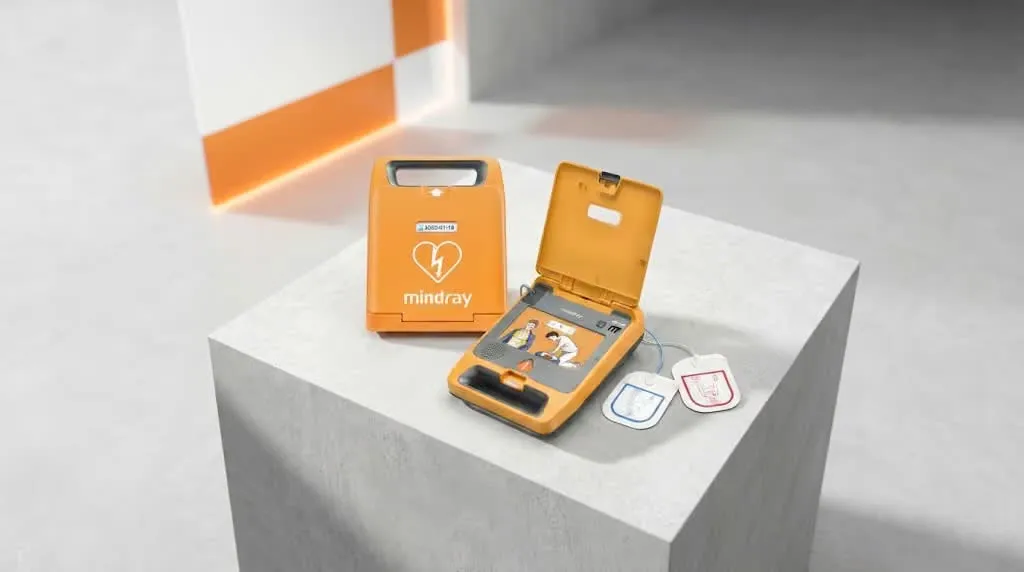
An ice rink welcomes families, school groups, hockey clubs and figure skaters, sometimes several hundred people at once. Physical effort, cold and falls sit alongside spectators of all ages. This article explains whether your facility must be equipped, where to place the device without exposing it to the cold, how to handle maintenance and how to train staff to act on the ice.
Physical activity in a high-risk setting
Skating strains the heart, especially for an untrained adult returning to activity during a family outing. Hockey, figure skating and speed training involve intense, repeated and often short efforts. A cardiac emergency can happen in the middle of the rink, far from the front desk, among other skaters in motion.
Rescuers also need time to reach the person: the session must be stopped, the ice cleared and the victim reached without slipping. About 50,000 cardiac arrests occur in France every year, and each minute without defibrillation reduces the chance of survival by about 10%. In this context, the device must already be on site.
Is an ice rink subject to the obligation?
The equipment obligation rests on loi 2018-527 and décret 2018-1186 (the French law and decree of 2018). It applies to public-access buildings (ERP, établissements recevant du public) according to their category: categories 1 to 3 have had to be equipped since 1 January 2020, category 4 since 2021, and some category 5 buildings since 2022.
An indoor rink generally falls under covered sports facilities, whose classification depends on capacity, spectators included. A seasonal outdoor ice track set up on a square or in a park follows different rules, which the organiser must check with the municipality and the safety commission.
Even where the obligation does not apply, the operator remains responsible for organising first aid. Equipping the site is the simplest answer to a liability question that arises quickly after an accident.
Location: close to the ice, away from the cold
The device must be reachable within a few dozen seconds from the rink barrier. The most relevant spots are the rink entrance, near the players' door or the skate rental room, and the front desk, where someone is present at all times.
Cold is the main pitfall. A rink hall stays cool, often close to the temperature of the ice, while devices have an operating and storage range set by the manufacturer. Check this range before choosing the location, and prefer an indoor cabinet in a heated area rather than a wall by the boards. Condensation on a device brought out of the cold is another point to check in the manual.
Signage follows the arrêté du 29 novembre 2018 (French order on AED signage). It must remain legible from the rink and the stands, even when the lights are lowered for an evening event or a show.
| Area | Point of attention | Suitable response |
|---|---|---|
| Front desk and checkout | Staff present at all times | Preferred location, visible from the entrance |
| Rink side | Cold, humidity, impacts | Cabinet in a heated area, visible signage |
| Locker rooms and rental room | Regular public traffic | Clear signage along the route |
| Stands and snack bar | Many spectators, variable access | Clear path to the device |
Equipment, children and falls
Rinks receive many children, especially during school trips and birthday parties. Depending on the model, the device offers paediatric pads or a child mode: check this option when buying and store these pads with the defibrillator.
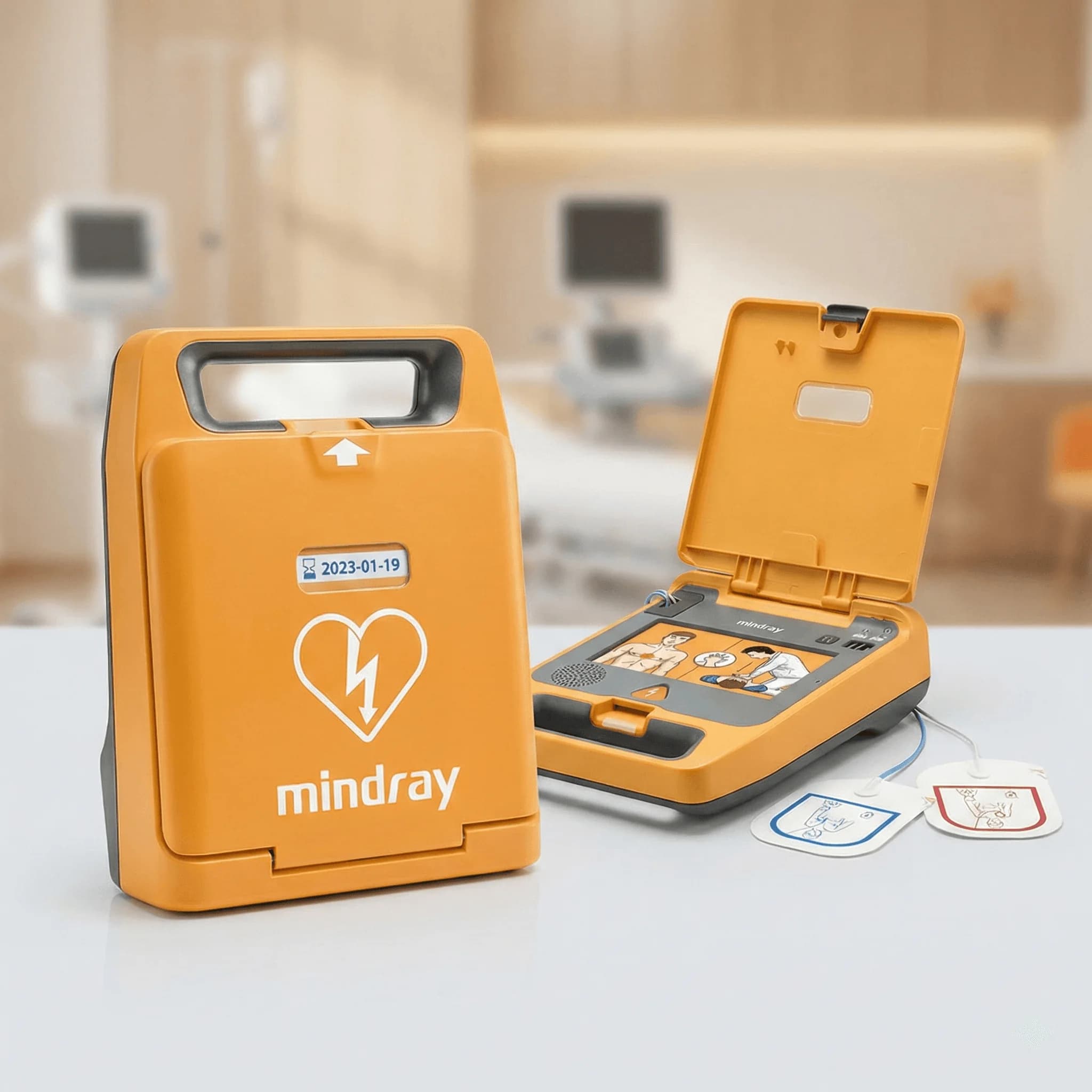
A skater who falls heavily is not always a cardiac arrest victim, but the reverse is possible: an unresponsive person who is not breathing normally must be treated as one. The device guides the procedure by voice, and its rhythm analysis alone decides whether a shock is useful. Staff can therefore use it without fear of doing it wrong.
Remember to dry the chest before applying the pads, as skaters often arrive sweaty or with condensation under their clothes.
Maintenance and staff training
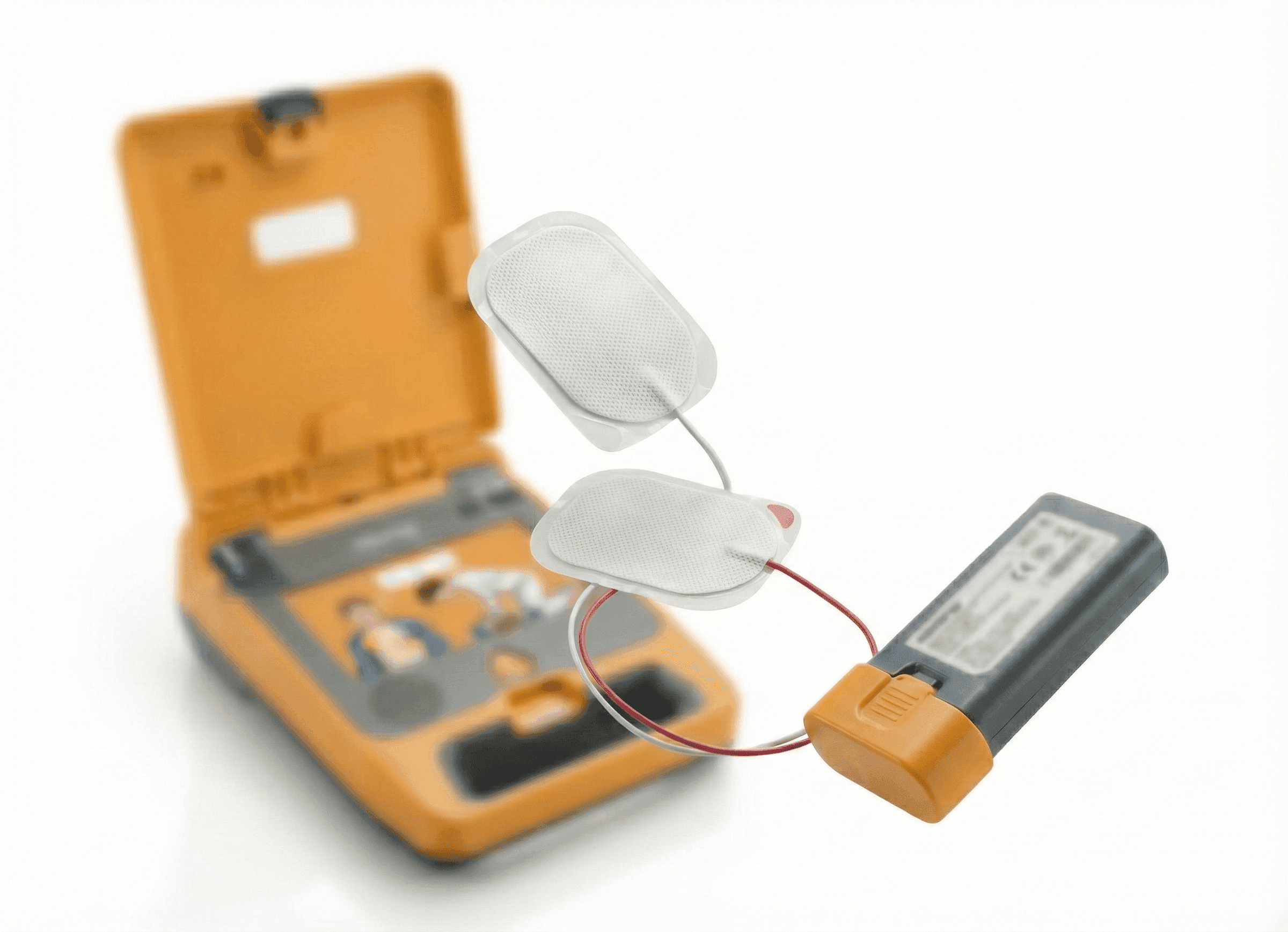
Maintenance is the operator's responsibility under article R. 5212-25 of the Code de la santé publique (French Public Health Code). The operator checks the self-test indicator, tracks deadlines and replaces consumables on time: pads last 2 to 5 years, batteries 3 to 5 years, and the device itself 8 to 10 years and more. Registration in GéoDAE is mandatory.
As cold can shorten a battery's useful life, more frequent checks during the operating season are a reasonable precaution. Rental, from 50 € excl. VAT per month with maintenance included, relieves the operator of consumables tracking. The warranty is 5 years, delivery takes 2 to 5 working days and a quote is provided within 24 hours.
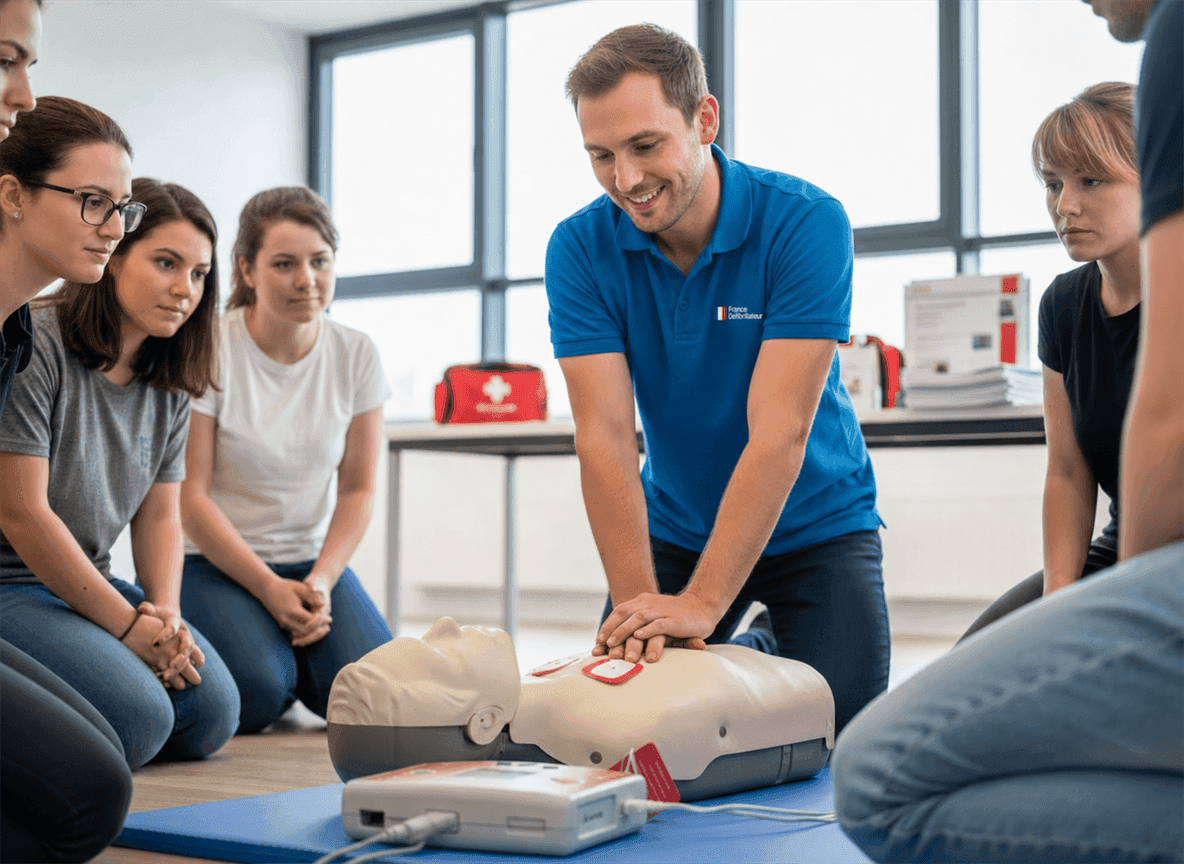
Rink guards, instructors, club coaches and reception staff are first on the scene. Basic life-saving training lets them alert emergency services, perform compressions and connect the device. A drill on the ice, in real conditions, quickly reveals weak points: access to the rink, a gate to open, who calls emergency services.
Frequently asked questions
Does an ice rink have to have an AED?
It depends on the ERP category. Categories 1 to 4 are subject to the obligation, as are some category 5 buildings since 2022. An indoor rink is classified by its capacity, spectators included. The safety commission confirms the classification.
Where should an ice rink's AED be installed?
Near the rink entrance or the front desk, in a heated area, with signage visible from the ice and the stands. The device must be reachable within a few dozen seconds, with no stairs or locked door in the way.
Does cold damage a defibrillator?
Each manufacturer specifies a storage and operating temperature range. Compare it with the actual temperature of the hall and avoid the wall by the boards. An indoor cabinet in a heated area is the safest solution.
Who handles maintenance in an ice rink?
The operator, under article R. 5212-25 of the Code de la santé publique. They check the self-test, replace pads and battery when due, and can entrust this to a provider through a rental with maintenance included.
Should ice rink staff be trained?
Training is not always required, but it is strongly recommended for guards, instructors and reception staff. Basic life-saving awareness lets them alert emergency services, perform compressions and use the device without hesitation during an emergency.
Planning an AED project?
Purchase, rental from 50 EUR excl. VAT per month, installation with GéoDAE registration, servicing and training: our team replies within 24 hours.