Defibrillator in a Leased Shop: Landlord or Tenant, Who Installs It?
Written by Cyrille GAGNAIRE, France Défibrillateur. Published on 1 September 2026.
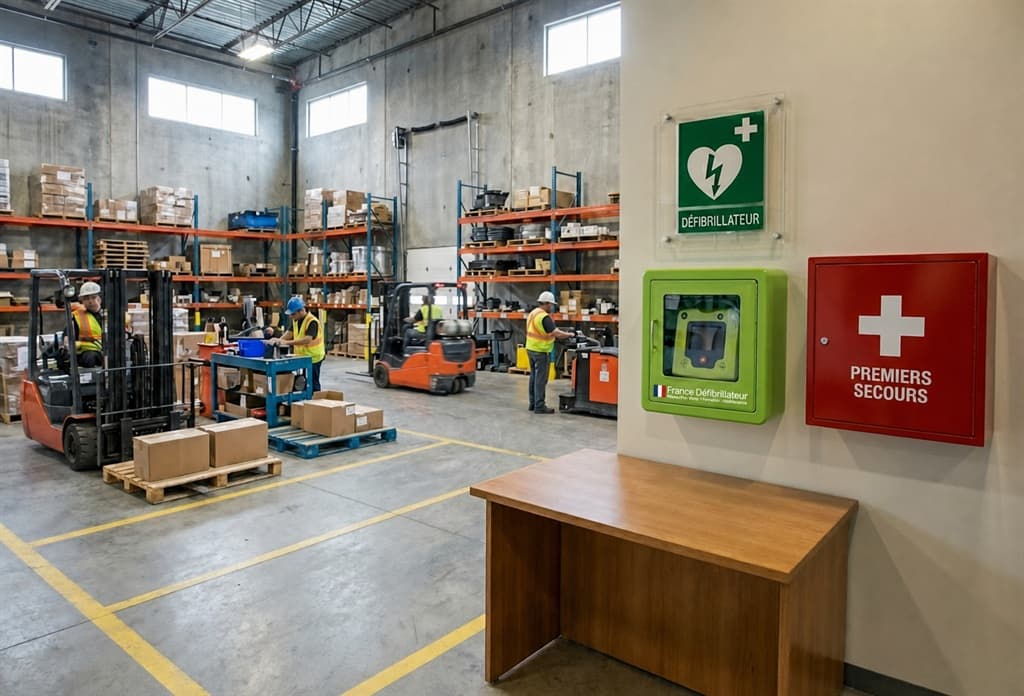
A shop changes tenants, a franchise changes manager, a commercial lease ends: each time, the defibrillator question resurfaces. French law requires this equipment in establishments open to the public according to their category, but it does not clearly state whether the duty falls on the building owner or on the operator who welcomes customers there. Here is how the law actually splits this responsibility, and how to secure it in a commercial lease.
The legal duty targets the operator, not necessarily the owner
French law 2018-527 and its implementing decree 2018-1186 (loi 2018-527, décret 2018-1186, French legislation) require an automated external defibrillator, AED (called DAE in French), in establishments open to the public (ERP, the French category for buildings receiving the public) according to a schedule set by category: categories 1 to 3 since 1 January 2020, category 4 since 2021, and some category 5 establishments since 2022. The text targets the operator of the establishment, meaning the person or company that actually welcomes the public and runs the activity, not necessarily the owner of the building.
In a unit leased to a shopkeeper, restaurant owner or gym, the operator is therefore the tenant. The owner is only concerned if they run the business themselves, for instance when they directly manage an activity open to the public in their own building. This distinction explains why so many commercial leases stay silent on the topic, even though the duty does apply to one of the two signing parties.
What the commercial lease should specify
A standard commercial lease describes upkeep duties, service charges and required insurance, but it often leaves out any provision related to life safety equipment such as the defibrillator. Without a dedicated clause, each party assumes the other is handling it, which delays installation or leaves an end of life device with no one to renew it.
A simple clause is enough to remove the ambiguity: it states who buys or rents the device, who handles its maintenance under article R. 5212-25 of the French public health code (article R. 5212-25 du code de la santé publique, French health regulation), who checks its self test indicators, and who updates its registration in GéoDAE (the French national defibrillator directory). This point deserves the same negotiation as any other safety equipment in the unit, before signing rather than after an incident.
What happens to the defibrillator when the tenant changes
A commercial lease ends, a business is sold, a franchise changes manager: in every case, the defibrillator must keep protecting the public who visits the unit, whatever name is on the door. Two options exist. The first treats the device as equipment attached to the unit, which stays in place and passes on to the next operator, much like an electrical installation.
The second treats the defibrillator as professional movable property belonging to the outgoing tenant, who takes it to their new premises. No rule imposes either solution, which is why it is worth settling in writing. Either way, the GéoDAE registration must be updated with the new operator's details, otherwise emergency services locate a device linked to a business that no longer exists there.
A table of responsibilities by situation
Who handles what mostly depends on who actually runs the activity open to the public. The table below summarises the most common cases found in retail and services.
| Situation | Installing the defibrillator | Maintenance and monitoring |
|---|---|---|
| Owner who runs the business themselves | Owner | Owner |
| Unit leased to an independent shopkeeper | Tenant operator | Tenant operator |
| Franchise with a manager | Franchisee, unless the contract states otherwise | Franchisee, unless the contract states otherwise |
| Shared building with ground floor shops | Each operator for their own establishment | Each operator for their own establishment |
Rental, a flexible option for commercial leases
For an operator who is not certain of staying in the same unit for years, buying a defibrillator is not always the most practical choice. Rental, available from 50 euros excl. VAT per month with maintenance included, avoids tying up capital in equipment that may need to be transferred or returned during the lease.
This option generally includes consumables tracking and a 5 year warranty, with delivery in 2 to 5 working days and a quote within 24 hours. It also simplifies the handover when the operator changes, since a rental contract is easier to take over or cancel than a purchase is to resell.
Planning ahead before signing the lease
The best time to settle the defibrillator question is when negotiating the lease, not when opening the shop. A future operator can ask the owner whether a device is already installed, what condition its electrodes and battery are in, and whether its maintenance is up to date. An owner can, in turn, require in the lease that the tenant install and maintain a defibrillator throughout the occupancy.
This clarification protects both parties: the owner avoids being held liable for a failure that falls under the tenant's operation, and the tenant avoids discovering the duty during an inspection, or worse, during a cardiac arrest occurring on the premises with no device available in time.
Frequently asked questions
Must the owner of a leased shop install a defibrillator?
Not automatically. The duty under French law 2018-527 targets the operator of the establishment open to the public, generally the tenant who runs the business there. The owner is only concerned if they run the business themselves. It remains possible, and advisable, to allocate this duty differently through a commercial lease clause.
What happens to the defibrillator when the tenant leaves the unit?
No general rule dictates it, so two outcomes coexist: the device stays attached to the unit for the next operator, or it leaves with the tenant as professional equipment. Either way, the GéoDAE registration must be updated with the new operator's details.
Who pays for defibrillator maintenance in a leased unit?
Article R. 5212-25 of the French public health code assigns maintenance to the operator of the establishment. In a leased unit, that generally means the tenant running the business, unless the commercial lease sets a different arrangement between the parties.
Is defibrillator rental suitable for a short term commercial lease?
Yes, it is particularly well suited. From 50 euros excl. VAT per month with maintenance included, and a 5 year warranty, it avoids tying up capital in equipment that may need to be transferred or returned before a purchase would be paid off.
Should the defibrillator be mentioned in the commercial lease?
It is not a legal requirement, but it is strongly advised. A dedicated clause avoids misunderstandings about who installs the device, who maintains it, and what happens to it if the tenant leaves or the business is sold.
Planning an AED project?
Purchase, rental from 50 EUR excl. VAT per month, installation with GéoDAE registration, servicing and training: our team replies within 24 hours.