Defibrillators in Places of Worship: Rules and Practice
Written by Cyrille GAGNAIRE, France Défibrillateur. Published on 7 September 2026.
Churches, temples, mosques and synagogues welcome worshippers every week, and far more during major religious festivals, weddings or funerals. Classified as public buildings of type V under French safety rules, these venues follow the same automated external defibrillator requirements as any other ERP (etablissement recevant du public), with thresholds set by their category. This article covers the obligation by building size, the specifics of an often elderly congregation and irregular use, and the equipment and training choices suited to volunteers.
A place of worship is still a public building
Churches, temples, mosques and synagogues are classified as type V public buildings (ERP, etablissement recevant du public) once they regularly welcome worshippers. Like any ERP, they fall into a category from 1 to 5 based on their maximum theoretical occupancy, calculated in particular from the floor area of the nave or prayer hall.
This category determines whether the requirement to install a DAE (AED), an automated external defibrillator, applies. French law 2018-527 and its implementing decree 2018-1186 set a phased schedule: categories 1 to 3 equipped since 1 January 2020, category 4 since 2021, some category 5 facilities since 2022. A large cathedral or mosque that can welcome several hundred worshippers often crosses the category 3 or 4 threshold, while a small rural chapel remains in category 5.
Occasional gatherings change the picture
Outside regular services, a place of worship sees attendance spikes during major religious festivals, weddings, baptisms or funerals, when numbers far exceed everyday attendance. These moments carry a higher statistical risk simply because more people gather in the same place, often standing for long periods, in buildings that can be poorly ventilated in summer.
The congregation also includes a significant share of elderly people, who remain among the most regular worshippers in many faiths. This demographic reality reinforces the case for suitable equipment, even for facilities that do not cross the legal threshold set by the regulation.
Every minute counts in a cardiac arrest
France records around 50,000 cardiac arrests a year, and every minute without defibrillation reduces the chances of survival by around 10 percent. In a large building such as a church or a big mosque, the time needed to reach a defibrillator stored far from the main nave can cost those decisive minutes.
Emergency services generally take several minutes to arrive, even longer in rural areas where many places of worship are located. A device available on site, combined with an immediate call to emergency services, remains the only way to act before they arrive.
Where to install the device in an older building
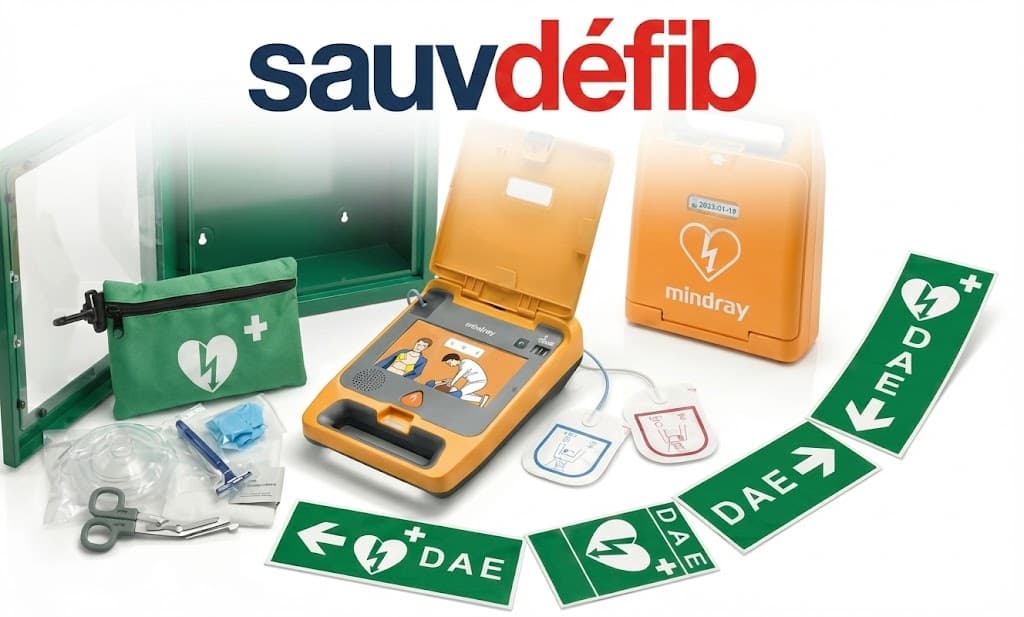
The entrance hall or narthex, used by every worshipper, is often the best location, provided it is visible and signed in line with the French order of 29 November 2018 on signage. The sacristy, reserved for clergy, is less suitable since access is restricted during services.
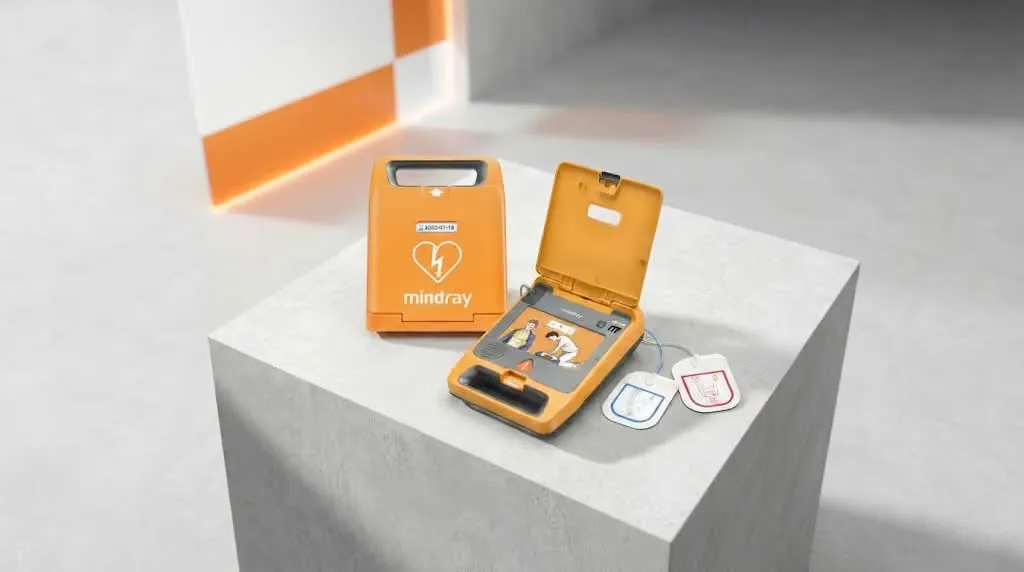
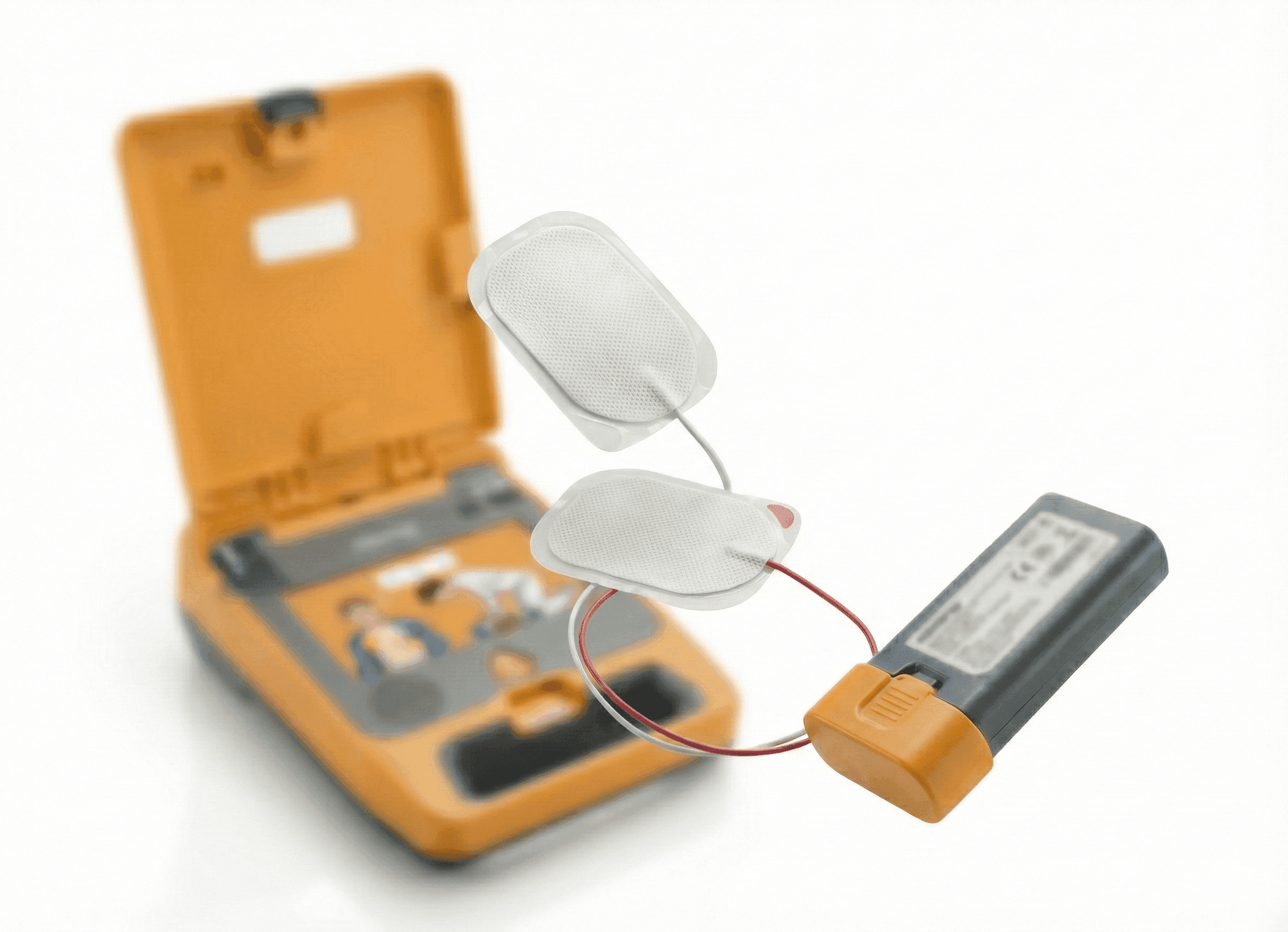
Older buildings, often poorly heated or unheated in winter, require checking the operating temperature range of the unit and its battery. A wall cabinet with thermal regulation prevents cold-related failures in uninsulated buildings, and illuminated signage helps locate the device in a dimly lit nave.
Who can respond: volunteers and stewards
Most places of worship run on volunteers: sacristans, parish council members or stewards during major festivals. Awareness training in lifesaving actions, including how to operate the defibrillator, lets them respond without waiting for a health professional, who is not necessarily on site.
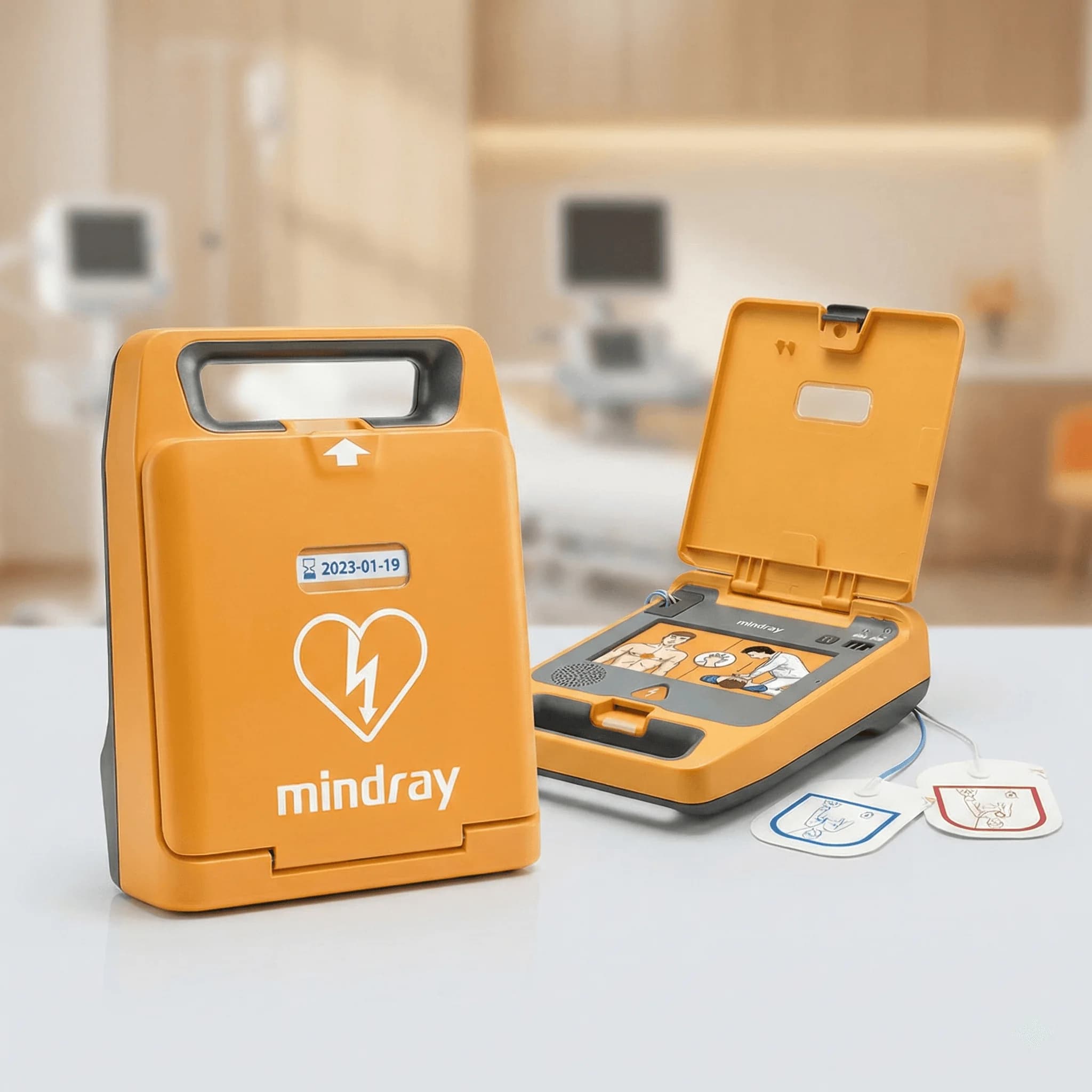
The DAE guides the user aloud through every step, making it accessible to a volunteer with no medical training. Training a group of several people, rather than just one, ensures a trained responder remains available even during services when the usual leaders are occupied elsewhere.
Maintenance and budget suited to irregular use
Maintaining the defibrillator remains the responsibility of the operator of the place of worship, whether a religious association, a diocese or an owning local authority, under Article R. 5212-25 of the French Public Health Code. Electrode pads are replaced every two to five years, the battery every three to five years, and a log kept by a designated volunteer tracks self-tests and renewal dates.
Rental, from 50 euros excl. VAT a month with maintenance included, suits an association with a tight budget. Purchase remains an option, with a five-year warranty, delivery in two to five working days and a quote within 24 hours to compare both options based on the size of the building.
| Type of building | Typical attendance | Typical ERP category |
|---|---|---|
| Small rural chapel | A few dozen worshippers | Category 5 |
| Parish church or temple in town | A hundred to a few hundred worshippers | Category 4 or 5 |
| Cathedral, large mosque or synagogue | Several hundred to a thousand worshippers | Category 2 or 3 |
Frequently asked questions
Is a church or mosque legally required to install a defibrillator?
It depends on its type V ERP category. Categories 1 to 3 have been equipped since 2020, category 4 since 2021, and some category 5 facilities since 2022, under law 2018-527 and decree 2018-1186. A large building welcoming several hundred worshippers often crosses the category 3 or 4 threshold.
Who pays for and maintains the defibrillator in a place of worship?
The operator, whether a religious association, a diocese or an owning local authority, handles maintenance under Article R. 5212-25 of the French Public Health Code. This covers self-tests, replacing electrode pads every two to five years and the battery every three to five years.
Does an unheated building need a specific defibrillator?
Yes, the operating temperature range of the unit and its battery should be checked before buying. A wall cabinet with thermal regulation protects the device in a poorly insulated church or temple, where winter temperatures can drop well below the range recommended for reliable operation.
Who can use the defibrillator during a service?
Any bystander, including an untrained volunteer, can use it thanks to the voice guidance that accompanies every step. Awareness training in lifesaving actions, given to sacristans and stewards, still improves the speed and quality of the response before emergency services arrive.
How can a small parish or religious association afford the equipment?
Rental starts at around 50 euros excl. VAT a month, with maintenance and consumables included, a formula that avoids tying up a tight association budget. Purchase remains possible, with a five-year warranty, delivery in two to five working days and a quote within 24 hours.
Planning an AED project?
Purchase, rental from 50 EUR excl. VAT per month, installation with GéoDAE registration, servicing and training: our team replies within 24 hours.