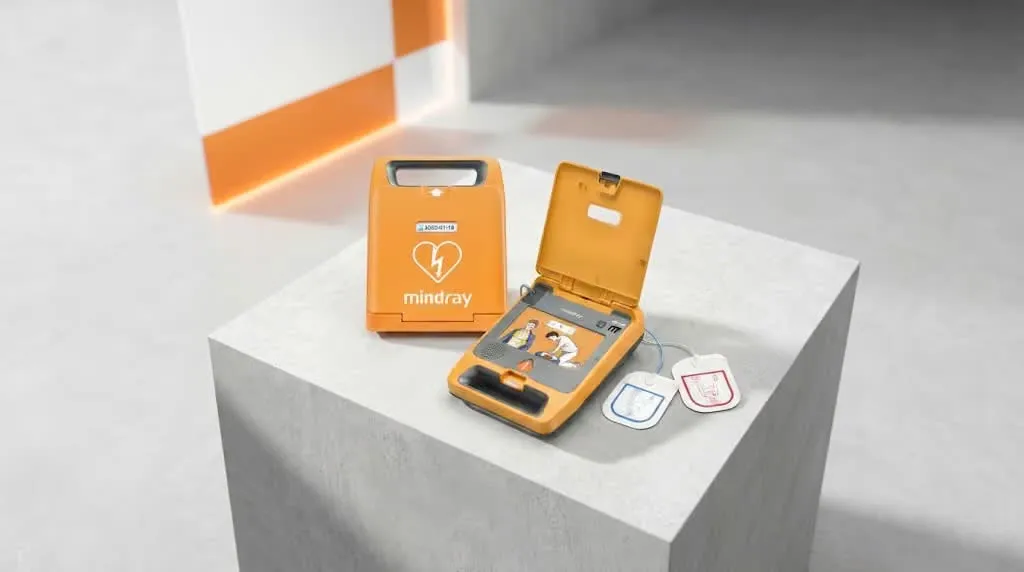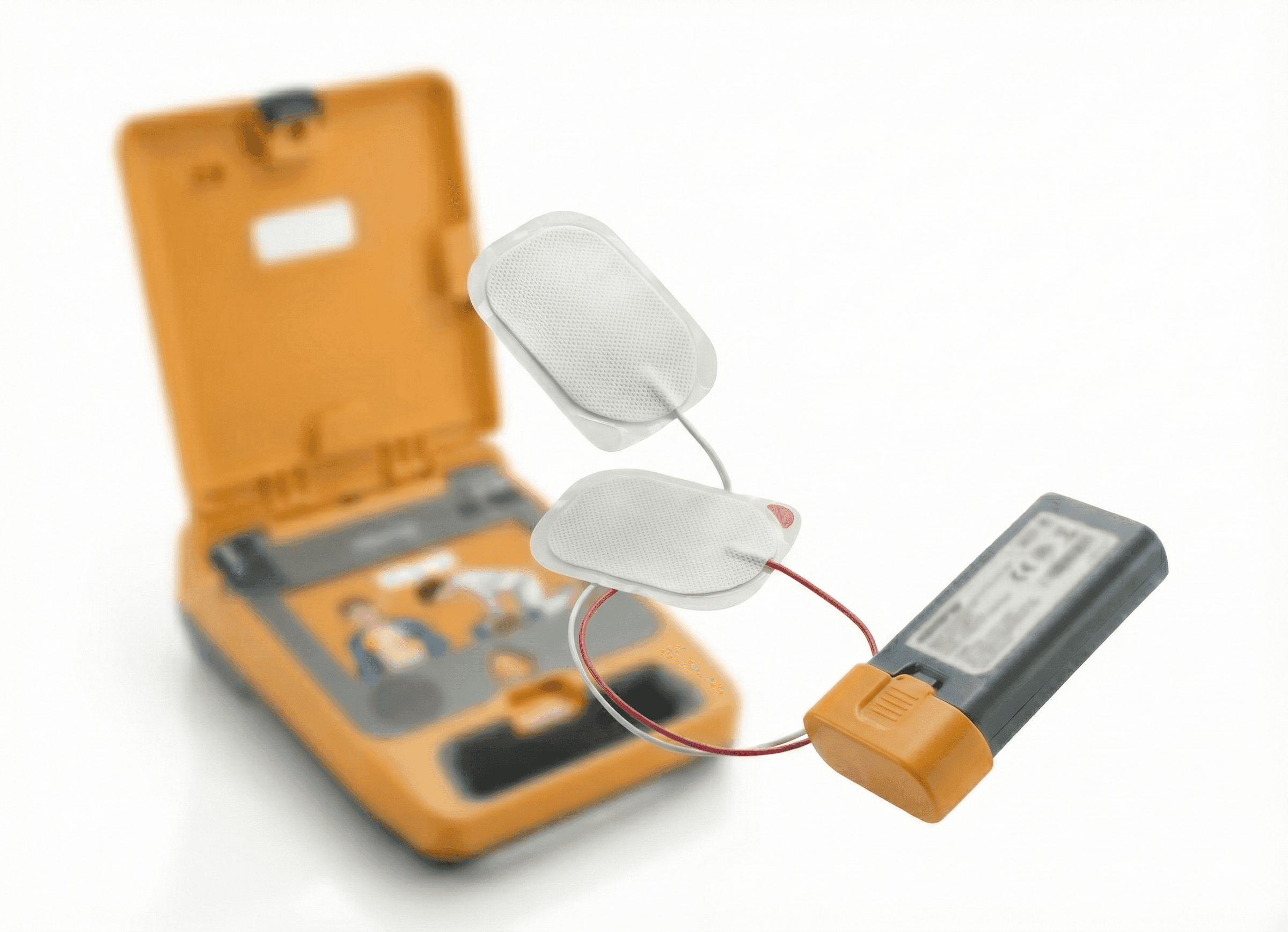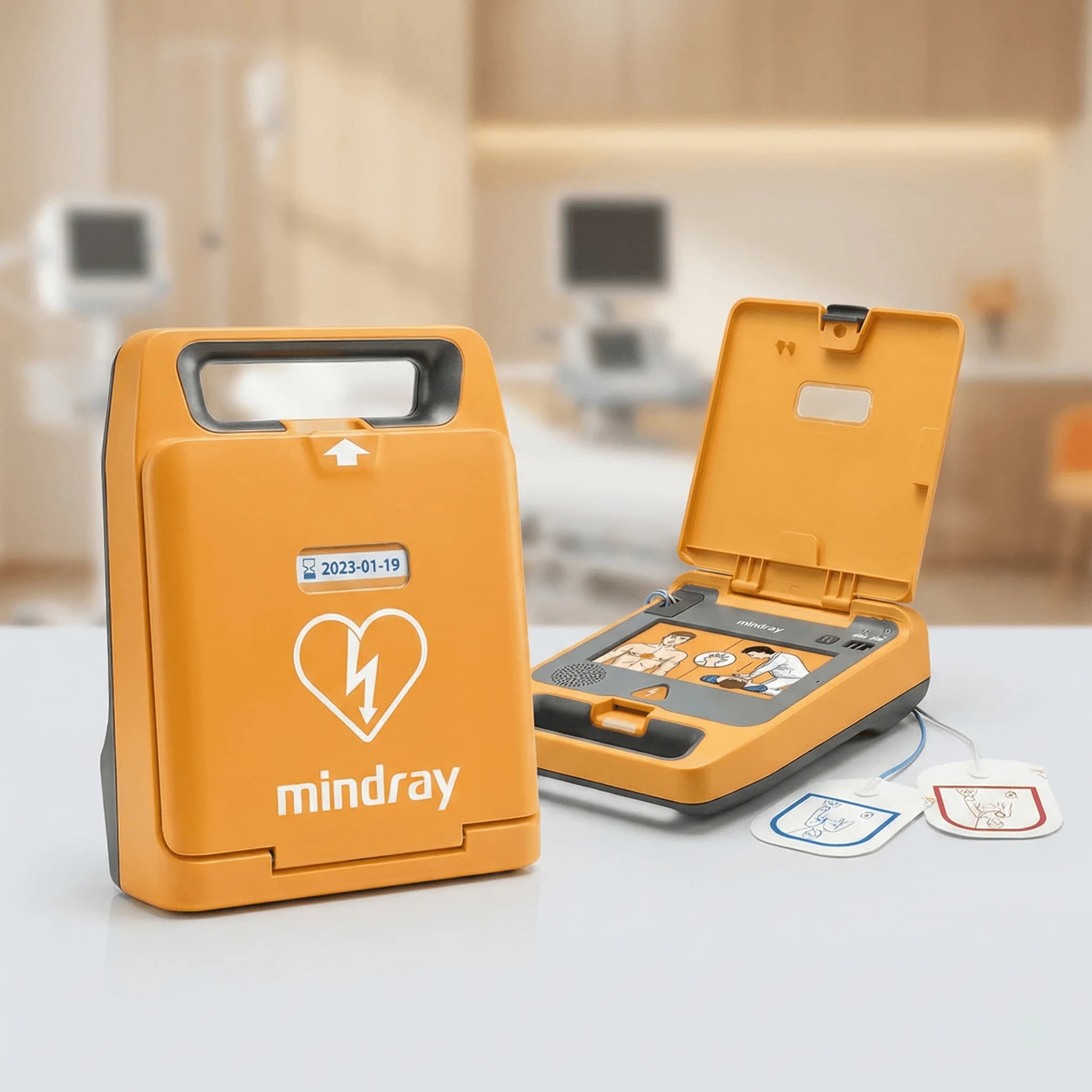
Defibrillators in Hotels: Obligations and Best Practices
Written by Cyrille GAGNAIRE, France Défibrillateur. Published on 6 August 2026.
A hotel is never really closed. A front desk open all night, a restaurant, a spa, rooms spread across several floors or buildings: continuous activity brings in very different guests, often elderly or worn out from travel. Sudden cardiac arrest can happen at any hour, sometimes far from the nearest emergency service in a rural or touristic area. Legal obligations, where the defibrillator is placed, training staff on both day and night shifts, and budget all shape how well a property can react in the first minutes that matter most.
A property that never fully closes
Unlike an office or a shop, a hotel welcomes guests continuously, even when staffing is at its lowest. Guests include elderly travellers, people worn out after a long journey, and sometimes visitors who have been drinking at an event held on site. This mix raises the odds that a cardiac emergency happens on a quiet night with minimal staff present, while outside emergency services may take several minutes to arrive, especially in touristic areas far from a hospital.
The chain of survival depends on how fast someone acts before emergency responders arrive. An accessible defibrillator (AED) together with staff able to respond makes a direct difference to survival odds, whatever the hour.
What the regulation requires from a hotel
A hotel falls under the French ERP type O classification, reserved for accommodation venues (public-facing establishments subject to safety rules). Whether a defibrillator is mandatory depends on the category calculated from the number of people the property can host. Establishments in categories 1 to 3 have had to be equipped since 1 January 2020, category 4 since 2021, and some category 5 establishments since 2022, under French law loi 2018-527 and its implementing décret 2018-1186.
Two further obligations come with owning the device. The defibrillator must be registered in the Géo'DAE database, so emergency services can locate the nearest unit. Signage indicating its location must follow the model set by the French arrêté du 29 novembre 2018, visible from corridors and the front desk.
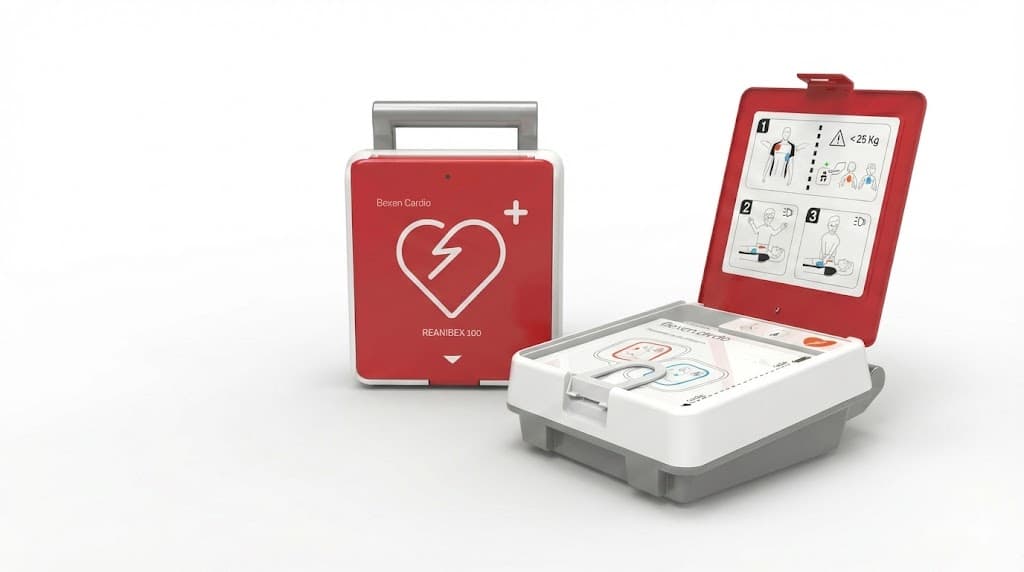
Where should a hotel install its defibrillator?
The front desk is often the best location, since it stays staffed around the clock and sits at the crossing point for guests and employees alike. For a property spread across several buildings or floors, one unit is not always enough: the walk from a distant room to the front desk can exceed the few minutes during which intervention remains most effective.
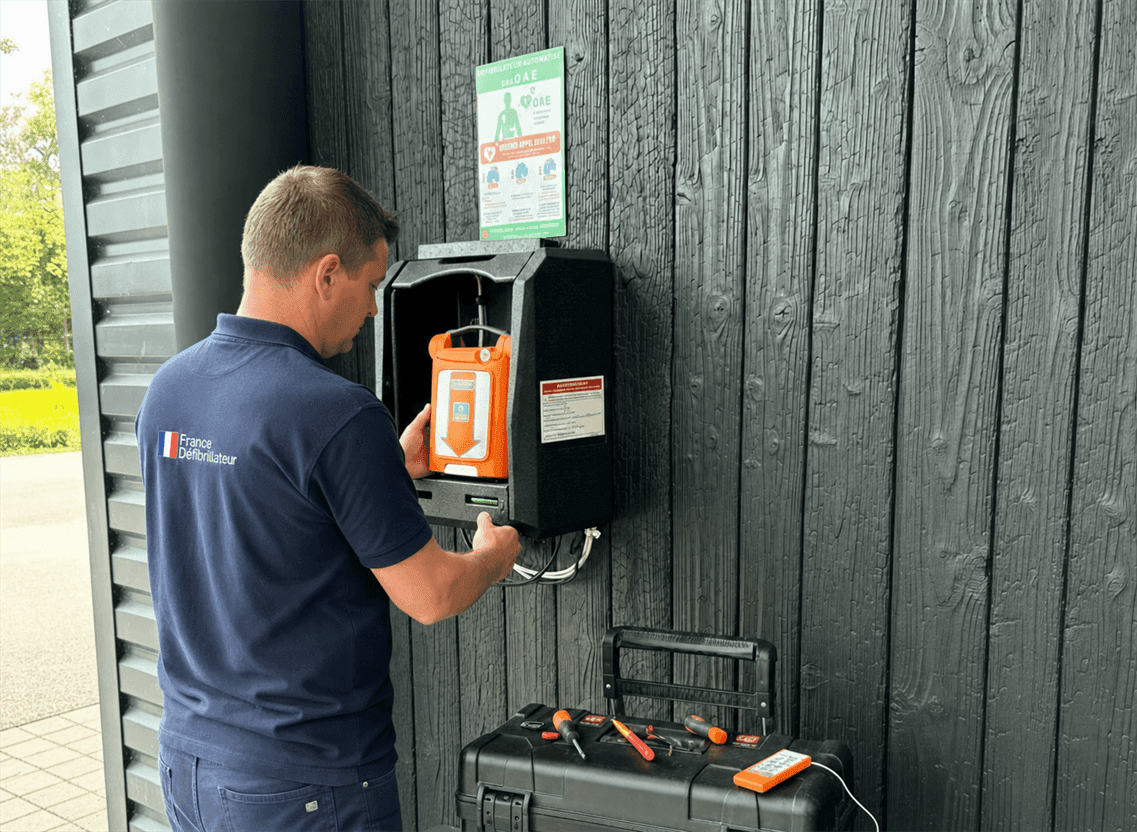
High-traffic areas such as the restaurant, the bar, the pool or the spa deserve particular attention, since physical exertion and water both raise cardiovascular risk. A heated outdoor cabinet allows continuous access even outside front-desk hours, while an indoor unit suits areas that are permanently supervised.
Training staff without disrupting service
Hotel staff work in rotating shifts, with reduced presence at night and seasonal reinforcements in summer. This structure means several people need training rather than a single point person: day and night receptionists, housekeeping staff, security agents and restaurant employees. An automated external defibrillator guides the user through voice prompts, which lowers the barrier to use, but training in life-saving gestures remains necessary to act quickly and without hesitation.
Short refresher sessions, repeated each season or when new employees join, keep the skill from fading as staff turnover runs its course, which is common in the sector. Folding this reminder into the onboarding path for new hires keeps coverage steady despite team changes.
Maintenance, log book and monitoring
Maintaining the defibrillator is the responsibility of the establishment's operator, under French article R. 5212-25 of the Code de la santé publique (public health code). It includes regularly checking the device's self-tests and replacing consumables before their expiry: pads between 2 and 5 years depending on the model, batteries between 3 and 5 years, with the unit itself remaining operational for 8 to 10 years and often longer.
A safety log book tracking checks, replacements and any actual uses makes inspections easier and reassures staff. For a hotel group managing several properties, centralising this tracking prevents any single site from slipping through the annual review.
Buying or renting depending on the size of the property
An independent hotel with a limited investment budget often benefits from renting, available from 50 euros excl. VAT per month with maintenance included, which simplifies management without tying up cash. A hotel group equipping several addresses may prefer to buy, with a 5 year warranty on the equipment, delivery within 2 to 5 business days and a quote provided within 24 hours to compare options before deciding.
| Criteria | Buying | Renting |
|---|---|---|
| Upfront budget | Initial investment | No initial investment |
| Maintenance | Arranged separately | Included in the monthly fee |
| Warranty | 5 years on the equipment | Equipment always under warranty |
| Best suited to | A single site or a long-term asset | Several sites or a controlled budget |
Frequently asked questions
Is a hotel required to have a defibrillator?
It depends on the ERP category calculated from the number of people the property can host, guests and staff included. Categories 1 to 3 have been equipped since 2020, category 4 since 2021, and some category 5 establishments since 2022. A small hotel may therefore fall outside the obligation, but equipping it is still advisable given the round-the-clock activity and the range of guests welcomed.
Does a large hotel need a defibrillator in every building?
Nothing formally requires it, but access time governs how effective the device actually is. If a building or a floor sits several minutes' walk from the only defibrillator (AED), installing a second unit is safer than risking too long a delay, since every minute without defibrillation lowers survival odds by around 10 percent.
Who should be trained in life-saving gestures at a hotel?
Ideally, everyone likely to be alone on site when an incident occurs: night receptionists, housekeeping staff, security agents and restaurant employees. Training only one designated person leaves the property exposed whenever that person is off duty or on leave, which happens often in a sector where teams work on rotation.
What should happen if the defibrillator is used overnight?
The device records the intervention and should be checked as soon as possible by whoever is responsible for maintenance. Used pads must be replaced before any further use, even if the device still looks in good condition. A report logged in the property's safety log book completes this check.
How much does it cost to equip a hotel with a defibrillator?
The budget depends on how many units are needed and the choice between buying and renting. Renting starts at 50 euros excl. VAT per month, maintenance included, which suits a property that prefers to spread out the cost. A personalised quote within 24 hours makes it easy to compare scenarios based on the hotel's actual size.
Planning an AED project?
Purchase, rental from 50 EUR excl. VAT per month, installation with GéoDAE registration, servicing and training: our team replies within 24 hours.