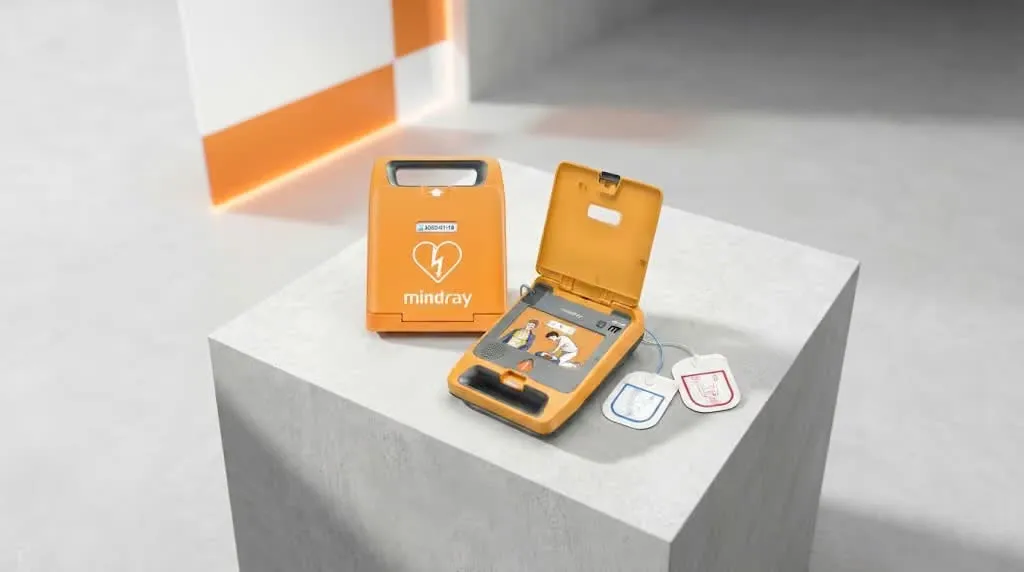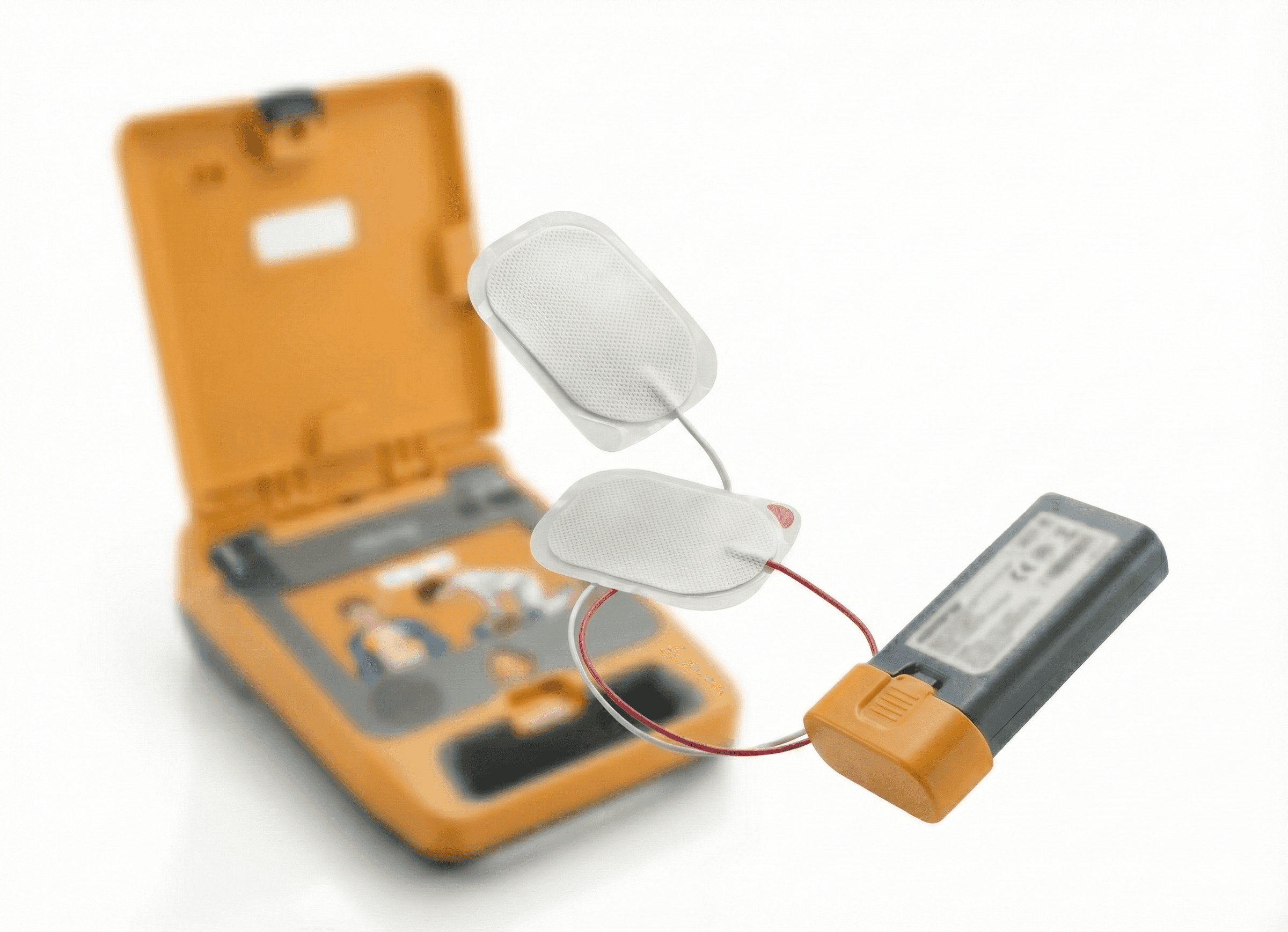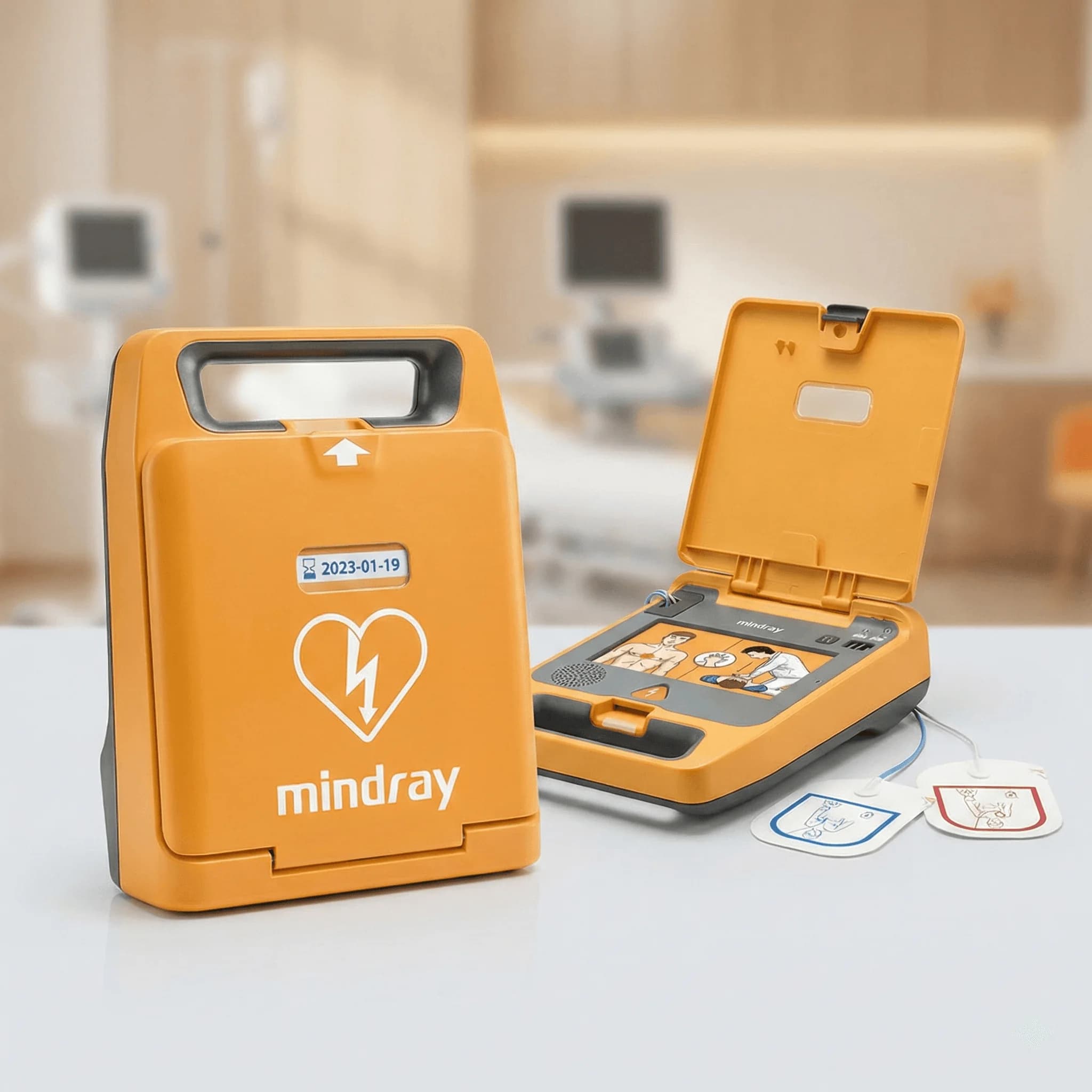
Defibrillator on a golf course: obligations and good practice
Written by Cyrille GAGNAIRE, France Défibrillateur. Published on 11 October 2026.
On a golf course, the clubhouse can be a twenty-minute walk from the last hole. Players are often middle-aged, the effort is prolonged, and emergency services sometimes have to cross the whole course. Yet every minute without defibrillation reduces the chances of survival by about 10%. Here is how to equip and organise a golf course so the device arrives in time.
A large site and an audience to watch over
About 50,000 cardiac arrests occur in France every year. A golf course combines several risk factors: many players over fifty, rounds lasting several hours, walking in the heat or the cold, and sometimes competitions where people play on despite fatigue.
The site's particularity is above all its geography. Between the first tee and the far end of the course, the distance is measured in kilometres. An automated external defibrillator (AED) kept in the clubhouse is then only useful to people close to it.
The people who work on the site are exposed too: greenkeepers, catering staff, instructors. Many work alone, early in the morning, in isolated areas of the estate. Their safety is part of the employer's general obligations, and a nearby device fits this prevention logic.
What the regulations provide
The equipment obligation rests on law 2018-527 and decree 2018-1186 (French law and decree). It targets public-access buildings (ERP, établissements recevant du public) according to their category: categories 1 to 3 since 1 January 2020, category 4 since 2021, and some category 5 ERP since 2022. The buildings of a golf course, clubhouse, restaurant, shop, meeting room, are concerned depending on their category, to be confirmed with the safety commission.
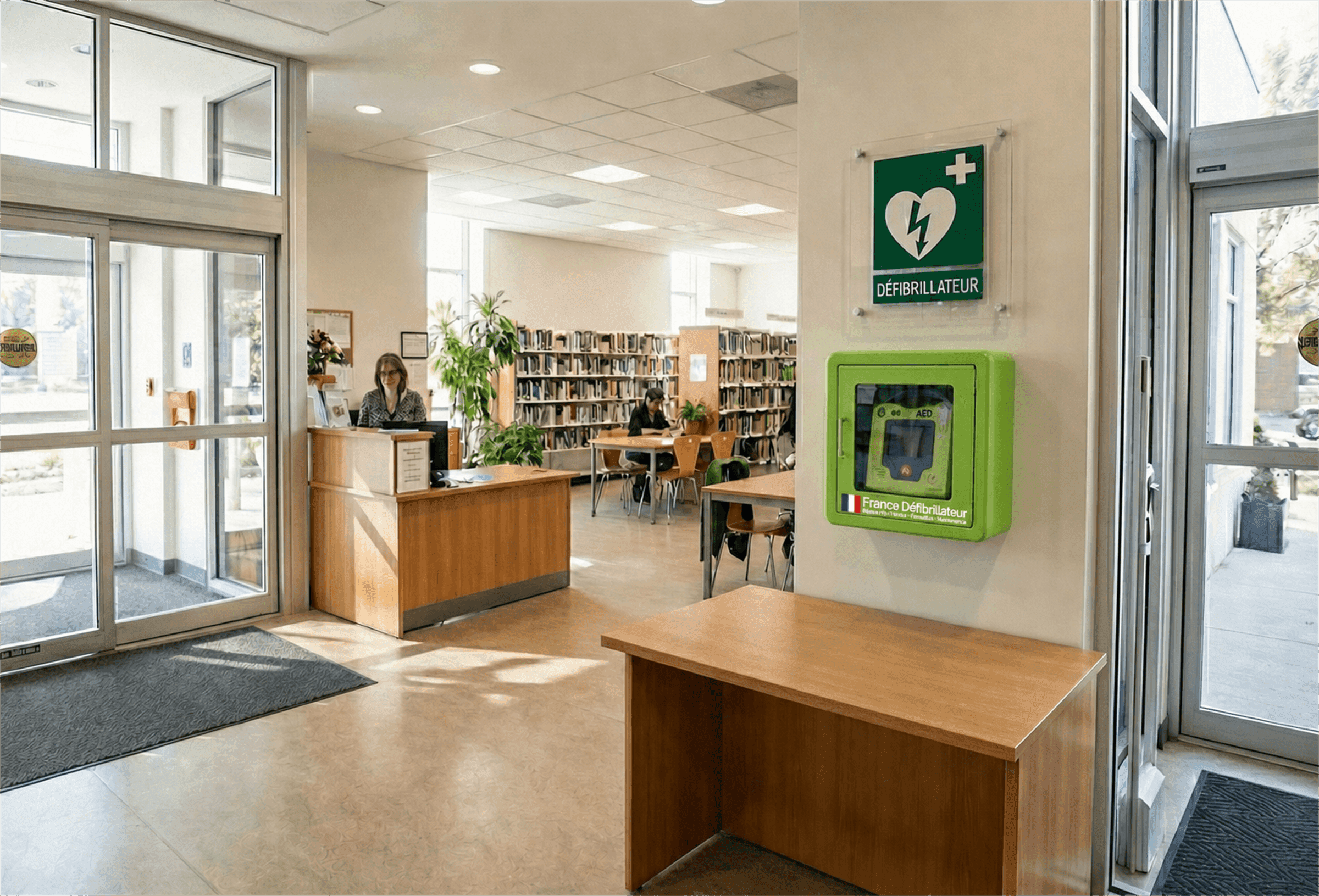
The course itself is not a building, but the manager has every interest in including it in their planning. The device must be registered in GéoDAE, signage follows the arrêté du 29 novembre 2018 (order of 29 November 2018), and maintenance remains the operator's responsibility under article R. 5212-25 of the Code de la santé publique (French Public Health Code).
Where to place devices across the estate
The criterion is not the distance shown on a map, but the real time needed to fetch the device and return to the victim. On a golf course, this time depends on terrain, paths and the means of transport available.
The most reliable method is to walk the estate with a stopwatch, on foot and by buggy, from the most distant points. The locations to study first are the following.
| Area | Point to watch |
|---|---|
| Clubhouse and reception | Device visible, signposted and accessible during all opening hours |
| First tee and driving range | High-traffic area, with many players at the same time |
| Mid-course, at the halfway house | Central point that shortens the distance to the farthest holes |
| Buggy shed | Possibility of carrying a device on the response staff's vehicle |
Buggy, weather and choice of equipment
A device carried on the marshal's or maintenance staff's buggy makes it possible to cover a large estate with little fixed equipment. It must be properly secured, protected from impacts and water splashes, and remain available during playing hours.
Weather matters too. Heat, frost and humidity damage a poorly stored AED. Check the manufacturer's manual for operating and storage temperature ranges, and plan a suitable cabinet if the device stays outdoors, for example near the first tee.
Finally, think about competitions and corporate events, which gather many people on a single day. Providing an additional device, rented for the occasion or placed at the start, reassures organisers and participants.
Training the team and organising the alert
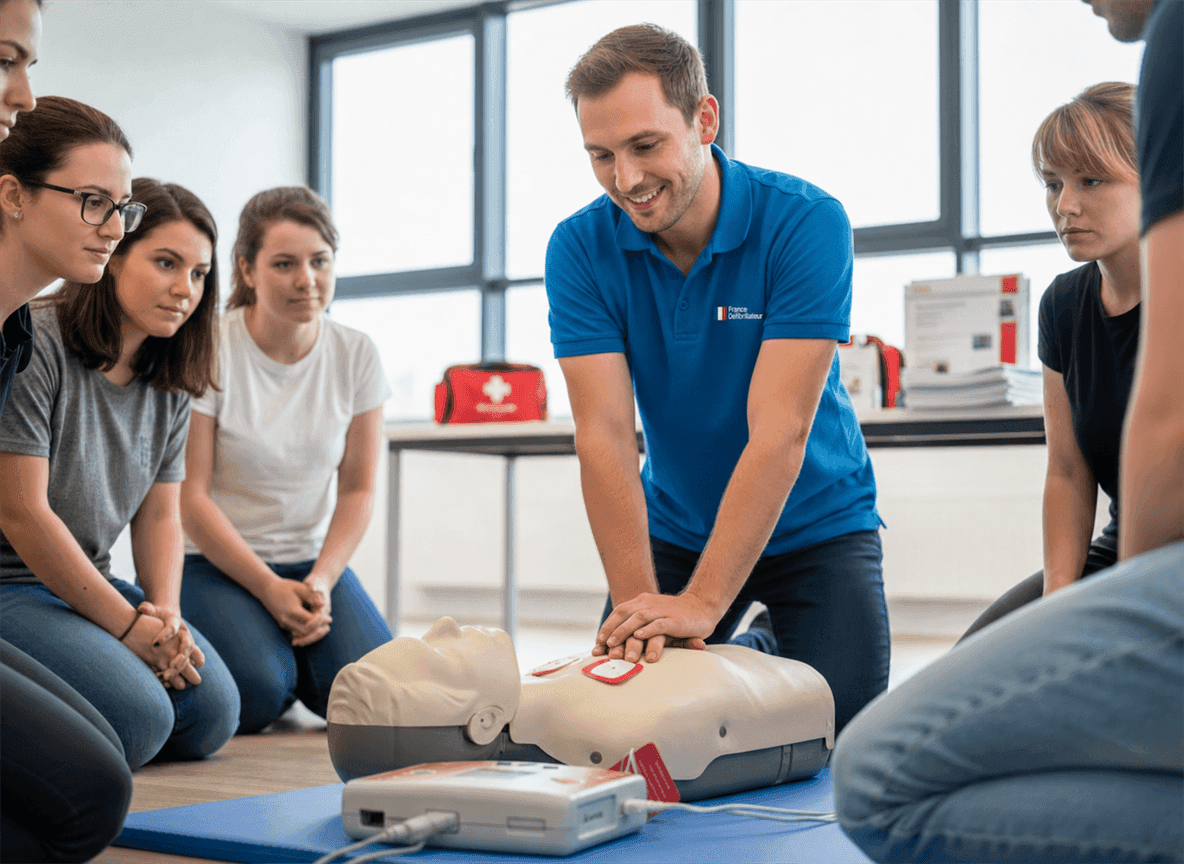
An automated defibrillator guides the user step by step, and anyone can use it. It remains preferable for reception staff, marshals, greenkeepers and instructors to be trained in chest compressions and AED use, with regular refreshers.
Plan a simple procedure: who calls 15 or 112, who brings the device, who guides the ambulance from the entrance to the right hole. Locating the scene is the weak point of large estates, hence the value of numbering access points and giving emergency services a map. A simulation exercise once a year lets you test this scenario.
Maintenance, rental and purchase
The operator must ensure each device is operational at all times. Electrodes are replaced every 2 to 5 years, batteries every 3 to 5 years, and the AED itself lasts 8 to 10 years and more. With several scattered devices, a check register prevents missing a deadline.
To delegate this follow-up, rental starts from 50 € excl. VAT per month, maintenance included. When buying, the warranty is 5 years, delivery takes 2 to 5 working days and a quote is provided within 24 hours. France Défibrillateur can help you size the number of devices according to your course layout.
After any use, the device must be checked, the electrodes replaced and the intervention recorded, so that the site is never left without an operational defibrillator.
Frequently asked questions
Is a golf course required to have a defibrillator?
It depends on the ERP category of its buildings, such as the clubhouse or restaurant. Categories 1 to 4 are subject to the obligation, and some category 5 ERP as well. Confirm the category with the safety commission, and equip yourself even without a strict obligation.
How many defibrillators does an 18-hole course need?
The law sets no number. A device must be able to reach any person within a few minutes, round trip included. Test travel times on foot and by buggy from the most distant points, then add fixed or mobile devices if needed.
Can an AED be carried on a golf buggy?
Yes, provided it is secured, protected from impacts, humidity and temperature extremes, and the manufacturer's manual is followed. The vehicle must be available during playing hours, and the driver trained in using the device.
Who is responsible for maintenance on a golf course?
Maintenance falls to the operator under article R. 5212-25 of the Code de la santé publique (French Public Health Code). It includes monitoring self-tests, replacing electrodes and batteries when due, and keeping a register. A rental contract can include this follow-up.
Planning an AED project?
Purchase, rental from 50 EUR excl. VAT per month, installation with GéoDAE registration, servicing and training: our team replies within 24 hours.