AED in a gîte or guesthouse: obligations and good practice
Written by Cyrille GAGNAIRE, France Défibrillateur. Published on 20 October 2026.
A rural gîte or guesthouse welcomes families, hikers and retirees, often far from an emergency service. The host lives on site, but is not always there when it matters. Cardiac arrest gives no warning, and every minute without defibrillation reduces the chances of survival by about 10%. Here is how to find out whether your property is concerned, where to place the device and how to maintain it without adding to your daily workload.
Gîte, guesthouse: a status that depends on capacity
Small tourist accommodations do not all fall under the same rules. Depending on capacity, the number of rooms and the layout, a property may be classed as an ERP (établissement recevant du public, a public-access building under French law) or remain treated as a private dwelling. This distinction determines the equipment obligation.
As a reminder, ERP of categories 1 to 3 have had to be equipped with a defibrillator since 1 January 2020, category 4 since 2021 and some category 5 ERP since 2022, under loi 2018-527 and décret 2018-1186. A large group gîte or a set of units with a shared room may therefore fall within the obligation.
The safest course is to ask the town hall or the local safety commission. If your property is not subject to the obligation, nothing prevents you from equipping it: it is a precaution your guests will notice.
Why an isolated property is more exposed
Many gîtes stand away from villages, at the end of a track or in the mid-mountains. Emergency services naturally take longer to arrive than in town. Meanwhile, only the people on site can act.
The clientele is particular too: family stays, groups of friends, older guests on a rest cure, sportspeople on an active weekend. A change in altitude, heat or a hike longer than planned are all situations in which the heart can fail.
A defibrillator within reach changes everything. A host, a neighbour or another traveller can deliver the shock in the first minutes by following the device's voice instructions, with no prior training.
Where to install the device in a scattered property
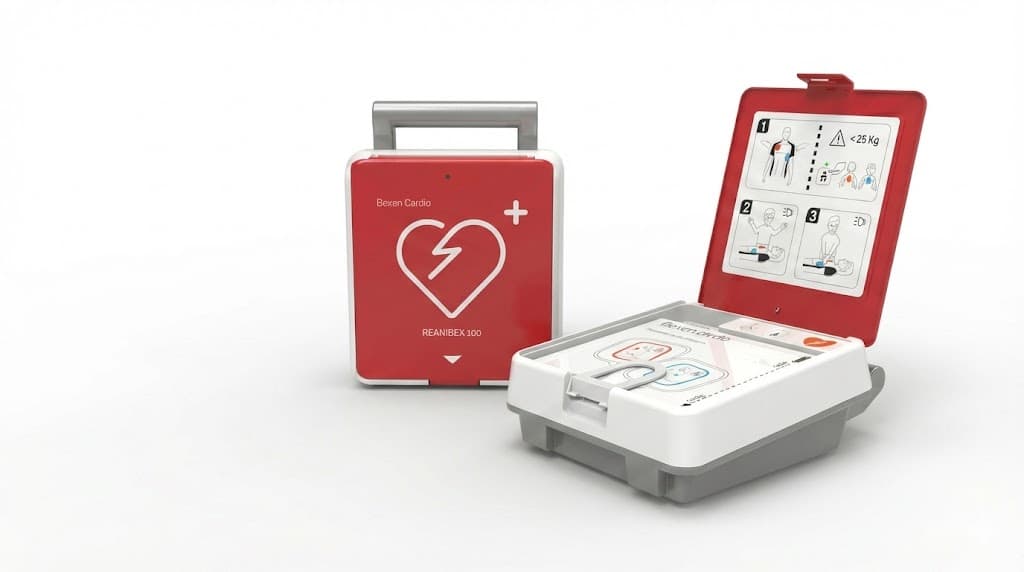
In a guesthouse, the shared entrance or the corridor serving the bedrooms is a good choice: visible, accessible at any hour, close to the telephone. In a group of several gîtes, favour a central point known to everyone, near reception or the common room.
The device must be accessible day and night. If the host is not always present, an outdoor cabinet or a room open to guests avoids hunting for a key at the decisive moment. The cabinet also protects the equipment from temperature swings, common in the countryside.
Signage follows the arrêté du 29 novembre 2018 (the French ministerial order of 29 November 2018): a standard pictogram at the device and directional signs from the entrances. Mention it in the welcome booklet and on the plan displayed in each unit.
Maintenance and registration: the operator's duties
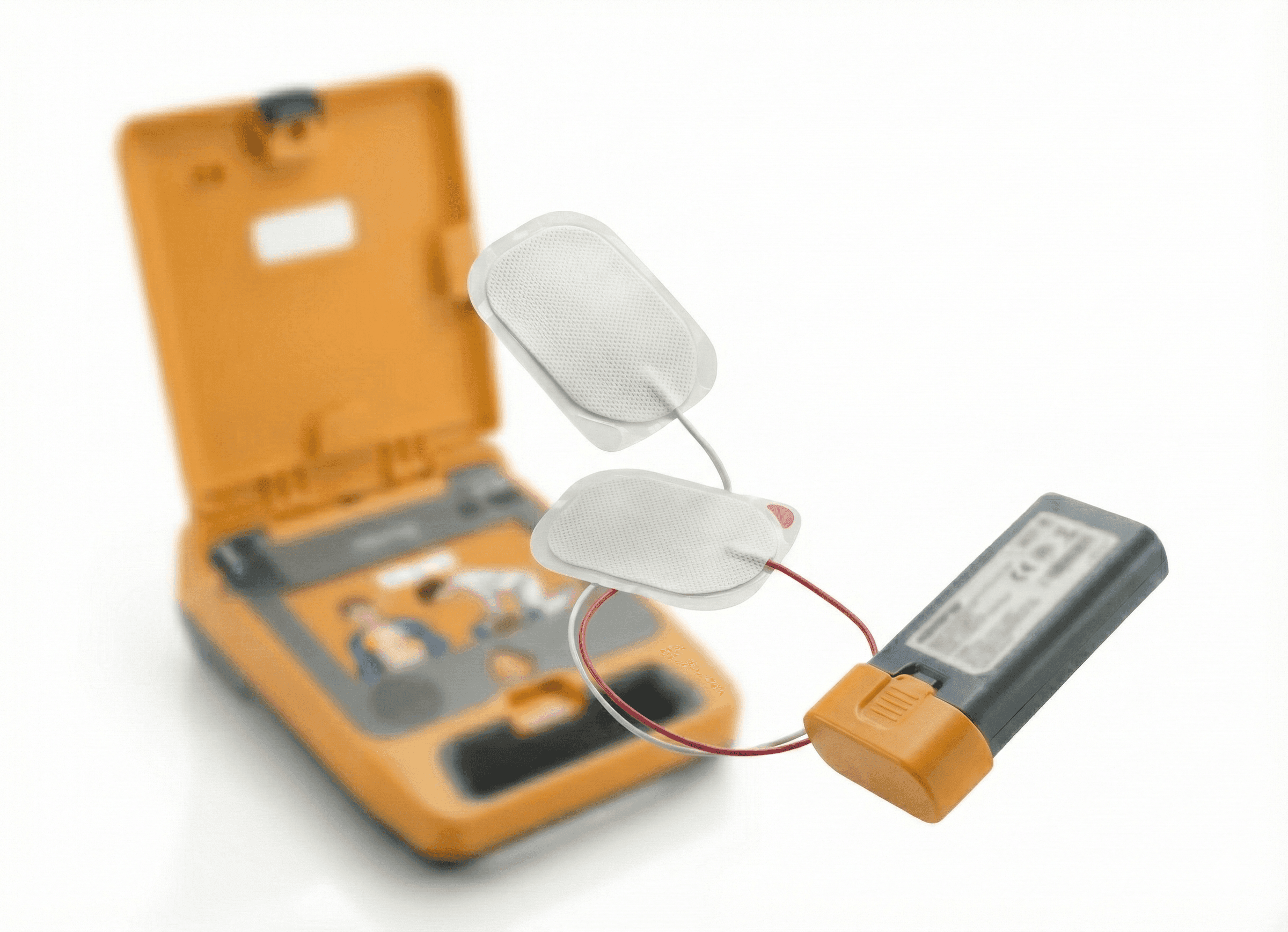
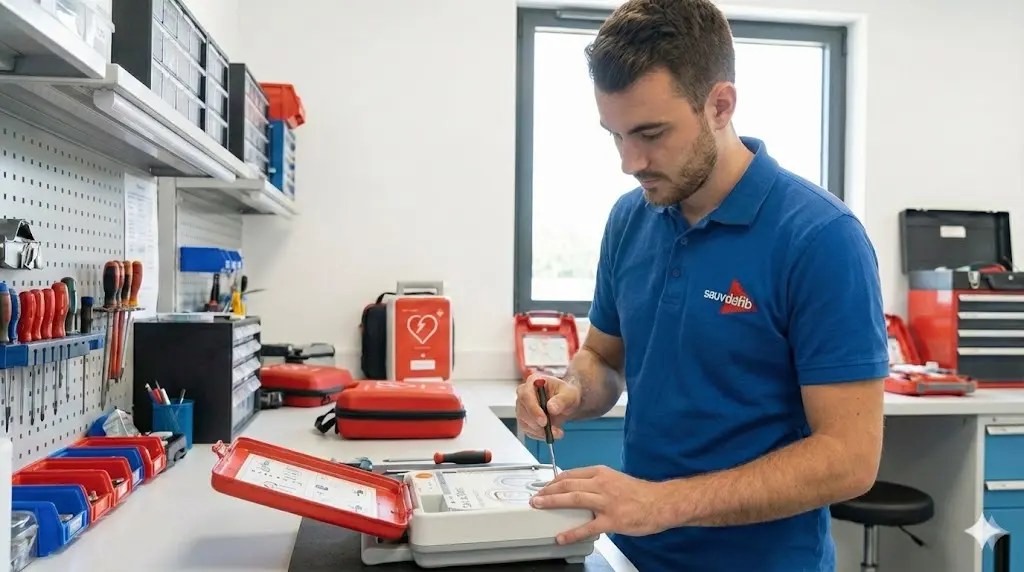
Maintenance is the operator's responsibility under article R. 5212-25 du Code de la santé publique (the French Public Health Code). In practice this means monitoring the device's self-test, replacing the pads and battery when due, and keeping a log of checks.
Typical lifespans are 2 to 5 years for pads, 3 to 5 years for batteries and 8 to 10 years or more for the device itself. A host who welcomes guests from May to September should check the indicator before the season opens, not only during the year.
Registration in GéoDAE is mandatory. It allows emergency services to locate your device and guide a bystander to it. A precise address, realistic access hours and a description of the exact spot avoid pointless searching.
For hosts who prefer not to manage upkeep themselves, rental from 50 € excl. VAT per month includes maintenance. It spreads the cost and relieves the host of tracking consumables.
Informing travellers and preparing reflexes
A device nobody knows about is useless. Indicate its location on arrival, in the welcome booklet and on a sheet displayed near the entrance. Add the emergency number, 15 or 112, and the exact address of the property, which holidaymakers do not always know by heart.
For the host, awareness training in life-saving gestures remains the best investment: call, compress, defibrillate. Half a day is enough to acquire the reflexes, and a spouse or seasonal staff can attend the same session.
After any use, the device must be checked, the pads replaced and the emergency services informed of what happened. Plan a spare set of pads from the outset so the device is operational again without delay.
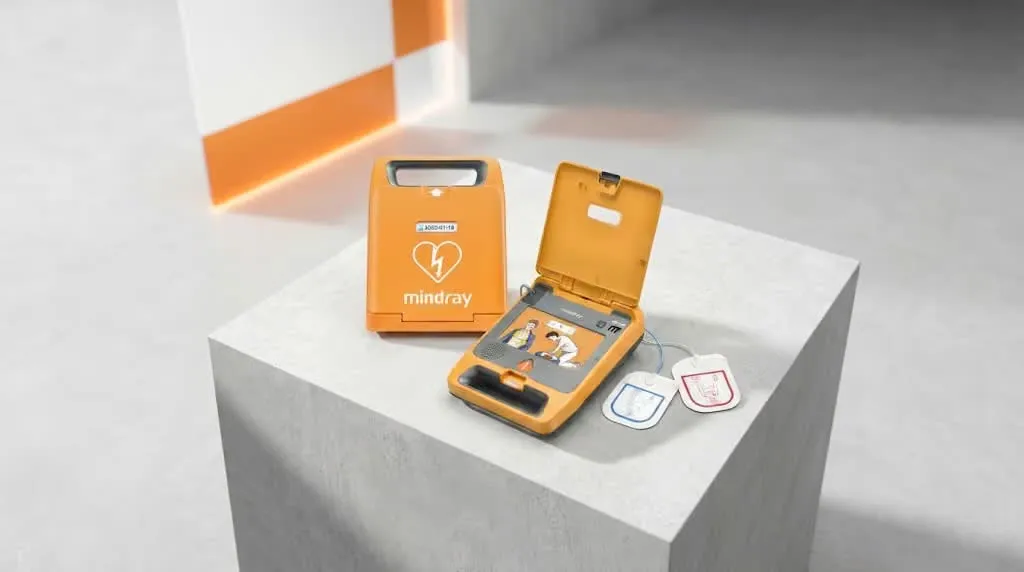
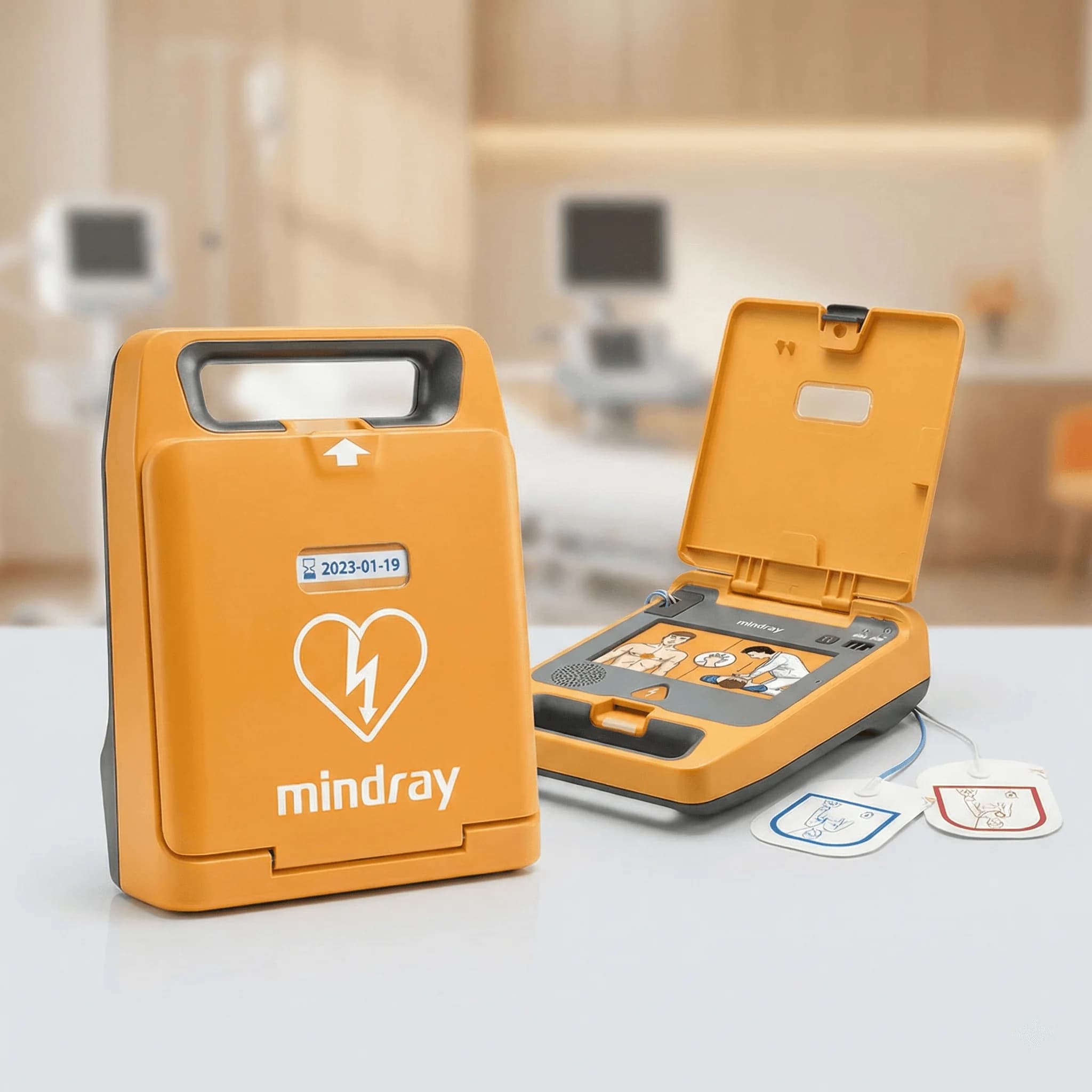
As for equipment, a simple model with clear voice guidance and a regular self-test suits a place where users are strangers. The 5-year warranty and delivery in 2 to 5 working days let you be equipped before the season opens, and a quote is issued within 24 hours.
Frequently asked questions
Must a gîte have a defibrillator?
It depends on its status. A property classed as an ERP in an affected category must be equipped according to the timetable set by loi 2018-527 and décret 2018-1186. A small gîte treated as a dwelling is not subject to it, but may equip itself voluntarily. The town hall or the safety commission can advise you.
Where should the defibrillator go in a guesthouse?
In a visible shared area accessible at any hour, such as the entrance or the corridor serving the rooms. In a group of gîtes, choose a central point. Sign it according to the arrêté du 29 novembre 2018 and mention its location in the welcome booklet given to guests.
Who handles maintenance in a gîte?
The operator, meaning the host, in accordance with article R. 5212-25 du Code de la santé publique. They monitor the self-test, replace pads and battery when due and keep a log. They can also choose a rental with maintenance included to delegate this follow-up.
Does the device need to be registered in GéoDAE?
Yes, registration is mandatory. It lets emergency services know where the device is and guide a bystander to it. Give the exact address, the access route and the availability hours, especially if the property closes for part of the year.
Planning an AED project?
Purchase, rental from 50 EUR excl. VAT per month, installation with GéoDAE registration, servicing and training: our team replies within 24 hours.