Defibrillators at festivals and outdoor events
Written by Cyrille GAGNAIRE, France Défibrillateur. Published on 16 September 2026.
Concerts, village fairs, trade shows and outdoor races sometimes bring together several thousand people on a site with no permanent infrastructure. Around 50,000 cardiac arrests occur every year in France, and every minute without defibrillation cuts survival chances by roughly 10 percent. On a temporary site, far from a classified building and its usual equipment, the question of a defibrillator (AED) deserves an answer before the gates open, not after.
A dense crowd, help that needs to move faster
A festival site or a sports gathering concentrates, over a few hours, a number of people far above the venue's usual attendance. Heat, physical effort, alcohol consumption and crowding create conditions favourable to cardiac events, including among young people who did not consider themselves at risk.
In a crowd, rescuers often take longer to locate a victim and reach them than in an ordinary urban setting. Every minute counts: this is exactly the delay a defibrillator placed on site can shorten while waiting for professional emergency services to arrive. The larger the site, campground, exhibition park, racecourse, the more this immediate proximity weighs on the outcome of the intervention.
An unclear regulatory status, a very real responsibility
A building that receives the public year round falls into a precise category, with an equipment timeline set by law 2018-527 (loi 2018-527) and its implementing decree 2018-1186 (décret 2018-1186): categories 1 to 3 since 2020, category 4 since 2021, part of category 5 since 2022. A site taken over for the duration of an event, a field turned into a stage or a car park used as a reception area, does not always fit the same classification grid.
This grey area does not release the organiser from responsibility. If someone suffers a cardiac emergency during the event, it is the resources actually present on site that make the difference, not the administrative category of the land. More and more organisers therefore include a defibrillator alongside first aid posts, regardless of any strict obligation.
The right defibrillator format for a temporary event
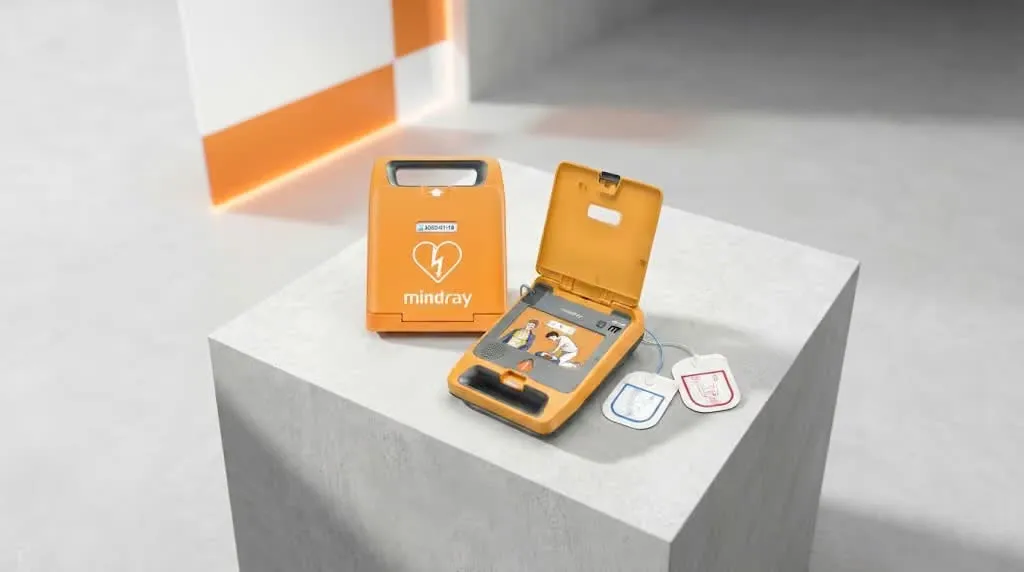
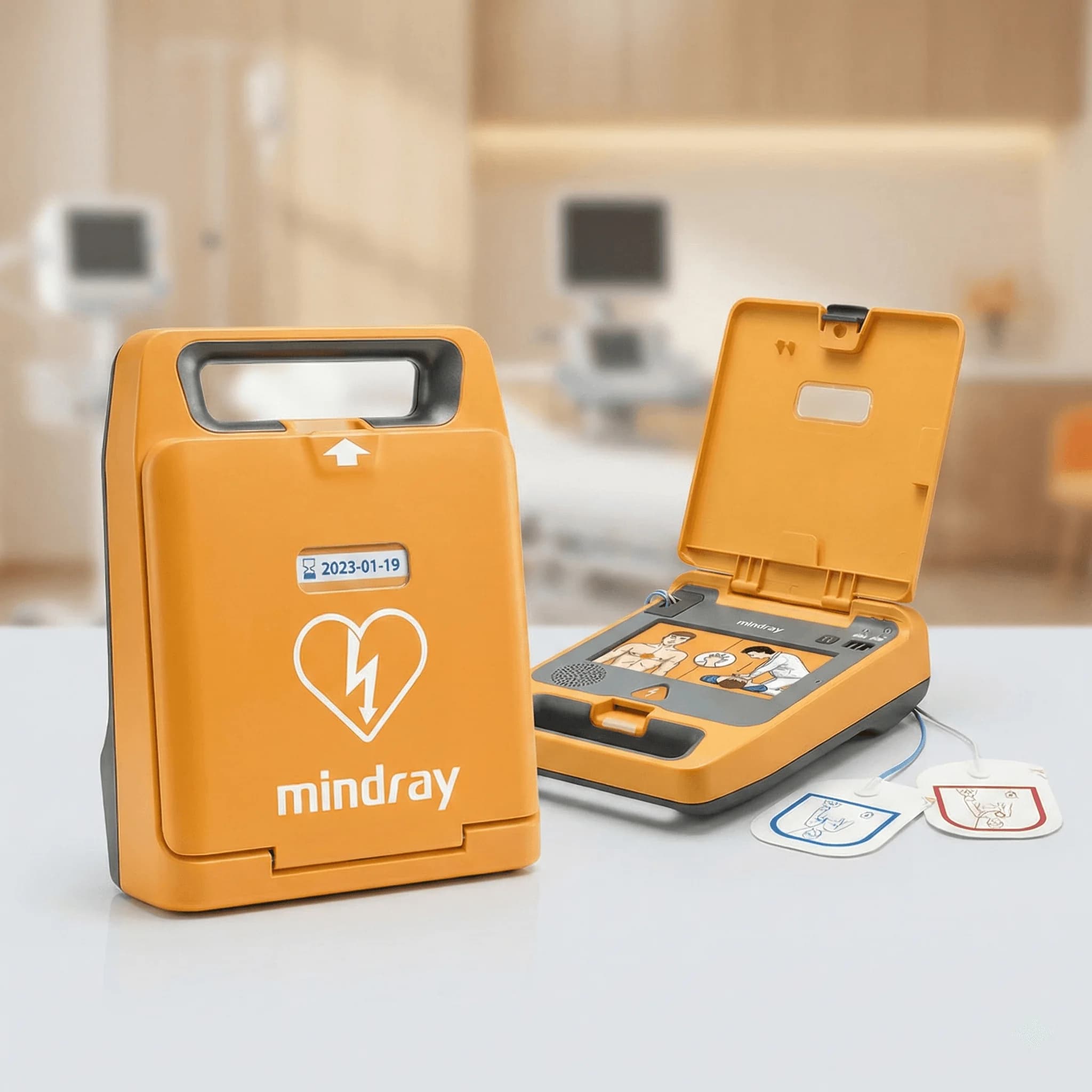
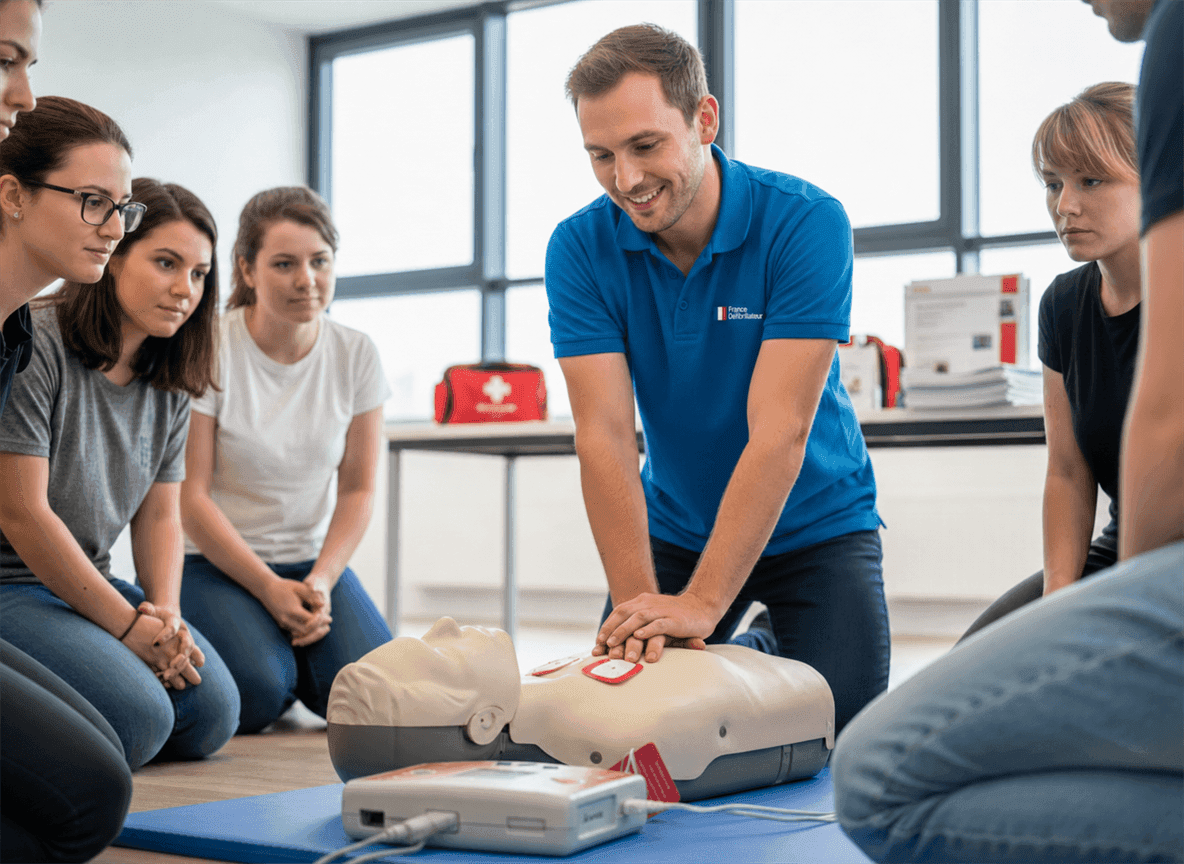
For mobile use, a lightweight automated external defibrillator, carried in a case rather than fixed inside a wall cabinet, suits a site that is assembled and dismantled within a few days. It can travel with the central first aid post or be spread across several points depending on the size of the site.
For an organiser who repeats the same event every year, rental, available from 50 euros excl. VAT per month with maintenance included, avoids tying up a budget on a device used only a few days a year. For an organisation that runs gatherings all year round, buying remains worthwhile, with a 5 year warranty and delivery within 2 to 5 working days once the quote is confirmed, usually issued within 24 hours.
Placement, signage and trained staff during the event
The defibrillator must stay visible and accessible at all times, with the same signage as in a fixed establishment, in line with the French order of 29 November 2018 (arrêté du 29 novembre 2018). On a large site, temporary signposting from the busiest areas, stage, refreshment stand, main entrance, helps volunteers and the public spot it quickly.
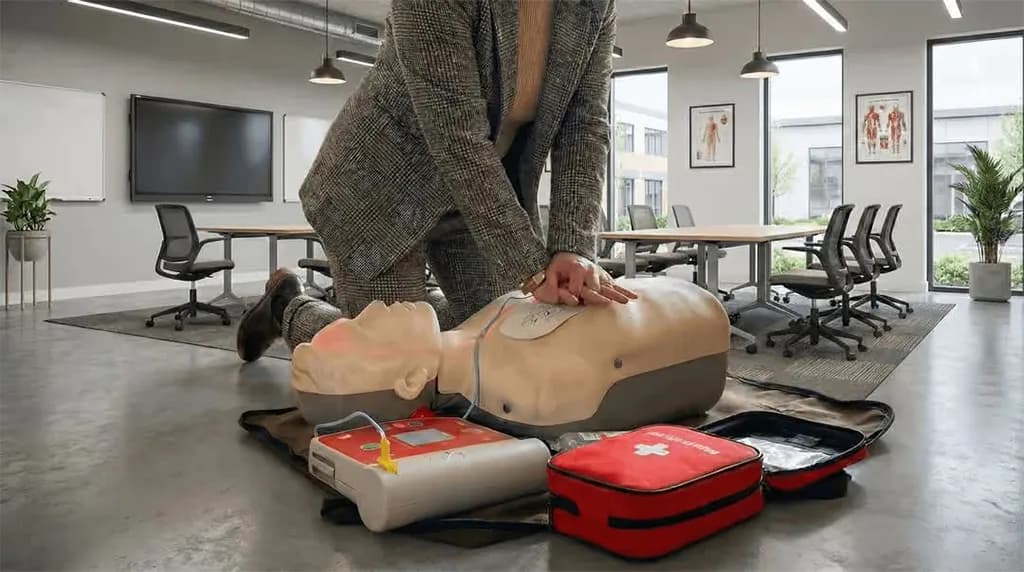
In France, anyone can use an automated external defibrillator, trained or not, as the device guides the user by voice at every step. A volunteer team or security service that has completed basic first aid training still saves precious time, in particular to start chest compressions before the device is even switched on. A clearly identified assembly point set up in advance also makes it easier to raise the alert when several posts rotate across a full day.
After the event: upkeep, storage and registration
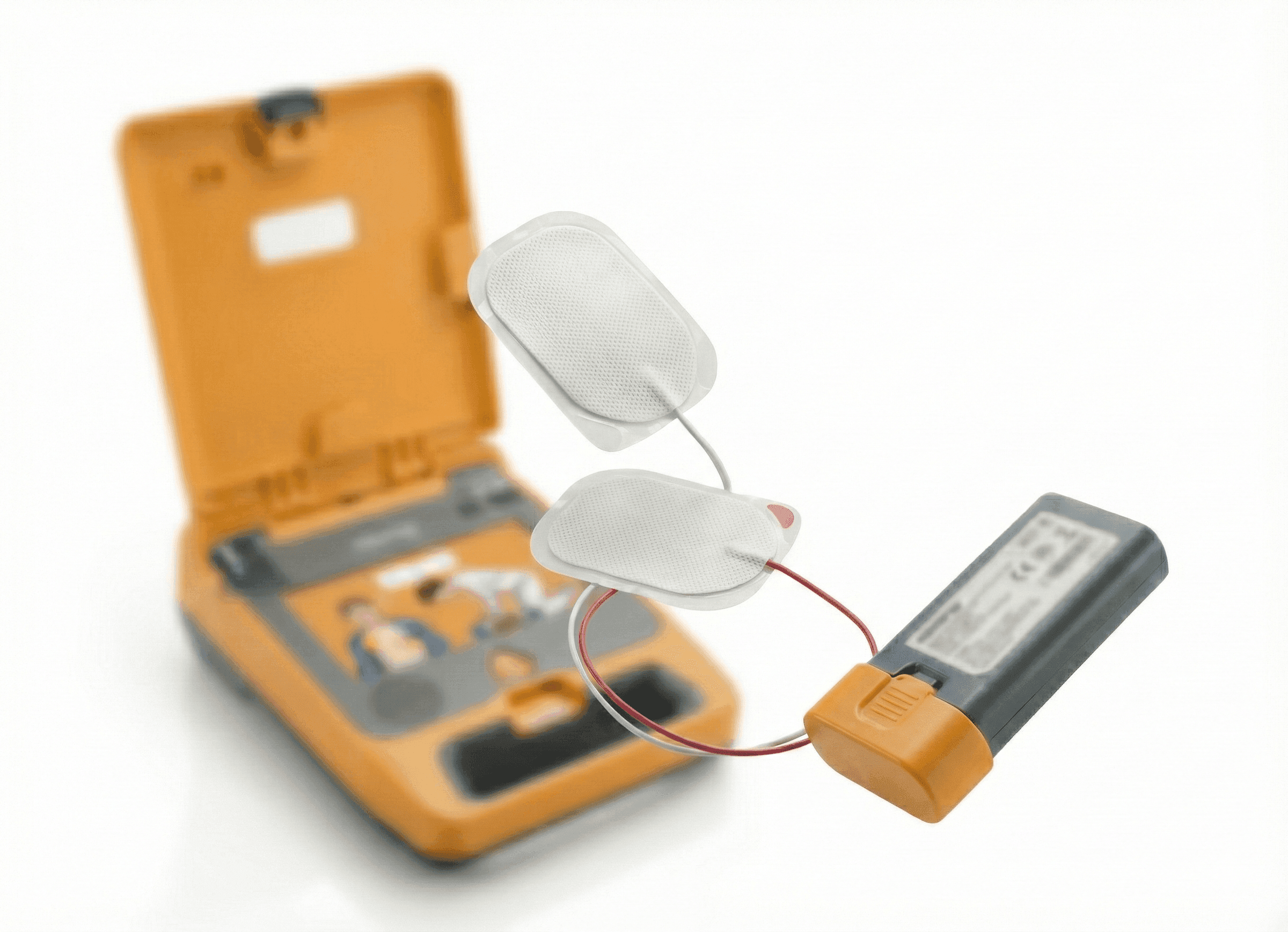
A defibrillator that travels from one event to another follows the same upkeep rules as a fixed unit: electrode pads renewed every 2 to 5 years, battery every 3 to 5 years, and a self test to check before each new outing. The organiser or the provider handling maintenance remains responsible for it working correctly, under article R. 5212-25 of the French public health code (article R. 5212-25 du Code de la santé publique).
Registration in the GéoDAE national directory, mandatory for a permanently installed defibrillator, does not apply in the same way to a strictly mobile unit. As soon as a site hosts the device on a recurring basis, a club's home ground, a stadium, a hall used for several events a year, registering it at that address becomes worthwhile so it appears in nearby emergency searches. Between outings, storage at a stable temperature extends the life of the battery and electrode pads.
Frequently asked questions
Is a festival legally required to have a defibrillator?
The timeline set by law 2018-527 (loi 2018-527) applies to buildings that receive the public year round, classified in categories 1 to 5. A temporary event on unclassified land does not automatically fall under this timeline. This does not stop an organiser from equipping the site as a precaution, especially for a gathering of several thousand people, where cardiac risk rises with crowd size.
Should a defibrillator that is only present for the festival be registered in GéoDAE?
GéoDAE registration is primarily aimed at permanently installed devices, so they appear in emergency service geolocation. A strictly mobile defibrillator, travelling with the organiser from one event to another, is not meant to be listed there permanently. If the same venue hosts the device every year, however, registering it at that address helps rescuers find it.
Is it better to rent or buy a defibrillator for a one off event?
For a single or occasional event, rental, available from 50 euros excl. VAT per month with maintenance included, avoids investing in a device that will only be used a few days a year. An organiser who runs several gatherings a year is better off buying a dedicated unit, covered by a 5 year warranty and delivered within 2 to 5 working days after a quote issued within 24 hours.
Who can use the defibrillator during a festival?
Any bystander on site can use an automated external defibrillator without prior training: the device analyses the heart rhythm and guides every step by voice. A volunteer or security team trained in basic first aid remains valuable, though, to quickly locate the victim in the crowd and start chest compressions without delay.
What should be done if the defibrillator was used during the event?
The device must be taken out of service and reported to the manufacturer or maintenance provider as soon as the intervention ends, for a full check before any reuse. The electrode pads used are single use and must be replaced, even if the self test still shows a correct status. This check determines the device's reliability for the next event.
Planning an AED project?
Purchase, rental from 50 EUR excl. VAT per month, installation with GéoDAE registration, servicing and training: our team replies within 24 hours.