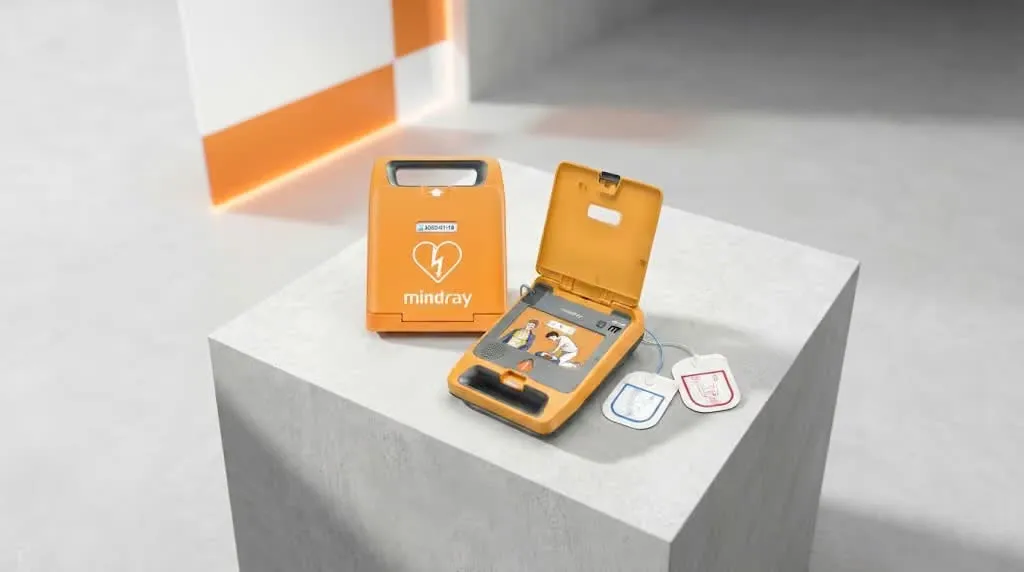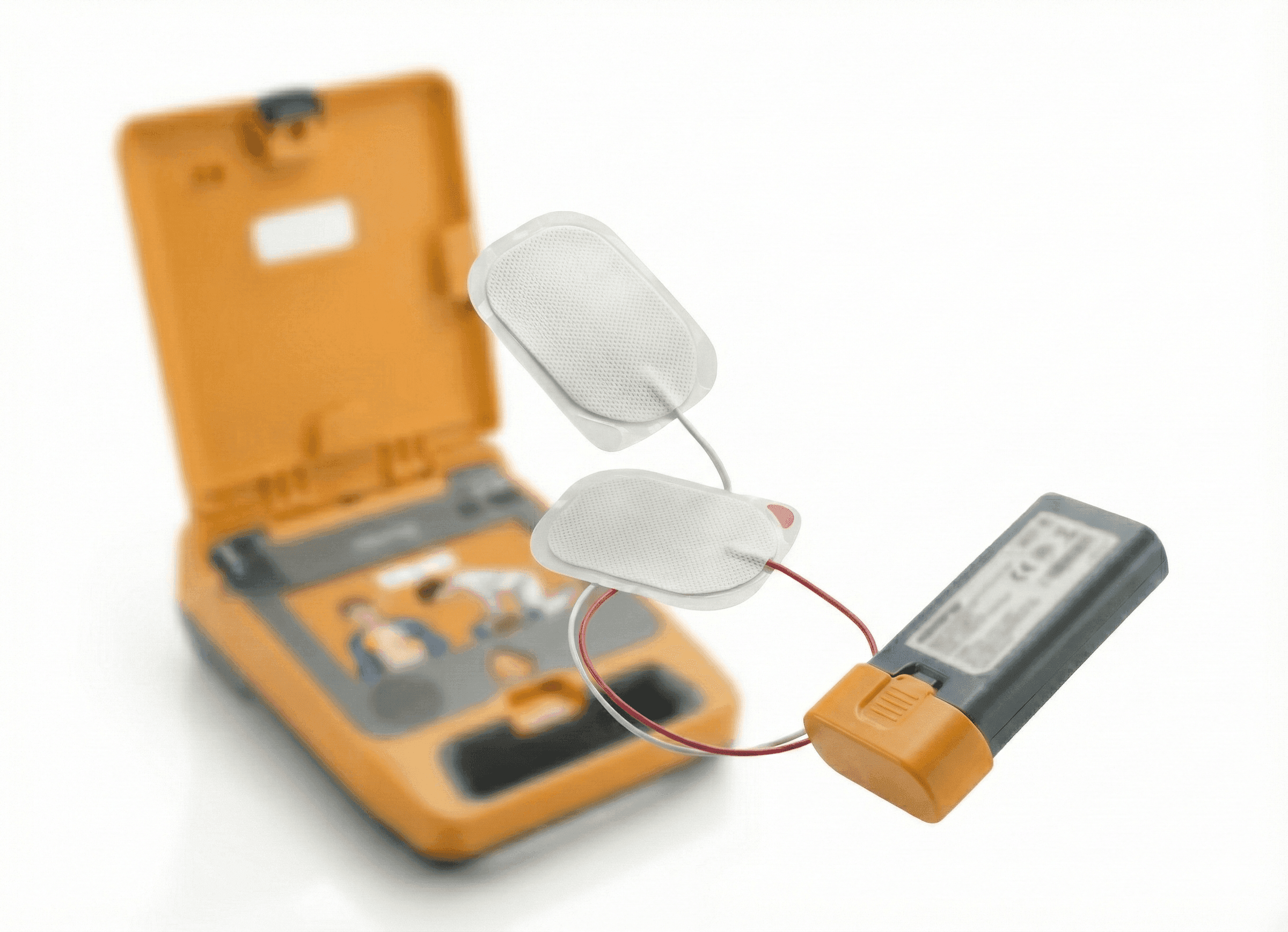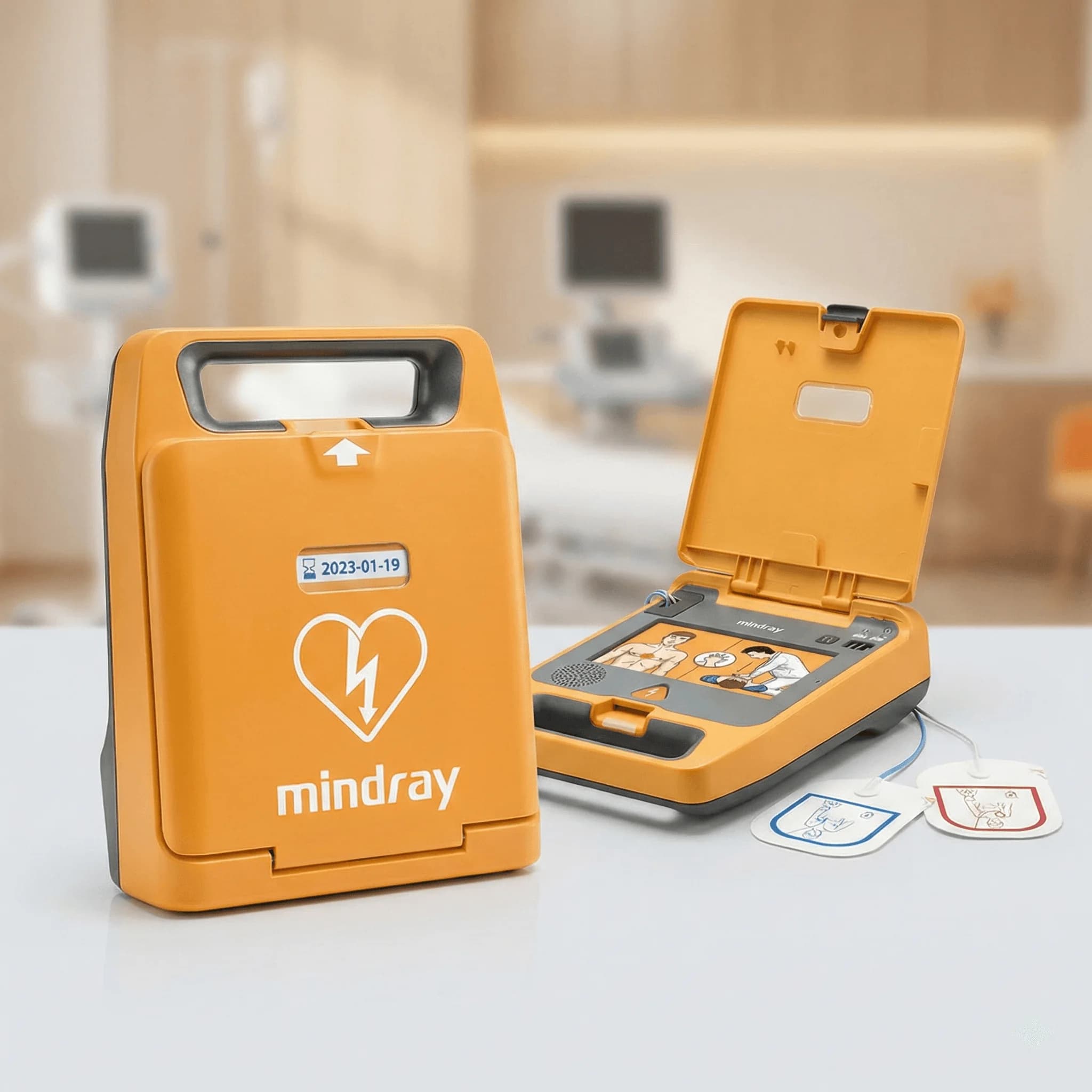
AED on a farm: obligations and how to organise
Written by Cyrille GAGNAIRE, France Défibrillateur. Published on 13 October 2026.

A farm is not a workplace like any other. Teams work far apart, over large areas, sometimes alone, and emergency services can take a long time to arrive. Yet every minute without defibrillation reduces the chances of survival by about 10%. Equipping a farm or a cooperative with an AED is first of all a question of response time. This article covers the applicable framework, placement, maintenance and organisation.
A real risk in an isolated setting
There are about 50,000 cardiac arrests per year in France. Farming is no exception: physical effort, outdoor work, summer heat, long days. What sets it apart is distance. Between a field, a livestock building and the nearest road, an ambulance can take tens of minutes to arrive.
In these conditions, a defibrillator on site and a trained bystander nearby make all the difference while waiting for emergency services.
What the regulations say
The equipment obligation set by loi 2018-527 (French law of 2018) and décret 2018-1186 (its implementing decree) targets ERP (établissements recevant du public, buildings open to the public): categories 1 to 3 since 1 January 2020, category 4 since 2021, some category 5 ERP since 2022. A farm that does not receive the public is not covered as such.
The situation changes if it welcomes customers: farm shop, educational farm, farm table, holiday cottage, reception hall. These areas may fall under the ERP regime depending on capacity and activity. The category should be checked with the town hall or the safety commission.
Even without an obligation, the employer must ensure employees' safety. An AED is among the most useful prevention measures for an isolated site.
Where to place the defibrillator
The right spot is one everyone knows and can reach in under three minutes. On a farm, favour a place people pass through: the yard entrance, workshop, milking parlour, office, point of sale. Avoid the back of a locked shed.
If buildings are scattered, a single unit cannot cover the whole site. It is better to place it at the centre of activity and, for remote areas, keep a portable unit in the team's vehicle.
A heated, ventilated outdoor cabinet protects the device from dust, humidity and temperature swings, which are common in farming. Signage follows the arrêté du 29 novembre 2018 (French order of 29 November 2018).
Maintenance and storage conditions
Maintenance is the operator's responsibility under article R. 5212-25 du Code de la santé publique (French Public Health Code). Electrode pads last 2 to 5 years, batteries 3 to 5 years, and the device itself 8 to 10 years and more.
Dust, vibration, cold and heat are the enemies of consumables. A device kept in an unheated room ages faster. The self-test indicator should also be checked regularly, since nobody walks past the device every day.
Rental from 50 € excl. VAT per month, maintenance included, spares you from tracking expiry dates yourself. Devices carry a 5-year warranty.
| Situation | Point of attention |
|---|---|
| Farm shop or holiday cottage | Check the ERP category and any obligation |
| Scattered buildings | Plan a central unit and a mobile unit |
| Unheated room | Use a suitable cabinet and monitor the indicator |
| Lone working | Train employees and define an alert procedure |
Training and organising the alert
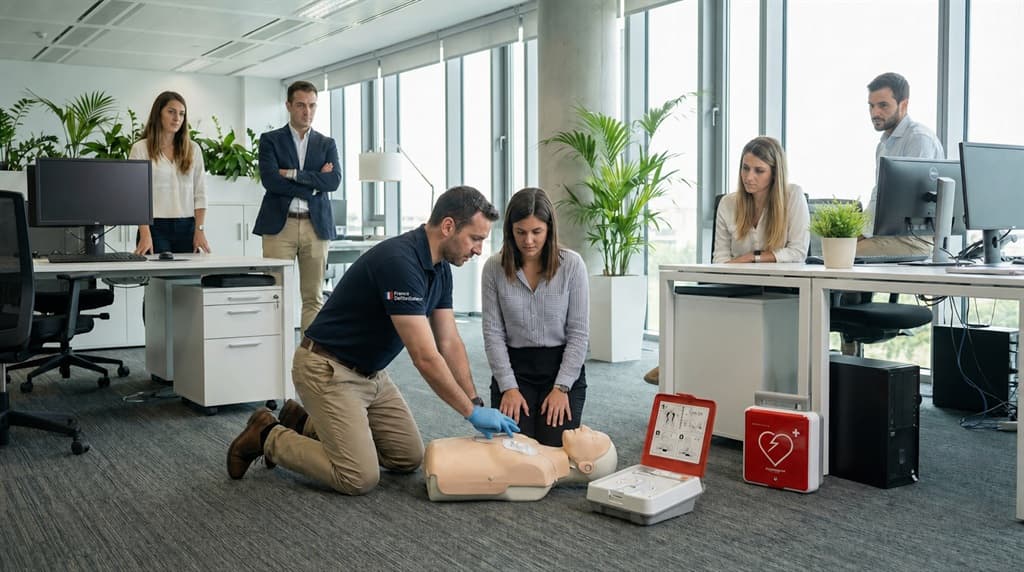
A device without trained people loses part of its value. Life-saving awareness training for every employee, seasonal workers included, allows a fast response: call 15 or 112, start compressions, bring the AED.
On a large site, the alert also needs preparation. Giving emergency services a clear meeting point, such as the farm entrance, and appointing someone to guide them avoids losing precious minutes.
Finally, registration in GéoDAE (the French national AED database) is mandatory. It lets emergency services locate the device, even in a rural area.
Frequently asked questions
Does a farm have to have a defibrillator?
Not as such if it does not receive the public. The obligation in loi 2018-527 targets ERP. However, a farm shop or a holiday cottage may fall under it. In any case, equipping the site remains a very useful prevention measure for employees.
Can a defibrillator be rented for a farm?
Yes. Rental starts at 50 € excl. VAT per month, maintenance included. It suits operators who do not want to track the expiry dates of electrode pads and batteries themselves, or manage replacing the device.
Where should the device go on a large site?
At the centre of activity, in a passage area reachable in under three minutes, without a key. For remote areas, a second portable unit kept in a vehicle completes the setup. An outdoor cabinet protects against dust and temperature swings.
Must the defibrillator be registered in GéoDAE?
Yes, registration is mandatory. It lets emergency services and dispatchers locate the nearest device. On a rural site this information is valuable, because the location is not always easy to describe over the phone.
How long does it take to get equipped?
Delivery takes 2 to 5 working days after ordering, and a quote is provided within 24 hours. Devices carry a 5-year warranty. You then need to choose the location, signpost the device and train the team.
Planning an AED project?
Purchase, rental from 50 EUR excl. VAT per month, installation with GéoDAE registration, servicing and training: our team replies within 24 hours.