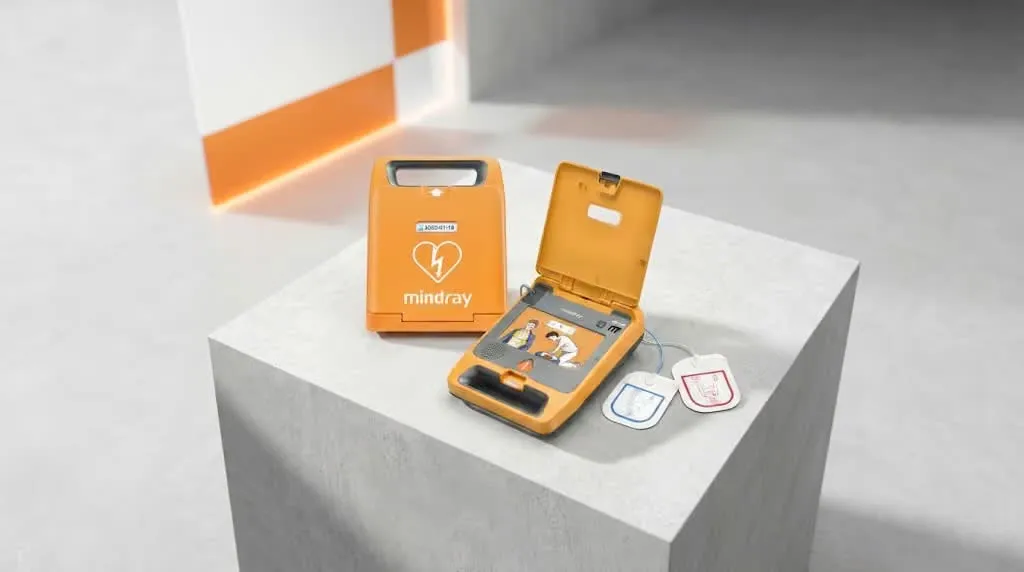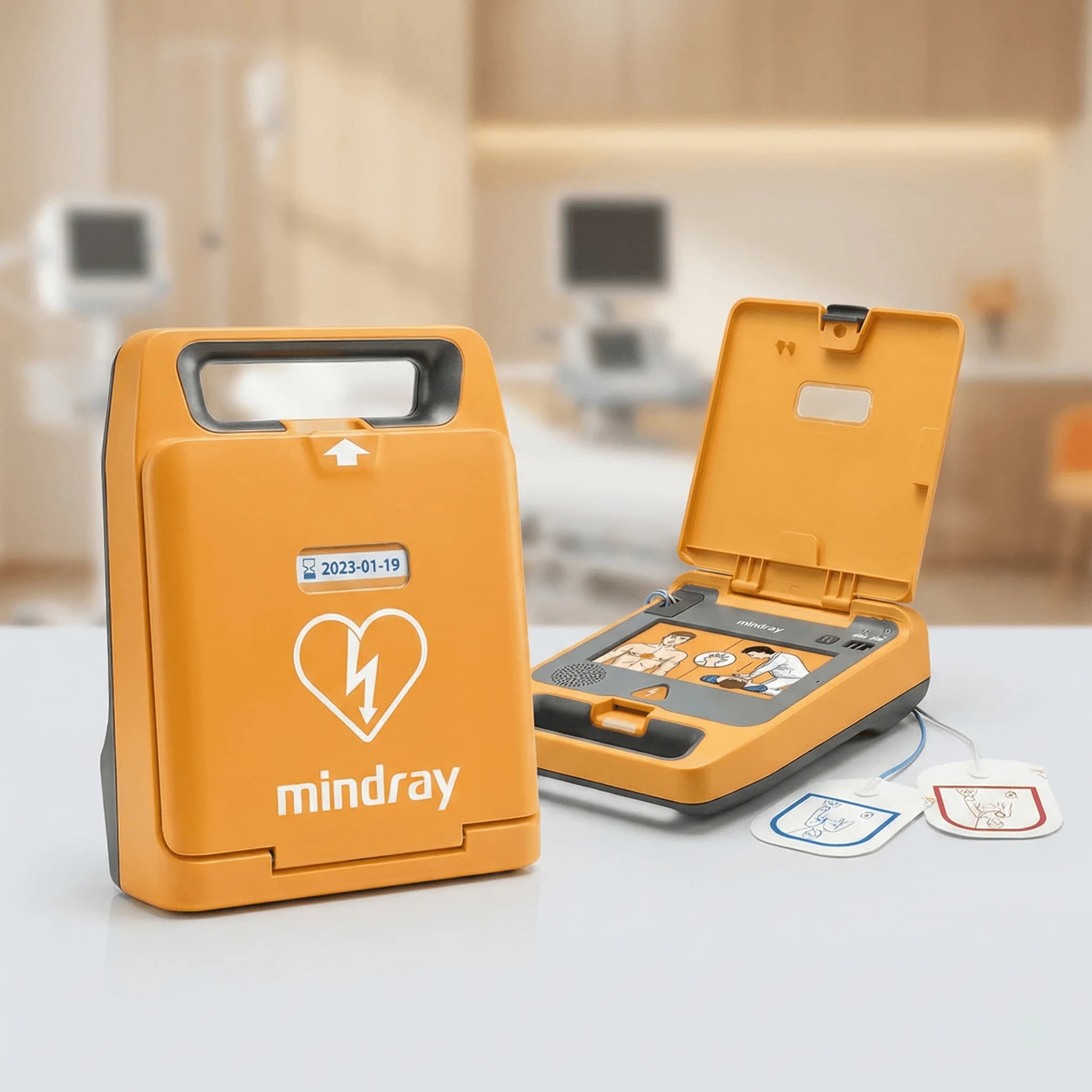
Defibrillators in category 5 ERP venues: obligations and shared units
Written by Cyrille GAGNAIRE, France Défibrillateur. Published on 28 July 2026.
Category 5 venues make up the vast majority of France's etablissements recevant du public (ERP, buildings open to the public): local shops, medical and paramedical practices, restaurants and community halls. They are also the operators who know their defibrillator obligations least well. The loi du 28 juin 2018 (Act of 28 June 2018) and its implementing decree of December 2018 do apply to them, and they come with a flexibility that very few operators currently make use of: the option of sharing a single unit between several establishments.
Two texts, one underlying rule
Loi n° 2018-527 du 28 juin 2018 relative au defibrillateur cardiaque (the French Cardiac Defibrillator Act) inserted articles L. 123-5 and L. 123-6 into the Code de la construction et de l'habitation (French building and housing code). The principle fits into a single sentence: public-access establishments whose types and categories are set by decree issued in the Conseil d'Etat must install a DAE (AED, automated external defibrillator) that is visible and easy to reach, and the owner of the unit must ensure its maintenance. Decret n° 2018-1186 du 19 decembre 2018 (NOR: SSAP1832210D) then set out the timetable and the practical arrangements.
For a category 5 operator, the first step is therefore not to buy, but to check. The Act leaves it to a decree to designate the types of establishment covered: your ERP type, as recorded in your safety file, determines whether the obligation applies to you. That information can be requested from the town hall or from the department that oversees your premises. One simple check, and you leave behind the uncertainty that many small operators still live with.
Since when category 5 has been covered
The timetable set by the decree is staggered. Category 1 to 3 ERP venues had to be equipped by 1 January 2020, category 4 venues by 1 January 2021, and the category 5 venues concerned by 1 January 2022. The deadline has therefore been behind us for more than four years. A covered establishment that still has no defibrillator is not merely running late on a project: it is non-compliant, and this can come to light during a safety commission visit or an inspection.
One point deserves to be stated plainly, because a good deal of loose talk circulates on the subject: category 5 is not covered as a whole. The text does not create a blanket obligation for every small establishment in the country; it targets certain types. If yours is not among them, you remain free to decide. That freedom takes nothing away from the value of having a unit: France records around 50,000 cardiac arrests a year, and every minute that passes without defibrillation cuts the chances of survival by roughly 10%. In a restaurant, a community sports hall or a waiting room, the device primarily serves the public and the staff.
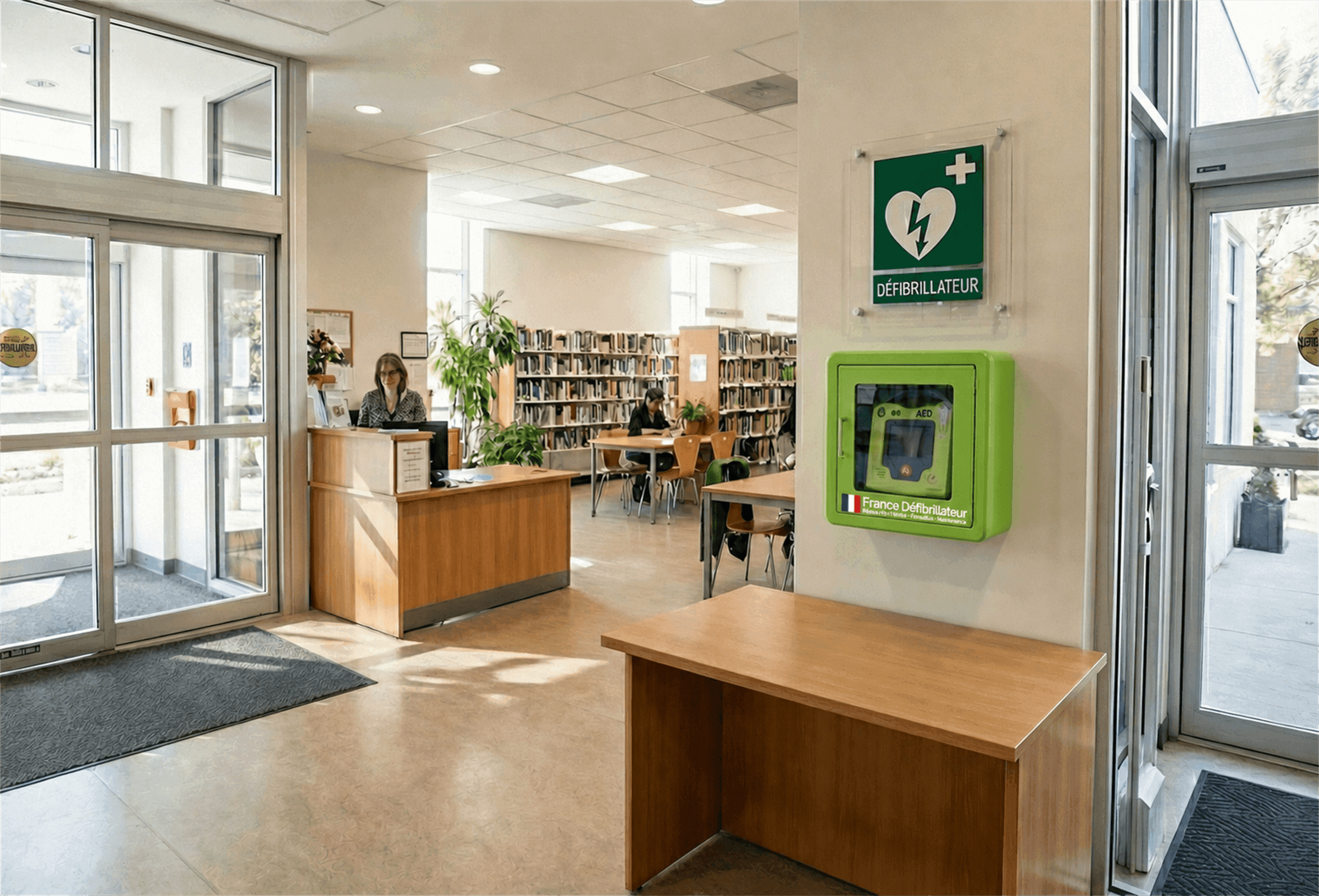
What sharing a unit genuinely allows
Both the Act and the decree provide that where several ERP venues sit on the same geographical site or fall under common management, the defibrillator may be shared. In other words, a single unit can cover several establishments. This is the most useful provision for category 5, and the most overlooked.
The situations involved are common: a shopping arcade with a dozen neighbouring shops, a health centre bringing together several independent practices, a building with a restaurant on the ground floor and other activities upstairs, or an operator running several outlets on one site. In practice, identify the other operators in the building and agree in writing on three points: where the unit is installed, who funds it and in what proportion, and who handles maintenance. A simple document signed by the operators is enough to record the arrangement and to produce it in the event of an inspection.
Shared use has one limit that must be respected to the letter: the unit has to remain visible and accessible at all times for every establishment it covers. A shared defibrillator kept in a room to which only one operator holds the key, or installed behind a shutter that comes down in the evening, does not meet the condition. The sensible reflex is to place it in a common circulation area rather than inside one occupant's premises.
Visible and permanently accessible, in practice
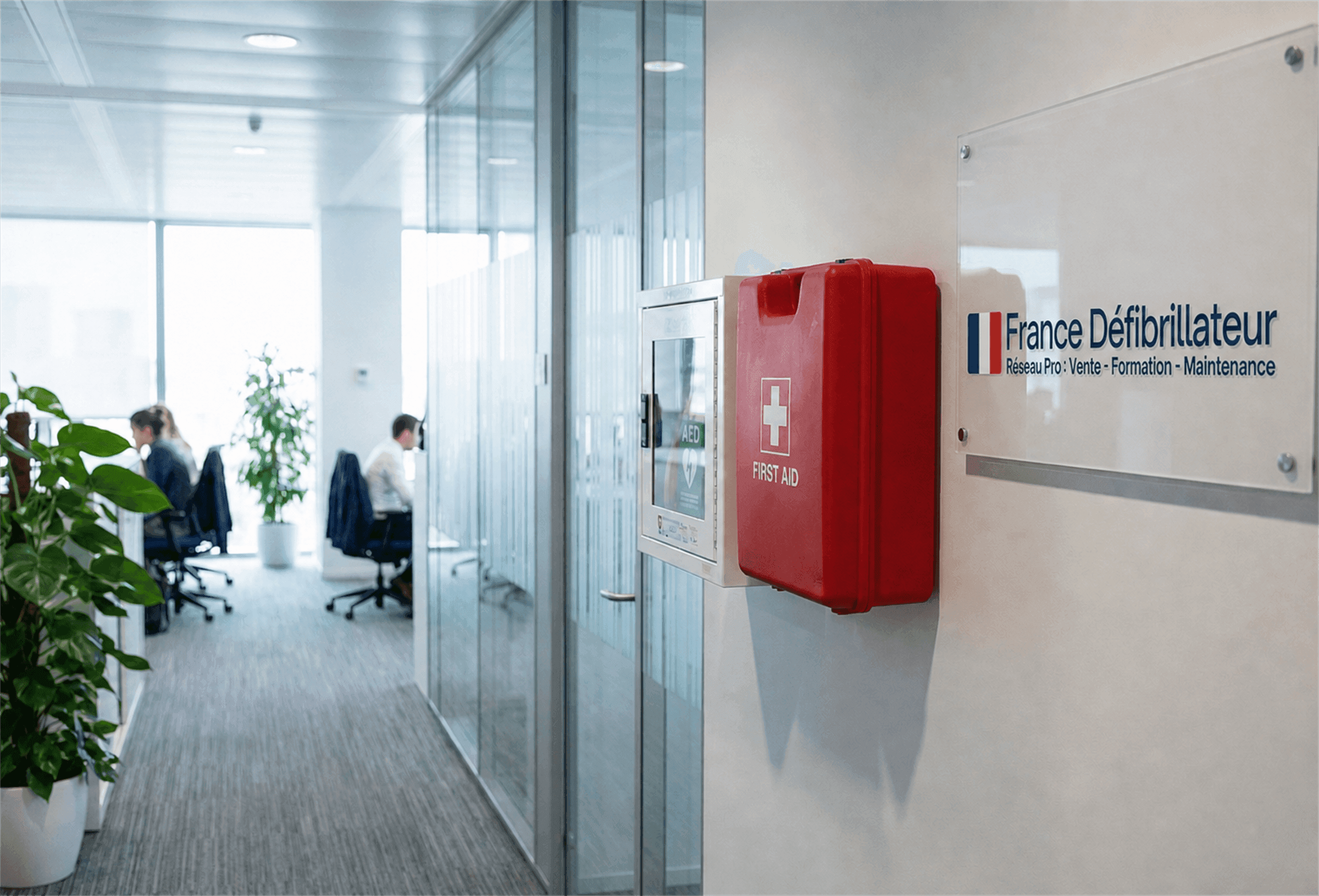
The text calls for a location that is visible to the public and accessible at all times. Translate that into simple decisions: entrance, reception hall, shared corridor or landing, at eye level, with standardised signage placed where it can be seen from several metres away. Avoid the stockroom, the office, the back kitchen and any room that gets locked at the end of service.
Accessibility also applies to the people who will use the device. Show the location to every new employee, seasonal worker or volunteer: a well-installed unit that nobody can find in an emergency loses most of its value. A short course in life-saving first aid usefully rounds off the installation.
Maintenance, record keeping and national registration
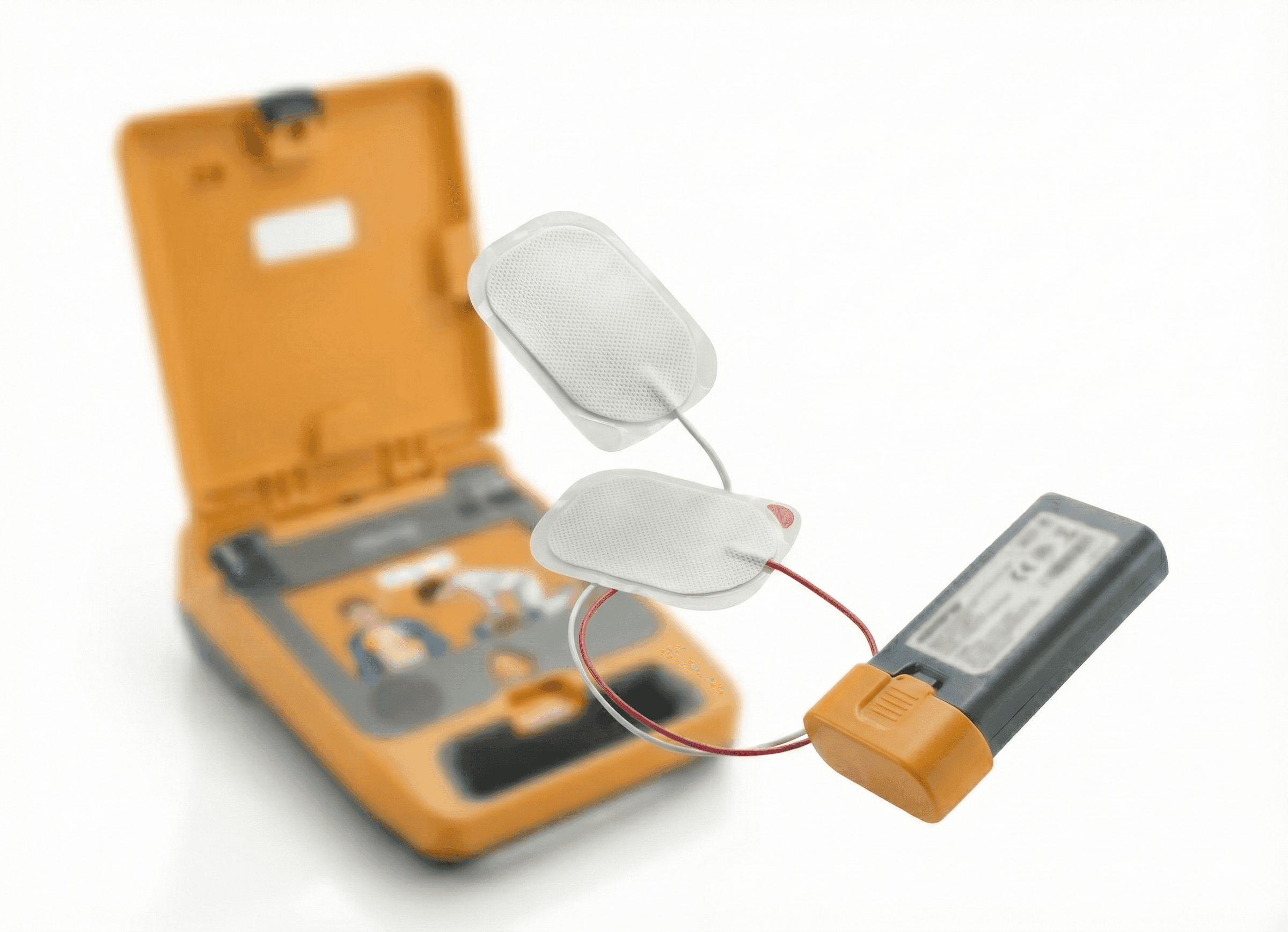
The owner of the defibrillator is responsible for carrying out the maintenance and quality checks required for medical devices. Three routes are open: the manufacturer, a third-party provider acting under the owner's responsibility, or the operator alone. In a small shop, the third option is perfectly realistic, provided a written record is kept. The establishment's safety register is the natural place to log it.
Here are the points to record there and the corresponding review intervals.
Loi n° 2018-527 also created article L. 5233-1 of the Code de la sante publique (French public health code), which establishes a national database of defibrillator locations and accessibility, fed by information supplied by operators. It gave rise to the Geo'DAE database. So register your unit as soon as it is installed, and update the entry if you move it or close the establishment. Where a unit is shared, appoint a single operator to handle registration and avoid duplicate entries.
| Item to monitor | What to record | Interval |
|---|---|---|
| Self-test indicator | Date of the visual check and status of the indicator | Every month |
| Electrodes | Reference, expiry date, replacement date | Service life of 2 to 5 years |
| Battery | Commissioning date and use-by date | Service life of 3 to 5 years |
| Unit | Serial number, installation date, updates | Over a service life of 8 to 10 years and more |
| Sharing agreement | Operators covered and person responsible for maintenance | Updated on every change |
| National registration | Registration date and exact location | Every time the unit is moved |
Becoming compliant without over-investing
A category 5 establishment has no need for an oversized set-up. Two routes exist: purchase, with a 5-year warranty on the unit, or rental from 50 euros excl. VAT per month with maintenance included, which hands the technical follow-up to the provider and spreads the cost. Our articles on renting versus buying, on real-world prices and on available subsidies set out each option, and our buying guide helps you choose between models.
Sharing remains the real saving for small organisations: split between five shops in the same arcade, the annual cost per operator becomes marginal. On timescales, a quotation goes out within 24 hours and delivery follows in 2 to 5 working days, enough to put things right before a commission visit. Budget for consumables from the first year rather than discovering the cost when the indicator turns red.
Frequently asked questions
Is my small shop really required to have a defibrillator
It depends on your type of establishment, not only on your category. Decret n° 2018-1186 du 19 decembre 2018 has covered certain category 5 ERP venues since 1 January 2022, not the whole category. Check the type shown on your safety file with the town hall or the department that oversees your premises before drawing any conclusion.
Can a defibrillator be shared between several shops in the same building
Yes. Loi n° 2018-527 du 28 juin 2018 allows a unit to be shared where several ERP venues sit on the same geographical site or under common management. The device must remain visible and accessible at all times for each of the establishments covered, so it should be installed in a communal area rather than inside one occupant's premises.
Who pays for the maintenance of a shared defibrillator
Responsibility for maintenance and quality checks lies with the owner of the unit. Between several operators, set out in writing who buys or rents the defibrillator, how the costs are split and who acts as the single point of contact for follow-up. That document prevents grey areas on the day an electrode reaches its expiry date.
Does a defibrillator have to be registered anywhere
Yes. Article L. 5233-1 of the Code de la sante publique establishes a national database of defibrillator locations and accessibility, fed by operators and known as Geo'DAE. Register the unit as soon as it is installed, then update the entry if it is moved, if the address changes or if the establishment closes.
What should the safety register contain about the defibrillator
Record the serial number and installation date, the monthly check of the self-test indicator, the expiry dates of the electrodes and the battery, and every replacement carried out. Add the sharing agreement if the unit is shared. This written trail is the simplest proof to produce during an inspection visit.
Planning an AED project?
Purchase, rental from 50 EUR excl. VAT per month, installation with GéoDAE registration, servicing and training: our team replies within 24 hours.