No defibrillator in an ERP: what risk for the operator
Written by Cyrille GAGNAIRE, France Défibrillateur. Published on 22 August 2026.
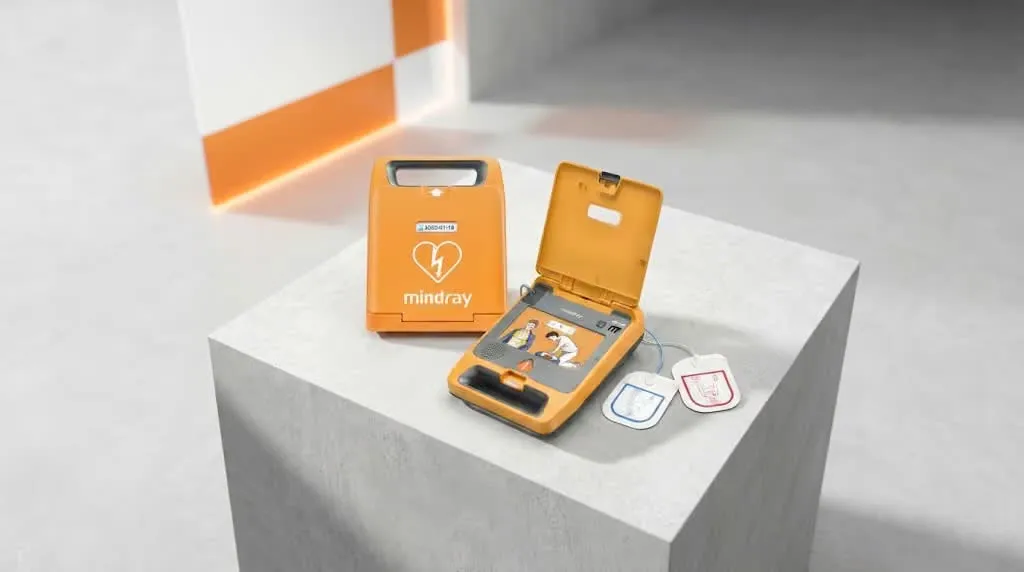
Since 1 January 2020, French public-access buildings (ERP, etablissement recevant du public) in categories 1 to 3 must carry a DAE (AED), a duty later extended to category 4 and then to part of category 5. Some operators still fall short, sometimes without grasping what an accident with no working unit on site can trigger on the civil, insurance and criminal fronts. The building category normally appears in the establishment's opening order, a document any operator can request from the town hall in case of doubt. Here is a look at those risks and at the quickest ways to guard against them.
A duty phased in step by step
Loi 2018-527 (French law) requires a defibrillator in public-access buildings. The duty has applied to categories 1 to 3 since 1 January 2020, to category 4 since 2021, and to certain category 5 establishments since 2022, under decret 2018-1186 (French decree). The text also sets side obligations, signage under the arrete of 29 November 2018 (French order) and registration of the unit in Geo'DAE.
This duty falls on the operator of the establishment, meaning the person or organisation running it day to day, not automatically on the owner of the building. A commercial lease is better off spelling out which party, landlord or tenant, carries that duty, to avoid any ambiguity during an inspection or after an incident. In a shopping centre or a gallery hosting several retailers, the point deserves to be settled in writing at signature, since each side might otherwise assume the other has it covered.
What an accident with no working AED can trigger
The decree sets no automatic fine tied to the mere absence of a defibrillator. The real exposure lies elsewhere. If a cardiac arrest occurs in an establishment subject to the duty and the unit is missing, out of service or cannot be found, that failure can be entered into the file during a civil liability claim brought by the victim or their family.
Depending on the circumstances, a clear-cut failure may also be examined from a criminal angle, particularly if it reflects negligence in how the safety of visitors was organised. A unit that is present but expired, flat or fitted with out-of-date electrode pads has the same effect as no unit at all, the equipment simply is not working at the moment it matters.
Consequences for insurance and business continuity
An insurer facing a claim can check whether the establishment met its regulatory duties, including the one covering the defibrillator. A documented failure weakens the operator's position when discussing cover, even where the policy does not mention the AED by name. Some professional liability policies already ask, at subscription or renewal, for a precise declaration of the safety equipment present on site.
Beyond the strictly legal side, an accident that occurs with no working equipment damages trust among the public, staff and sometimes partners of the establishment. Some tenders or agreements with local authorities already require proof of up-to-date AED compliance.
Geo'DAE and signage, two duties often overlooked
An equipped establishment is not necessarily compliant. Registering in Geo'DAE lets emergency services locate the nearest unit when someone calls the emergency number, and an unregistered defibrillator can delay that step. Signage required under the arrete of 29 November 2018 must also make the unit easy to spot from the building's circulation areas.
These two points, less visible than a physically missing unit, are still examined if the speed of the emergency response is ever called into question. Both are fixed within minutes and warrant no delay.
Reference points by ERP category
The timetable set by decret 2018-1186 distinguishes between categories of public-access buildings. It offers a useful reference for checking your own situation before moving further into the compliance process.
| ERP category | Equipment deadline |
|---|---|
| Categories 1 to 3 | Since 1 January 2020 |
| Category 4 | Since 2021 |
| Certain category 5 establishments | Since 2022 |
Getting compliant without delay
Becoming compliant requires neither a heavy budget nor a long wait. Rental starts at around 50 euros excl. VAT a month, servicing included, with a quote available within 24 hours and delivery in 2 to 5 working days. Units carry a 5-year warranty, which limits the financial risk for an operator putting things right. The rental route also transfers part of the technical follow-up, self-tests, electrode pads, battery, to a dedicated provider, cutting the odds of something being missed.
Keeping proof of that diligence, a servicing contract, a screenshot of the Geo'DAE registration, a photo of the signage in place, is a simple safeguard against any later dispute. It is a file that takes a week to build, not a project.
Frequently asked questions
What does an operator risk by not installing a defibrillator when their ERP is required to have one?
The decree sets no automatic fine tied to that absence alone. The risk mainly surfaces after an accident, the failure can be raised in a civil liability claim, or even a criminal one if negligence is established, and it weakens the operator's position with their insurer.
Is the building owner liable instead of the operator?
The duty falls in principle on the operator, meaning the person running the establishment day to day, not necessarily on the owner of the building. In a commercial lease, it is best to state in writing which party carries that duty, to avoid disagreement during an inspection.
Does a faulty defibrillator count as no defibrillator at all?
Yes, in practice. A red self-test indicator, a flat battery or expired electrode pads leave the unit unable to work at the moment it would be needed. Servicing, which is the operator's responsibility under article R. 5212-25 of the Code de la sante publique (French public health code), exists precisely to prevent that situation.
Is the Geo'DAE registration checked during an inspection?
It is not routinely checked as such, but it can be examined if the speed of the emergency response is ever questioned after an accident. It is a free, quick step, with no good reason to put it off once the unit is installed.
How long does it take to become compliant?
A quote can be obtained within 24 hours, delivery takes 2 to 5 working days, and rental starts at 50 euros excl. VAT a month, servicing included. From the decision to a unit installed and registered, a week is usually enough.
Planning an AED project?
Purchase, rental from 50 EUR excl. VAT per month, installation with GéoDAE registration, servicing and training: our team replies within 24 hours.