An AED in the vehicle of mobile teams
Written by Cyrille GAGNAIRE, France Défibrillateur. Published on 6 November 2026.
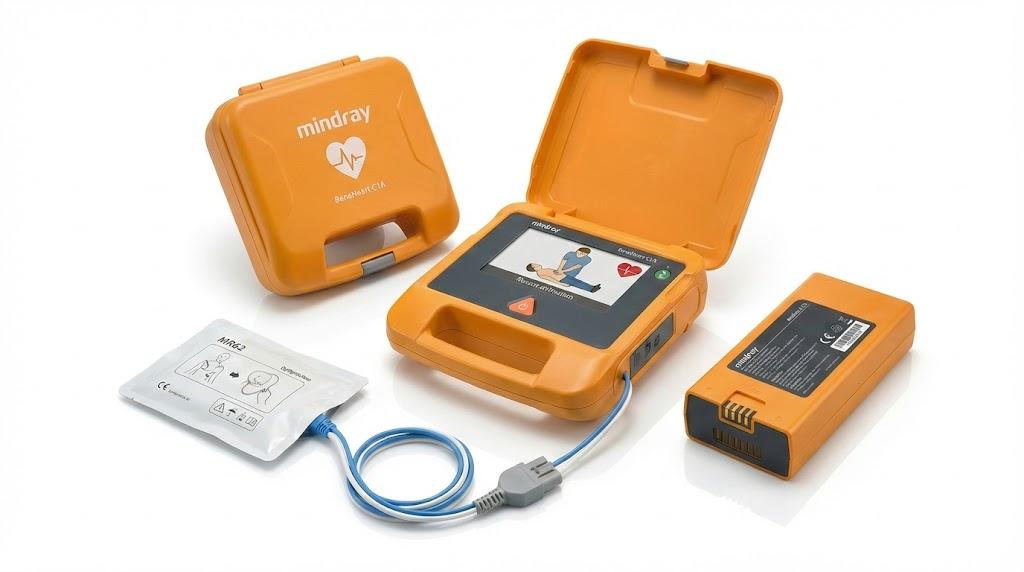
A team that spends its day on the road has no corridor where a cabinet can be mounted. Yet a cardiac arrest can happen on an isolated site, in a client's premises or in a car park. Carrying a defibrillator in the vehicle is a real option, provided you manage the constraints: storage, temperature, monitoring and training of the people who ride along.
Why mobile teams are a special case
The rules on defibrillators in public premises target buildings: one operator, one address, one declared fixed location. A team of technicians, craftspeople or delivery staff works the other way round, on many sites, often at third parties, sometimes far from any public device.
About 50,000 cardiac arrests occur in France each year, and every minute without defibrillation reduces the chance of survival by about 10%. On a site with no device, the delay depends on the distance to the nearest AED, which is not always known or accessible. A device in the vehicle shortens that trip by several minutes whenever it is within reach.
What the regulation says, and what it does not
The equipment obligation set by loi 2018-527 and décret 2018-1186 (French law and decree) applies to certain ERP (établissements recevant du public, buildings open to the public), not to vehicles. Carrying a device is therefore not an obligation in itself: it is an organisational decision, which the employer can link to its risk assessment and prevention plan.
One point holds everywhere: maintenance is the operator's responsibility under article R. 5212-25 du Code de la santé publique (French Public Health Code). The vehicle's device needs the same follow-up as a fixed one, with an identified person in charge. If the vehicle changes driver every week, that person must be named in writing.
Constraints specific to a vehicle
A closed cabin in the sun or a freezing cab in winter quickly leaves the temperature range set by the manufacturer. Electrodes and battery are the most sensitive parts. Read the storage and operating ranges in the manual before any purchase, and never leave the device in an unheated boot in midsummer.
Storage matters just as much. An AED sliding around the boot suffers shocks, and a bag buried under tools is impossible to find at the critical moment. Plan a dedicated, wedged, easily spotted place that every team member knows without hesitation. A suitable carry bag and a visible pictogram on the door or in the cab solve most of it.
| Constraint | Practical answer |
|---|---|
| Extreme temperature | Respect the range in the manual, bring the device indoors overnight if needed |
| Shocks and vibrations | Rigid bag or secured mount inside the cabin |
| Quick location | Fixed spot and visible pictogram |
| Device follow-up | A named lead, a check at the start of each week |
Follow-up when the device changes hands
A fixed defibrillator shows its self-test light in a corridor people pass every day. In a vehicle, nobody looks at it. Adopt a short visual check: indicator light, presence of electrodes, readable expiry date, condition of the bag. Record it in a register shared by the vehicle.
Electrodes expire after 2 to 5 years and batteries after 3 to 5 years, depending on the model. With a fleet, these deadlines add up quickly. A table listing all devices, their dates and their leads avoids discovering an empty battery on the day it is needed. After any use, even brief, the reconditioning procedure applies as for a fixed device.
Train the team, not just equip the vehicle
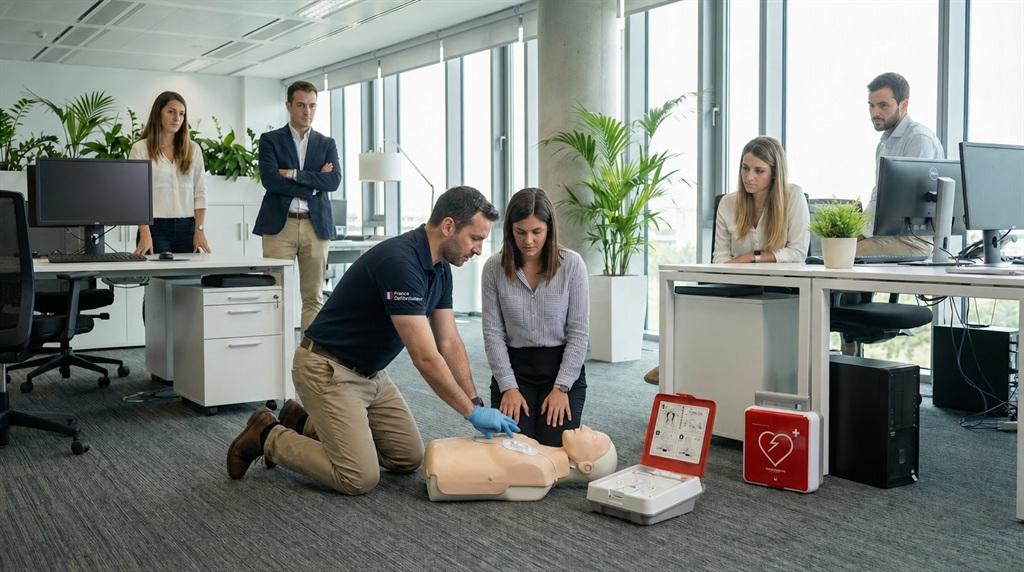
A device with nobody comfortable using it is useless. An AED guides the user by voice, but resuscitation gestures, alerting the emergency services and the reflex to fetch the device must be learned. In a mobile team, training two people per vehicle is sometimes enough to ensure someone is always on board.
Also set a clear instruction: who calls the emergency services, who fetches the device, who stays with the victim. On a site or at a client's, these roles are decided in seconds. A yearly drill, even twenty minutes in the company car park, anchors these reflexes far better than a memo.
Buy or rent for a fleet
With several vehicles, the budget question comes up fast. Rental starts at 50 € excl. VAT per month, maintenance included, which spares you from managing consumables and checks across the whole fleet. Purchase suits one or two closely monitored vehicles better. The warranty is 5 years, and delivery takes 2 to 5 working days.
Ask for a quote within 24 hours, stating the number of vehicles, conditions of use and how long they sit in sun or cold. These elements guide the choice of model and bag, even before the question of price.
Frequently asked questions
Is a defibrillator mandatory in a company vehicle?
The equipment obligation from loi 2018-527 (French law) applies to certain ERP (buildings open to the public), not to vehicles. Carrying an AED is the employer's choice, which can be part of its risk assessment. Maintenance remains its responsibility, as for any device it operates.
Can an AED stay in the boot in summer or winter?
Better avoided. Heat and frost quickly exceed the storage ranges given by the manufacturer, to the detriment of electrodes and battery. Check the manual, keep the device in the cabin if possible and bring it indoors overnight when temperatures are extreme.
Who looks after the device when the vehicle changes driver?
A single lead must be named per vehicle, in writing. They check the indicator light, electrodes and dates, and log each check in a register. Without that name, nobody looks at the device and expiry dates go unnoticed.
How many people should be trained per vehicle?
There is no regulatory figure. In practice, training at least two people per vehicle means someone comfortable is on board even when one is absent. The AED guides by voice, but resuscitation gestures and alerting the emergency services are learned in training.
Planning an AED project?
Purchase, rental from 50 EUR excl. VAT per month, installation with GéoDAE registration, servicing and training: our team replies within 24 hours.