Defibrillator under repair: avoiding a coverage gap
Written by Cyrille GAGNAIRE, France Défibrillateur. Published on 31 October 2026.
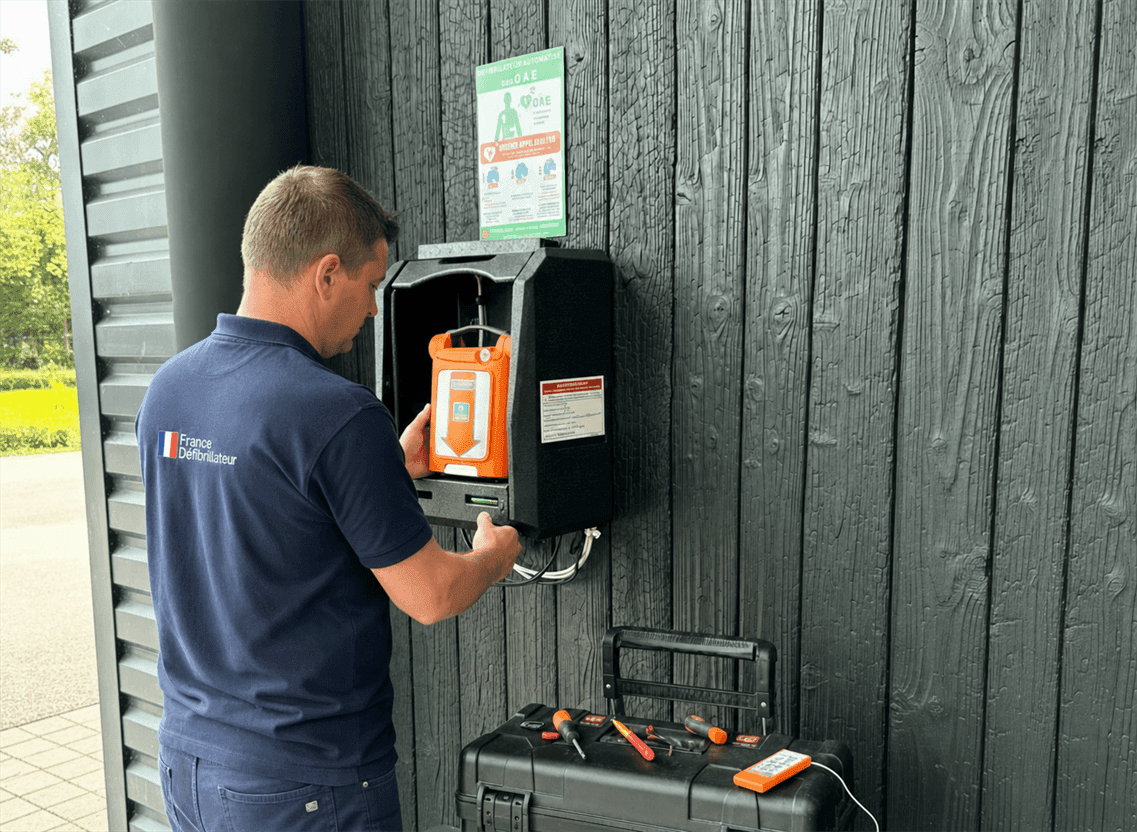
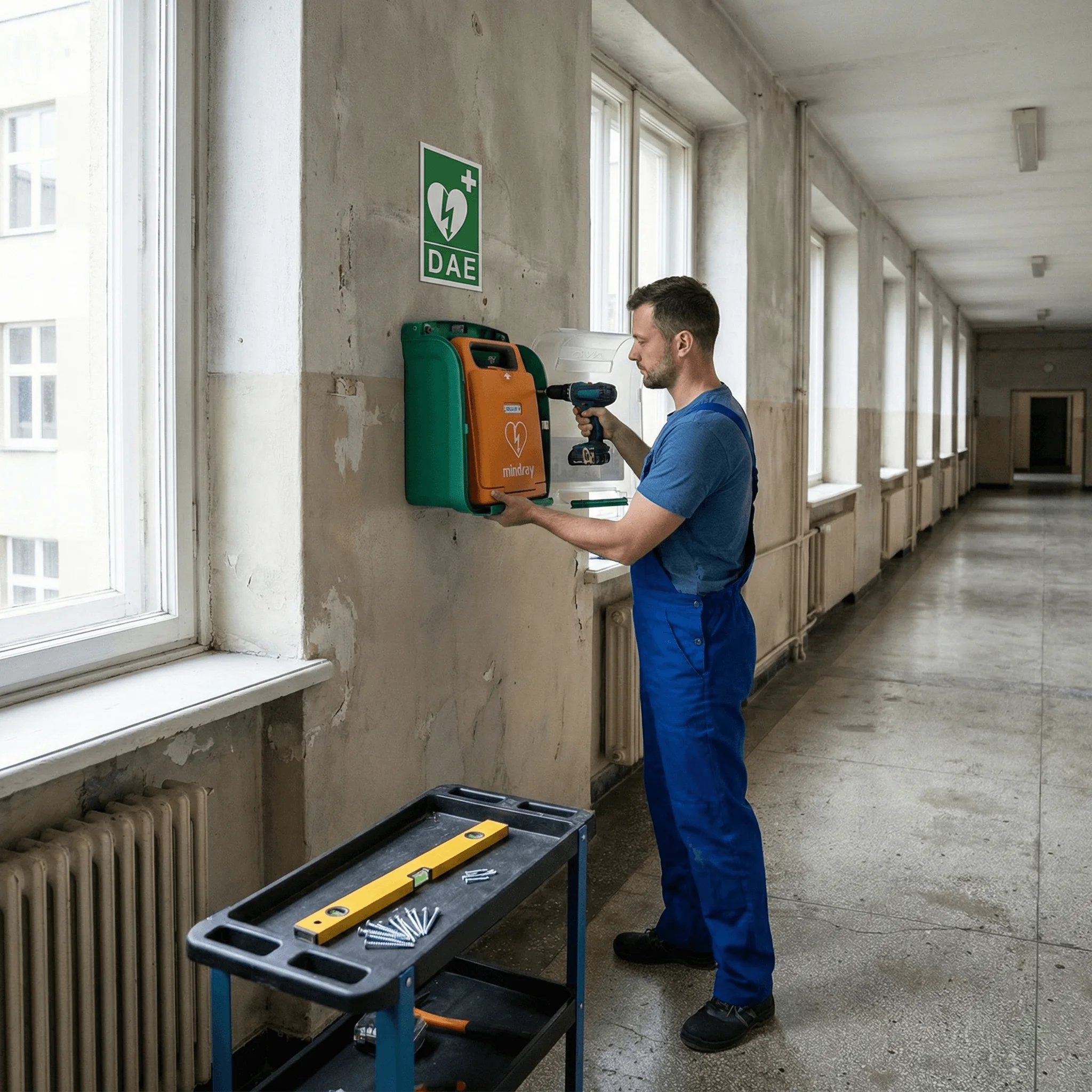
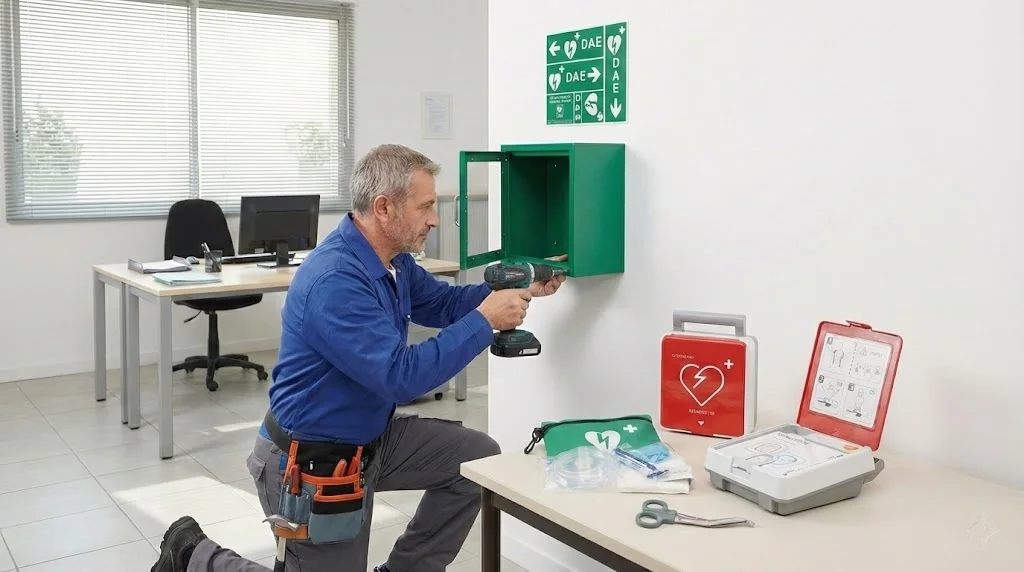
A defibrillator taken off the wall for a repair, a persistent alert or a service leaves the premises unprotected, sometimes for several days. Yet the equipment obligation is not suspended while the device sits in a workshop. The operator remains responsible for its availability. This article explains how to plan for these periods, which replacement options exist, how to inform occupants and how to log the intervention so that coverage stays continuous.
Why unavailability is a problem
The equipment obligation targets a usable device, not just a box fixed to a wall. ERPs (établissements recevant du public, premises open to the public) of categories 1 to 3 have been subject to it since 1 January 2020, category 4 since 2021 and some category 5 ERPs since 2022, under loi 2018-527 and décret 2018-1186 (French law and decree). A device missing for several days no longer meets the spirit of these texts.
The risk is first of all human. There are about 50,000 cardiac arrests a year in France, and every minute without defibrillation reduces the chance of survival by about 10%. An empty cabinet helps nobody. Since maintenance is the operator's responsibility (article R. 5212-25 du Code de la santé publique, the French Public Health Code), managing these periods falls to the operator too.
In practical terms, ask yourself a simple question: if someone collapses in the lobby tomorrow morning while the device is in the workshop, what happens? As long as the answer is not written down and known to your teams, coverage is not organised.
Causes of a temporary removal
Several situations require taking the device away: a self-test light that stays red after the consumables are changed, a shock or water damage, a periodic check entrusted to the maintenance provider, or a return after a real use. Some can be planned, others happen without warning.
Indicative service lives help with planning: 2 to 5 years for electrodes, 3 to 5 years for batteries, 8 to 10 years and more for the device itself. Replacing a consumable before it expires often avoids any downtime.
| Situation | Predictable? | Recommended reflex |
|---|---|---|
| Electrodes or battery near expiry | Yes | Order ahead and replace on site |
| Periodic check by the maintenance provider | Yes | Schedule it with a replacement device |
| Persistent red light | No | Contact the provider and arrange a loan |
| Shock, moisture, vandalism | No | Remove the device and signal its absence |
| Return after use | No | Replace the electrodes and have the device checked |
Solutions to keep coverage in place
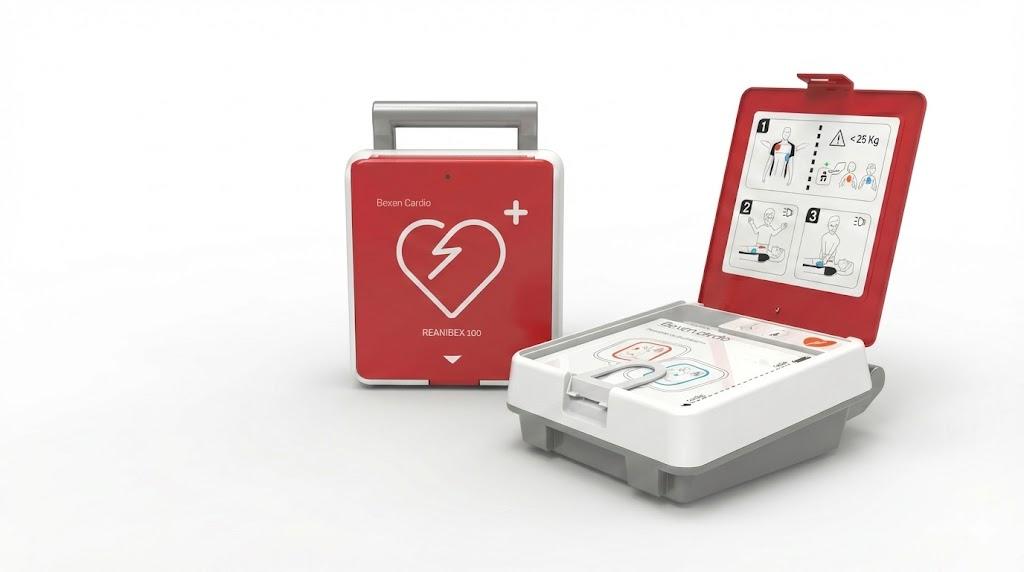
The first option is a replacement device. Before signing a maintenance or rental contract, check whether it provides a loan during downtime and within what time. Rental starts at €50 excl. VAT per month, maintenance included, which can simplify this point.
Sites that welcome many visitors sometimes choose a second device, which serves as a backup during removals. It takes a budget, but it removes the problem for premises where an absence of a few days would be hard to justify.
For small organisations, an accessible neighbouring device can fill the gap provided this has been agreed in advance and clearly indicated. A written agreement, even a short one, avoids misunderstandings on the day it is needed.
Whatever solution you choose, agree with the provider on a maximum acceptable downtime and ask for a written commitment on the return date. A removal announced for a few days that drags on should immediately trigger the setting up of a backup device.
Informing occupants and adapting signage
A missing device must be visible. Put a notice on the cabinet stating that the defibrillator is temporarily removed, the planned return date and the location of the nearest device. The regulatory signage (arrêté du 29 novembre 2018, a French ministerial order) stays in place, as it also guides people to the cabinet during recommissioning.
Inform reception, the designated contacts and the people trained in life-saving first aid. Everyone must know that in an emergency they should call the emergency services, start chest compressions and send someone to fetch the backup device.
Finally, check that the GéoDAE registration (the French national AED database) remains consistent, especially if the device is replaced by another model or moved.
Logging the intervention and returning to service
Record in the safety register the removal date, the reason, the provider, any replacement device and the return date. This record protects the operator in the event of an inspection or dispute, and it shows that continuity was organised.
When the device comes back, run a simple check: self-test light green, electrodes present and in date, battery properly installed, device back in its cabinet and the cabinet accessible. If consumables are needed, delivery takes 2 to 5 working days and a quote is provided within 24 hours. The 5-year warranty covers device failures under the terms of the contract.
Frequently asked questions
Is the equipment obligation suspended during a repair?
No, no text suspends the obligation while a repair is under way. The operator must organise continuity: a replacement device, a second device or a nearby solution clearly signposted. A short, well-managed absence will be easier to justify than a removal with no information and no backup.
Does my maintenance contract include a loan device?
It depends on the contract. Read the clauses on downtime and ask in writing whether a loan is provided, within what time and at whose cost. This is worth clarifying before signing, so you do not discover the lack of a solution on the day of a breakdown.
What should I do if the self-test light turns red?
Check the manual to identify the alert, inspect the electrodes and the battery, then contact the provider if the light persists. As long as the device is not judged operational, signal its unavailability and arrange a temporary replacement.
Do I need to warn the emergency services of a removal?
No particular procedure is described for a short removal. However, inform your teams and occupants, and check that the GéoDAE registration matches the real situation, especially in case of a lasting replacement or a change of location.
Planning an AED project?
Purchase, rental from 50 EUR excl. VAT per month, installation with GéoDAE registration, servicing and training: our team replies within 24 hours.