Defibrillator in nightclubs and dance halls: obligations and best practices
Written by Cyrille GAGNAIRE, France Défibrillateur. Published on 5 September 2026.
A nightclub, a cabaret or a dance hall welcomes a dense crowd, in the dark, with loud music and often after drinking. These venues fall under the same French ERP rules as a shop or a town hall, but running them at night calls for specific choices on where to place the defibrillator, how to train staff who change fast from one season to the next, and how to maintain a device exposed to heat, humidity and smoke.
A nightclub falls under ERP type P rules
A nightclub, a dance hall or a cabaret falls under the French category of establishments receiving the public known as type P, reserved for dance halls and gaming rooms. Law 2018-527 and its implementing decree 2018-1186 require an automated external defibrillator depending on the establishment's category: categories 1 to 3 since 1 January 2020, category 4 since 2021, and part of category 5 venues since 2022. A neighbourhood venue for two hundred people and a large club for several thousand guests do not follow the same timeline.
The classification depends on the maximum capacity authorised, set out in the opening order issued after review by the safety commission (ERP, French rules for venues open to the public). An operator who enlarges the dance floor, opens an extra level or changes the layout of the bars must check whether this figure changes the category, and therefore the deadline. Any doubt should be cleared up with the prefecture's prevention department or the fire service, which keeps the venue's safety file.
What darkness, noise and alcohol change
A nightclub combines constraints rarely found elsewhere: strobe lighting, music loud enough to drown out calls for help, a packed dance floor and alcohol consumption that makes it harder to recognise the first warning signs. A guest who loses consciousness may first be mistaken for someone simply drunk, which delays the alert. Bar staff, cloakroom attendants and security must be able to tell a loss of consciousness with no normal breathing apart from ordinary intoxication, and react without waiting.
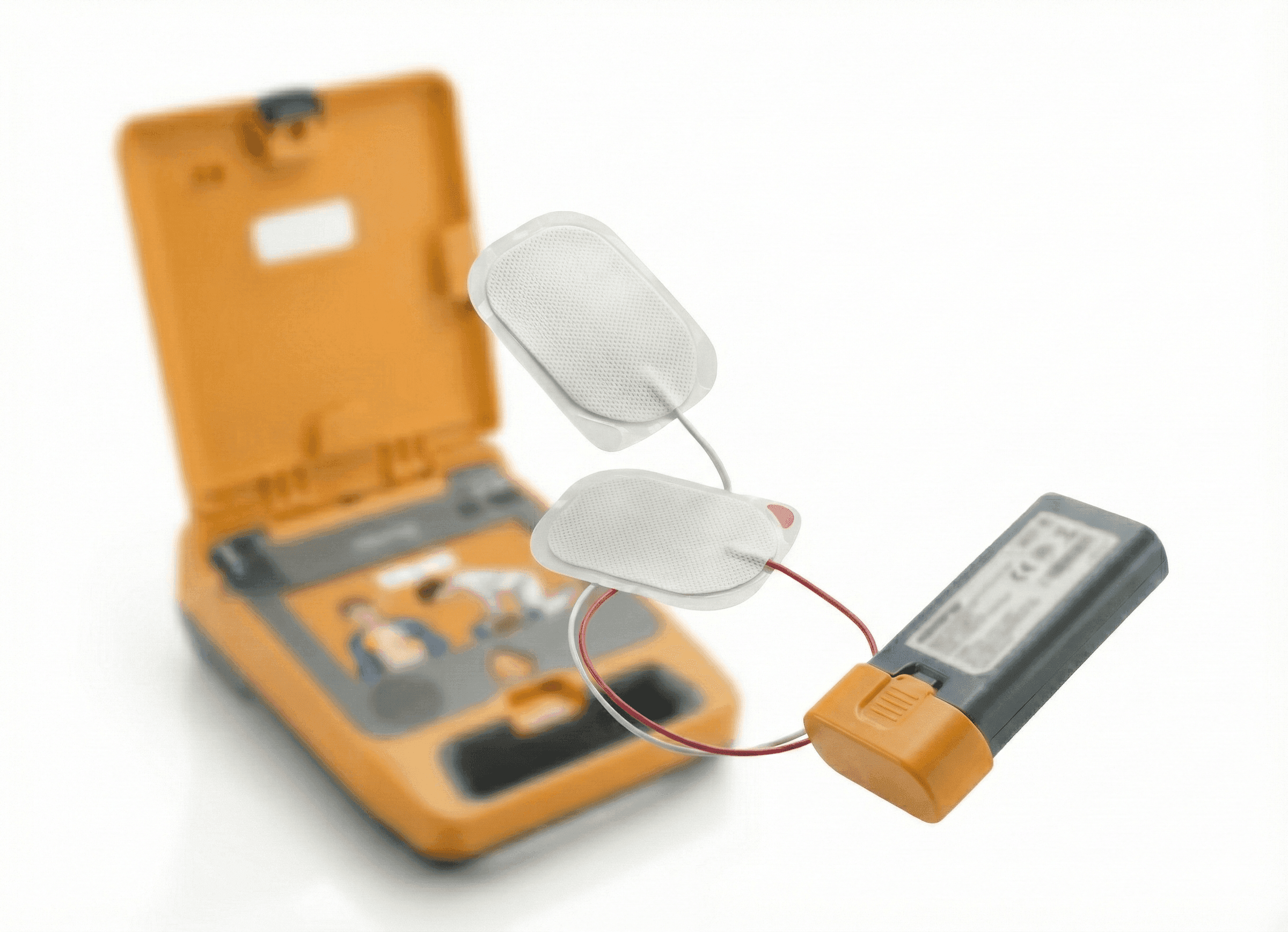
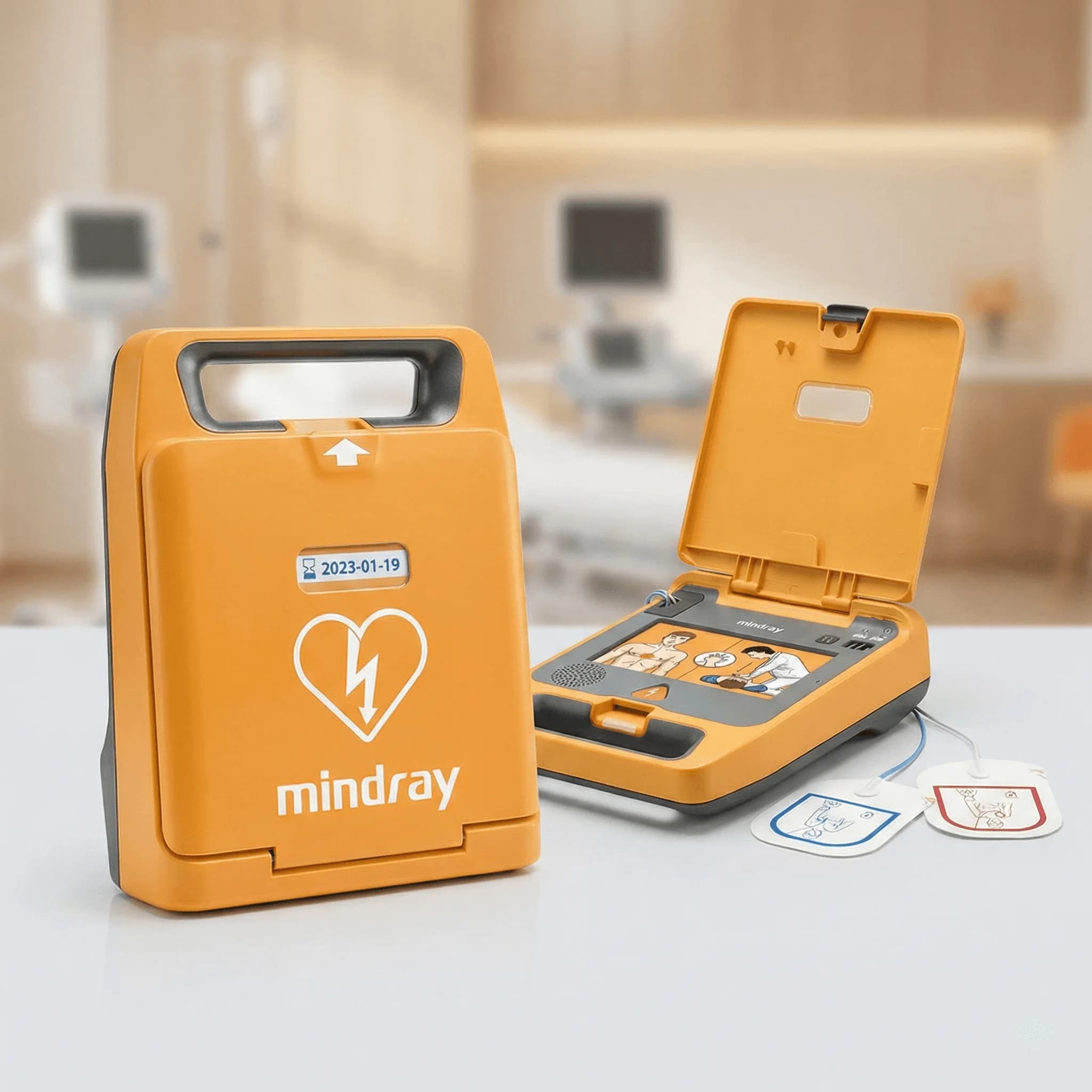
Choosing the defibrillator model matters a great deal here. A fully automatic device, which delivers the shock without human validation, reduces the risk of hesitation in an environment where staff change often from one season to the next. The casing must also withstand the conditions typical of these venues: heat, humidity from a sweating crowd, dust from smoke and fog machines.
Where to place the defibrillator in a night venue
The entrance and cloakroom are an obvious location, accessible even before guests reach the dance floor, and easy for door staff to spot. But a club with several levels, a basement turned into a secondary room or a mezzanine benefits from spreading the equipment out: one unit near reception, a second close to the main bar or the dance floor, to respect the rule of under three minutes' walk from any point accessible to the public.
Smoking terraces and outdoor areas are often overlooked in this planning, even though overflow crowds gather there regularly on busy nights. A cardiac arrest can just as easily happen outside the main room, in a poorly lit car park or terrace, and the placement plan should cover these zones on the same footing as the dance floor.
Making the defibrillator easy to spot in the dark
The French order of 29 November 2018 requires standardised signage, a white pictogram on a green background, visible and lit. In a room plunged into darkness and swept by light effects, this sign loses much of its usefulness unless backed up by emergency lighting or a photoluminescent surface that stays visible for several minutes after the lights go out. The device itself should be placed away from speakers, whose constant vibration can weaken the electronics over time.
Staff need to know the exact location without having to search for it in the middle of the crowd and the noise. The briefing before each night's opening, already common for fire safety and evacuation instructions, should systematically include a reminder of where the defibrillator or defibrillators are placed.
Training teams that change often
A nightclub rarely keeps the same staff from one year to the next: students working part time, seasonal hires for the summer, private security agents called in on the busiest nights. This turnover means training should focus first on floor managers and heads of security, who stay on over time, while giving every new recruit a short briefing from their very first shifts.
Basic life-saving training, whether a one-hour awareness session or a fuller first-aid course, gives staff the ability to recognise a cardiac arrest despite the darkness and noise, perform chest compressions and use the device without waiting for emergency services. Security agents already trained in physical intervention benefit greatly from this addition, often missing from their initial training.
Maintaining the defibrillator under night-time operating conditions
A nightclub's opening schedule, often limited to a few nights a week, does not excuse it from regular monitoring of the device. The automatic self-test should be checked at the start of every shift, and consumables watched closely: pads to replace every two to five years, battery every three to five years, and the full unit renewed after eight to ten years of use. Heat, humidity and smoke wear out the equipment faster than in an air-conditioned office, which justifies more frequent checks.
Renting, from 50 euros excl. VAT a month with maintenance included, suits many night venues with seasonal income, especially ahead of summer or the end-of-year holidays when crowds pick up. Buying remains an option, with a five-year warranty, delivery within two to five working days and a quote within 24 hours to compare both formulas before the busy season.
Frequently asked questions
Does a small neighbourhood nightclub need to install a defibrillator?
It depends on the ERP category assigned by the safety commission, tied to the maximum authorised capacity, not to how big the venue looks. A category 5 venue can be affected since 2022 depending on its activity and attendance. The safest approach is to check the opening order or contact the fire service.
Must security staff be trained, or is an accessible device enough?
The law requires the device, not mandatory individual training for every employee. But a defibrillator without staff able to recognise a cardiac arrest loses much of its value. Training at least floor managers and security agents remains strongly recommended.
Must a defibrillator stay accessible on the smoking terrace?
Nothing requires a dedicated device for every outdoor area, but the chosen location must allow the terrace to be reached in under three minutes' walk, like any point accessible to the public. If distance or layout does not allow this, a second unit becomes necessary.
What should be done if the device is used on a busy night?
The venue must follow the usual after-use procedure: report the intervention, replace the used pads and check the battery before putting the defibrillator back into service. The club must never be left without a working device from one night to the next, and keeping a spare set of pads on site helps.
Does the GéoDAE (French national AED registry) listing change if the venue changes name or owner?
Yes, the GéoDAE listing must be updated whenever the operator, trading name or address changes, so that emergency services have accurate information. This declaration remains mandatory regardless of how often the venue opens, even for one that only runs on certain nights of the week.
Planning an AED project?
Purchase, rental from 50 EUR excl. VAT per month, installation with GéoDAE registration, servicing and training: our team replies within 24 hours.