Defibrillator in a Nursery: Requirements and Best Practices
Written by Cyrille GAGNAIRE, France Défibrillateur. Published on 8 September 2026.
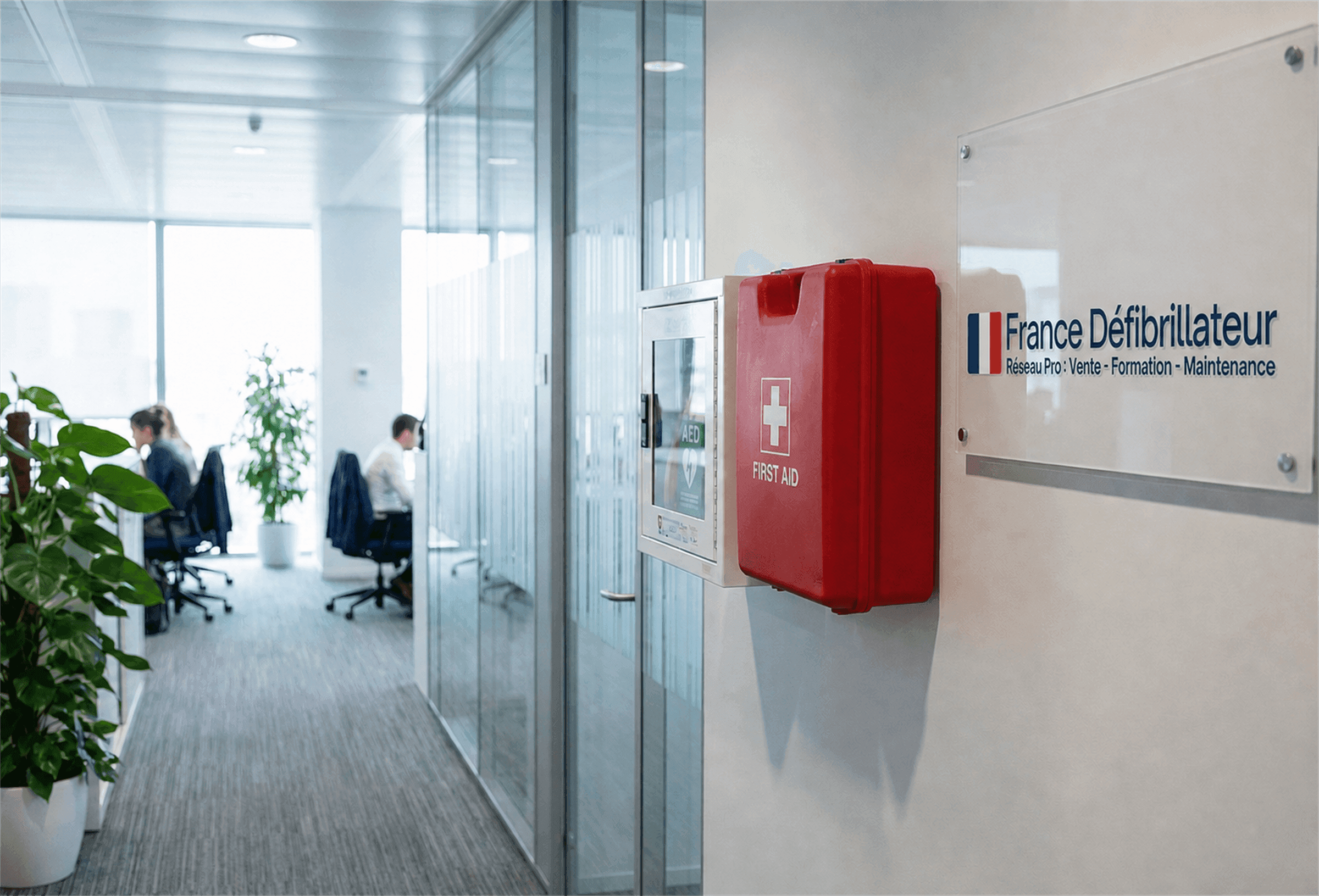
A nursery brings together infants, young children, early years professionals and parents dropping off or picking up their child every day. Cardiac arrest there almost always affects an adult rather than a toddler, but the question of equipping the premises arises just as it would in any public building. Between ERP classification, pads suited to the youngest children and keeping the device safe from the children themselves, several points deserve clarifying before choosing a defibrillator.
Is a nursery a public building?
A nursery, whether a municipal childcare centre, an association-run creche, a private micro-creche or a childminders' collective, receives the public in the regulatory sense as soon as it welcomes children and their families from outside the operator's own household. It therefore falls under the classification of buildings open to the public, known in France as ERP (établissement recevant du public), with a category that depends on the total number of people accommodated, children and staff combined. ERP categories 1 to 3 have been required to have a defibrillator since 1 January 2020, category 4 since 2021, and part of category 5 since 2022, under the French loi 2018-527 (law) and its décret 2018-1186 (implementing decree).
Most nurseries, especially micro-creches limited to around ten places, fall into category 5 for lack of sufficient headcount to move into a higher category. That does not exempt them from considering the question: a larger childcare centre with dozens of places, together with its staff and the families passing through morning and evening, quickly adds up to a number of people present well above that of a single school class. The operator, whether a town council, a local welfare body, an association or a private network, is the one responsible for checking the exact category of its establishment.
Cardiac arrest in a nursery mostly affects adults
Cardiac arrest affecting an infant or young child remains an exceptional event. In a nursery, the most likely scenario involves an adult: an early years professional, a parent dropping off their child, a grandparent, a delivery driver or an outside visitor. About 50,000 cardiac arrests occur every year in France, and every minute that passes without defibrillation lowers the chances of survival by roughly 10%. A nursery, like any place where adults cross paths every day, is no exception to this reality.
This changes how the equipment should be thought about. The defibrillator is not installed only for the young children in care, but for anyone present on the premises or nearby, including during outings to the park or outdoor activities organised by the setting.
Pediatric pads are needed almost every time
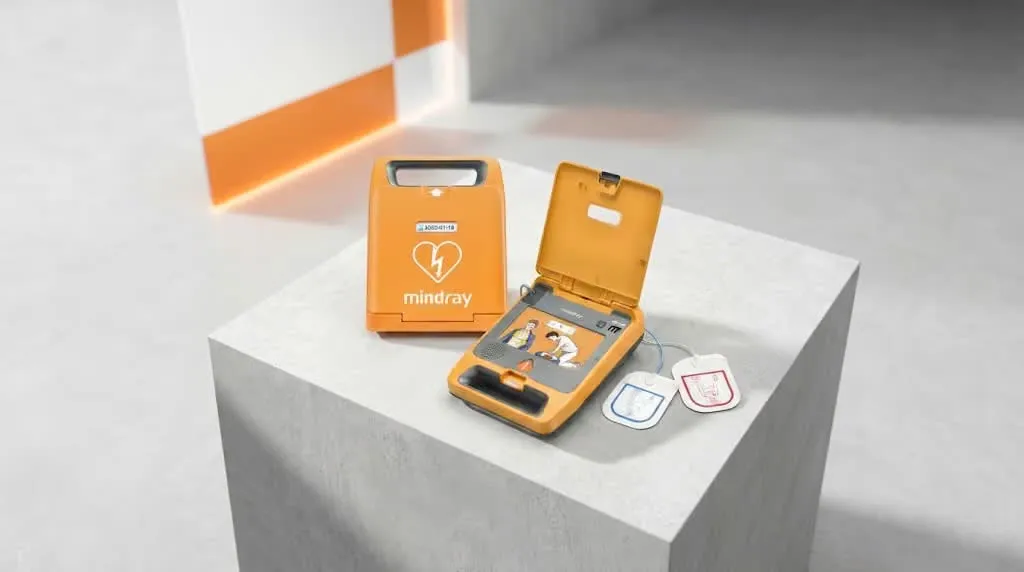
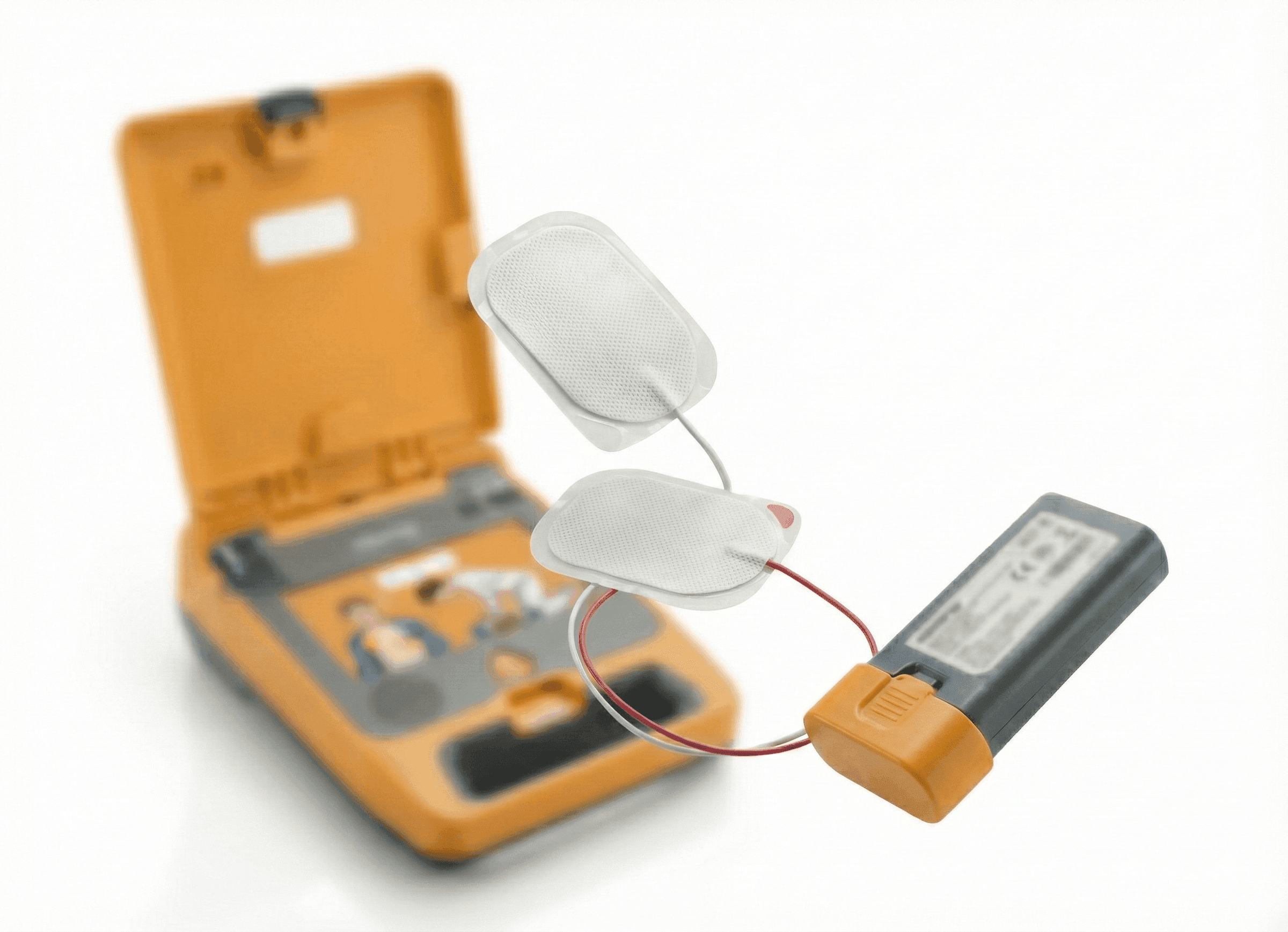
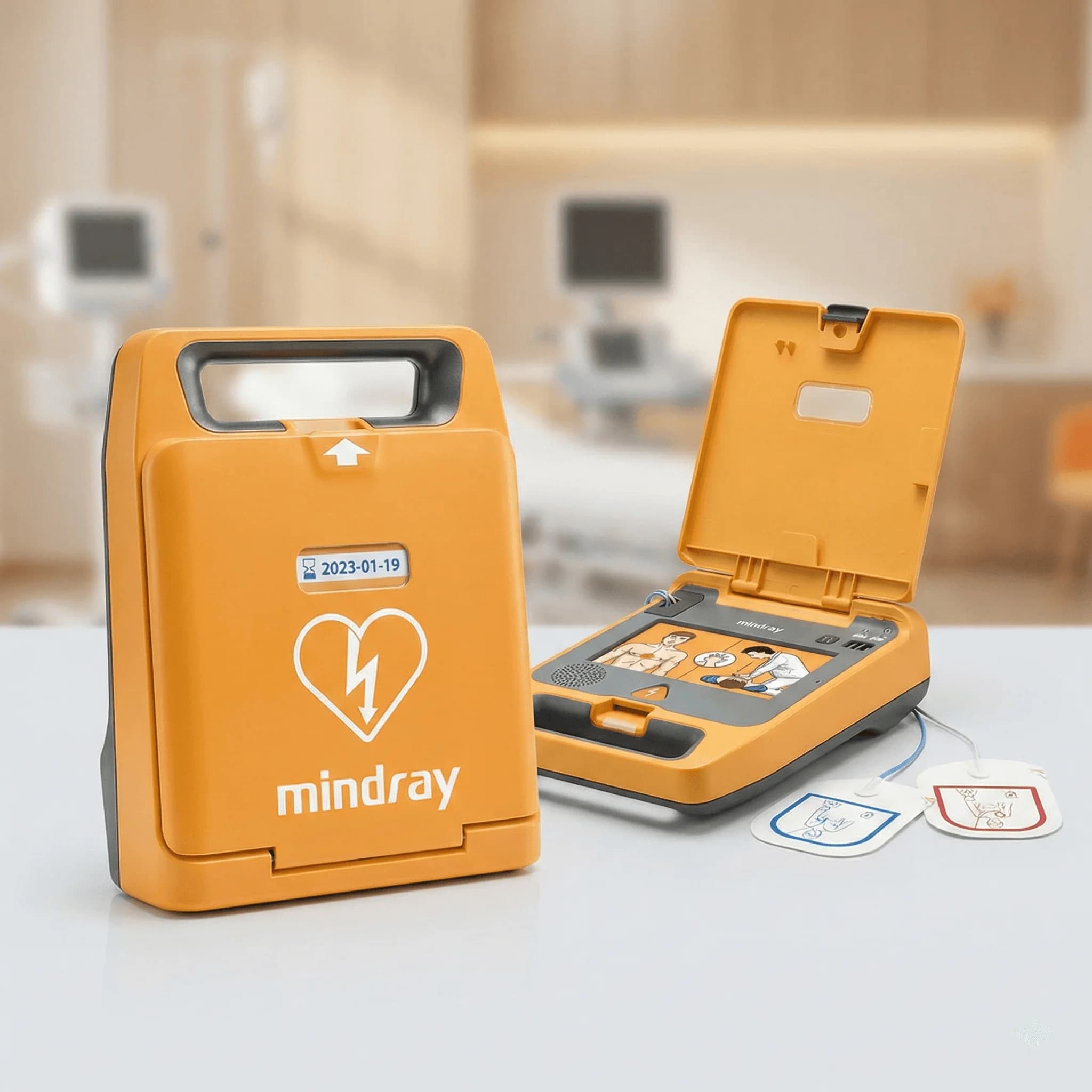
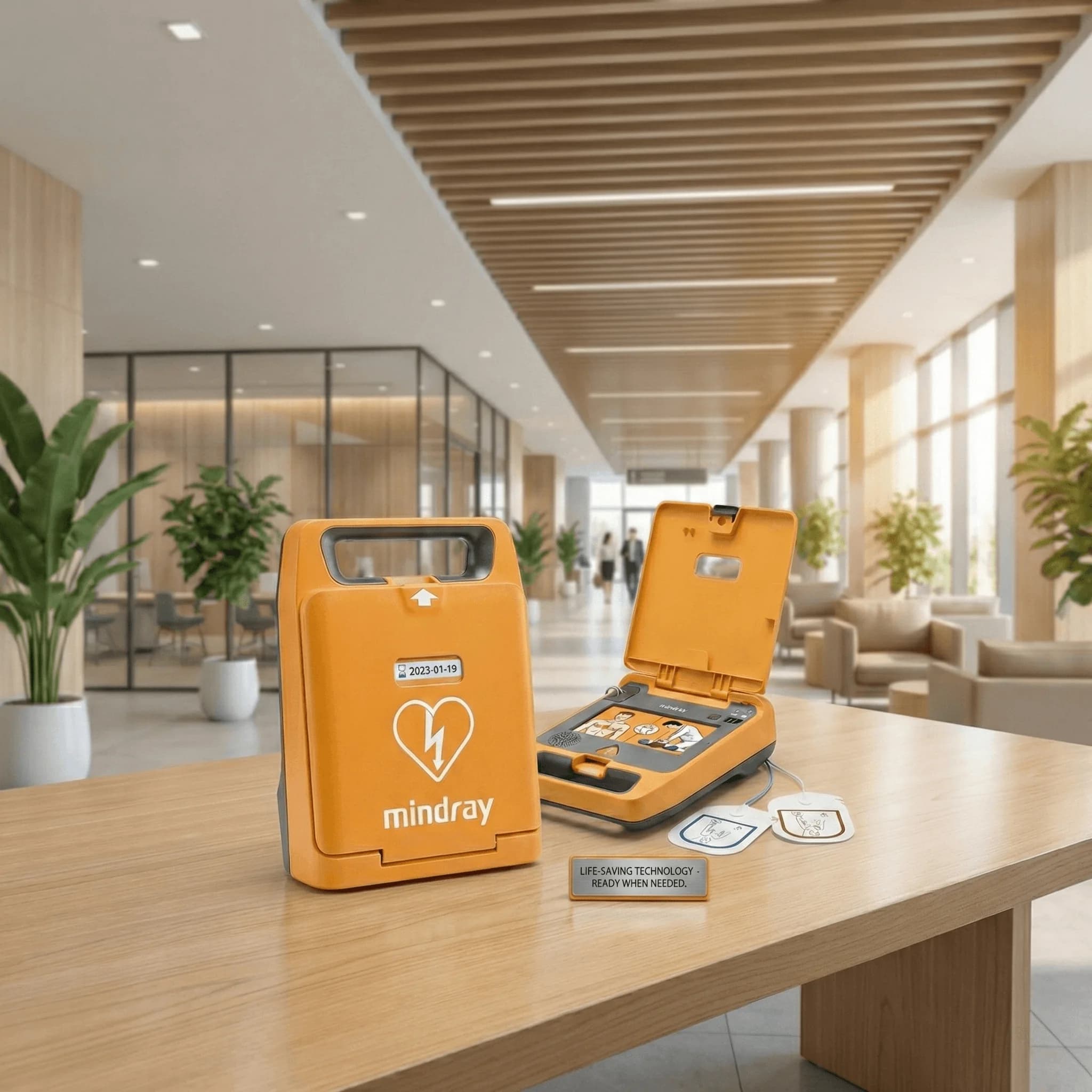
When the victim is a child, the energy an automated external defibrillator, or DAE (AED), delivers by default, calibrated for an adult, can be excessive for a child under 25 kilograms or under eight years old, which describes every child cared for in a nursery. Manufacturers address this with pediatric pads or energy attenuator keys, which automatically reduce the shock delivered.
A nursery that equips itself should therefore check that its device offers this option and keep the pediatric pair within easy reach of staff, stored with the device and tracked for its expiry date just like the adult pads. Failing that, adult pads remain usable rather than forgoing defibrillation, but that should stay the exception rather than the rule in a setting dedicated to early childhood.
Training a team already introduced to first aid
Early years professionals often receive, during their initial training, an introduction to first aid suited to infants and young children. This grounding does not always cover using a defibrillator or performing chest compressions on an adult, two skills that need specific, regular practice.
Basic life saving training, open to the whole team rather than management alone, lets every staff member respond without waiting for the one qualified person on duty that day. Renewing it every year, alongside a staff meeting or training day, keeps the reflex sharp without taking up disproportionate time.
Maintaining the defibrillator over time
Like any defibrillator installed in a building open to the public, a nursery's device remains the operator's responsibility to maintain, under article R. 5212-25 (French public health code) of the Code de la santé publique. Registration with Géo'DAE remains mandatory so that emergency services can locate the device during a call, and the signage displayed must follow the model set out in the arrêté du 29 novembre 2018 (French ministerial order).
| Item | Lifespan or frequency |
|---|---|
| Pads | 2 to 5 years depending on the model |
| Battery | 3 to 5 years depending on the model |
| Complete device | 8 to 10 years or more as long as the self-test stays green |
A location adults can reach, out of children's hands
The chosen location has to reconcile two apparently conflicting demands: staying reachable within seconds for an adult in an emergency, while remaining out of reach of children who explore every corner of the premises. A high wall mount, in the entrance hall or near the management office, generally meets both requirements better than a low cabinet.
Nurseries with a garden or a yard should also plan for quick access from outside, especially during outdoor activities, without multiplying installation points in a setting that is often small. One well placed cabinet known to the whole team is worth more than several poorly identified locations.
Frequently asked questions
Is a nursery required to have a defibrillator?
It depends on its ERP category, calculated from the number of people it accommodates, children and staff combined. Most micro-creches and small childcare centres fall into category 5, covered by the requirement only for certain establishments since 2022. The operator can check the exact category with the fire safety services and choose to equip the setting even without a strict obligation.
Do nurseries need pediatric pads?
Yes, they are particularly suited since every child in care weighs under 25 kilograms. A pediatric pair or an attenuator key lowers the energy of the shock the device delivers. Failing that, adult pads remain usable as a last resort, but a nursery benefits from keeping a pediatric pair available at all times near the defibrillator.
Who should be trained in basic life saving at a nursery?
The whole care team, not management alone, benefits from regularly renewed basic life saving training. Early years qualifications already include some first aid awareness for infants, but using a defibrillator and performing chest compressions on an adult need specific training that this grounding does not always cover.
Where should the defibrillator go so it stays out of children's reach?
A high wall mount, in the entrance hall or near the management office, reconciles accessibility for adults with safety for children. This location should be known to the whole team and signposted in line with the arrêté du 29 novembre 2018 (French ministerial order), including when the nursery has a garden or outdoor yard.
Who is responsible for maintaining the defibrillator in a municipal or association-run nursery?
The operator of the establishment, whether a town council, a local welfare body or a managing association, is responsible for maintenance under article R. 5212-25 (French public health code). A designated team member can handle the regular follow up of the self-test and the expiry dates of consumables.
Planning an AED project?
Purchase, rental from 50 EUR excl. VAT per month, installation with GéoDAE registration, servicing and training: our team replies within 24 hours.