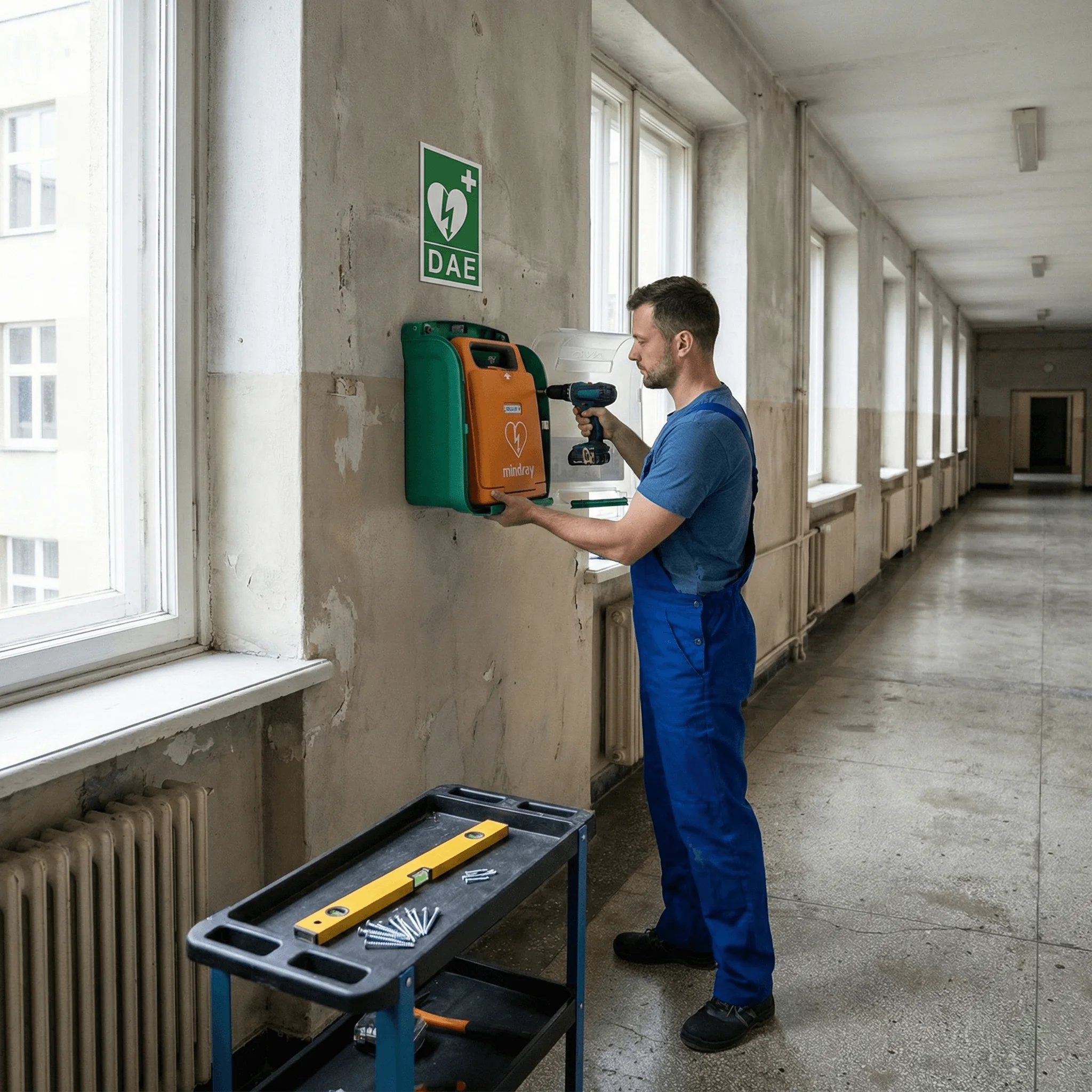
Heat, frost, humidity: what a defibrillator endures
Written by Cyrille GAGNAIRE, France Défibrillateur. Published on 1 November 2026.
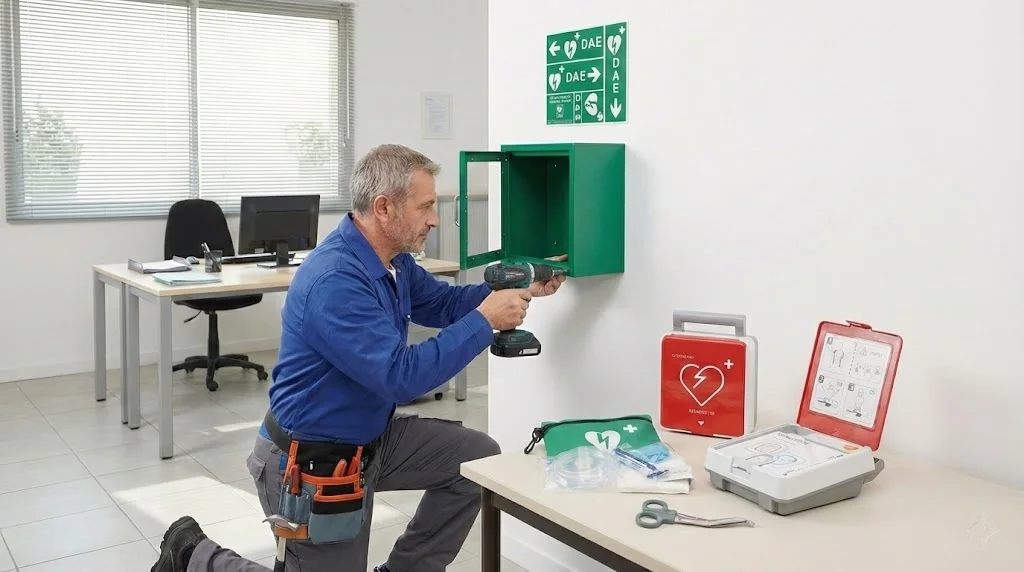
A defibrillator spends most of its life sitting still, and that is exactly when its surroundings wear it down. A south-facing window, an unheated corridor in winter, an outdoor cabinet that fogs up: each situation strains the pads and the battery differently. Here is how to spot risky locations, what the manufacturer's manual lets you verify and how to adapt checks through the seasons.
A device that waits, an environment that works on it
A defibrillator is rarely used, sometimes never during its whole service life. Yet its self-test runs continuously and its consumables age unnoticed. The pads contain a conductive gel that can dry out, and the battery loses capacity depending on how it is stored.
The announced lifespans, pads from 2 to 5 years, batteries from 3 to 5 years, the device itself 8 to 10 years and more, assume use in line with the manual. A device exposed to harsh conditions may reach these limits sooner, or report a fault well before the stated deadline.
Heat, the quiet enemy
The first trap is accumulated heat. A device placed behind a glass wall, next to a radiator, in a poorly ventilated technical room or in a car parked in the sun experiences temperatures well above those of the room where people are. Batteries are particularly sensitive, and pads can lose their adhesion.
For mobile equipment, such as that of a sports coach or an event organiser, the rule is simple: never leave the bag in a boot or on a parcel shelf. It is better to keep it with you, in the shade, in a mild place.
Inside a building, favour an interior wall at adult height, away from heat sources and direct sunlight. A visible, accessible location remains the priority, but it must also stay within the operating range given by the manufacturer.
Cold and frost: the outdoor cabinet on the front line
Cold slows the chemical reactions in a battery and can temporarily reduce available power. It also makes the pad gel less supple. An indoor device simply placed in an unheated entrance hall during winter may end up outside its storage range.
For outdoor locations, the cabinet plays a central role. Models designed for outdoor use offer insulation and, depending on the reference, a regulated heating system. Check that the cabinet has a reliable power supply and that its status light is visible.
Also note that a defibrillator taken out of the cold may need a warm-up period before performing fully. If the cabinet is not heated, slipping the device under a coat on the way to the victim is a simple reflex. The manual for your model states the operating conditions.
Humidity, condensation and dust
Humidity is less spectacular but just as troublesome. In a swimming pool, a spa, a professional kitchen or a cellar, steam can reach the connectors and the battery contacts. A sealed, well-ventilated cabinet limits condensation, provided its gaskets are checked regularly.
Dust is another problem in workshops, warehouses and building sites. It clogs the cabinet, hides the status light and ends up discouraging visual checks. A dry cloth at each inspection is often enough to prevent this.
The following table summarises the most common situations and the matching reflex.
| Location | Main risk | Reflex |
|---|---|---|
| Behind a sunlit window | Overheating, damaged pads | Move to an interior wall in the shade |
| Unheated hall or corridor | Frost, weakened battery | Insulated or heated cabinet, mild location |
| Outdoors, facade or car park | Frost, rain, vandalism | Powered outdoor cabinet, gaskets checked |
| Pool, spa, kitchen | Humidity, steam | Sealed cabinet, ventilation, contact checks |
| Workshop, warehouse, building site | Dust, impacts | Closed cabinet, cleaning during checks |
| Vehicle | Extreme variations | Do not leave the device on board when parked |
Adapting checks to the seasons
Maintenance is the operator's responsibility under article R. 5212-25 of the Code de la santé publique (French Public Health Code). In practice, a regular visual check of the status light, the cabinet and the expiry dates remains the basis. Record each visit in your safety register.
Add two key appointments: one before summer, to check sun exposure and ventilation, and one before winter, to check the power supply and heating of outdoor cabinets. After a marked weather event, heatwave, prolonged frost or flood, review everything without delay.
If the light signals a fault, or if the device has been exposed to conditions outside the manual, do not take risks: have it checked and replace the consumables concerned. A well-drafted maintenance contract covers this kind of intervention, and rental from 50 € excl. VAT per month includes maintenance.
Frequently asked questions
Can a defibrillator be left in a car?
Better avoided. A closed cabin can far exceed the storage temperature range set by the manufacturer, which wears out the battery and pads. If the device has to travel, keep it with you or stored in a mild place, out of the sun.
Is an outdoor cabinet mandatory outside?
A defibrillator meant to stay accessible outdoors must be protected by a suitable cabinet. Indoor models are not designed for rain, frost or heat. Check the manual and choose a cabinet intended for this use, with a visible status light.
Does cold stop a defibrillator from working?
Cold can reduce battery performance and make the pads less effective. The manual gives the operating range of the model. If in doubt, warm the device against your body on the way and follow the voice instructions.
How often should the device be checked depending on the season?
A regular visual check is enough in normal times, with a reinforced review before summer and before winter. After a heatwave, prolonged frost or flood, check the status light, the cabinet and the expiry dates without delay, then record it in the register.
What if the device has suffered excessive heat?
First look at the status light and the manual. If doubt remains, have the device checked by a professional and replace the pads or the battery if needed. An early replacement is better than doubtful equipment at the critical moment.
Planning an AED project?
Purchase, rental from 50 EUR excl. VAT per month, installation with GéoDAE registration, servicing and training: our team replies within 24 hours.