Defibrillator in a casino or gaming hall: requirements and best practices
Written by Cyrille GAGNAIRE, France Défibrillateur. Published on 24 September 2026.
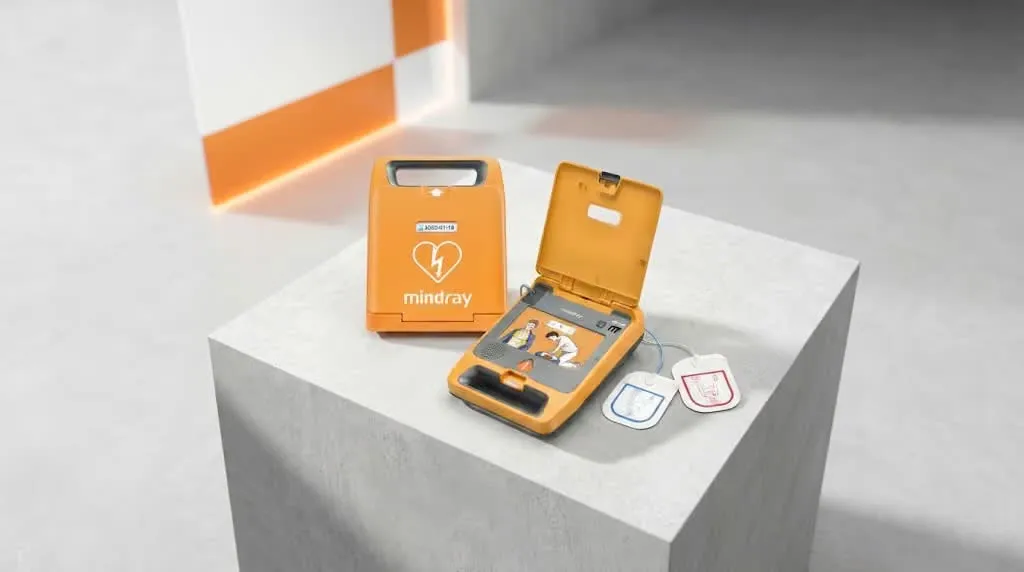
A casino or gaming hall keeps players seated and focused for hours, sometimes well into old age, in an enclosed space where physical exertion stays low but stress and fatigue build up. This particular setting, marked by late hours and a reduced staff at the end of a shift, means the venue must be equipped with a defibrillator like any establishment open to the public. This guide covers the applicable regulations, the best placement, and how to organise maintenance and training.
A seated, focused, and sometimes older crowd
A casino or a hall of gaming machines welcomes a public that stays still for long stretches, seated at a table or in front of a machine, in an enclosed space lit continuously. This prolonged stillness, combined with the tension of gambling and often late hours, does not by itself cause a cardiac arrest, but it can act as a trigger in someone whose heart already carries an unnoticed weakness.
About 50,000 cardiac arrests occur every year in France, and some affect people who appear perfectly healthy, at the moment they least expect it. Every minute without defibrillation cuts survival chances by roughly 10 percent, a figure that matters even more in a venue where outside emergency services can take several minutes just to find the right room, among several floors or several gaming areas.
A public venue subject to the same timeline
A casino falls under the same regulations as any venue open to the public. French law 2018-527 and its implementing decree 2018-1186 (the 2018 legislation requiring AEDs in establishments open to the public) require a defibrillator according to the venue's category, determined by its maximum capacity: categories 1 to 3 have had to be equipped since 1 January 2020, category 4 since 2021, and some category 5 venues since 2022.
A large casino that receives several hundred people at once, across traditional gaming tables, a slot machine area and possibly a restaurant or a performance stage, most often falls into the more demanding categories. The operator must check the venue's exact category with the relevant authorities, since it determines both the recommended number of defibrillators and the equipping timeline already in force.
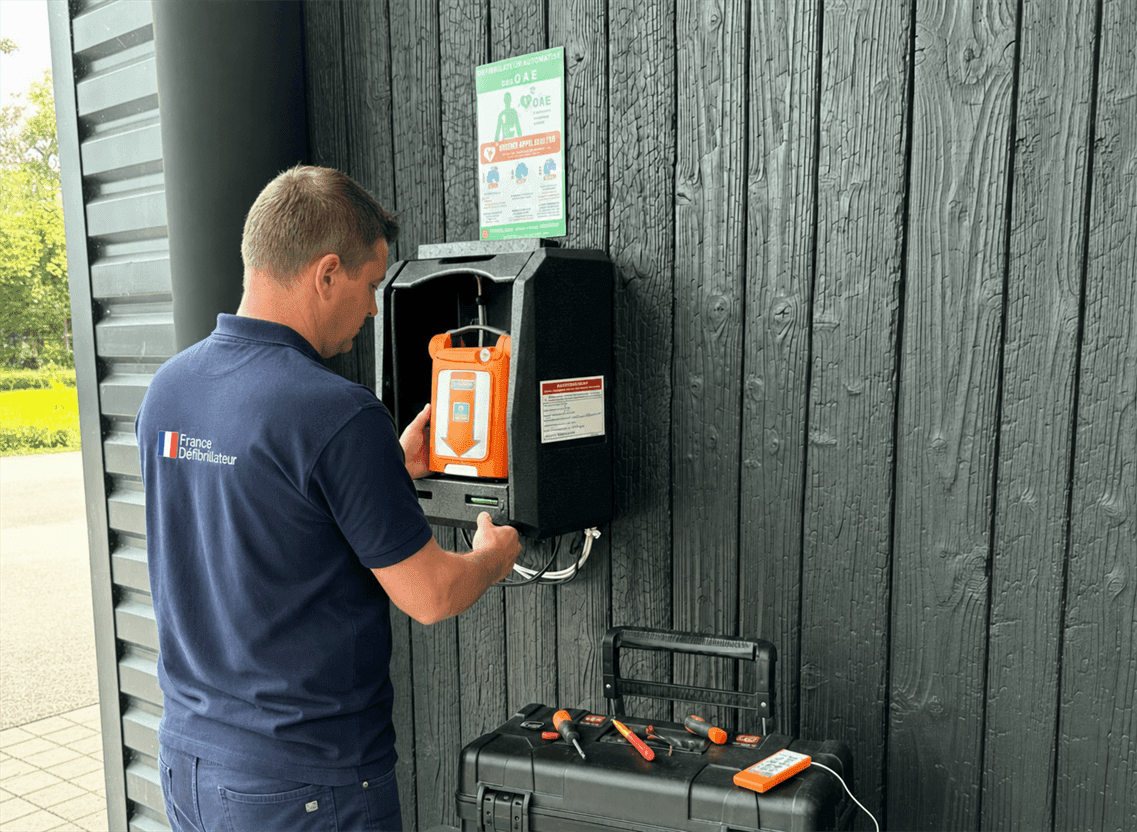
Where to place the defibrillator in a gaming area
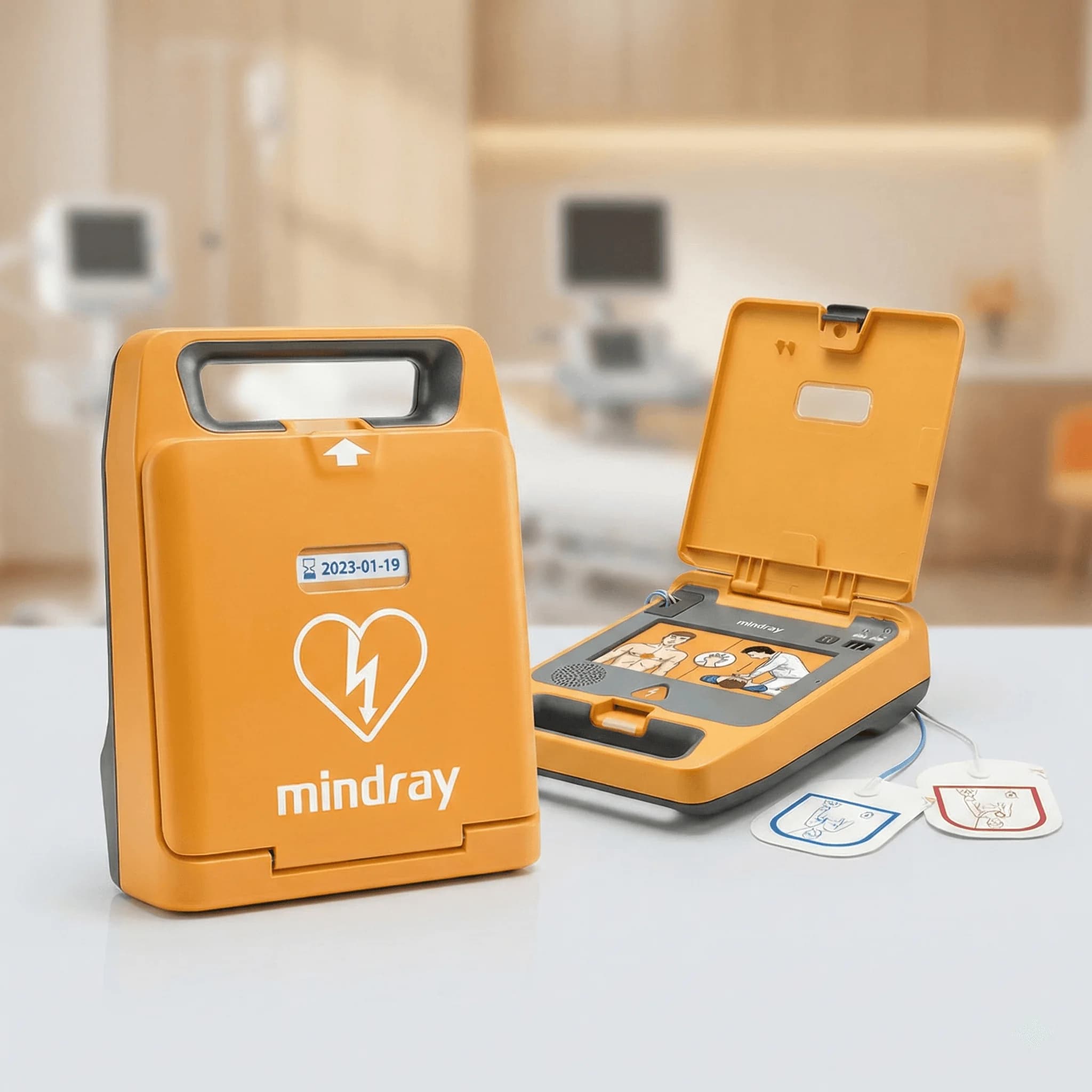
A gaming area is marked by a steady noise level, distinctive lighting and traffic that can get dense between tables, machines and cash desks. The defibrillator should sit in a central spot, visible despite the changing lights, and reachable without crossing the whole room or going through an extra access control point.
In a venue spread across several floors or separate rooms, it is better to plan for one unit per main gaming area rather than relying on a single cabinet far from half the clientele. The reception desk, the security post or the cash area make sensible spots, since they stay staffed continuously through opening hours, including late at night.
Signage and registration with Geo'DAE
Defibrillator signage follows the templates set by the French order of 29 November 2018 (arrete du 29 novembre 2018, the national defibrillator signage standard) and must stay legible despite the relative darkness of some gaming rooms. A single sign mounted high near the main entrance is not always enough, it helps to add another near every secondary access used by staff or by customers during quiet hours.
Once installed, the unit must be registered with Geo'DAE (Geo'DAE, the French national defibrillator locator database), the national database that lets emergency services find it quickly. This registration matters twice as much in a venue open late at night, when the team on site is smaller and every minute saved in directing emergency services carries real weight.
Keeping up maintenance despite extended hours
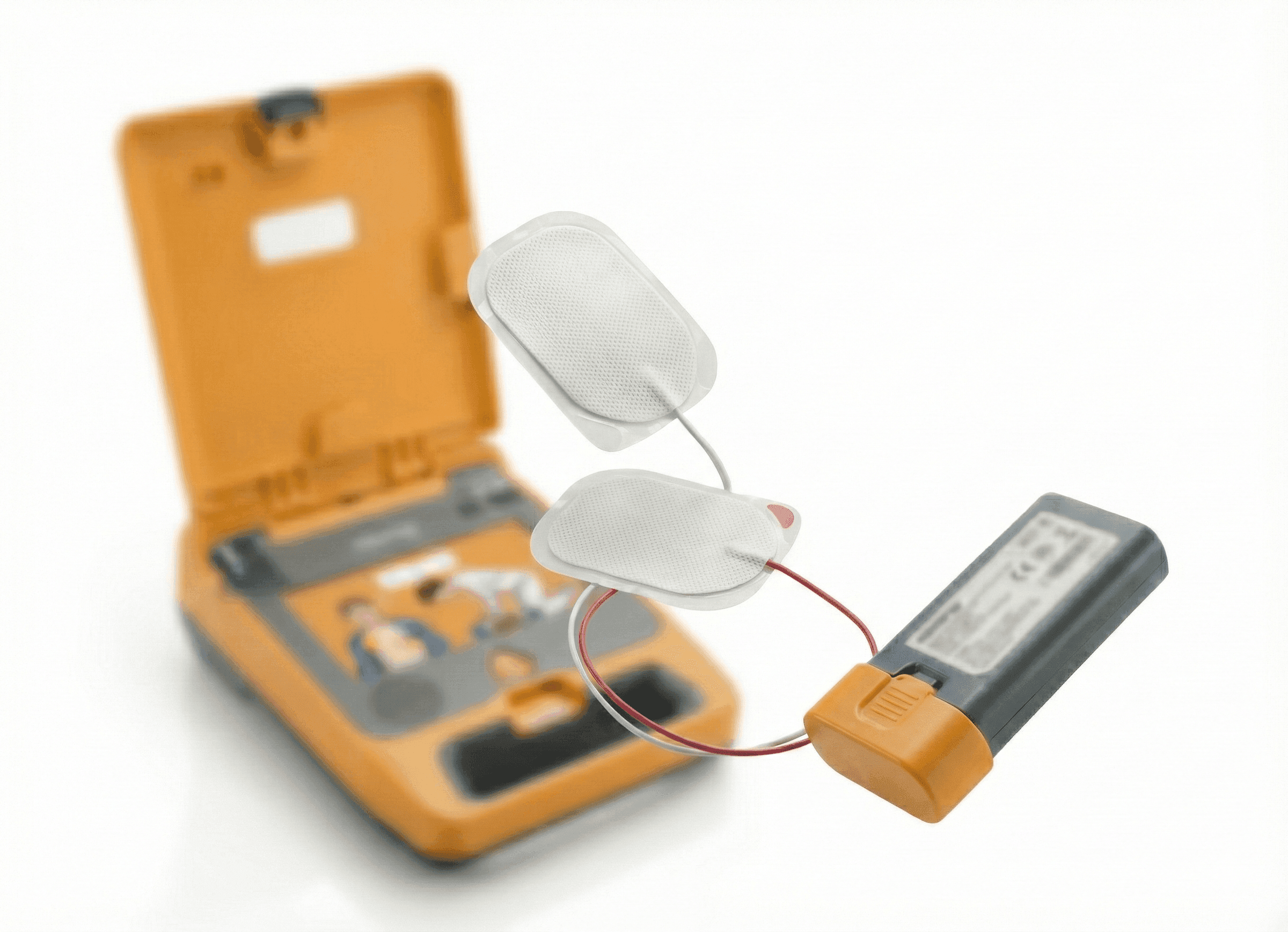
Maintenance of the defibrillator remains the operator's responsibility, under French Public Health Code article R. 5212-25 (article R. 5212-25 of the French Public Health Code, which places device upkeep on the operator), whatever the venue's opening hours. A casino open late into the night or nearly around the clock needs a regular check of the self-test indicator, rather than waiting on a day team that never crosses paths with the night staff.
| Component | Typical lifespan |
|---|---|
| Electrode pads | 2 to 5 years |
| Battery | 3 to 5 years |
| Defibrillator unit | 8 to 10 years or more |
Training staff present at every opening hour
A casino employs staff spread across several shifts, dealers, security officers, reception or restaurant staff, who do not necessarily cross paths from one shift to the next. Training only the day team leaves a gap on evening and night shifts, even though footfall stays steady then and outside help can sometimes take longer to arrive.
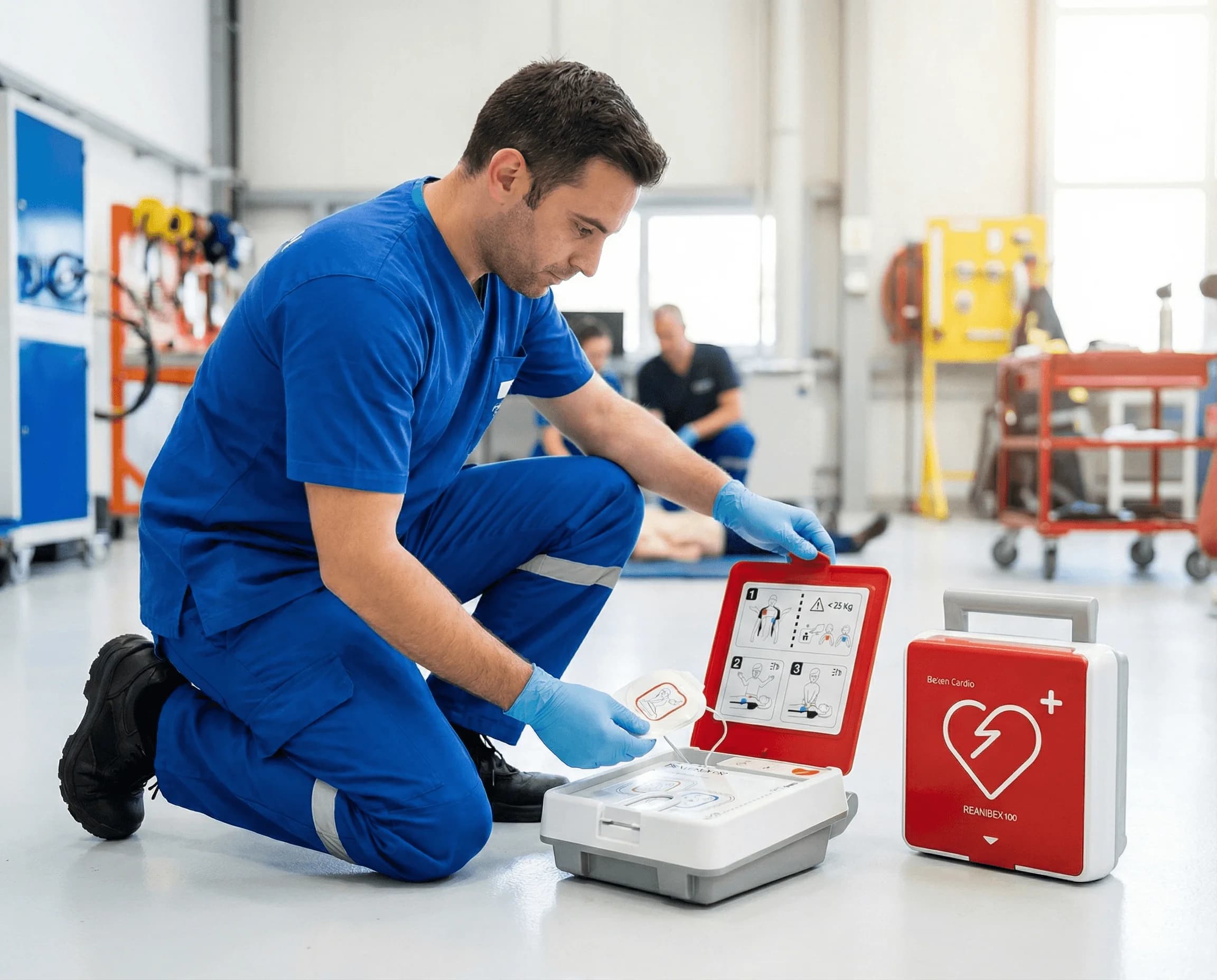
Awareness training in life-saving actions, paired with fuller training for security officers already trained in incident prevention, helps cover every opening hour. The unit guides each step by voice once switched on, which makes it usable by a non-medical staff member as long as they know where it is and are willing to act without hesitating.
Frequently asked questions
Does a casino spread across several rooms need more than one defibrillator?
It depends on the floor area and the number of distinct gaming rooms. A venue spanning several floors or with spaces far apart from each other benefits from spreading out several units rather than relying on one central cabinet, so the time to reach a player in distress always stays short.
Should night staff receive the same training as the day team?
Yes, ideally every shift, including the one working late evening or night hours, should include at least one person trained in life-saving actions and able to locate the defibrillator without hesitation. Limiting training to the day team leaves a gap during hours when the venue still stays open and busy.
Does a slot machine hall need a different defibrillator than traditional gaming tables?
No, the same model of automated external defibrillator suits both spaces, as long as it stays easy to carry and its location remains visible despite the particular lighting of these rooms. The choice depends mainly on the layout of the venue, not on the type of game offered.
Who covers defibrillator maintenance in a casino?
Maintenance falls to the venue's operator, under French Public Health Code article R. 5212-25. A rental offer that includes maintenance, available from 50 euros excl. VAT per month, lets the operator hand this follow-up to a provider instead of managing it in-house with rotating teams.
Does a casino also need to equip its restaurant or performance stage?
If those spaces are part of the same establishment open to the public, they fall under the same requirement as the gaming rooms. The operator must make sure the defibrillator stays reachable from every zone, including during a dinner service or a show, without relying solely on a unit at the other end of the building.
Planning an AED project?
Purchase, rental from 50 EUR excl. VAT per month, installation with GéoDAE registration, servicing and training: our team replies within 24 hours.