AED for campsites and outdoor accommodation: rules and best practice
Written by Cyrille GAGNAIRE, France Défibrillateur. Published on 20 August 2026.
A campsite or holiday park welcomes whole families, often across several hectares split between pitches, mobile homes, a swimming pool and activity areas. Numbers rise sharply in summer, with visitors of all ages exercising in the heat, sometimes after a long journey. This combination raises the risk of a cardiac incident just when the site is running on a seasonal team that is still finding its feet. Being properly equipped and training staff directly changes the outcome of a serious collapse.
A large site with a short peak season
Unlike a town-centre shop, a campsite often spans several hectares, with pitches or mobile homes sometimes several hundred metres from reception. Numbers vary sharply with the season, with a summer peak that can far exceed the rest of the year. This surge concentrated into a few months exposes more people at once, including older or travel-fatigued holidaymakers.
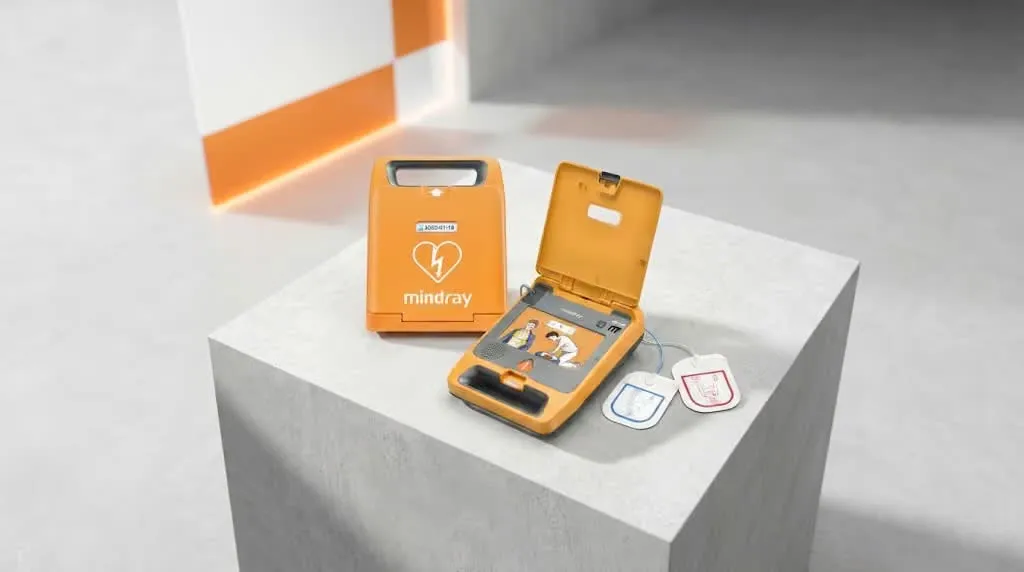
Swimming, sport and heat all increase the strain on the heart, particularly for people doing unfamiliar physical activity while on holiday. A defibrillator (AED, automated external defibrillator) that can be reached quickly, together with staff able to react, cuts the delay before the first shock is delivered, the factor that weighs most heavily on survival chances.
What the rules say for a campsite
A campsite or holiday park falls under French regulations for establishments open to the public (ERP, buildings receiving the public). The requirement to install a defibrillator depends on the category calculated from the total number of people on site, campers and staff included. Establishments in categories 1 to 3 have had to be equipped since 1 January 2020, category 4 since 2021, and some category 5 establishments since 2022, under loi 2018-527 and its implementing décret 2018-1186.
Two further obligations accompany the presence of the device on site. The defibrillator must be registered in the Géo'DAE database so that emergency services can locate the nearest device. Its signage must follow the model set out in the arrêté du 29 novembre 2018, visible from the main walkways and not only from reception.
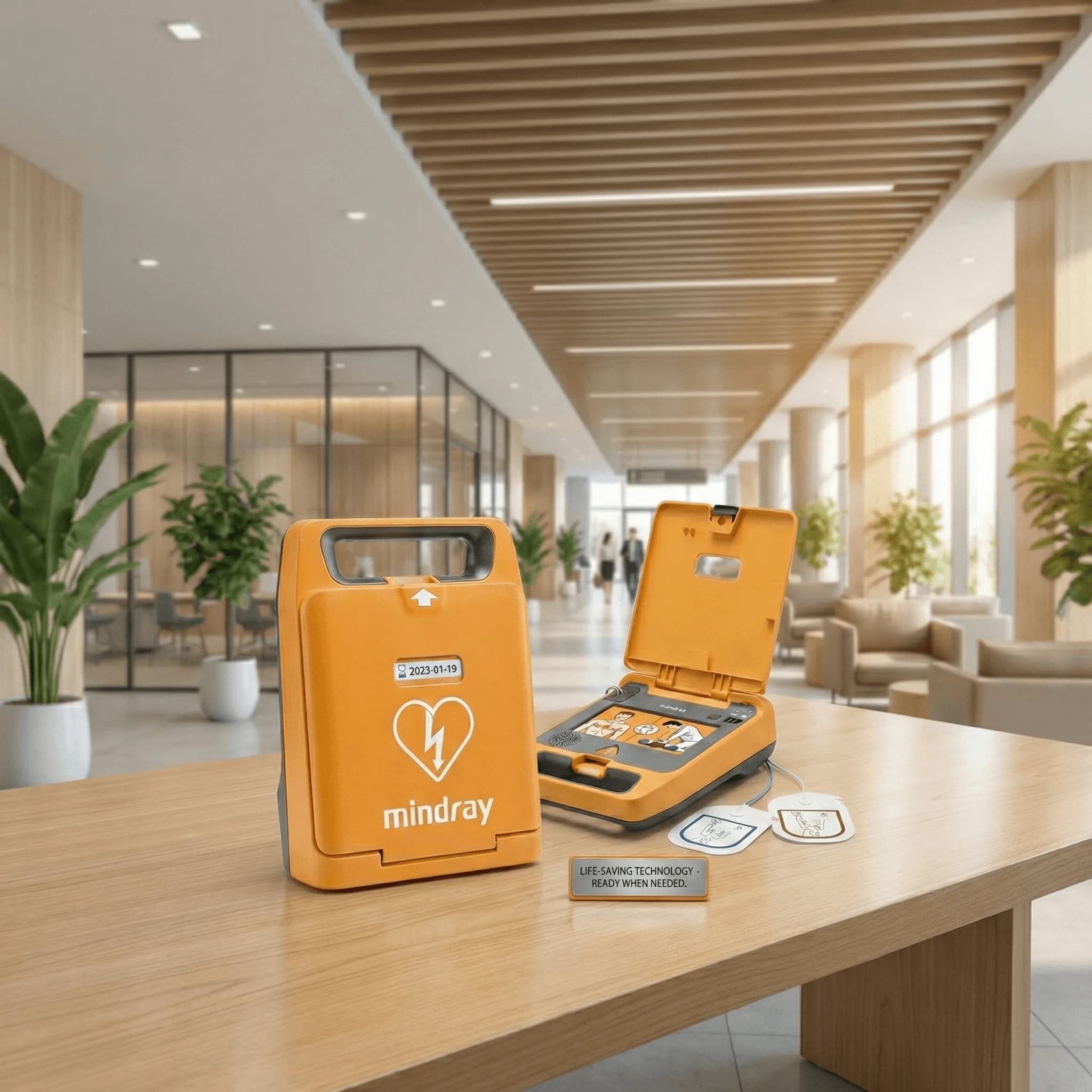
Where to install the defibrillator on a large site?
Reception is a natural location, staffed throughout opening hours. It is not enough on its own for a site covering several hectares, since a distant pitch can be more than five minutes' walk away. The most exposed areas, such as the pool, sports courts and the activities area, justify a second device, or even a third on the largest sites.
A weatherproof outdoor cabinet, wall-mounted or freestanding, allows continuous access even outside reception's opening hours, which matters on a site that is busy from morning until late evening in high season. An indoor unit is better suited to a permanently supervised location, such as the pool's first-aid post.
Training seasonal teams that change every summer
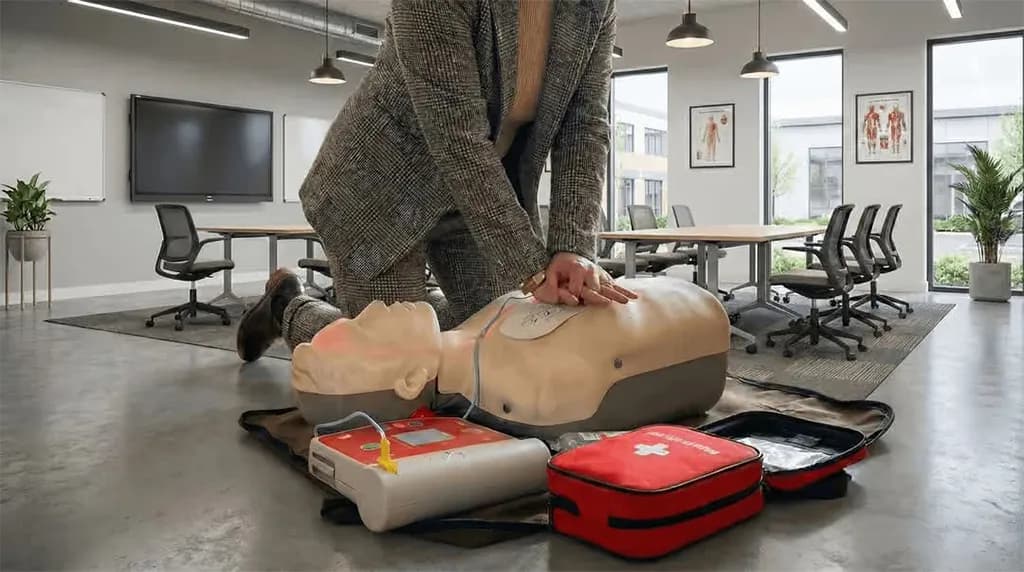
The defining feature of this sector is high staff turnover between seasons. Activity leaders, reception staff, maintenance workers and lifeguards often change from one year to the next, which rules out relying on skills built up over time. Including a short awareness session on life-saving actions as soon as each seasonal worker arrives prevents the site from being left without anyone trained during high season.
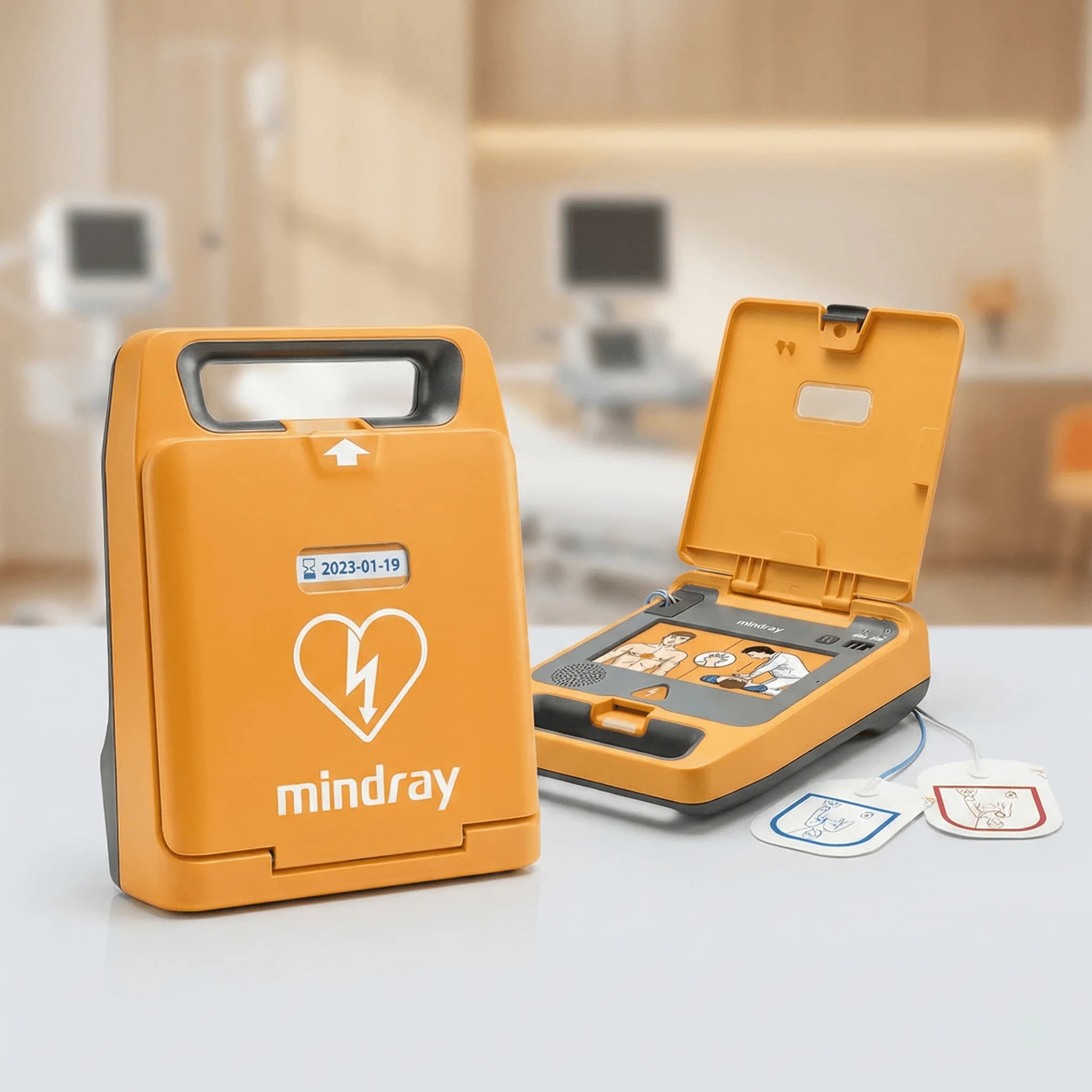
An automated defibrillator guides the user with voice instructions, which lowers the barrier for an inexperienced young seasonal worker. Training nonetheless remains necessary to recognise a cardiac arrest, call the emergency services without delay and start chest compressions before even reaching for the device.
Maintenance suited to outdoor exposure
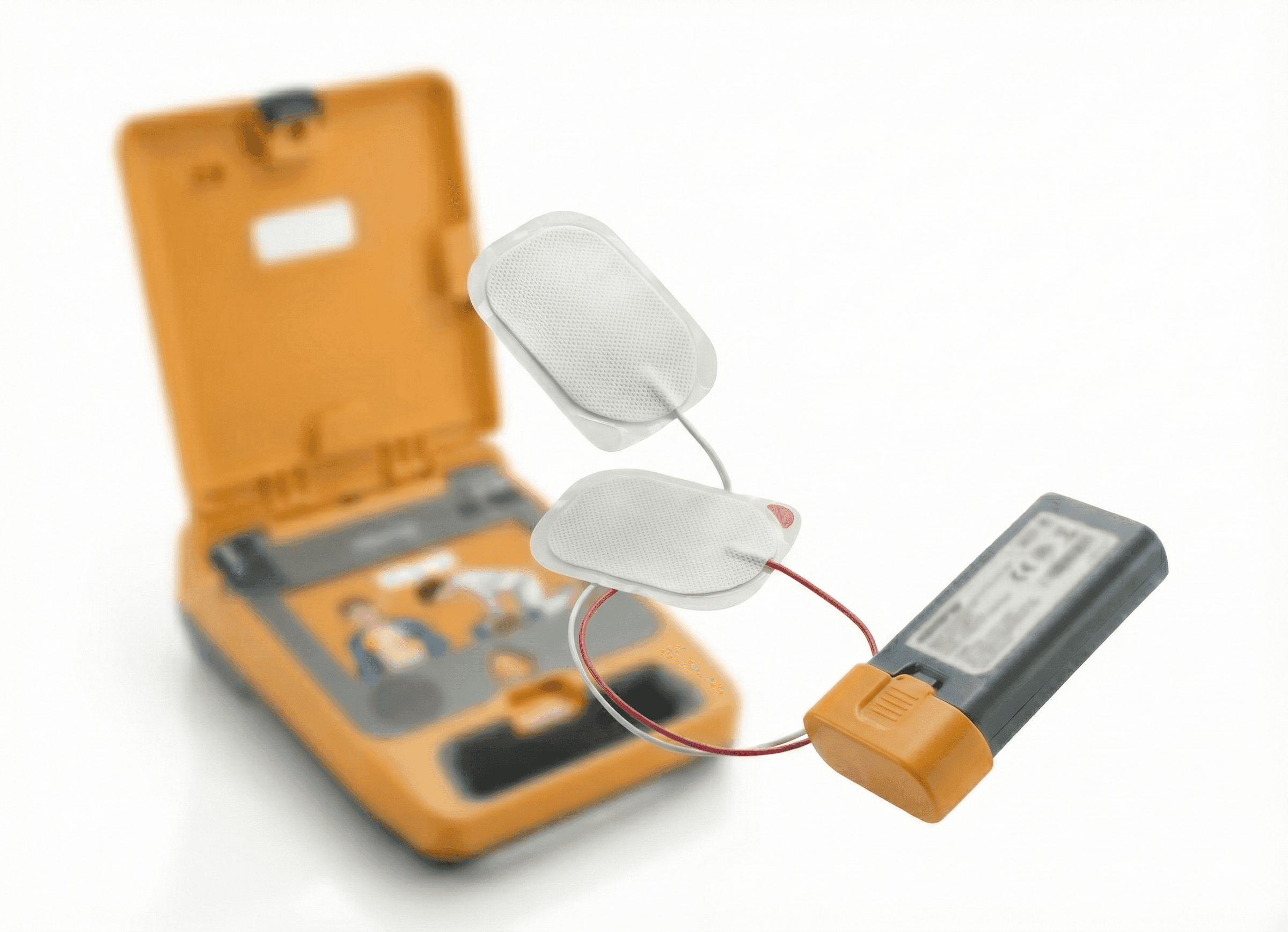
Maintaining the defibrillator remains the responsibility of the campsite operator, under article R. 5212-25 of the French public health code (Code de la santé publique). Exposure to sun, humidity and temperature swings typical of an outdoor installation calls for closer checks on self-tests and replacement of consumables within the set timeframes: pads every 2 to 5 years depending on the model, batteries every 3 to 5 years, with the unit itself remaining operational for 8 to 10 years and often longer.
A safety log tracking checks, replacements and any use of the device makes inspections easier before each season opens. For a group running several sites, centralising this tracking prevents one site reopening in spring with consumables already out of date.
Buying or renting for a seasonal activity
A family campsite open for just a few months a year often gains more from renting, available from 50 euros excl. VAT per month with maintenance included, which spreads the cost across the year without tying up cash in the off-season. A group running several sites may prefer to buy, with a 5-year warranty on the equipment, delivery within 2 to 5 working days ahead of reopening, and a quote provided within 24 hours to compare options depending on how many sites need equipping.
| Criterion | Buying | Renting |
|---|---|---|
| Starting budget | Upfront investment | No upfront investment |
| Maintenance | To be arranged separately | Included in the monthly fee |
| Warranty | 5 years on the equipment | Equipment always under warranty |
| Best suited to | A single site or a long-term purchase | Several sites or seasonal activity |
Frequently asked questions
Is a campsite required to have a defibrillator?
It depends on the establishment's category, calculated from the total number of people on site. Categories 1 to 3 have been equipped since 2020, category 4 since 2021, and some category 5 establishments since 2022. A small family campsite may therefore fall outside the requirement, but equipping it is still strongly advisable given the pool and the physical activities on offer.
Does a large site need more than one defibrillator?
There is no blanket requirement, but travel time determines how effective the device really is. On a site covering several hectares, a pitch far from reception can be more than five minutes' walk away, and every minute without defibrillation reduces survival chances by around 10 percent. A second device near the pool or the activities area then becomes worthwhile.
How do you train seasonal staff who change every year?
Building a short awareness session on life-saving actions into the onboarding of every new arrival stops the skill from fading as teams turn over each year. Repeating this session at the start of each season for all staff present ensures that as many seasonal workers as possible can react before the site even opens to the public.
Can a defibrillator withstand being installed outdoors all season?
A dedicated outdoor cabinet protects the device from sun, rain and temperature swings, provided it is designed for this kind of use. Prolonged outdoor exposure calls for more frequent self-tests and closer attention to the condition of consumables before each season reopens.
How much does it cost to equip a campsite with a defibrillator?
The budget depends on how many devices the size of the site requires and on the choice between buying and renting. Renting starts at 50 euros excl. VAT per month, maintenance included, a formula suited to an activity concentrated into a few months. A tailored quote within 24 hours makes it easy to compare options before the season reopens.
Planning an AED project?
Purchase, rental from 50 EUR excl. VAT per month, installation with GéoDAE registration, servicing and training: our team replies within 24 hours.