Defibrillator in a medical practice: what are the obligations?
Written by Cyrille GAGNAIRE, France Défibrillateur. Published on 19 August 2026.
A medical, dental or allied health practice that receives patients in a dedicated space is a place open to the public, just like a shop or a company waiting room. Many practitioners believe their emergency training exempts them from installing a defibrillator, or simply do not know the requirement applies to them. Between an often older patient base, shared equipment between colleagues and the budget of a private practice, here is what matters to stay compliant.
A practice open to patients is a public-receiving establishment
A general practitioner, dentist, physiotherapist or self-employed nurse who receives patients in a dedicated space is running a public-receiving establishment (ERP, the French term for a site open to the public), whatever the size of the practice. This classification triggers the same obligations as a shop or a company waiting room, with deadlines that have already passed: ERP categories 1 to 3 had to be equipped from 1 January 2020, category 4 from 2021, and part of category 5, where most individual practices sit, from 2022.
Many practitioners assume their medical training covers the risk of cardiac arrest in the waiting room. The obligation actually concerns the equipment of the premises, not the skill of the person practising there. A cardiologist without a defibrillator in their practice is at fault in the same way as a shopkeeper without one, under the law of 28 June 2018 and its implementing decree.
Why some practices are more exposed than others
A medical practice's patients are not the same as an ordinary shop's customers. A cardiology, sports medicine or physiotherapy practice sees people under physical effort or older patients with known cardiovascular conditions. The risk of cardiac arrest, which affects around 50,000 people every year in France across all causes, is statistically more present there than in a hairdresser's waiting room.
This reality does not exempt any practice from the same regulatory baseline, but it does change how a practitioner should prioritise the purchase when still hesitating to invest below the legal threshold.
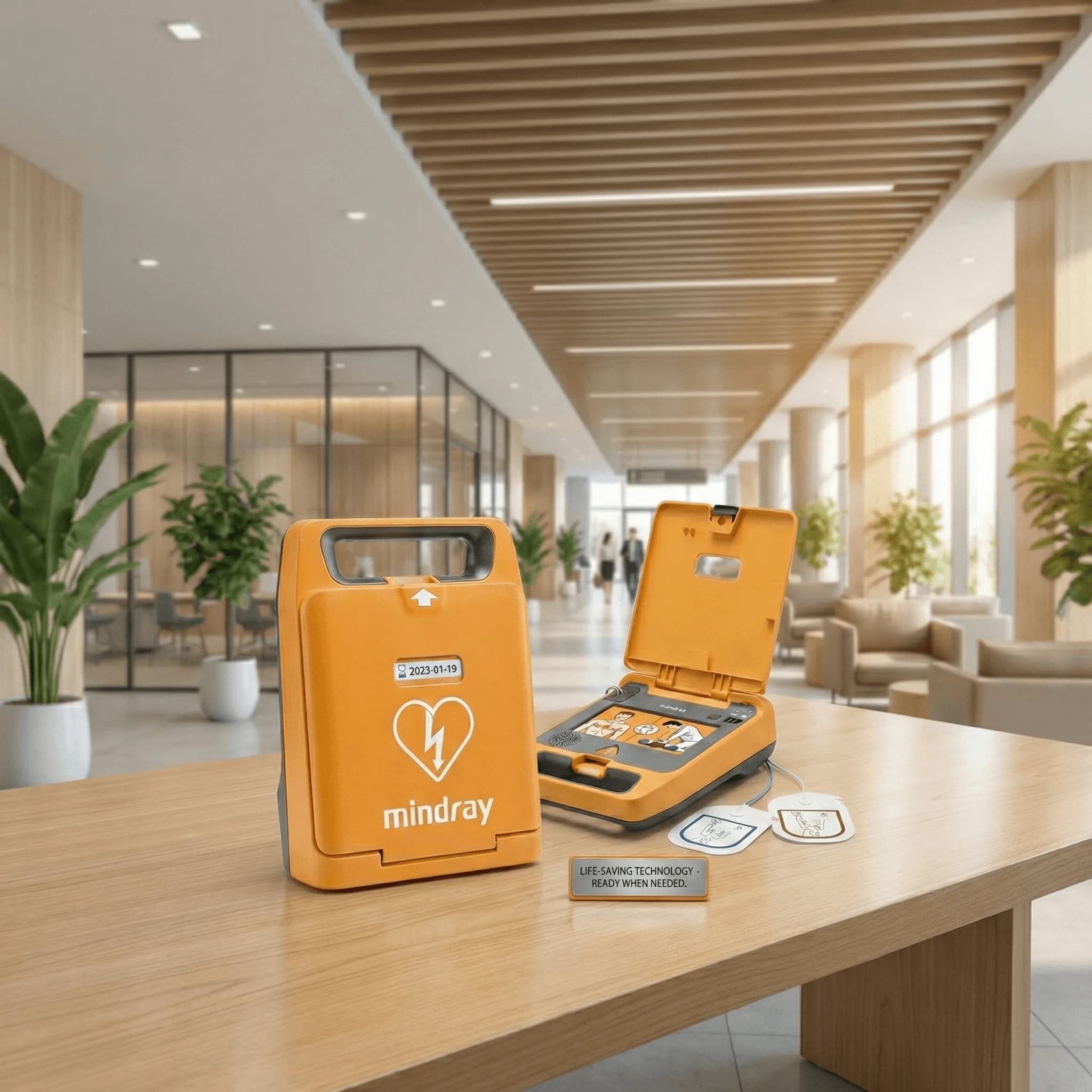
Where to place the device in a small practice
In premises often limited to a few rooms, the waiting room remains the best location: it is where a patient is likely to be alone, without the practitioner's direct supervision during a consultation. The device must stay accessible without a code or key throughout opening hours, including when reception staff step away.
| Situation | Good practice |
|---|---|
| Individual ground-floor practice | An AED in the waiting room, visible from the entrance |
| Practice on an upper floor with no lift | Device placed at the practice's level, not only in the entrance hall |
| Multidisciplinary health centre | A shared AED, jointly funded and maintained between practitioners |
| Shared building with other professions | Written agreement setting out who registers and maintains the device |
Sharing a defibrillator between several practitioners
In a multidisciplinary health centre or a building housing several practices, nothing requires each practitioner to fund their own device. A single defibrillator, placed in a common area accessible without a code, can cover several practices if access is guaranteed at all times the practices are open. This sharing arrangement requires a written agreement between practitioners on funding, maintenance and the Géo'DAE registration, so that no one assumes a neighbouring colleague is handling it.
A shared reception desk or a coordinating nurse is often the right anchor point for carrying this responsibility day to day.
Registration and signage are not optional
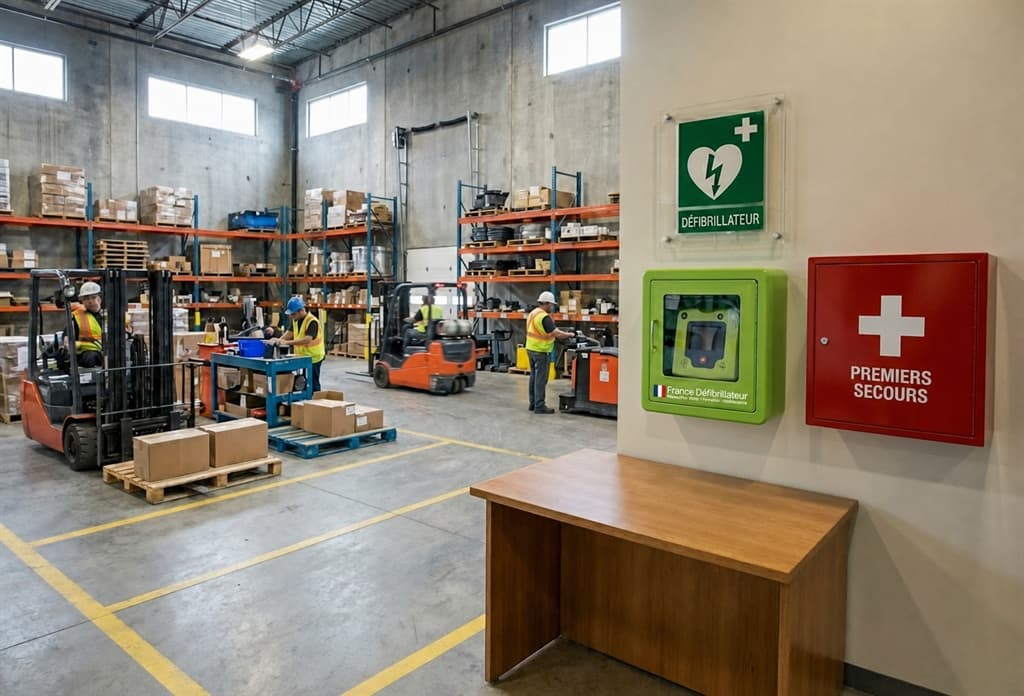
Like any operator, the practitioner or the structure hosting the practice must register the device in Géo'DAE as soon as it is put into service, so it appears in the geolocation system used by emergency services and public apps. Signage and directional panels must follow the French order of 29 November 2018 (arrêté du 29 novembre 2018, the national signage standard), visible from the practice entrance and not just stuck onto the device casing.
This formality takes only a few minutes but is too often forgotten once the device is installed, which deprives it of its usefulness outside consultation hours.
Who in the practice needs to know how to use it
Clinical staff generally master resuscitation gestures, but a defibrillator may also need to be used by a medical secretary or a receptionist, the only person present when a patient collapses in the waiting room. A short awareness session for all staff, including non-clinical staff, reduces the time between collapse and first defibrillation.
This training differs from the initial curriculum of health professions: it focuses on the alert reflex and the practical use of the device available in the practice, not on resuscitation theory.
Choosing and maintaining the device without a heavy budget
For an individual practice, a compact model is more than enough, without the features designed for large multi-building sites. Practices seeing children, such as a paediatrician or a paediatric dentist, should however check that paediatric electrode pads come with the device.
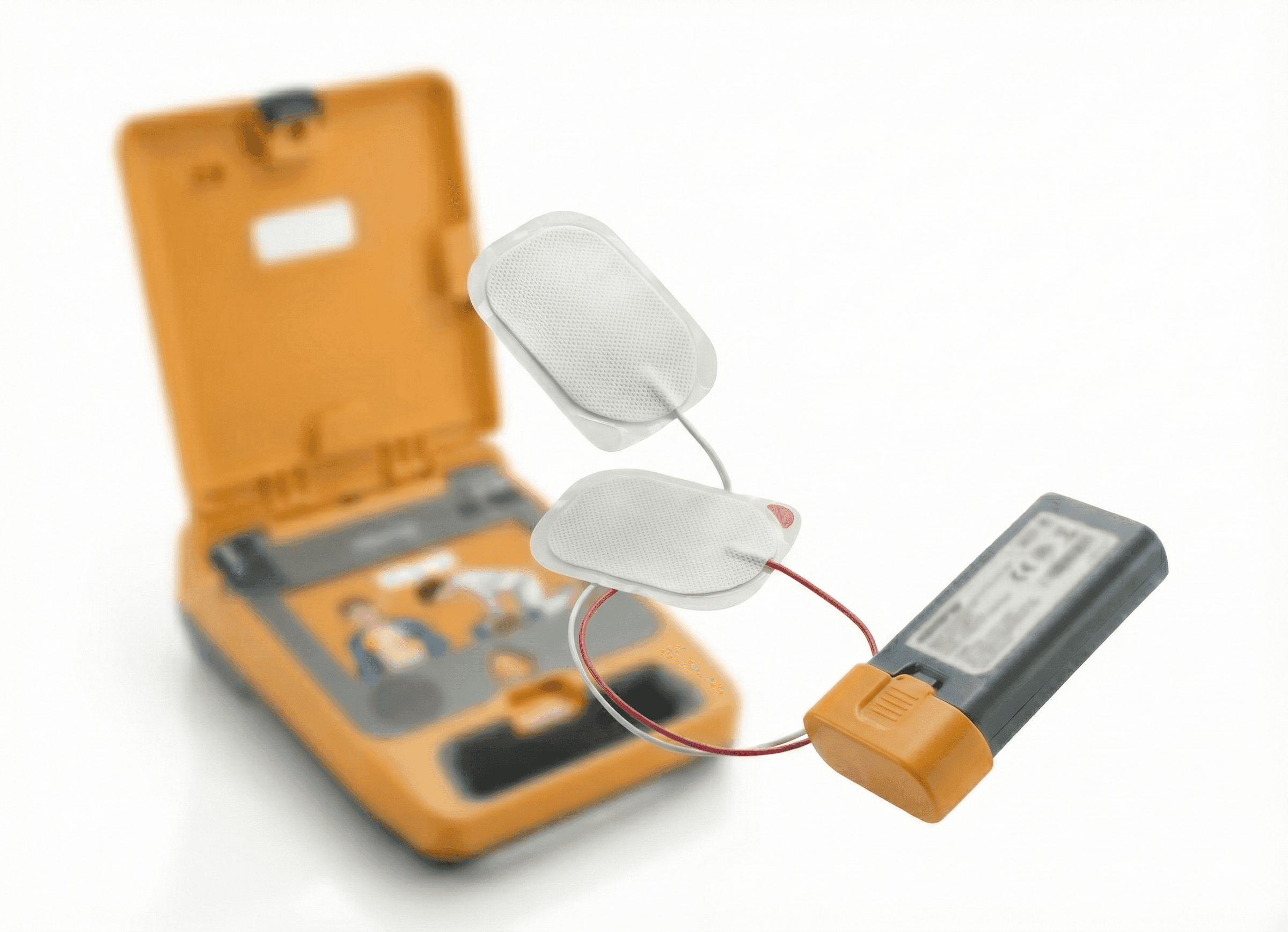
Financially, renting from 50 euros excl. VAT per month, with maintenance and consumables replacement included, suits a private practice that prefers to spread the cost rather than tie up capital. When buying, the five-year warranty covers the equipment, but tracking the electrodes, replaced every two to five years, and the battery, every three to five years, remains the operator's responsibility under article R. 5212-25 (article R. 5212-25 du Code de la santé publique, the French Public Health Code). A quote is available within 24 hours and delivery takes two to five working days.
Frequently asked questions
Can a doctor or physiotherapist skip a defibrillator because they know how to resuscitate?
No. The equipment requirement depends on the category of the public-receiving establishment, not on the qualification of the professional working there. A medical practice follows the same rules as a shop of the same category: the practitioner's skill helps during an intervention but does not replace the device itself or its registration in Géo'DAE.
Do several practices in the same building each need their own defibrillator?
No, a device shared between several practitioners in the same building or a multidisciplinary health centre is possible, provided it stays accessible without a code whenever the practices are open. A written agreement should set out who funds the purchase or rental, who follows up maintenance and who handles the Géo'DAE registration.
Are paediatric electrodes needed in a practice that sees children?
Yes, as soon as the patient base includes children, such as at a paediatrician or a paediatric dentist. These pads reduce the energy delivered compared with adult electrodes and must stay available right next to the device, with the same renewal tracking as any electrode.
Who in a small practice should be trained to use the defibrillator?
Everyone present during opening hours, reception and secretarial staff included, not only clinical staff. It is often a non-clinical staff member who is alone in the waiting room when someone collapses, and a short awareness session on the gesture and the device reduces the time before first defibrillation.
Does the practice need to display a sign for the defibrillator?
Yes, signage follows the French order of 29 November 2018 (arrêté du 29 novembre 2018) and must stay visible from the practice entrance, not only fixed to the device casing. Clear directional signs from the corridor or waiting room let anyone present find the device without losing time in an emergency.
Planning an AED project?
Purchase, rental from 50 EUR excl. VAT per month, installation with GéoDAE registration, servicing and training: our team replies within 24 hours.