AED in bowling alleys and laser tag arenas: obligations
Written by Cyrille GAGNAIRE, France Défibrillateur. Published on 21 October 2026.
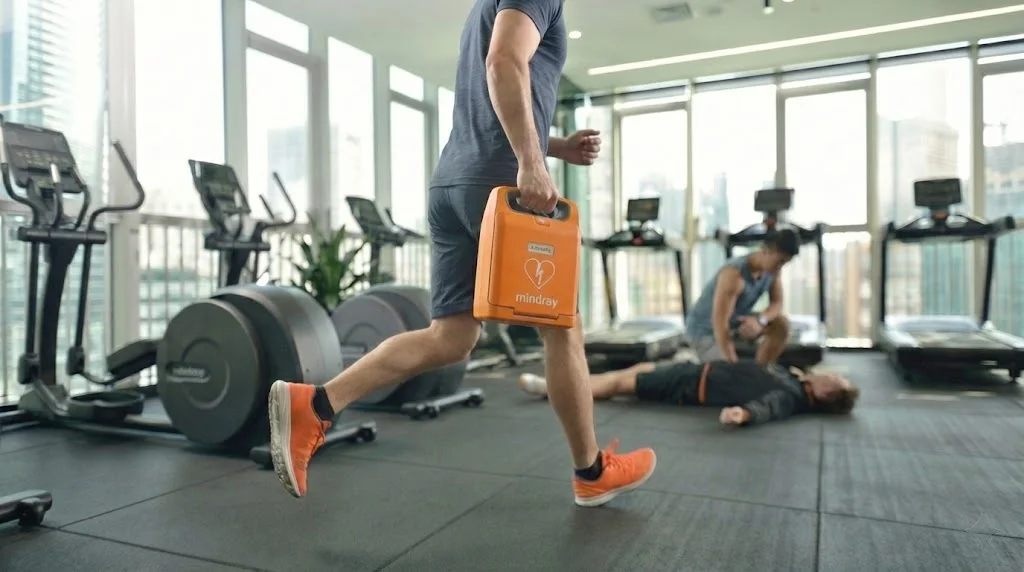
A bowling alley, a laser tag arena or a trampoline park brings together families, groups of friends and corporate teams, often amid constant noise and deliberately dim lighting. That setting makes it harder to spot a collapse and to organise help. Here is how to work out whether your venue must be equipped, where to place the device and how to organise upkeep and staff training.
An active public in a difficult environment
Indoor leisure venues share one feature: they offer physical activity, sometimes intense, to people of all ages and fitness levels. An adult running through a laser tag course, a child jumping at a birthday party, a parent joining in without preparation: the effort can reveal a heart condition nobody knew about.
The environment itself slows down the response. Loud music, black light, mazes, lanes separated by machines: staff do not always hear a player calling out and may not see the person who collapses. Yet around 50,000 cardiac arrests occur every year in France, and each minute without defibrillation reduces the chances of survival by about 10%.
Is your venue subject to the obligation?
The equipment obligation rests on law 2018-527 and decree 2018-1186 (French texts on automated external defibrillators in public premises). It targets establishments open to the public (ERP, établissements recevant du public) according to their category: categories 1 to 3 have been equipped since 1 January 2020, category 4 since 2021, and certain category 5 establishments since 2022.
Classification depends on capacity and type of activity. A large leisure complex combining bowling, an arcade and catering falls into a higher category than a small city-centre laser tag arena. The safest approach is to check your category with the safety commission or your building operator, then compare it with the list of category 5 establishments concerned.
Even without an obligation, equipping a venue that makes its public run and jump is common sense, and the operator's liability may be examined if emergency organisation proves lacking.
Choosing a location in a noisy, dark room
The device must be retrievable very quickly from any point of the play area. In a large bowling alley, that may mean placing it near reception, where staff are present at all times, rather than in a service corridor.
Signage follows the arrêté du 29 novembre 2018 (the French ministerial order on defibrillator signs). In a room lit by black light or kept dim, a standard sign gets lost: favour directional signs visible from the play areas and dedicated lighting for the cabinet. A closed cabinet without a key lock, with an audible alarm when opened, avoids hunting for a key during an emergency.
Think about temperature too. A trampoline hall heated in winter and open in summer stays within the operating range of most devices, but the cabinet should not sit near a source of heat or humidity, such as a bar or a kitchen.
| Area | Point of attention | Suitable answer |
|---|---|---|
| Reception and till | Staff present at all times | Preferred location, visible from the entrance |
| Lanes and play areas | Noise, low light | Illuminated signs and lit cabinet |
| Birthday area | Children and families | Paediatric pads available |
| Bar and kitchen | Heat and humidity | Avoid this neighbourhood for the cabinet |
Children and birthdays: plan for suitable pads
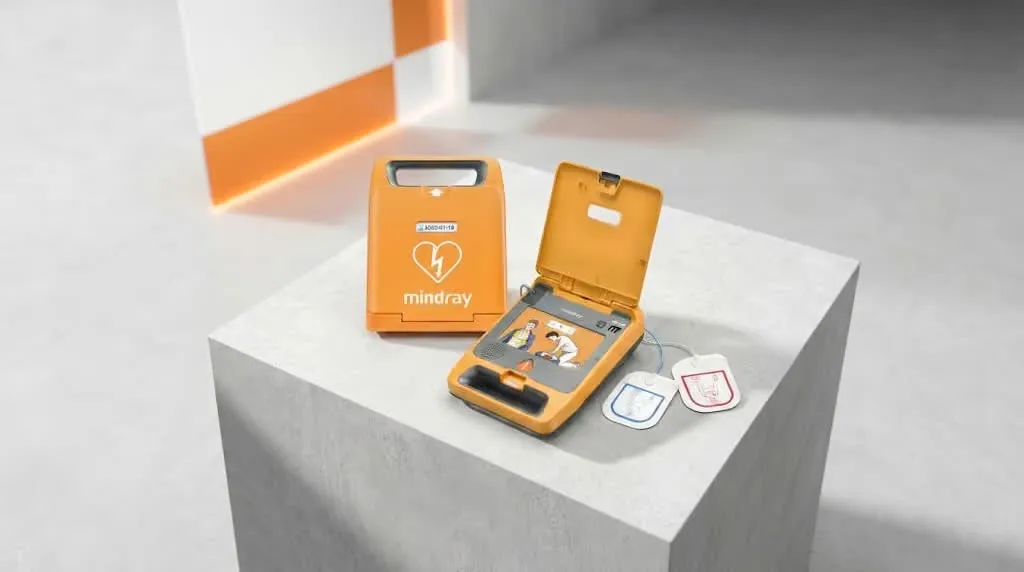
These venues welcome many children, notably at birthday parties. Depending on the model, the device offers paediatric pads or a child mode. Check at purchase that this option exists, and store the suitable pads with the device, in a marked spot, so nobody has to search under pressure.
Staff should also know that a child's cardiac arrest is treated like an adult's when paediatric equipment is missing: using the device is better than doing nothing.
Maintenance and follow-up by the operator
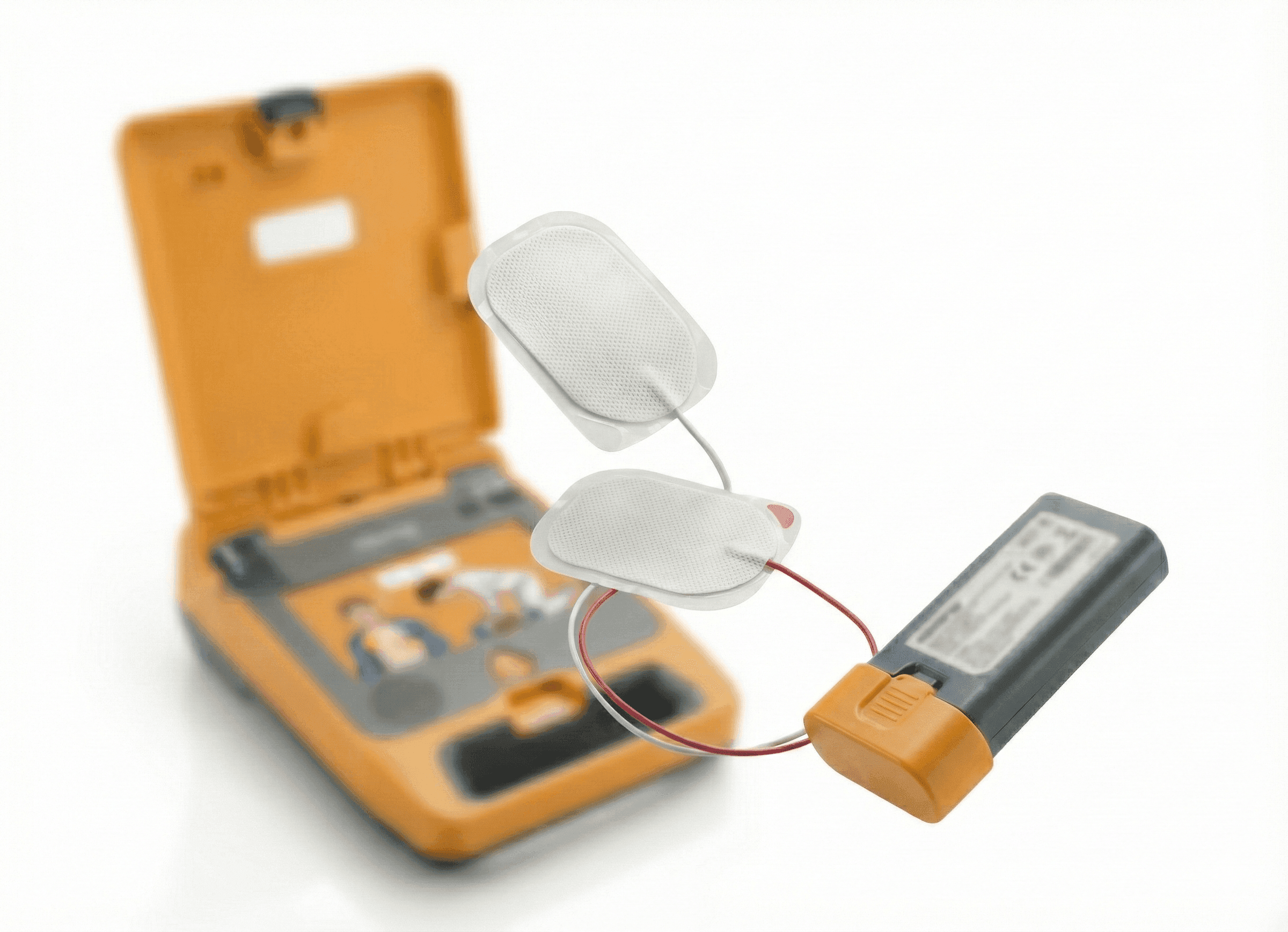
Maintenance is the operator's responsibility under article R. 5212-25 du Code de la santé publique (French Public Health Code). In practice, this means checking the self-test indicator, tracking expiry dates and replacing consumables on time: pads last 2 to 5 years, batteries 3 to 5 years, and the device itself 8 to 10 years and more.
In a venue open seven days a week, appoint a lead for each team and build the check into the opening routine. Rental, from €50 excl. VAT per month with maintenance included, relieves the operator of consumables follow-up, which suits sites with high staff turnover. Registration in GéoDAE (the French national AED register) remains mandatory in all cases.
If you host groups in the evening or at night, check that the device stays accessible at the hours when reception is least staffed.
Training the team, including activity hosts
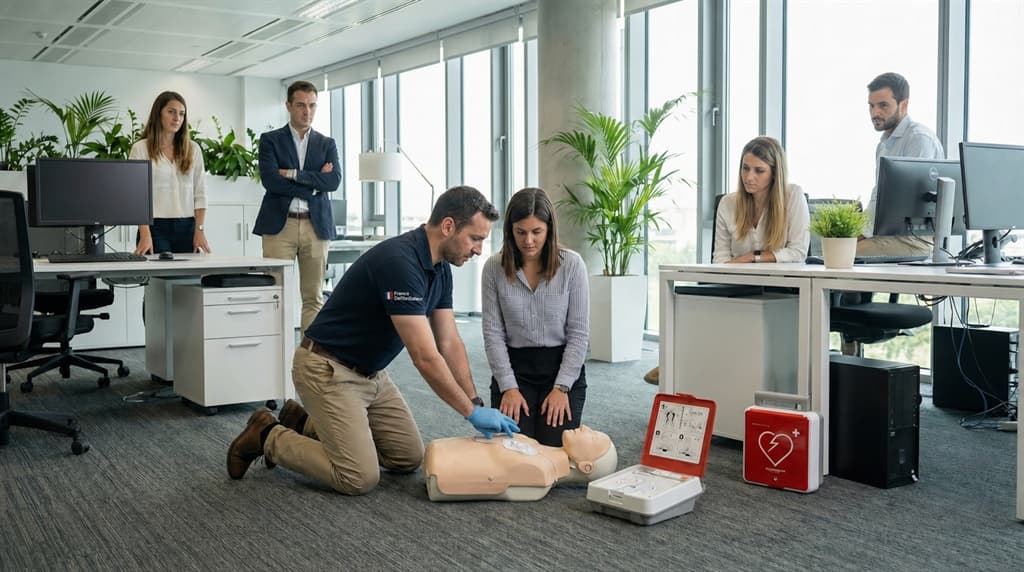
A defibrillator is only as good as the person using it. Activity hosts, laser tag referees and floor managers are first on the scene: awareness training in life-saving skills, renewed regularly, lets them call for help, perform compressions and attach the device without hesitation.
A simulation drill at closing time, with the music cut and then restored, gives a good picture of real difficulties: who calls 15 (the French emergency medical number), who fetches the device, who guides the paramedics to the room.
Frequently asked questions
Must a bowling alley have a defibrillator?
It depends on the establishment's category. Categories 1 to 4 are subject to the obligation, as are certain category 5 establishments since 2022. Check your classification with the safety commission, then compare it with the types of establishments covered by decree 2018-1186.
Where should the defibrillator go in a laser tag arena?
Near reception or a thoroughfare where staff are always present, with signs visible from the play areas. The device must be reachable very quickly, and the cabinet lit if the room is kept dim.
Do you need child pads in a trampoline park?
If your public includes many children, yes: choose a model offering paediatric pads or a child mode, and store them with the device. Failing that, using adult pads remains preferable to no defibrillation at all.
Who handles the defibrillator's maintenance?
The operator of the establishment, under article R. 5212-25 du Code de la santé publique. They check the self-test, replace pads and battery when due, and may entrust this to a provider through a rental with maintenance included.
Must the device be registered in GéoDAE?
Yes, registration in GéoDAE is mandatory. It lets emergency services locate the nearest device during a call. Remember to update the entry if the device moves or if access hours change.
Planning an AED project?
Purchase, rental from 50 EUR excl. VAT per month, installation with GéoDAE registration, servicing and training: our team replies within 24 hours.