AED at leisure parks and beaches: obligations and best practice
Written by Cyrille GAGNAIRE, France Défibrillateur. Published on 19 October 2026.
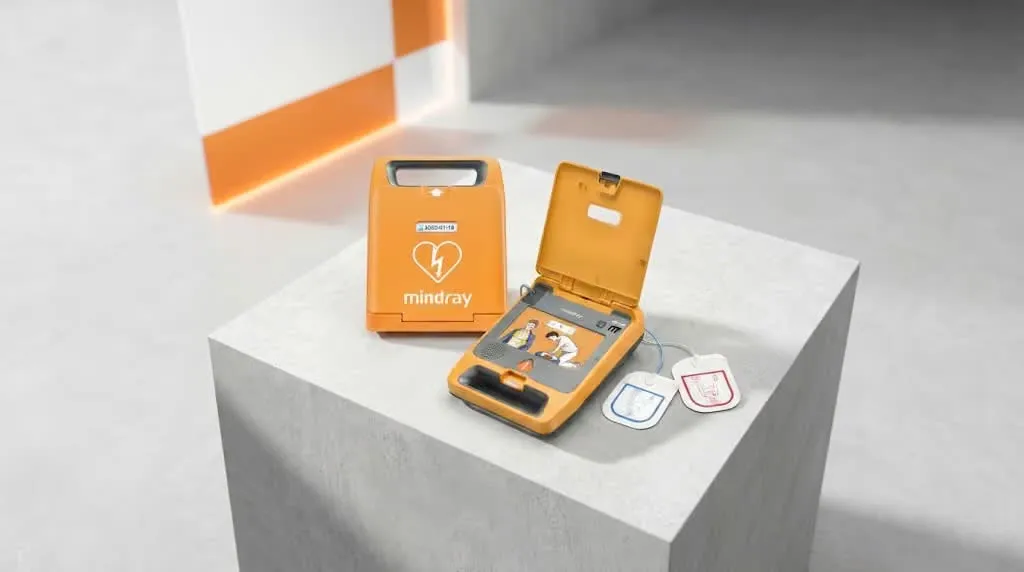
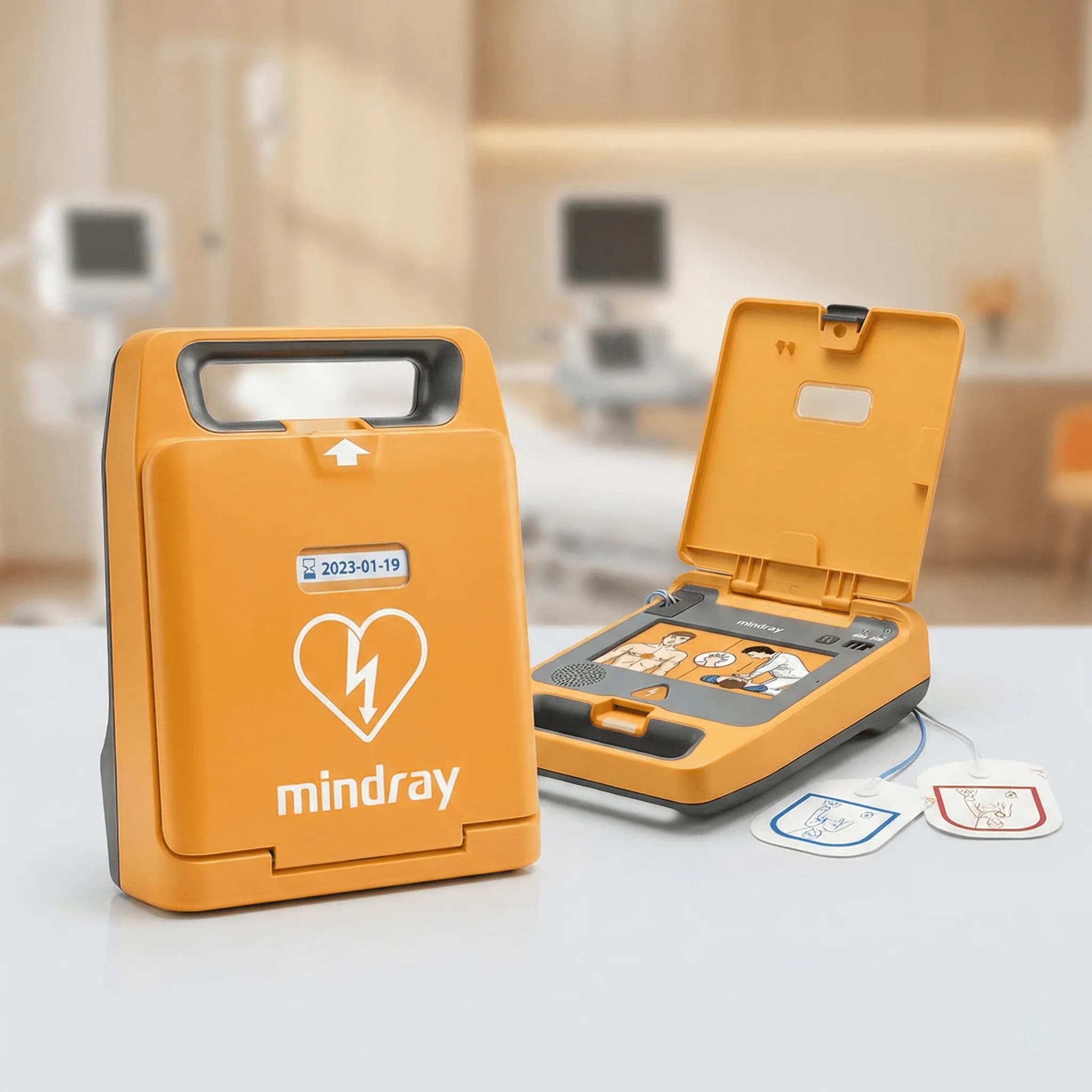
A leisure park brings swimmers, athletes, families and sometimes hundreds of schoolchildren on an outing together within a few hectares. Exertion, heat and water multiply the number of medical emergencies, while rescue services may be far away. This guide explains how to plan defibrillator coverage for such a site, from choosing the location to maintaining a device exposed to the weather.
An open site, concentrated risks
About 50,000 cardiac arrests occur in France every year, and each minute without defibrillation reduces the chances of survival by roughly 10%. At a leisure park these minutes matter even more, because the site is large, sometimes on the edge of the town, with access routes that emergency vehicles take slowly.
Immersion adds a difficulty of its own. A swimmer who collapses may be spotted late, pulled from the water by a lifeguard, then treated on the bank. The chain of survival then starts with the rescue, and the defibrillator must be within immediate reach of the lifeguard post.
What the regulations say
The equipment obligation set by loi 2018-527 and décret 2018-1186 (the French law and decree on defibrillators in public buildings) applies to ERP (établissements recevant du public, meaning premises open to the public) according to their category and type. ERP of categories 1 to 3 have been concerned since 1 January 2020, category 4 since 2021 and some category 5 ERP since 2022. A leisure park often has several buildings and activities: reception, catering, changing rooms, sports facilities. The operator must have each part classified with the safety commission.
A beach or lake with free access is not an ERP in the strict sense. The absence of an obligation does not prevent a local authority from equipping its bathing sites, and many do so by choice. In every case, registration in GéoDAE (the national defibrillator database) is mandatory for the devices concerned, and signage must comply with the arrêté du 29 novembre 2018 (the ministerial order on defibrillator signs).
Where to place the device
The right location is one a bystander can reach without hesitation, within a few dozen seconds. On a supervised beach, the lifeguard post is the natural candidate, provided it is open during the hours when the public uses the site. Outside the season or outside supervised hours, a device locked in a closed room is useless.
On a large site, a single defibrillator does not cover everything. It is better to map the busiest areas, measure real walking distances, then distribute the devices accordingly. A visible display at the entrance, with a map, helps visitors find the nearest one.
| Area of the site | Point of attention | Common solution |
|---|---|---|
| Beach lifeguard post | Permanent access during opening hours | Visible cabinet on the public side |
| Reception and catering | Presence of trained staff | Indoor cabinet at the entrance |
| Sports and play areas | Distance from the main building | Heated and ventilated outdoor cabinet |
| Car parks and paths | Signage and directions | Signs and a location map |
Withstanding sand, water and sun
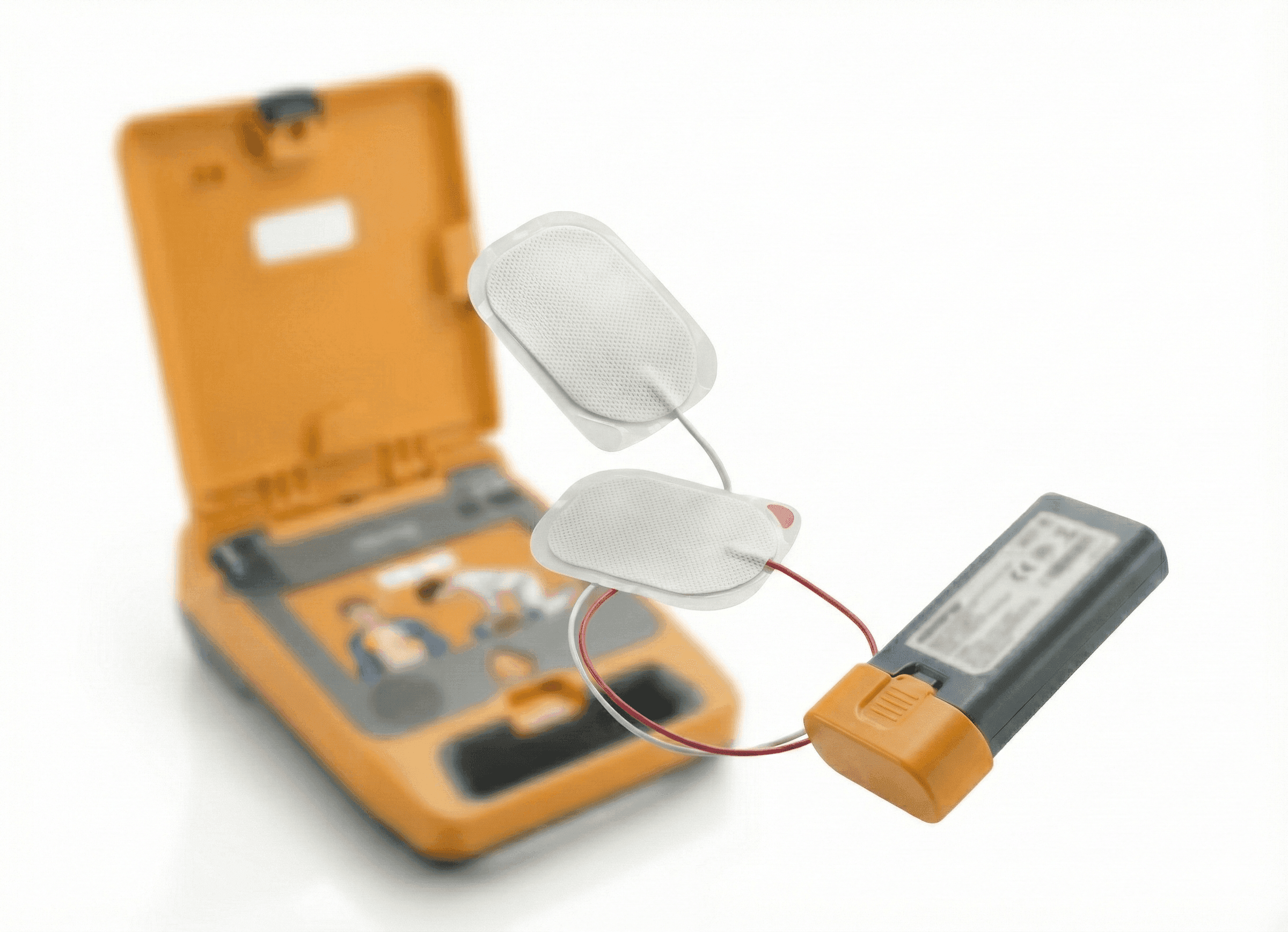
A defibrillator is still an electronic device. The heat of a shelter in full sun, humidity, sea spray near a coastline or fine sand can degrade the device, the electrodes and the battery, each of which has its own operating and storage temperature range. This should be read in the manufacturer's manual before choosing the location.
For an outdoor spot, a suitable cabinet protects against rain and splashes, and its thermal regulation avoids the most extreme swings. The choice between an indoor and an outdoor cabinet is therefore made site by site, based on actual exposure rather than habit.
Maintaining a seasonal device
Maintenance is the operator's responsibility under article R. 5212-25 du Code de la santé publique (the French Public Health Code). For a site that reopens every spring, it follows the rhythm of the season: a full check before opening, regular monitoring of the self-test indicator during summer, and an inspection after heatwaves or storms.
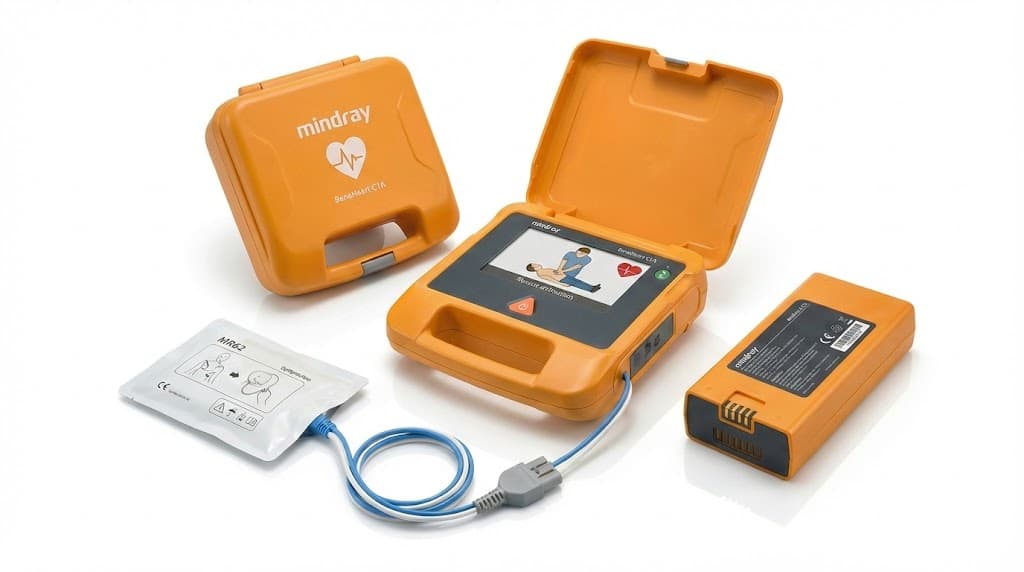
The orders of magnitude are well known. Electrodes last 2 to 5 years, batteries 3 to 5 years, and the device itself 8 to 10 years and more. A dated check register proves the follow-up and makes it possible to plan replacements before they fall in the middle of the season.
For managers who prefer not to tie up a budget, rental starts at €50 excl. VAT per month, maintenance included. A purchase comes with a 5-year warranty, delivery takes 2 to 5 working days and a quote is provided within 24 hours.
Training seasonal teams
A device is only useful if someone dares to use it. Lifeguards, activity leaders and reception staff, often hired for the summer, must know where the defibrillator is and how to link alert, chest compressions and shock. A short awareness session at the start of the season is enough to make these actions familiar.
A simulation drill on site, at the water's edge as well as at reception, quickly reveals weaknesses: a locked door, a sign hidden by a parasol, an emergency number poorly displayed. It is better to discover them in June than in August.
Frequently asked questions
Must an unsupervised beach have a defibrillator?
A beach with free access is not an ERP, so no general obligation applies. The municipality may nevertheless decide to equip the site, especially near a lifeguard post or a busy car park. Any device installed must then be registered in GéoDAE, signposted and maintained.
Can a defibrillator be left outdoors all year?
Yes, provided it is placed in a suitable outdoor cabinet that protects against rain, sand and temperature swings. You should also check the operating ranges given by the manufacturer, in particular for the electrodes and the battery.
Can a wet swimmer be defibrillated?
The victim must first be taken out of the water, then the chest dried quickly before placing the electrodes. Once the person is on the bank, the device guides the user by voice at every step, and chest compressions remain the priority until it is set up.
Who is responsible for maintenance at a leisure park?
Maintenance falls to the site operator under article R. 5212-25 du Code de la santé publique. It can be entrusted to a provider under contract. A dated register of checks and of electrode and battery changes makes it possible to justify the follow-up.
Does every area of the park need a device?
Not necessarily every area, but the device must be quickly reachable from all busy points. On a large site, a single defibrillator is often not enough: measure walking distances and distribute the devices according to attendance.
Planning an AED project?
Purchase, rental from 50 EUR excl. VAT per month, installation with GéoDAE registration, servicing and training: our team replies within 24 hours.