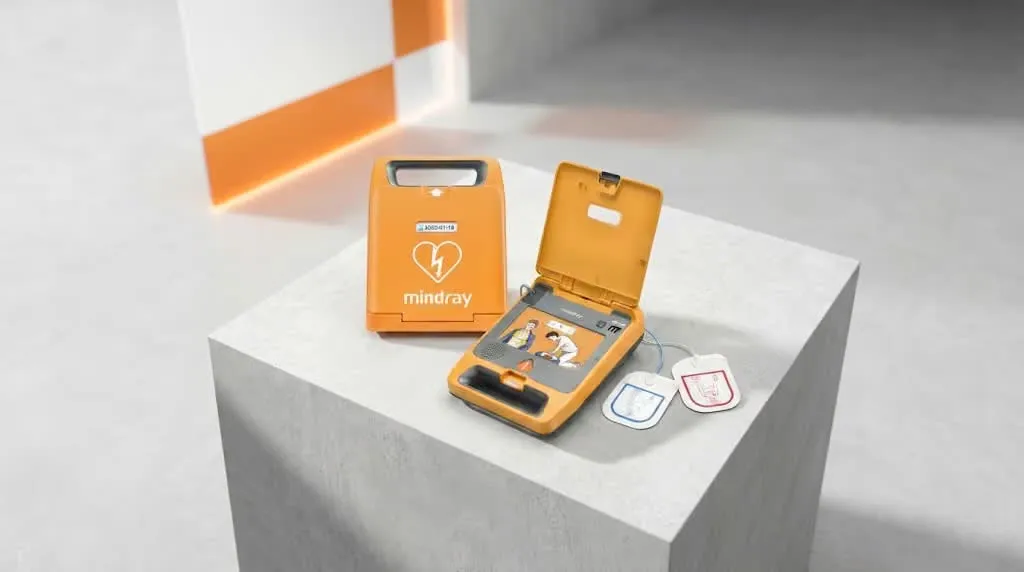
Defibrillators at highway service areas and gas stations: rules and best practice
Written by Cyrille GAGNAIRE, France Défibrillateur. Published on 10 September 2026.
Highway service areas and gas stations see thousands of drivers pass through every day, often far from any town and from the nearest emergency services. Sudden cardiac arrest can strike without warning, a customer, a truck driver or an employee, and every minute without resuscitation cuts the chances of survival by about 10 percent. Regulations require an automated external defibrillator (AED) in most of these premises. Here is who must equip their site, who maintains the device, and how to install it where it actually helps.
A passing crowd, a need for continuity
A highway service area or gas station is unlike any other public venue. Customers never stay, they stop for a few minutes before driving off, and the number of people on site varies sharply by time of day and season. On peak travel days, a car park can see several hundred vehicles in just a few hours, with families, children and drivers sometimes worn out after long hours on the road.
This constant turnover changes how emergency response has to be organised. A bystander usually does not know the site, has no idea where the defibrillator is or how to reach it, and often leaves before ever noticing the device. Signage and placement matter just as much as owning the equipment itself.
Which sites must be equipped
The duty to install an automated external defibrillator applies to establishments open to the public (ERP, France's public-venue classification) according to their category and expected occupancy, under French law 2018-527 and decree 2018-1186. ERP categories 1 to 3 have had to comply since 1 January 2020, category 4 since 2021, and part of category 5 since 2022. A service area with a shop, fast food outlet or a standard gas station falls within this scope as soon as it welcomes the public, whatever its size.
A plain rest area, with no shop or building open to the public, does not fall under the same regulatory duty. Many highway concession holders choose to install a device there anyway, given how far away emergency services can be and the volume of traffic that passes through every day.
Who installs and who maintains the device
Several parties often share the same site. The highway concession holder usually manages the land and shared infrastructure, while the gas station, the shop and the food outlets are run by separate companies, sometimes under franchise agreements. This multi-party setup means it has to be clear from the start who installs the defibrillator, who registers it, and who takes care of its maintenance.
French law places maintenance duty on the operator of the establishment, under article R. 5212-25 of the Public Health Code (Code de la santé publique). On a shared site, it is best to appoint a single party responsible for the device through an agreement between the brands present, rather than letting each one install its own unit with no coordination. A single maintenance contract covering the whole site makes it easier to track self-tests, consumables and inspection visits.
Where to place the defibrillator to save time
The device needs to stay visible and reachable both from the shop and from the truck parking area, which is often separate from the car park on larger sites. A unit locked away in a technical room or an office closed at night loses much of its value, when passing customers come through at all hours, including when the shop itself is closed.
An outdoor cabinet, heated and secured, keeps the defibrillator accessible at all times near the building entrance or on the facade facing the car park. Signage installed in line with the French decree of 29 November 2018 (arrêté du 29 novembre 2018) needs to stay visible from a distance, in both directions of foot traffic, so a driver in a hurry can spot the device within seconds.
Standing up to outdoor conditions all year round
A highway service area exposes the defibrillator to wider temperature swings than a climate-controlled urban shop, from full summer sun to winter frost. A suitable outdoor cabinet and regular self-test monitoring limit the risk of failure right when the device becomes essential. Consumables follow their own replacement schedule, best planned for in the maintenance contract rather than discovered during an inspection.
| Component | Typical lifespan |
|---|---|
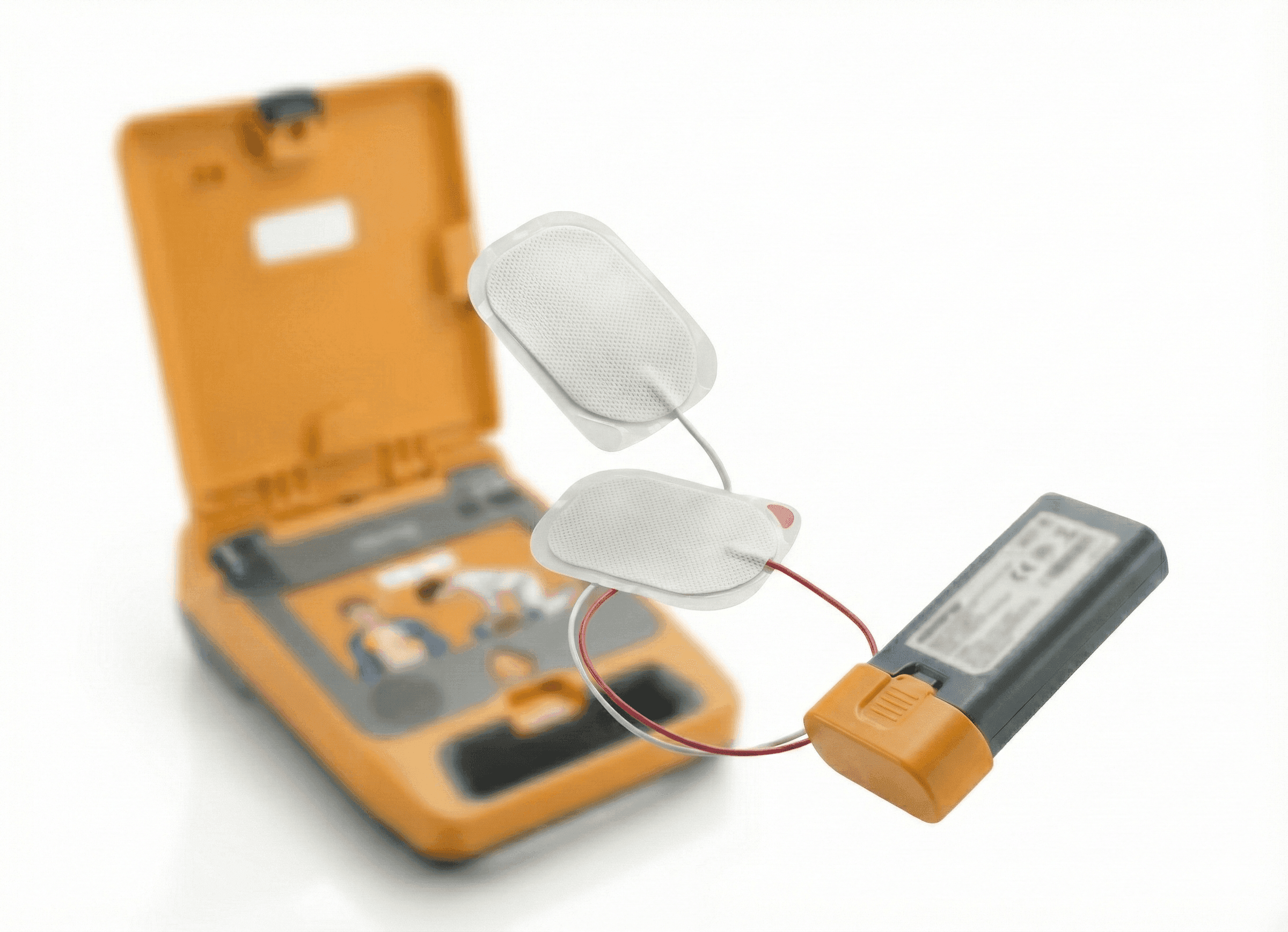
| Pads (electrodes) | 2 to 5 years |
| Battery | 3 to 5 years |
| Defibrillator | 8 to 10 years or more |
Training staff who turn over often
Staff at gas stations and highway service areas change frequently, between seasonal jobs, part-time hours and shift work around the clock. This turnover makes it harder to sustain first-aid training over time than in a stable team.
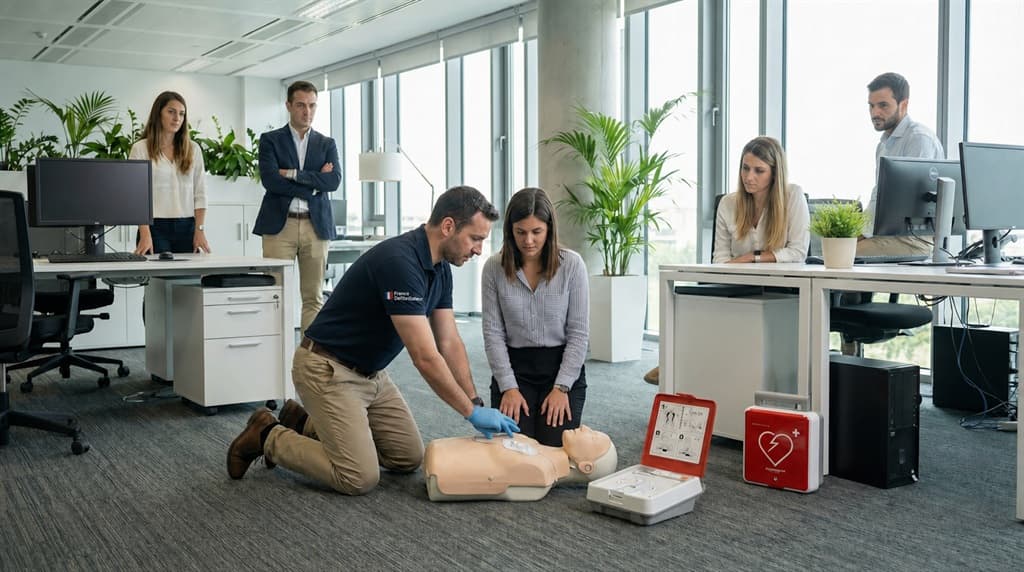
Building in a short awareness session as soon as a new employee starts, rather than relying only on an annual session for the existing team, keeps people on hand at all times who can perform chest compressions and use the defibrillator before emergency services arrive. Site managers benefit from keeping an up to date list of trained staff, alongside the device's own maintenance log.
Frequently asked questions
Does a rest area with no shop have to install a defibrillator?
No, the regulatory duty applies to establishments open to the public according to their category and occupancy. A rest area with no shop or building open to the public falls outside that scope. Many highway concession holders install one anyway, given how far away emergency services can be and the heavy traffic these areas see all year round.
Who has to maintain the defibrillator on a site shared by several brands?
Maintenance duty falls on the operator of the establishment, under article R. 5212-25 of the Public Health Code. When several brands share the same site, it is best to appoint a single party responsible through an agreement, rather than each installing its own device with no coordination between the companies present on site.
Does a defibrillator on highway land need to be registered in Geo'DAE?
Yes, registration in Geo'DAE, the national defibrillator database, is mandatory for any defibrillator accessible to the public, whatever the type of establishment. On a highway service area, this registration matters even more, since emergency services rely on this database to guide a bystander to the nearest device in what is often an unfamiliar setting.
Can a defibrillator stay installed outdoors all year on a highway service area?
Yes, provided it sits in an outdoor cabinet designed to withstand temperature swings and weather. Regular self-test monitoring confirms that the device and its consumables stay in good condition despite tougher exposure than inside a climate-controlled shop.
How long does it take to equip a gas station with a defibrillator?
Expect a delivery time of two to five working days after ordering, with a quote available within 24 hours. For a rented unit with maintenance included, plans start from 50 euros excl. VAT per month, which makes it possible to equip a site quickly without a large upfront investment.
Planning an AED project?
Purchase, rental from 50 EUR excl. VAT per month, installation with GéoDAE registration, servicing and training: our team replies within 24 hours.