Cardiac Arrest in Athletes: Causes and the Role of the Defibrillator
Written by Cyrille GAGNAIRE, France Défibrillateur. Published on 14 September 2026.
People often assume that regular training protects athletes from heart problems. Yet cardiac arrest also strikes people in good physical condition, sometimes during exercise itself. Every year, sudden deaths occur on sports fields across France, from a Sunday jog to a competitive match. Understanding the causes, recognising the warning signs, and knowing that a nearby defibrillator changes the outcome remains the best protection for clubs, gyms and athletes themselves.
Training does not protect an athlete from cardiac arrest
Regular physical activity is often linked to good heart health, which holds true on average across a population. But a trained heart can hide a silent abnormality: hypertrophic cardiomyopathy, a congenital coronary anomaly, or an undiagnosed rhythm disorder. In athletes under 35, these genetic or congenital causes explain most sport related sudden deaths. After 35, coronary artery disease becomes the leading cause, often triggered by intense effort in someone resuming sport after a long break.
A precise chest impact, received at the wrong moment of the cardiac cycle, can also trigger a severe rhythm disorder in an otherwise healthy heart. This rare phenomenon particularly affects sports involving projectiles or contact, such as hockey, baseball or martial arts. Intense effort then acts as a trigger rather than a cause in itself, which is why vigilance must remain the same on an amateur sports field as in any venue open to the public.
Warning signs to watch for during exercise
Chest pain or tightness that appears during exertion, breathlessness out of proportion to the effort, unusual palpitations, or a brief loss of consciousness are signals to take seriously, even in an athlete used to pushing personal limits. Many athletes who suffered cardiac arrest had experienced symptoms in the days or weeks before, without interpreting them correctly.
On the field, cardiac arrest shows as a sudden loss of consciousness, a fall with no apparent cause and a lack of response. Breathing may seem present for a few moments in the form of gasps, which sometimes delays the alert. Any sudden loss of consciousness during or after exercise should trigger a call to emergency services and a search for a defibrillator, without waiting for further confirmation.
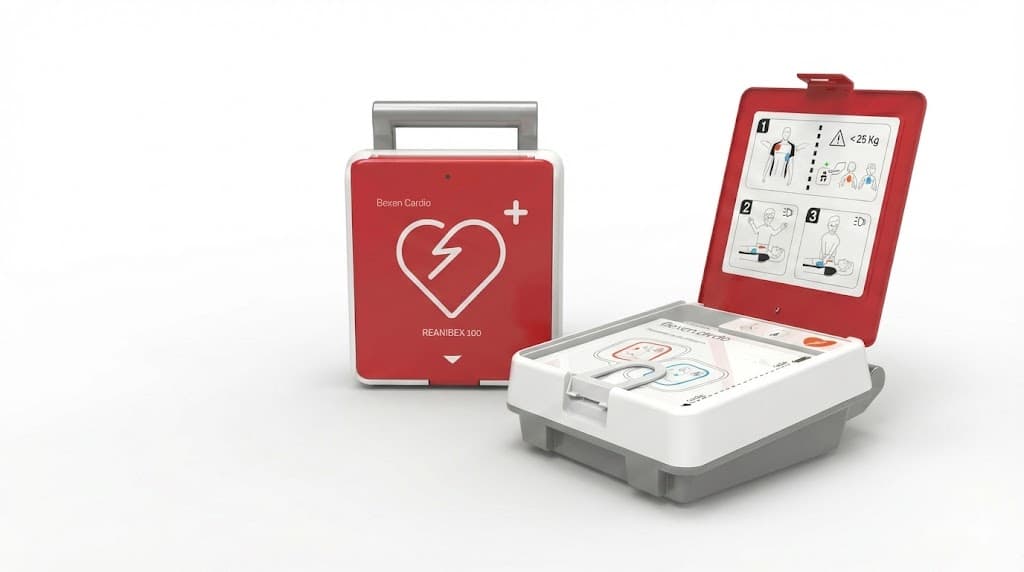
The defibrillator, a decisive link in the sports chain of survival
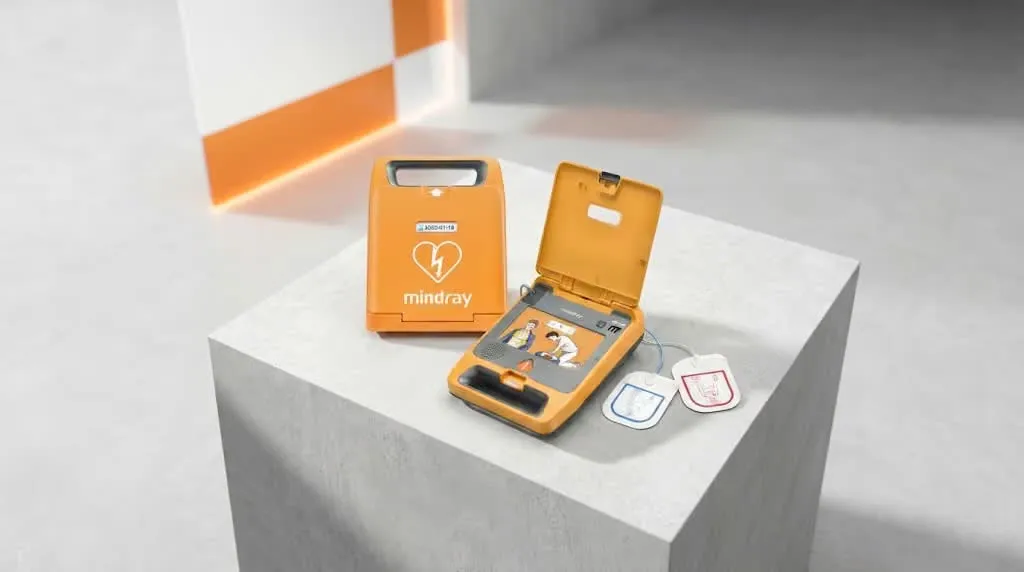
On a sports field, emergency services often take several minutes to arrive, even longer in an out of the way gym or a hard to reach outdoor site. Yet every minute without defibrillation reduces survival chances by roughly 10 percent. Uninterrupted chest compressions maintain minimal circulation, but only the electric shock delivered by a defibrillator (AED) can restore an effective heart rhythm when the heart is fibrillating.
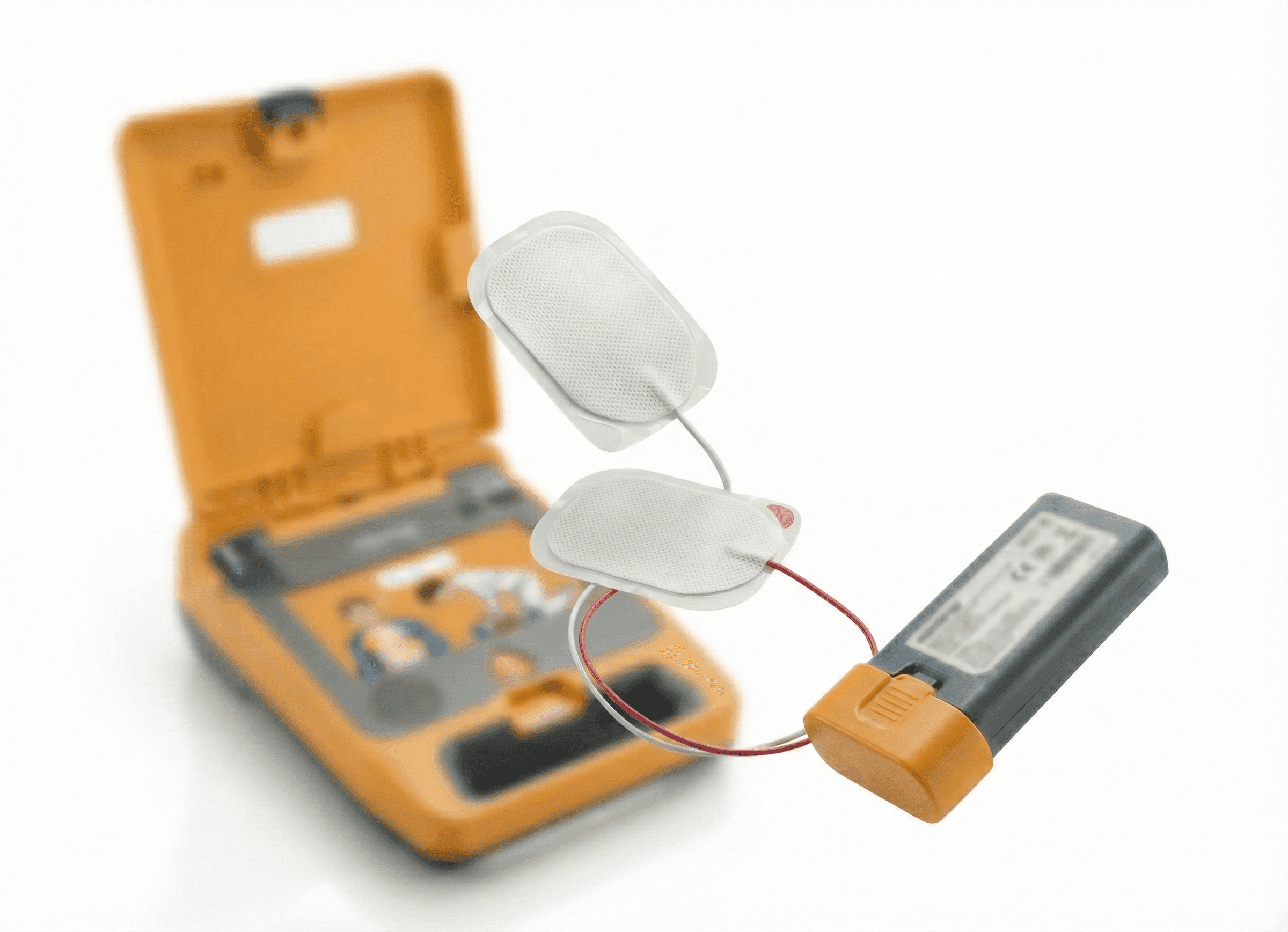
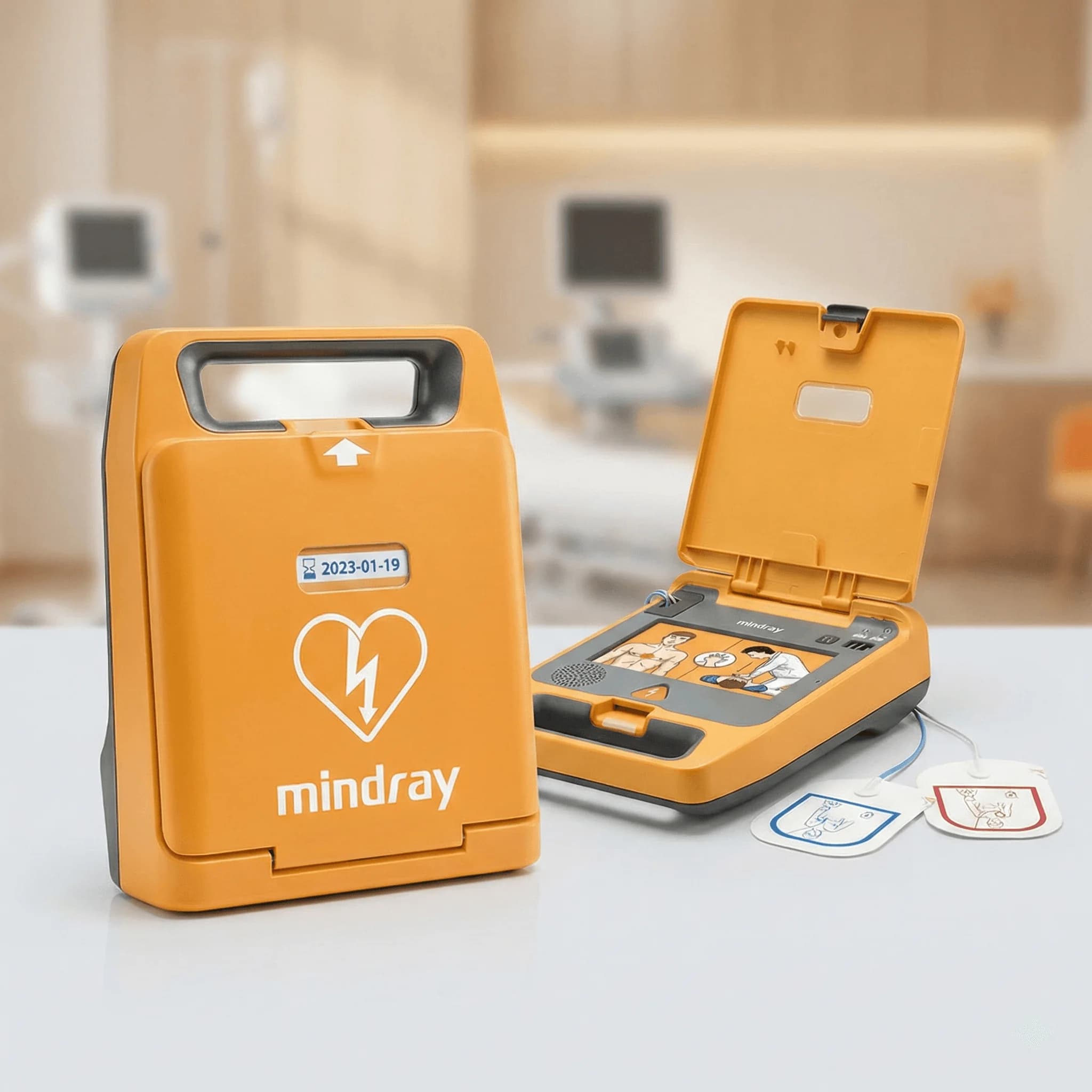
An AED that anyone present can use, without medical training, guides the user by voice and analyses the heart rhythm itself before delivering a shock if needed. Having one right next to the field, rather than in a locked room at the other end of the sports complex, directly determines the response time and therefore the athlete's chances of survival.
Equipping clubs, gyms and sports grounds
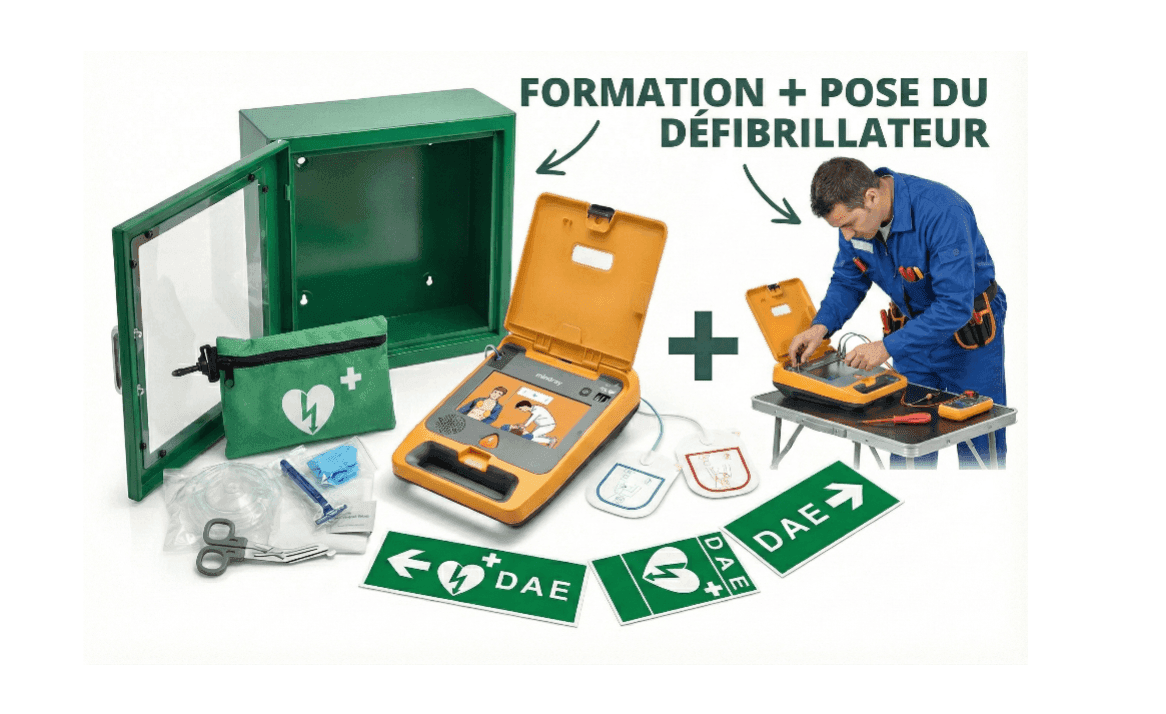
Sports facilities falling under the ERP (establishment open to the public) categories subject to the equipment requirement must have a defibrillator registered with Géo'DAE, the French national registry, and signposted according to the arrêté of 29 November 2018. Beyond the regulatory requirement, the site's layout guides the choice of equipment: an outdoor cabinet for an open air pitch, an indoor wall mounted cabinet for a gym, and paediatric electrodes available if children train on site.
The choice also depends on weather exposure and how busy the club is, which determine how rugged and accessible the device needs to be.
| Sports venue | Recommended equipment |
|---|---|
| Outdoor field (football, rugby, athletics) | Weatherproof outdoor cabinet, adult and paediatric electrodes |
| Gym or indoor hall | Indoor wall mounted cabinet near changing rooms and the playing area |
| Pool or basin attached to the club | Location sheltered from water splashes, signage visible from the pool |
| Club with a youth section | Paediatric electrode set available alongside adult electrodes |
Training staff and raising awareness among athletes
A well placed defibrillator is not enough if no one nearby can recognise cardiac arrest, call emergency services and start chest compressions while waiting for the device. Training coaches, referees and a few volunteers in lifesaving gestures, beyond the first aid training some staff already have, shortens the delay between an athlete collapsing and the first compression.
Short awareness sessions, repeated every season rather than held once, keep reflexes sharper than an isolated initial course that is never renewed. They also help bring new coaches and volunteers who join the club each year up to speed.
Frequently asked questions
Can a young athlete with no medical history suffer cardiac arrest?
Yes. In athletes under 35, most sport related sudden deaths have a genetic or congenital origin that was never diagnosed, such as a cardiomyopathy or a coronary artery anomaly. The absence of a known family history does not remove this risk, which is why an accessible defibrillator on every practice site matters, including for youth competitions.
Is the medical fitness certificate enough to rule out the risk?
It can detect certain abnormalities through the interview, clinical examination and sometimes an electrocardiogram, but it does not catch every possible cause of cardiac arrest. It remains a useful prevention tool, complementary to having a defibrillator on the practice site rather than an absolute guarantee.
Does an outdoor field need a different defibrillator?
The device itself does not need to differ, but exposure to weather calls for a suitable outdoor cabinet that protects the battery and electrodes from cold and humidity. A device installed indoors can use a simpler wall mounted cabinet.
Who should act first if someone collapses during a match?
Anyone present can and should act: call emergency services, start chest compressions and ask for the nearest defibrillator. No medical qualification is required to use an AED, since the device guides the user by voice throughout the intervention.
Does resuming sport after a cardiac event require special follow up?
A cardiologist's opinion is needed before resuming any sport after a cardiac event, with examinations suited to the athlete's situation. The club or host venue should also check that the return to activity happens in a setting equipped with an accessible, clearly signposted defibrillator.
Planning an AED project?
Purchase, rental from 50 EUR excl. VAT per month, installation with GéoDAE registration, servicing and training: our team replies within 24 hours.