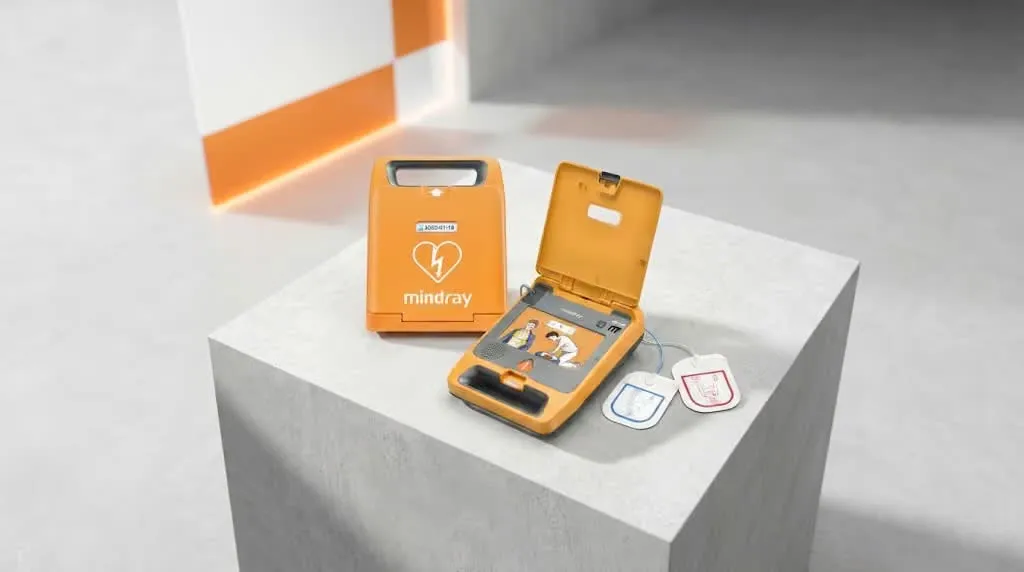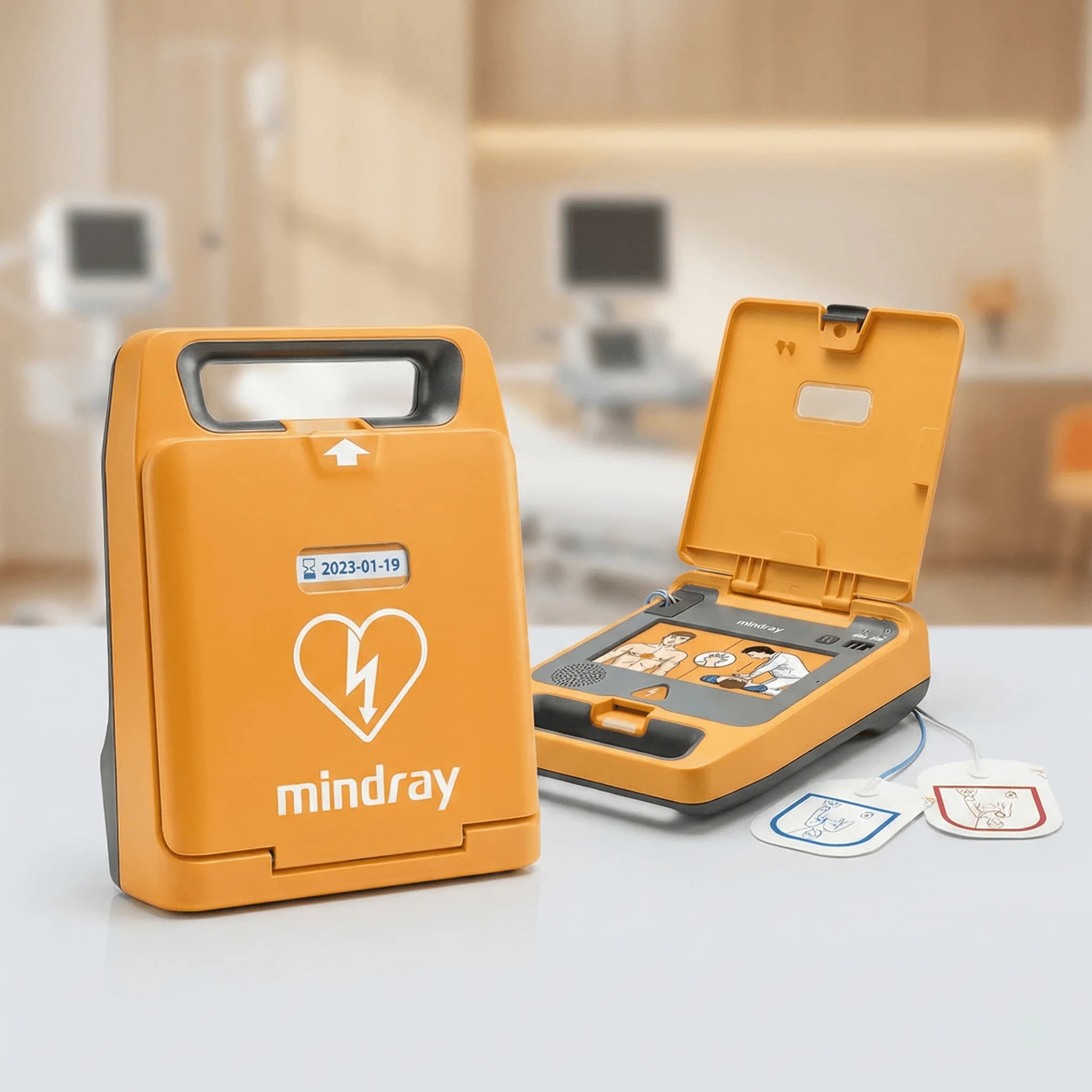
AED used: the procedure to follow after an intervention
Written by Cyrille GAGNAIRE, France Défibrillateur. Published on 10 August 2026.
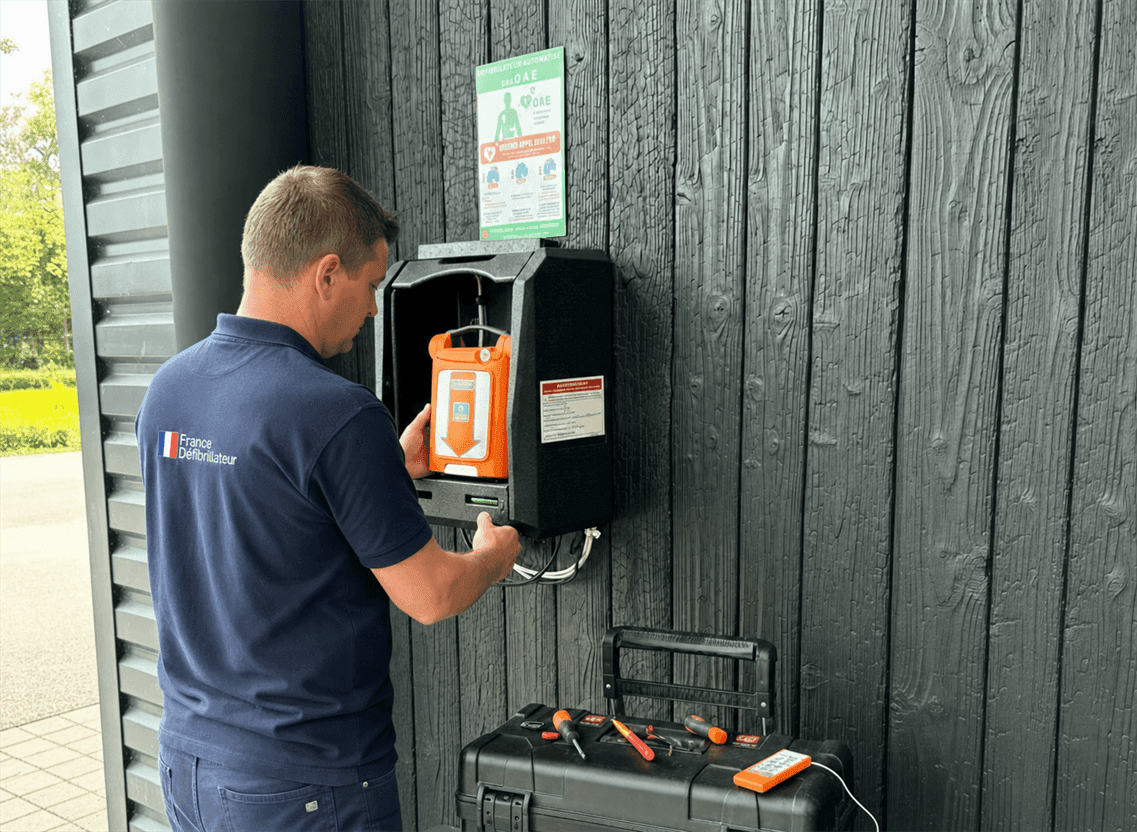
Delivering a shock or starting a heart rhythm analysis is only the first step of an intervention. Once the emergency team has left with the patient, the site operator must put the automated external defibrillator (AED) back into working order: consumables to replace, data to retrieve, log to update. These steps, often forgotten in the heat of the moment, determine whether the device will be ready for the next emergency.
Keep the alert going and leave the device running
Once the shock has been delivered or the analysis finished, the automated external defibrillator keeps guiding resuscitation gestures until the emergency team arrives. It must not be switched off, and the electrodes must not be removed, before the medical team has taken over the patient. The call to emergency services stays active throughout the intervention, with regular updates on the victim's condition passed to the dispatcher.
The witness who triggered the alert passes on useful information to the arriving emergency team: approximate time of the cardiac arrest, number of shocks delivered, duration of chest compressions performed before their arrival. These details guide the hospital care that follows and are recorded by the medical team.
In the minutes that follow, the witnesses' role does not end once the patient is handed over. It remains useful to stay available to the medical team while it gathers any last piece of information, before turning to putting the equipment back in order.
Retrieve the intervention data
Most defibrillators record the intervention on a memory card or an internal chip: analysed heart rhythm, shocks delivered, duration of chest compressions. This data is part of the patient's medical follow-up and must be handed to the care team or kept by the operator according to the terms set out in the manufacturer's instructions.
Some models allow the history to be exported directly to a computer or a dedicated application. This step must never delay care for the victim: it happens afterwards, once the emergency team has left.
Replace the consumables that were used
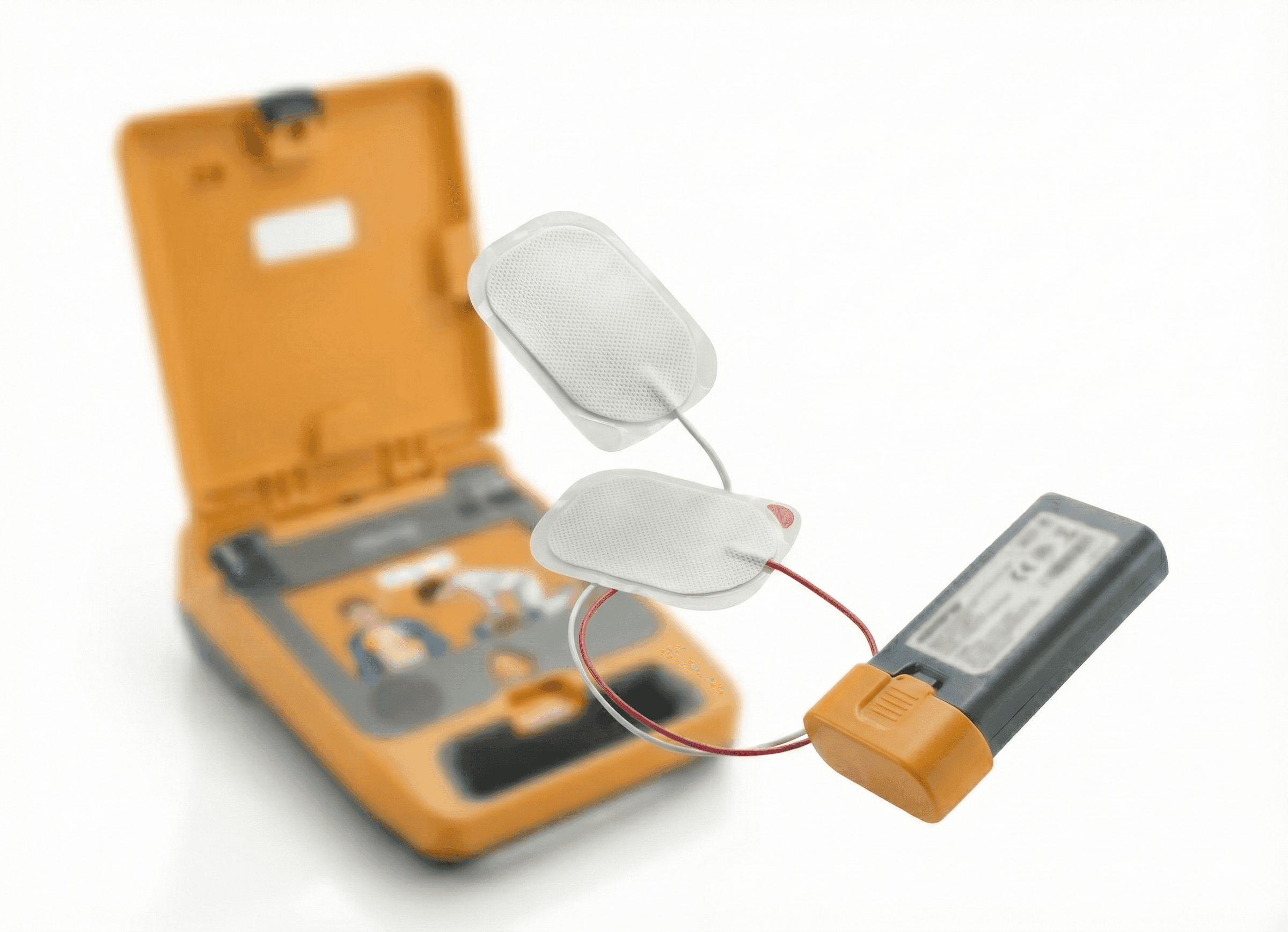
Electrode pads (AED) are single use: they must be replaced after every use, even if their expiry date has not been reached. The battery, drawn on during the analysis and the shock, deserves an immediate check of its charge level, and possibly a replacement if it is close to the end of its service life, generally between three and five years depending on the model.
The accessory kit that comes with the device, razor, scissors, gloves, gauze, often ends up incomplete after a real intervention. A systematic check avoids missing an item the next time it is needed. Keeping a spare set of electrodes near the cabinet, rather than in a distant drawer, means it can be replaced instantly without waiting for a new order.
| Item | Action after use |
|---|---|
| Electrodes | Systematic replacement, even if not expired |
| Battery | Charge level check, replacement if close to end of life |
| Accessory kit | Restocking (razor, scissors, gloves, gauze) |
| Device | Self-test and status indicator check before putting back into service |
Log the intervention in the safety register
The site operator records the date, the context and the follow-up of the intervention in the defibrillator's safety log, alongside periodic checks and consumable replacements. This traceability is part of the maintenance obligations that fall on the operator, set out in the French article R. 5212-25 of the Public Health Code (Code de la santé publique).
If the device behaved abnormally during the intervention, failure to recognise the rhythm, error message, unexpected shutdown, the supplier who provided it should be informed promptly so a technical check or a replacement can be assessed. This should also be reported even for a seemingly minor incident: a defect that recurs across several interventions can point to a wider problem.
Put the defibrillator back into service
Before placing the device back in its cabinet, make sure the status indicator turns green again and that the self-test reports no anomaly. A defibrillator that has not been restocked with electrodes, or left discharged, is no longer operational for the next emergency, which defeats the whole purpose of having it on site.
The cabinet itself deserves a quick check: proper closing, audible alarm where fitted, and clear visibility of the signage, which must remain visible from the site's passageways.
Support the witnesses and rescuers
Helping someone in cardiac arrest leaves a lasting mark on witnesses, whether or not they are trained in life-saving gestures. Taking time to talk with site management, or even referring them to psychological support, helps ensure the experience does not discourage future intervention.
Recalling that every minute gained before defibrillation increases the chances of survival by about 10 percent also helps put the value of the act into perspective, whatever the outcome for the victim.
Frequently asked questions
Does the AED need to be sent back to the manufacturer after use?
Not systematically. A return is only needed if a malfunction was noticed during the intervention, such as a failure to recognise the rhythm or an error message. In other cases, an on-site check, a successful self-test and replacing the electrodes are enough to put the device back into service, following the maintenance provider's instructions.
Who is responsible for replacing the electrodes that were used?
This responsibility falls on the site operator, whether owner or lessee of the defibrillator. Under a rental agreement, the maintenance contract often includes restocking consumables after a real intervention, which simplifies putting the device quickly back into service and spares the operator from managing stock themselves.
Does the data recorded by the device need to be kept?
It is useful for the patient's medical follow-up and can be requested by the care team to review how the intervention went. The operator keeps or forwards it according to the terms set out by the manufacturer, with no obligation to share it beyond the medical circle involved in the intervention.
How long is the site left without a working defibrillator?
Ideally, not at all. Replacing the electrodes and checking the battery takes only a few minutes if consumable stock is available on site. That is why it is useful to keep a spare set of electrodes near the cabinet, outside the device itself.
What should be done if the defibrillator misbehaved during the intervention?
It should be reported without delay to the maintenance provider or supplier, describing the anomaly precisely, and set aside pending a technical check. A device under suspicion should not be put back into service until its proper functioning has been confirmed.
Planning an AED project?
Purchase, rental from 50 EUR excl. VAT per month, installation with GéoDAE registration, servicing and training: our team replies within 24 hours.