How to Replace an AED's Electrode Pads and Battery
Written by Cyrille GAGNAIRE, France Défibrillateur. Published on 23 August 2026.
A defibrillator (AED) only protects a site as long as its electrode pads and battery remain valid. Once their expiry date has passed, the device stays powered on but can no longer deliver a shock safely. Replacing these two consumables is a simple task that anyone on site can carry out, provided a few precise steps are followed. Here is how to do it correctly, whatever model is installed in the building.
Knowing when to act
The defibrillator's daily self-test signals a problem with a red light or an audible alert when the electrode pads or battery are close to their expiry date. This date also appears directly on the electrode pad packaging and on the battery label, shown as a month and a year. Do not wait for the unit's alert before checking these dates: a regular visual check, logged in the safety register, makes it possible to order consumables in advance and avoid the device becoming unavailable.
| Component | Typical lifespan | Who can replace it |
|---|---|---|
| Electrode pads | 2 to 5 years | Anyone on site |
| Battery | 3 to 5 years | Anyone on site |
| Complete defibrillator | 8 to 10 years or more | Manufacturer or maintenance provider |
Checks to make before starting
Before unwrapping new electrode pads, switch the defibrillator off or wait for it to enter standby mode. The model and reference of the pads must match exactly what the manufacturer specifies, since an incompatible connector simply will not plug in. On sites used by children, pediatric electrode pads should be ordered and stored next to the adult ones, clearly labelled, as the two are never interchangeable. The same care applies to the battery, whose reference is printed on the manual or on the old battery being removed.
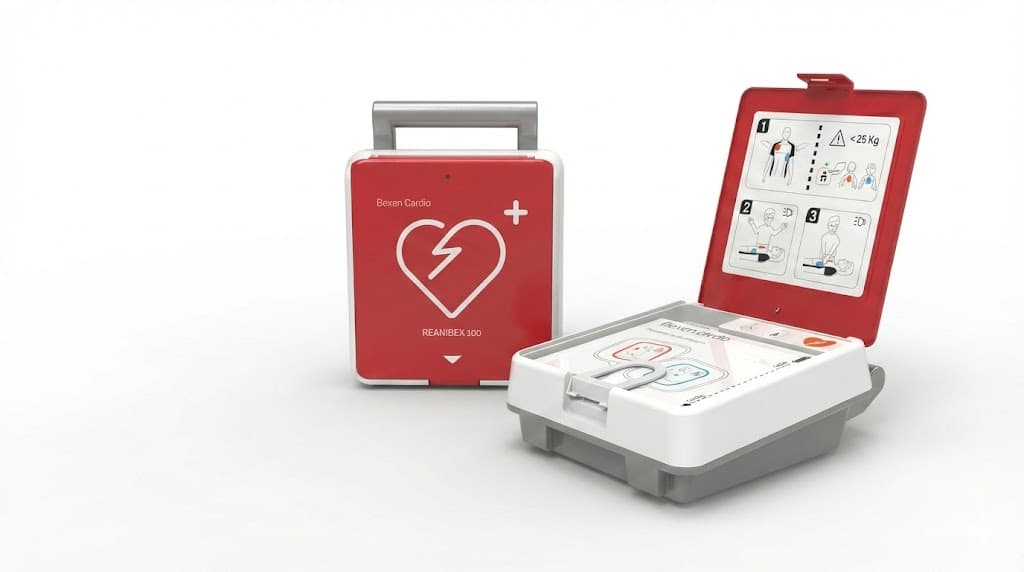
Replacing the electrode pads step by step
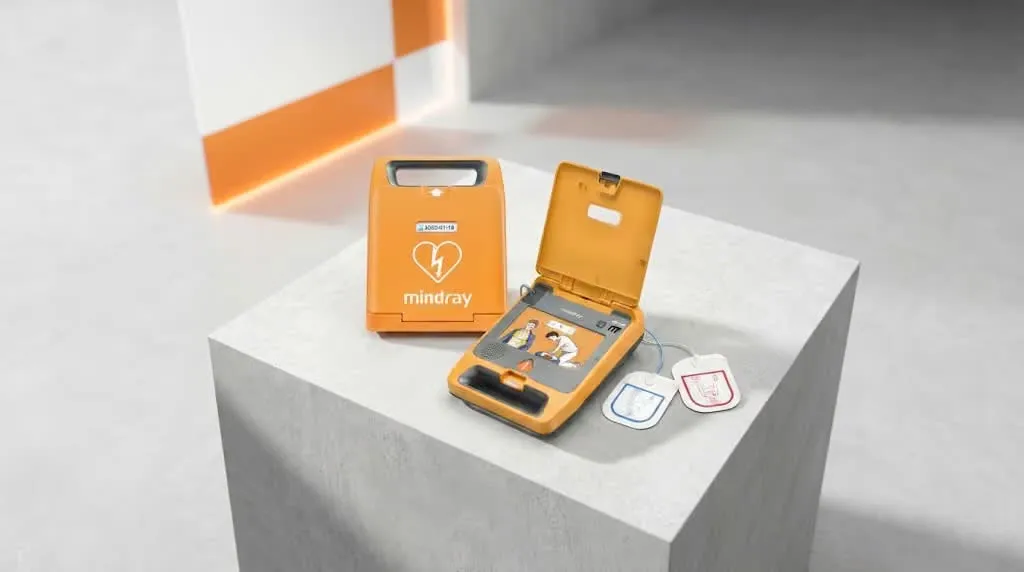
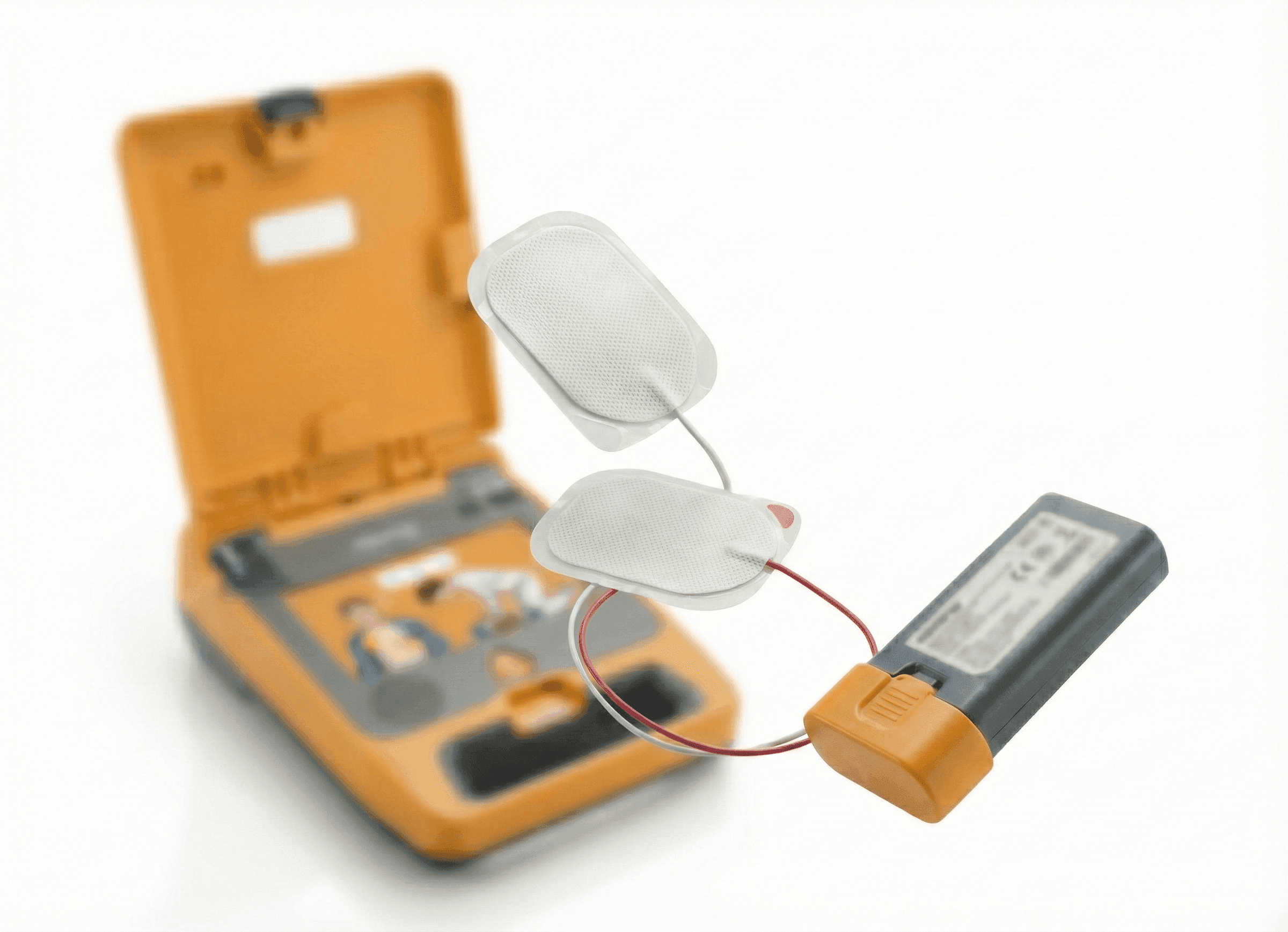
The used electrode pad cartridge usually detaches with a simple push or by sliding a tab, with no tools needed. The new sealed cartridge clicks into place, connector facing the right way. The pouch should stay sealed until it is actually used on a patient: once opened to the air, the conductive gel dries out and the pads lose their effectiveness even before the printed expiry date. After fitting, the device automatically runs a self-test that confirms the new pads have been recognised correctly, shown by the light turning green again.
Replacing the battery step by step
The battery compartment usually opens with a latch or a single screw, without needing to fully dismantle the casing. The old battery slides out by pulling a tab, and the new one slides in until it locks firmly into place, audibly or by feel. On some models, the device needs a few seconds to initialise before its ready light comes back on: it should not be switched off or on again during this phase. If the light stays red after replacement, the battery is more likely poorly seated than faulty, and simply needs repositioning.
Mistakes that put the site's protection at risk
Reusing an electrode pad cartridge that has already been opened, even briefly, means fitting a partially expired consumable without realising it. Mixing a battery or pads from a different brand than the one recommended by the manufacturer can stop the device working or void its warranty. Forgetting to check that the light has returned to green after the operation is another common mistake, since a defibrillator can display a silent alert if the fitting was not recognised correctly. Finally, storing spare consumables somewhere too hot or too humid speeds up their deterioration before they are even installed.
Logging the intervention and disposing of used consumables
Every replacement of electrode pads or a battery should be logged in the site's safety register, with the date, the reference of the consumable fitted and the name of the person who carried it out. Used batteries follow the standard battery and accumulator collection scheme, available at recycling centres or through the defibrillator supplier. Electrode pads that were never used on a patient can go out with household waste, while those used during an actual intervention follow the healthcare waste disposal route. A maintenance contract that includes consumable renewal takes this organisation off the operator's hands, with rental available from 50 euros a month excl. VAT.
Frequently asked questions
Do you need training to replace an AED's electrode pads or battery?
No, this task is deliberately simple and requires no training or certification. It involves opening a compartment, removing the used part and clicking the new one into place until it locks. The device checks the installation itself during the next self-test. All that is needed is to order the exact reference specified by the manufacturer and respect the connector's orientation for the operation to go smoothly.
How can you tell if electrode pads are still usable?
The expiry date is printed on the sealed packaging as a month and a year. As long as the pouch stays sealed and is stored at a reasonable temperature, the pads remain usable until that date. A cartridge that has already been opened, even if never used, should be replaced, because the conductive gel dries out on contact with air, which reduces the effectiveness of the shock delivered to the patient.
What if the light stays red after replacement?
First check that the battery or electrode pad cartridge is properly clicked into place, since poor positioning is the most common cause. If the light stays red after a second check, it may be an incompatible reference or a faulty consumable. In that case, it is best to contact the supplier or maintenance provider rather than use the device as it is.
Where should used electrode pads and batteries be disposed of?
Used batteries follow the standard battery and accumulator collection scheme, available at recycling centres or directly through the defibrillator supplier when consumables are renewed. Electrode pads that were never used on a patient can go out with regular household waste. Those used during an actual resuscitation are treated as healthcare waste and must follow that specific disposal route.
Does a maintenance contract cover consumable replacement?
It depends on the contract, but most rental offers include monitoring and renewal of electrode pads and the battery at no extra cost and with no action needed from the operator. For a purchased defibrillator, a dedicated maintenance contract can cover the same service. This delegation prevents a missed expiry date and keeps the device operational at all times.
Planning an AED project?
Purchase, rental from 50 EUR excl. VAT per month, installation with GéoDAE registration, servicing and training: our team replies within 24 hours.