Victim regains consciousness: what to do before help arrives
Written by Cyrille GAGNAIRE, France Défibrillateur. Published on 18 November 2026.
After several minutes of compressions and one or two shocks, the victim sometimes coughs, opens their eyes or starts to speak. The relief is immense, but the situation remains fragile. A heart that has just restarted can stop again. Here is how to recognise a genuine recovery, which actions to continue and what the rescuer should tell the emergency team.
Recognising a genuine recovery
The signs to look for are simple: the victim breathes normally, moves deliberately, opens their eyes, coughs or answers a question. An isolated arm movement or a simple groan is not enough. It may be a reflex, and compressions must not be stopped on a doubt.
The most reliable criterion remains breathing. Regular breathing, without long pauses or snoring noises, shows that the heart is pumping blood again. Conversely, rare and noisy breaths are gasps, the sign of a cardiac arrest that is still under way.
Also look at the skin. A face that stays grey or bluish despite a few movements probably has not regained effective circulation. A colour that gradually returns, with warmer skin, points the right way. None of these signs replaces breathing, but they help confirm what you observe.
When to stop compressions
Chest compressions stop only when the victim shows clear and lasting signs of life, or when the emergency team takes over. If they struggle, push your hands away or talk, there is no longer any reason to compress the chest.
If you are unsure, resume compressions. Needless compressions on a person whose heart is beating are rarely dangerous, whereas stopping too early during a cardiac arrest that is still present wastes precious minutes. Each minute without defibrillation reduces the chances of survival by about 10%, and this reasoning also applies to an uncertain recovery.
Once compressions have stopped, do not move away. Keep your hands close to the chest, ready to resume, and ask a bystander to stay with you to help monitor. This shared vigilance is valuable, because the rescuer's attention drops quickly after the effort and the emotion.
Leaving the defibrillator in place
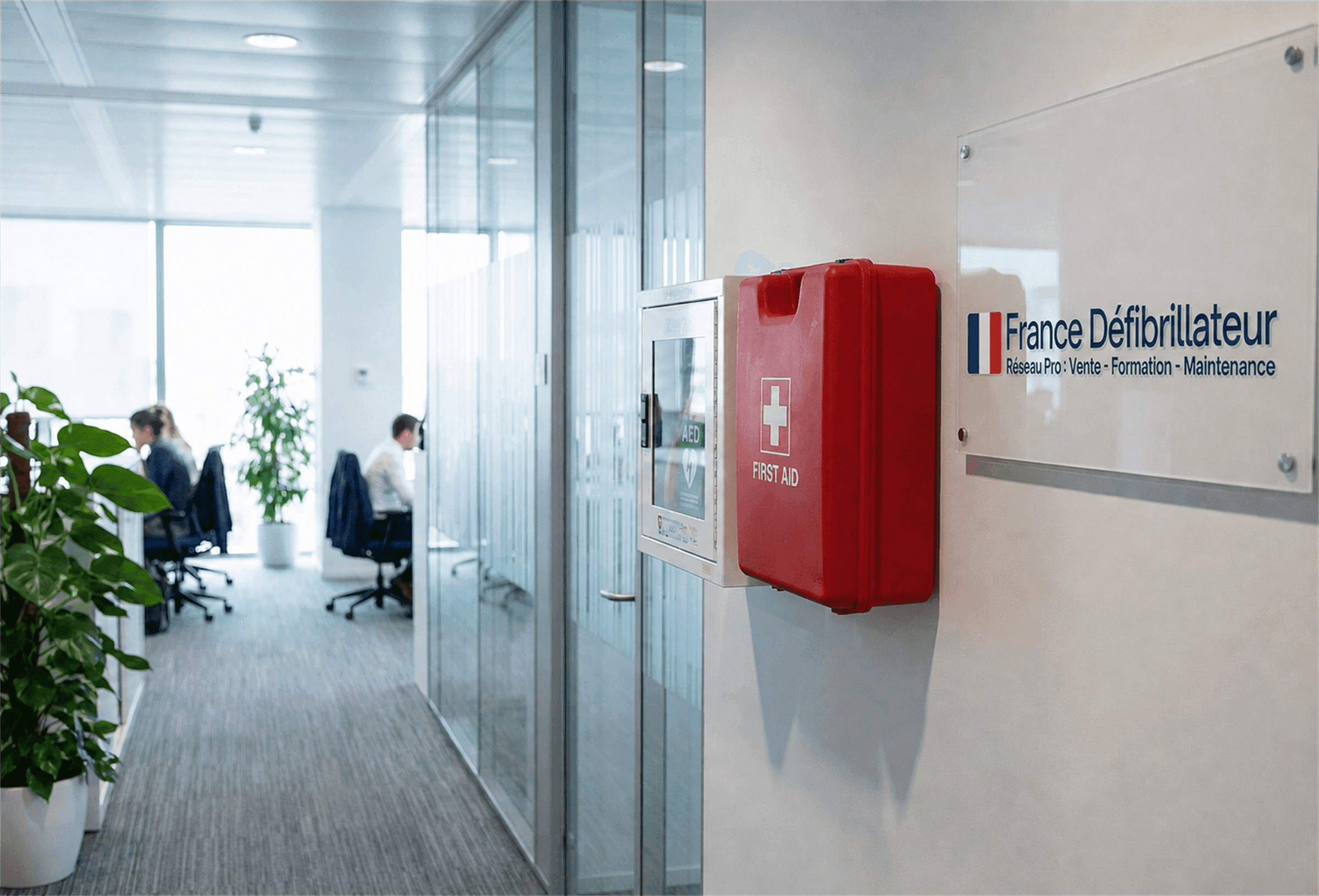
Do not remove the pads and do not switch the device off. Until the emergency team arrives, the AED (automated external defibrillator) keeps analysing the heart rhythm and can detect a relapse. This is common in the first minutes after a successful resuscitation.
If the device announces that a shock is advised although the victim seemed to be improving, follow its instructions: it has detected a rhythm that warrants a shock. Otherwise it will tell you not to touch the victim or to resume compressions, depending on its analysis. The voice prompts remain the reference.
Placing the victim in the right position
If the victim is breathing but unconscious or very confused, the recovery position protects their airway in case of vomiting. The pads can stay in place; the cables are simply moved aside so they are not pulled off during the manoeuvre.
If they are conscious, let them stay in the position where they feel best, often half sitting or lying down. Avoid making them stand up, walk or drink. Cover them if they are cold, speak to them calmly and tell them what happened, without playing it down.
If the victim vomits, turn them onto their side without delay and carefully clear their mouth. Keep the head slightly tilted back so that air passes freely, and check breathing again as soon as they are settled.
Monitoring continuously until help arrives
Stay next to the victim and watch their breathing continuously. If it slows, becomes irregular or stops, the victim is in cardiac arrest again: call again, or tell the operator already on the line, then resume compressions immediately and follow the device.
Keep the line open with the 15 or the 112 if possible. The operator can guide you and inform the medical team of the progress. Never leave the victim alone, even if they say they feel fine: a person who refuses to be examined should be redirected to the emergency services.
Finally, think of yourself. After such an intervention, the rescuer often feels an aftershock: trembling, fatigue, doubts about their actions. Mention it to the emergency team, who will know where to direct you, and take the time to talk about it afterwards with a relative or a professional.
Information to give the emergency team
When the team arrives, describe the sequence precisely: approximate time of the collapse, when compressions began, number of shocks delivered, the moment of recovery and any relapses. This information guides the next stage of care.
Leave the device available to the emergency team: the recording of the rhythm and shocks is useful to them. After the intervention, the AED must be checked, its pads replaced and the event noted in the establishment's register. The victim will be taken to hospital in any case, even if they seem completely recovered.
Frequently asked questions
Can the pads be removed if the victim is breathing again?
No. Leave them in place and keep the device switched on until the emergency team arrives. The defibrillator keeps monitoring the rhythm and can signal a relapse, which often happens in the minutes following a successful resuscitation.
What if the victim complains of chest pain?
Pain is common after chest compressions, because they are forceful. Reassure the victim, let them stay in the most comfortable position and report the pain to the emergency team. It must not be a reason to refuse medical care.
What if the victim wants to leave or refuses to wait for help?
Calmly insist on the need for an examination: a cardiac arrest always has a cause that must be identified. Keep them nearby, stay in contact with the 15 operator and explain the situation to them. A relapse can happen at any moment.
Should rescue breaths still be given?
Only if you are trained and the victim is not breathing. If they breathe normally, no rescue breaths are needed. Simply monitor the breathing rhythm and resume compressions as soon as breathing stops or becomes abnormal.
What should be done with the defibrillator once the emergency team has left?
The operator must have it checked, replace the pads used and verify the battery before putting it back into service. The intervention is noted in the maintenance register. A device left without new pads is no longer operational.
Planning an AED project?
Purchase, rental from 50 EUR excl. VAT per month, installation with GéoDAE registration, servicing and training: our team replies within 24 hours.