Alone with a victim: fetch the defibrillator or stay?
Written by Cyrille GAGNAIRE, France Défibrillateur. Published on 13 November 2026.
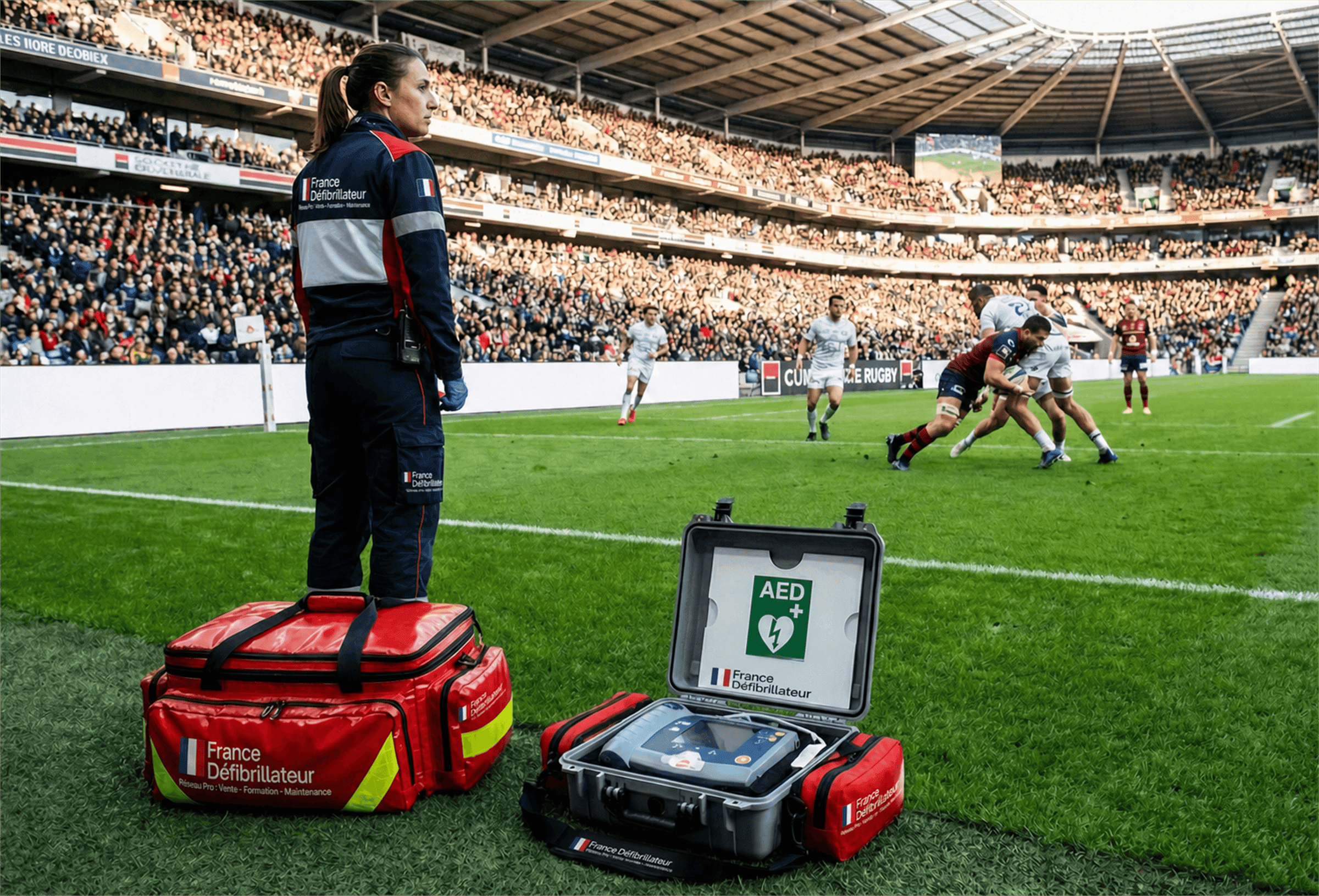
You are alone with someone who has collapsed and is not breathing. A defibrillator is displayed down the corridor, or you are told there is one in the next building. Should you fetch it and leave the victim, or stay and perform compressions? The question freezes many bystanders, yet a simple line of reasoning settles it in a few seconds. Here are the markers to use, and what a site operator can do so the choice almost never has to be made.
Why the dilemma arises
Two facts pull in opposite directions. Each minute without defibrillation reduces the chance of survival by about 10%. On the other hand, without compressions blood stops circulating and the brain suffers within the first minutes. A lone bystander cannot do both at once.
About 50,000 cardiac arrests occur in France each year, and in many cases the bystander is alone or nearly so. This is therefore not a rare situation, and the decision has to be made without long thought.
First reflex: call, and use speakerphone
Before anything else, a lone bystander alerts the emergency services. The phone stays on speaker beside the victim: your hands are free and the dispatcher can guide the compressions remotely. The dispatcher often says whether to fetch a device and where it is, relying on the GéoDAE database (the French national AED register) when the place is known.
If the operator has filed the GéoDAE declaration, the location of the nearest defibrillator is available to the emergency services. A forgotten declaration deprives the dispatcher of this information at the worst moment.
Markers for deciding
The main criteria are distance and certainty. If the defibrillator is visible, a few seconds away, and you are sure of its location, fetching it is reasonable: the potential gain is large and the break in compressions stays short.
If the device's location is uncertain, far away, behind a door you cannot open or in another building, it is better to stay and perform uninterrupted compressions. Continuous compressions beat a dash toward a device you may not find. In that case, call out to anyone passing to fetch it: a second bystander changes everything, see also our article on sharing roles among several bystanders.
| Situation | Recommended reflex |
|---|---|
| Device visible and very close, location certain | Fetch it, then return to compress and attach it |
| Device far away or location uncertain | Stay and compress, call for help |
| A second bystander arrives | Ask them to fetch the device |
| The dispatcher names a specific device | Follow their instructions |
Once the device is in hand
Back beside the victim, do not waste time setting everything up. Open the device, follow the voice prompts, place the pads on the bare chest and let the analysis run. Resume compressions as soon as the device asks.
If you had to step away, do not blame yourself: what matters is that compressions resume quickly and that the emergency services stay on the line. The device is designed to be used by an untrained person, without risk to them.
What the operator can do to avoid the dilemma
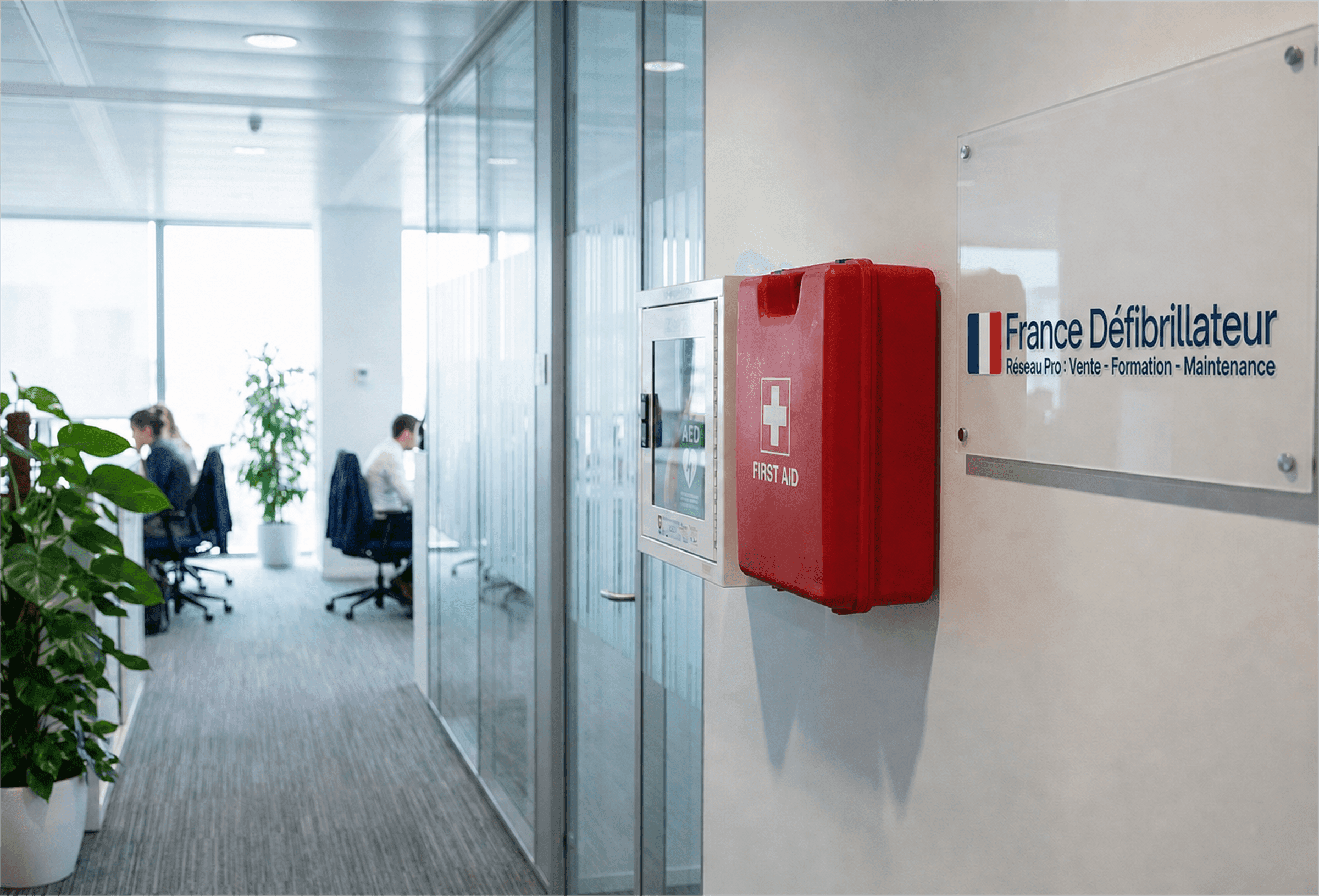
A well-equipped site shortens the distance between the victim and the device. Public-access buildings (ERP, établissements recevant du public) of categories 1 to 3 have been equipped since 1 January 2020, category 4 since 2021 and some category 5 ERP since 2022, under loi 2018-527 and décret 2018-1186 (the French law and decree on AED equipment). But the equipment obligation says nothing about real access time: a device at the back of a locked room is no use to a lone bystander.
Signage under the arrêté du 29 novembre 2018 (the French order on AED signage) must let people find the device without knowing the premises. A displayed plan, signs visible from circulation routes and a central location save seconds. Maintenance, which is the operator's responsibility under article R. 5212-25 of the Code de la santé publique (French Public Health Code), ensures the device is ready when someone finally reaches it.
Rehearse before facing it
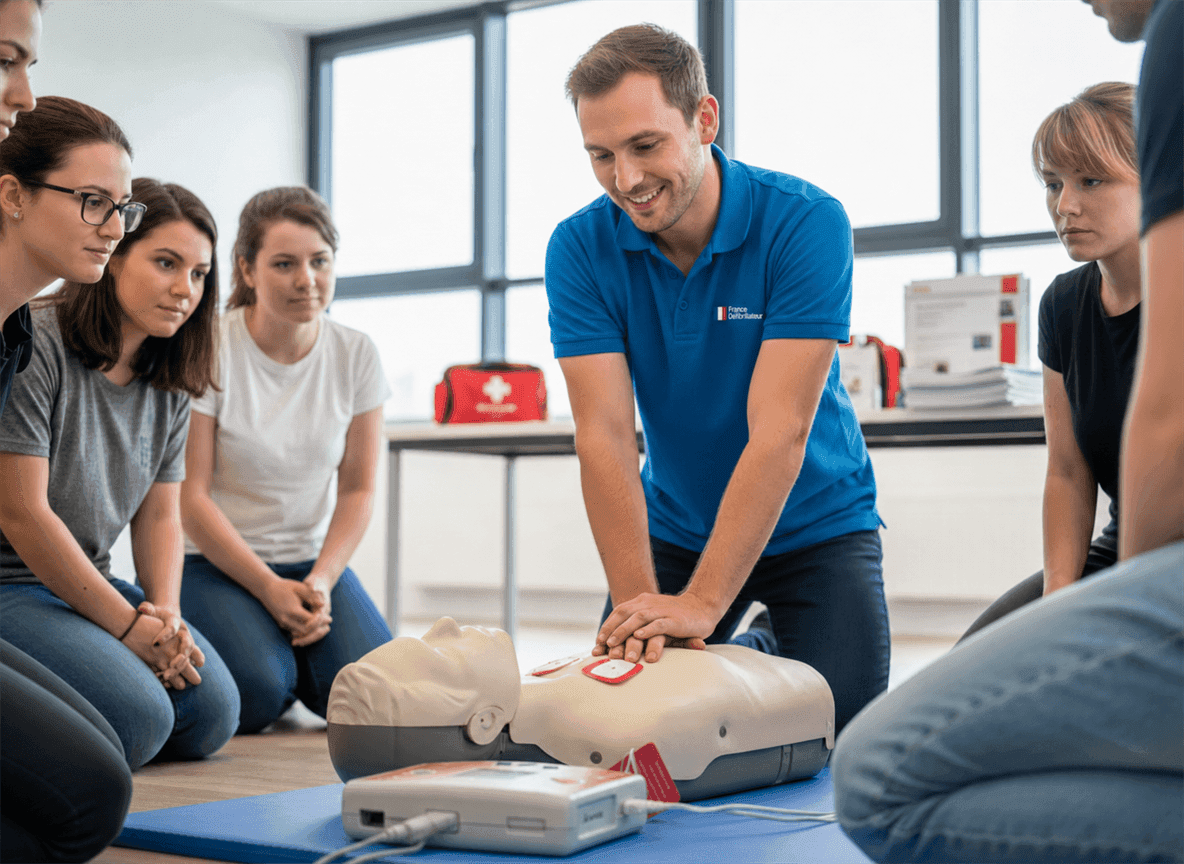
The best way to decide quickly is to have already imagined it. In a team, a short session is enough: where is the device, who calls, who fetches it, who performs compressions. Life-saving training does the rest, and repeating it regularly keeps reflexes from fading.
For a site that wants to equip itself or review its setup, France Défibrillateur offers sales, rental from €50 excl. VAT/month with maintenance included, installation and training. The quote is provided within 24 hours, delivery takes 2 to 5 working days and the warranty is 5 years.
Frequently asked questions
I am alone: should I leave the victim to fetch the defibrillator?
It depends on the distance and how sure you are of the location. If the device is visible and very close, fetch it. If it is far away or uncertain, stay and perform compressions while calling for help. The dispatcher on the phone can also guide you.
Should I call emergency services before or after fetching the device?
Before. Call first, switch on speakerphone and put the phone near the victim. The dispatcher can guide your compressions, point to the nearest device and send help without waiting for you to come back.
Can a defibrillator be used without training?
Yes. Devices guide the user with voice prompts and deliver a shock only if the heart rhythm calls for it. Training builds confidence and speed, but lacking it should never stop anyone from acting during a cardiac arrest.
How do I find the nearest defibrillator?
In a public place, look for the regulatory signage. The dispatcher also has the GéoDAE database, fed by operators' mandatory declarations. An up-to-date declaration therefore lets them point you to the nearest device.
Can an operator help a lone bystander?
Yes: by choosing a central, accessible location, taking care of signage, declaring the device in GéoDAE, ensuring maintenance and training staff. These choices shorten access time, and so the time without defibrillation.
Planning an AED project?
Purchase, rental from 50 EUR excl. VAT per month, installation with GéoDAE registration, servicing and training: our team replies within 24 hours.