Several bystanders and a cardiac arrest: who does what
Written by Cyrille GAGNAIRE, France Défibrillateur. Published on 10 November 2026.
Faced with an unconscious person, a group's first reflex is often to freeze, each person waiting for someone else to act. Yet when several bystanders are present, the challenge changes: it is no longer about finding the courage to act alone, but about sharing tasks without losing time. Each minute without defibrillation reduces the chances of survival by about 10%. Here is how to organise roles, and how an establishment can prepare its teams to do so.
Why the number of bystanders is not enough
One might think that the more people there are, the better the victim's chances of being helped. Rescuers' experience often shows the opposite: in a group, everyone assumes someone else has already called for help or that a more qualified person will step in. This phenomenon, known as diffusion of responsibility, delays the first actions.
About 50,000 cardiac arrests occur in France every year. The bystander on the scene is the first link in the chain of survival, and when there are several, the best response is to assign roles immediately, out loud, addressing specific people. This takes a few seconds and prevents everyone from waiting for someone else to move.
The four roles to assign
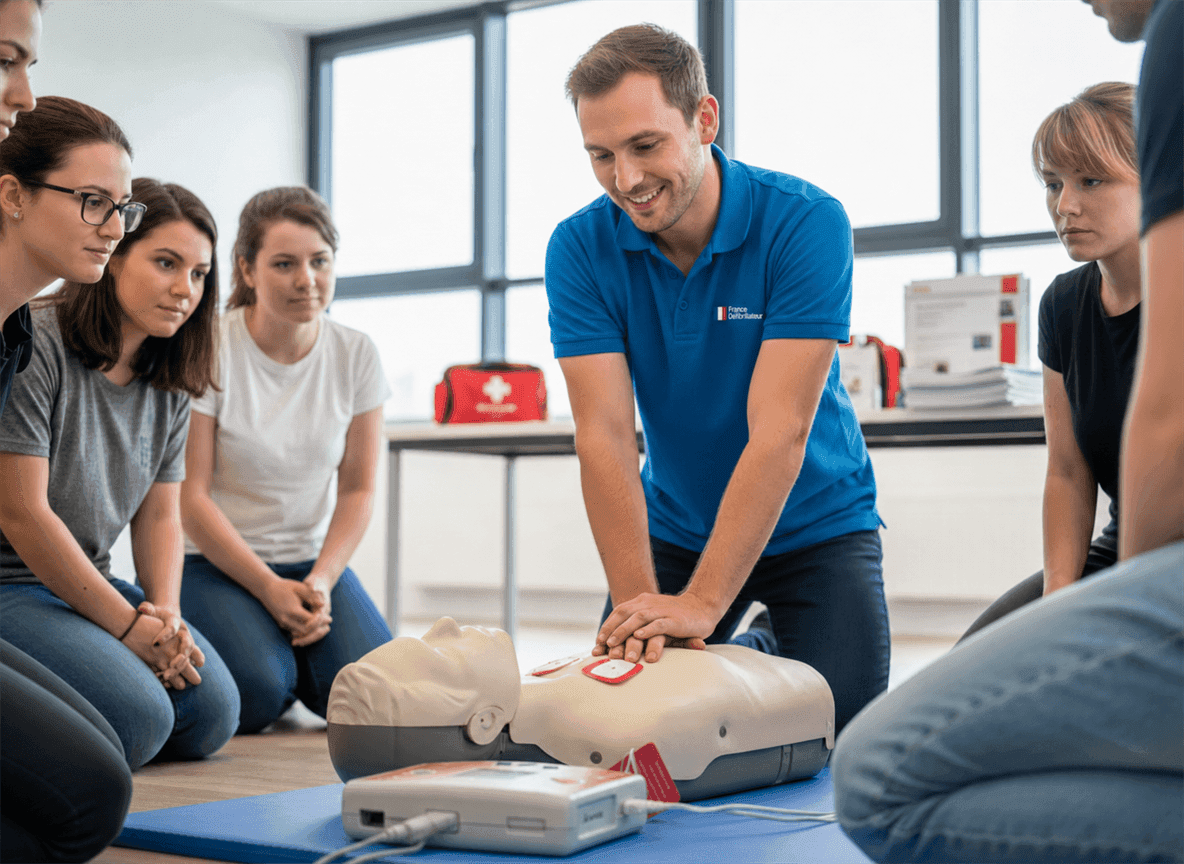
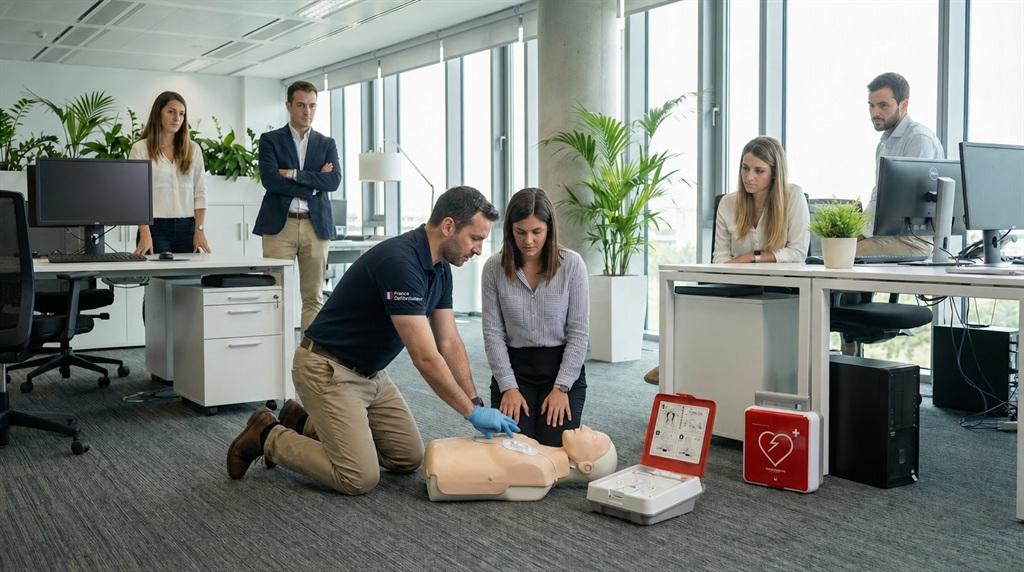
The first bystander to notice the arrest, meaning a person who does not respond and is not breathing normally, starts chest compressions at once. This is the only role that cannot be postponed. Everything else is organised around that person.
The second bystander calls emergency services and stays on the line, on speaker if possible, to relay the dispatcher's instructions. The third goes to fetch the defibrillator, asking where it is if necessary. A fourth, if there is one, meets the rescuers at the entrance, clears the way and keeps onlookers back.
The table below summarises this split, which adapts to the number of people present.
| Role | Task | With few bystanders |
|---|---|---|
| Compressor | Start and continue chest compressions | Role always taken first |
| Caller | Reach emergency services and stay on the line | Can be combined with fetching the AED if the phone is on speaker |
| AED carrier | Bring back and open the defibrillator | Comes second, once the alert is given |
| Guide | Open doors and meet the rescuers | Often done by the caller |
Give clear orders rather than invitations
Under stress, a general sentence such as "can someone call emergency services?" has no effect. It is better to single out a person by look or gesture: "You, in the blue jacket, call the emergency number and stay on the line." A named instruction removes ambiguity and makes the action immediate.
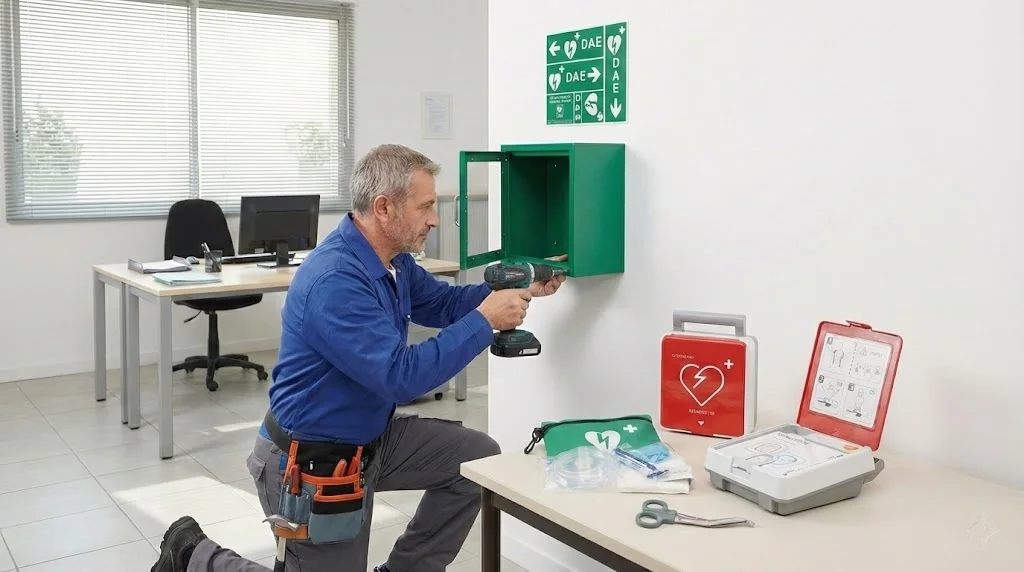
The same principle applies to the defibrillator: "You, go and get the defibrillator at reception and run back." If nobody knows where it is, the signage and the GéoDAE registration (the French national AED database) should make it easy to locate. An AED that cannot be found wastes as much time as one that is missing.
Once help is on its way, remember to note the time compressions started and the number of shocks delivered by the device. The dispatcher and the medical team will value this information, which a designated bystander can remember or write down while the others continue.
Taking over from the compressor and using the AED as a team
Chest compressions are tiring, and their effectiveness drops with exhaustion. As soon as a second bystander is available, they can take over from the first, for example at each analysis by the defibrillator, keeping interruptions to compressions as short as possible. The handover is prepared by positioning on the other side of the victim.
When the AED (automated external defibrillator) arrives, one person places the pads while the compressor carries on. The device then guides by voice: it analyses the rhythm, says whether a shock is needed and asks everyone to stand clear. The whole team must then respect the instruction not to touch the victim. Someone must stay alert during this phase to prevent a bystander from resuming compressions too early.
If the victim starts breathing normally again, do not leave them alone: keep the AED attached, watch them and follow the dispatcher's instructions until help arrives. Everyone's role ends only at that moment.
Prepare these roles before they are needed
In an establishment, the split of roles is prepared in advance. A short meeting is enough to display who calls, who brings the AED and who meets the rescuers, depending on hours and locations. A simulation exercise checks that everyone knows their place, and often reveals a practical detail, such as a locked door.
Staff training helps: the more people are comfortable with chest compressions, the easier the handover. France Défibrillateur supports operators in choosing equipment, training and maintenance, with a quote within 24 hours and rental from €50 excl. VAT per month, maintenance included.
Think about stand-ins too: teams change, colleagues are absent, and a role given to a single person may end up vacant. Plan a second name for each task, and recall the split when welcoming new arrivals.
Frequently asked questions
Who should call emergency services first?
If you are alone, call with the phone on speaker, then start compressions. With several people, a designated person calls while the first bystander compresses. What matters is that the call is made without delay and that the caller stays on the line.
Can you stop compressions to fetch the defibrillator?
If you are alone and the device is very close, the round trip can be justified, but with several people it is better to send another bystander. Compressions should continue without unnecessary interruption until the AED arrives.
Do you need training to take one of these roles?
No. Calling, bringing the AED or meeting the rescuers requires no training. The defibrillator guides the user by voice. Training remains useful, especially for compressions, but lack of training should never prevent you from acting.
What if nobody steps forward?
Speak up and assign the roles yourself, addressing specific people. A bystander who organises others does a real service, even without being a first aider. A simple, clear order is better than a long hesitation.
Planning an AED project?
Purchase, rental from 50 EUR excl. VAT per month, installation with GéoDAE registration, servicing and training: our team replies within 24 hours.