AED Lead: Who to Appoint and What They Do
Written by Cyrille GAGNAIRE, France Défibrillateur. Published on 30 October 2026.
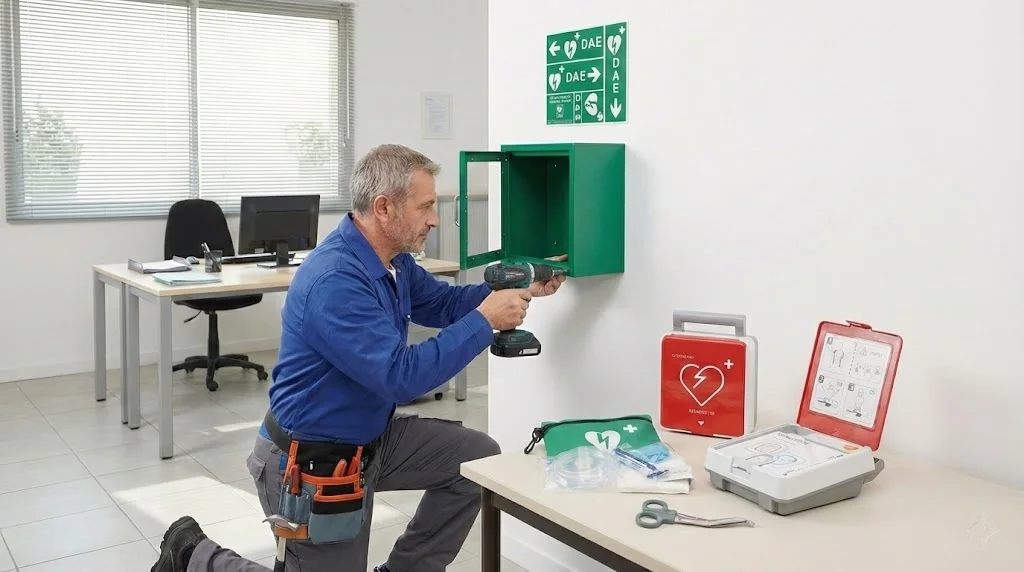
A defibrillator fixed to a wall does not monitor itself. When nobody is in charge of checking the self-test indicator, noting expiry dates or calling the service provider, the device can fail without anyone noticing. Appointing a lead person is the simplest way to prevent this. Here is who to choose, what to entrust to them and how to organise a deputy.
Why a lead person changes everything
Maintaining an AED (automated external defibrillator) is the operator's responsibility under article R. 5212-25 of the French Public Health Code (Code de la santé publique). In a mid-sized site, this duty often stays theoretical: everyone assumes a colleague is taking care of it. A lead person puts a name on that responsibility and turns a vague duty into identified tasks, with someone to ask.
Appointing a lead is first of all an internal organisational choice. Yet it addresses a very concrete risk: a device with expired pads or a flat battery is useless the day a cardiac arrest happens, when each minute without defibrillation reduces the chances of survival by about 10%. With roughly 50,000 cardiac arrests a year in France, the real availability of the device is no administrative detail.
Choosing the right person
The right profile is not necessarily the most technical one. You need someone present on site every day, in a stable position, and comfortable chasing a provider or a manager. In a town hall it may be a technical services employee; in a company, the person in charge of general services or prevention; in a club, a coach or a permanent volunteer.
Avoid giving the task to someone about to leave or whose schedule keeps them away from the site several days a week. A lead trained in life-saving first aid is a plus, as they understand what the device must make possible in a real situation and take any warning sign more seriously.
In organisations with several buildings or several devices, one lead per site, coordinated by a single manager, works better than one person in charge of everything.
The lead person's concrete tasks
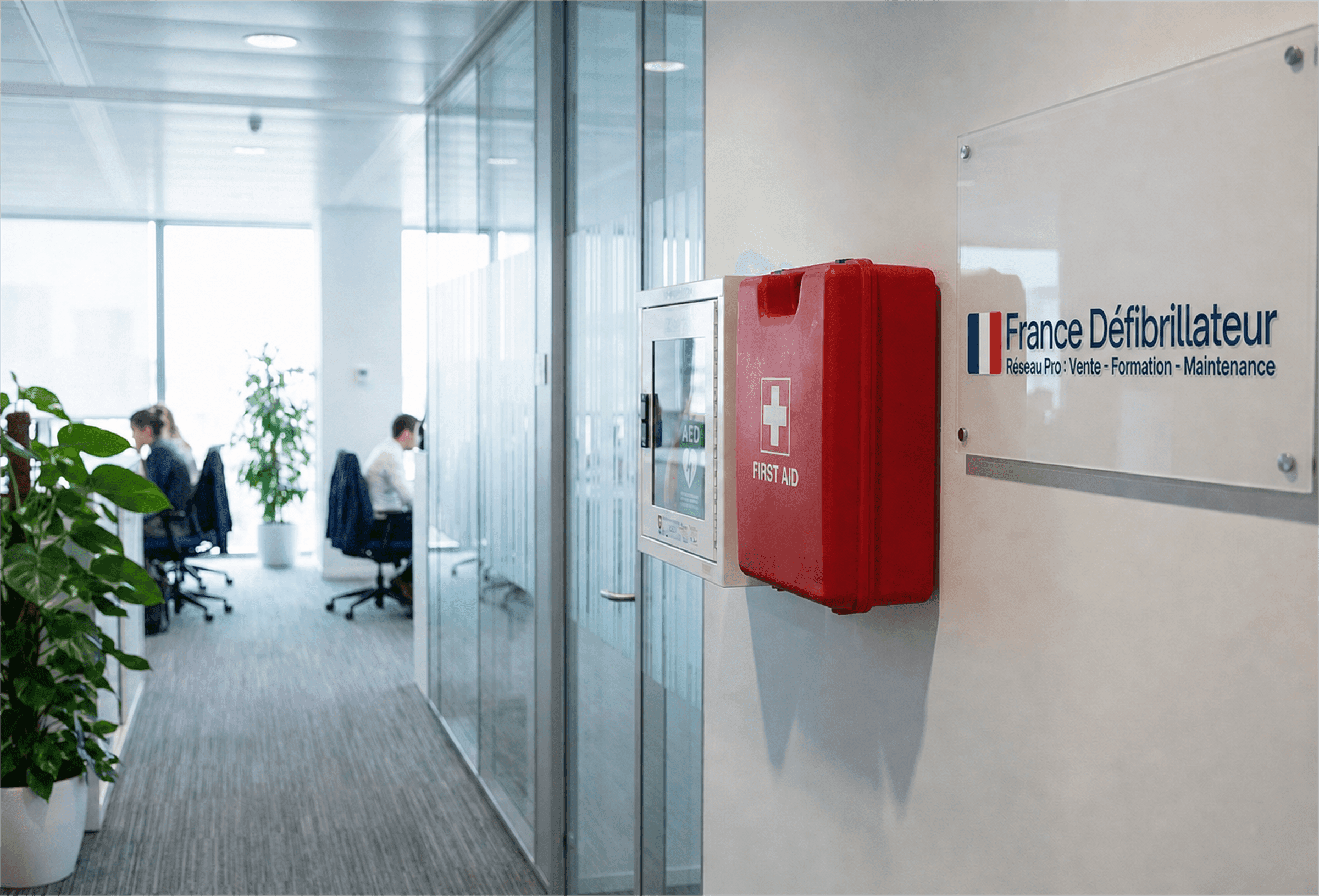
The lead regularly checks the device's self-test indicator, which usually signals through a light or a beep that a fault has been detected. They also check that the cabinet is accessible, that signage is visible and that the AED is in its place.
They keep the calendar of consumables: pads to replace every 2 to 5 years depending on the model, batteries every 3 to 5 years, and replacement of the device itself after 8 to 10 years or more. They record every check in the safety register and keep the provider's invoices and reports.
Finally, they make sure the GéoDAE registration stays up to date and that the operator is told as soon as a device is moved, replaced or removed. After use, they start the procedure: retrieving data, replacing pads, putting the device back into service.
Planning a deputy and a handover
A single lead remains a weak point: holidays, sick leave, transfers. Appoint a deputy from the start and have them work together at least once, for example during a full check. Both must know where the register, the maintenance contract and the provider's contact details are.
Write the handover on one page: device location, key dates, contacts, after-use procedure. This document stops information from leaving with the person who held it. If you choose a rental with maintenance included, from €50 excl. VAT per month, the lead mainly becomes the provider's contact rather than the person carrying out the work.
Informing teams and formalising the role
A lead nobody knows is of no use. Display their name near the device or on the staff notice board so anyone can report a warning light, a broken-into cabinet or a moved device. Also remind everyone to call the emergency services before fetching the AED.
Formalise the role with a short internal note or a line in the job description, stating the time granted for it. A regular, recognised slot is enough in most cases, but it must exist so the task does not slip at the first busy period.
Frequently asked questions
Is an AED lead person mandatory?
Not under that exact name, to our knowledge. However, maintenance is the operator's responsibility (article R. 5212-25 of the French Public Health Code), and appointing a lead is the most reliable way to ensure follow-up. It is an internal organisational measure, best formalised in a note or job description so responsibility does not stay implicit.
Must the lead be trained in life-saving first aid?
It is not essential for monitoring the device, but it is strongly advised. A trained person understands the role of the AED, spots a fault sooner and can pass on good practice to colleagues. A short awareness session is enough to start, followed by fuller training according to the needs of the site.
What should the lead check in practice?
They look at the self-test indicator, the state of the cabinet, the visibility of signage and the presence of accessories. They also track the expiry dates of pads and battery, record each check in the register and warn the provider as soon as an alert appears. The exact frequency depends on the manufacturer's manual and the contract.
Can this role be given to the maintenance provider?
The provider can carry out checks and replace consumables, notably under a rental with maintenance included. But the operator remains responsible and must keep an internal contact who receives alerts, liaises with the provider and checks that planned interventions actually took place.
Planning an AED project?
Purchase, rental from 50 EUR excl. VAT per month, installation with GéoDAE registration, servicing and training: our team replies within 24 hours.