Defibrillator delivered: what to check before installing it
Written by Cyrille GAGNAIRE, France Défibrillateur. Published on 29 October 2026.
Delivery of a defibrillator is not the end of the project. A device taken out of its box and hung on a wall without checks may be unusable on the day it is needed: missing pads, a status light showing a fault, nobody knowing where it is. Here is the order of actions to follow as soon as the parcel arrives, from opening it to registering it, so that the device is genuinely ready to save someone.
Prepare for receipt before the carrier arrives
Delivery usually takes place within 2 to 5 working days of the order. This is the right time to appoint someone to receive the parcel and then remain responsible for the device. Without a named person, everyone assumes someone else is taking care of it.
Also identify the final location now: a visible place, accessible at all times during opening hours, close to a busy route. If a cabinet is planned, check that it is delivered at the same time or that its installation is scheduled, because a defibrillator placed temporarily in a drawer often stays there for months.
Finally, tell the people concerned when it will arrive: reception, caretaker, safety officer. A parcel left aside in a damp or hot room, or sent back for lack of a recipient, delays the whole schedule and exposes the equipment to storage conditions the manufacturer did not intend.
Open the parcel in front of the carrier or just after
Check the condition of the packaging before signing the delivery note. A crushed or punctured box justifies written reservations on the slip, since they are the basis of any later claim.
Then open the parcel and compare its contents with the quote: device, bag or case, adult pads, battery, manual, any paediatric pads, and emergency accessories such as scissors, razor and gloves. Note the references and the expiry dates printed on the pads and the battery. These dates will be the starting point of your follow-up, and they should match the usual benchmarks: pads from 2 to 5 years, batteries from 3 to 5 years.
First start-up and checking the self-test
Follow the manufacturer's manual to fit the battery and connect the pads. On start-up, the device runs a self-test and reports its status with an indicator light or a voice message. Wait until the indicator shows normal operation and record it in writing, with the date and time.
Never test the device on a person and never open the pads to try them: an opened pouch is a pouch to replace. To train teams, use a training device, not the establishment's own. If the indicator stays in alert or an accessory is missing, contact the seller the same day: the 5-year warranty exists precisely to cover this kind of defect.
Keep the manual within reach, in the bag or right next to the device. It explains the meaning of the indicators, how to replace consumables and the manufacturer's contact details. Also photograph the label showing the serial number: you will need it for the register and for any support request.
Install, signpost and register
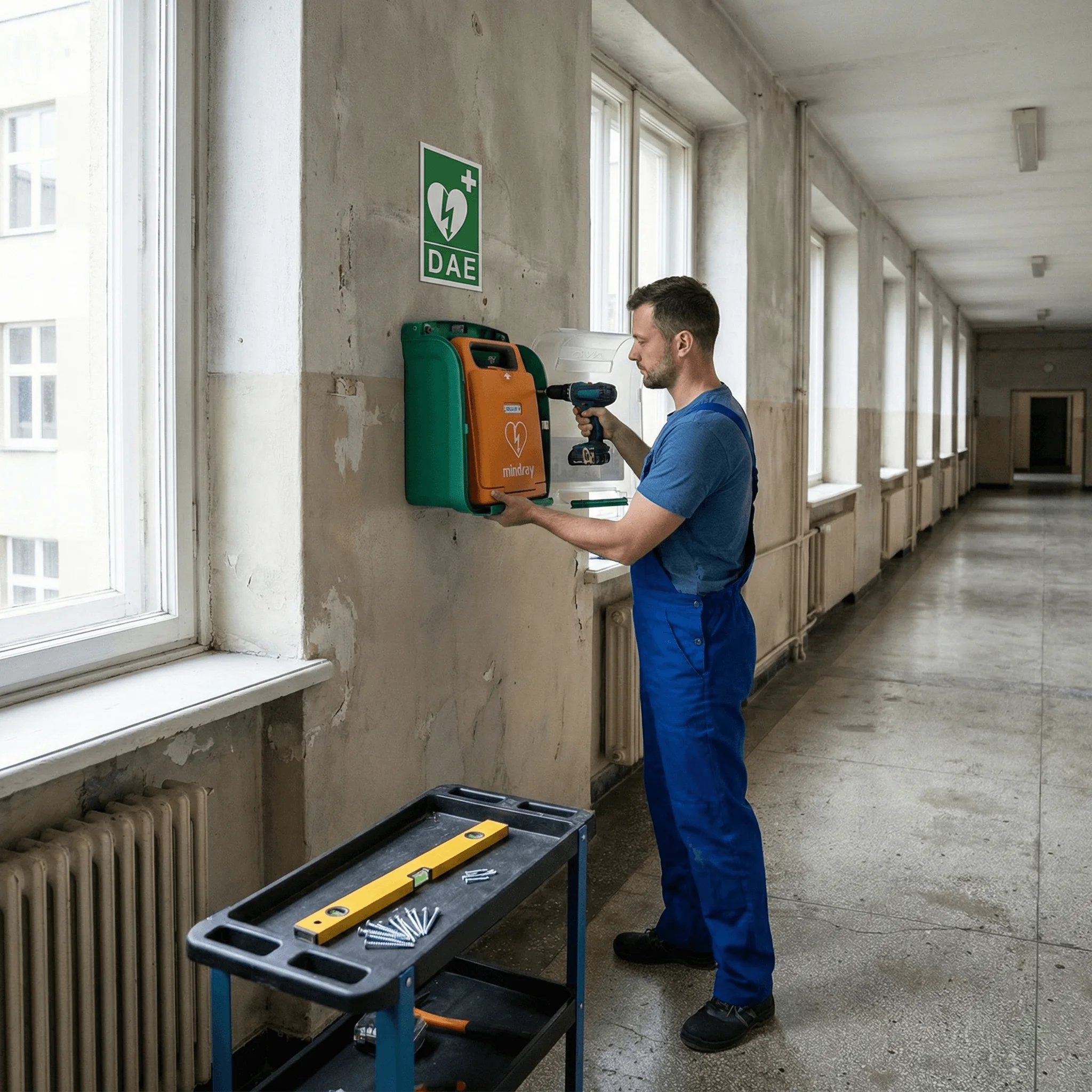
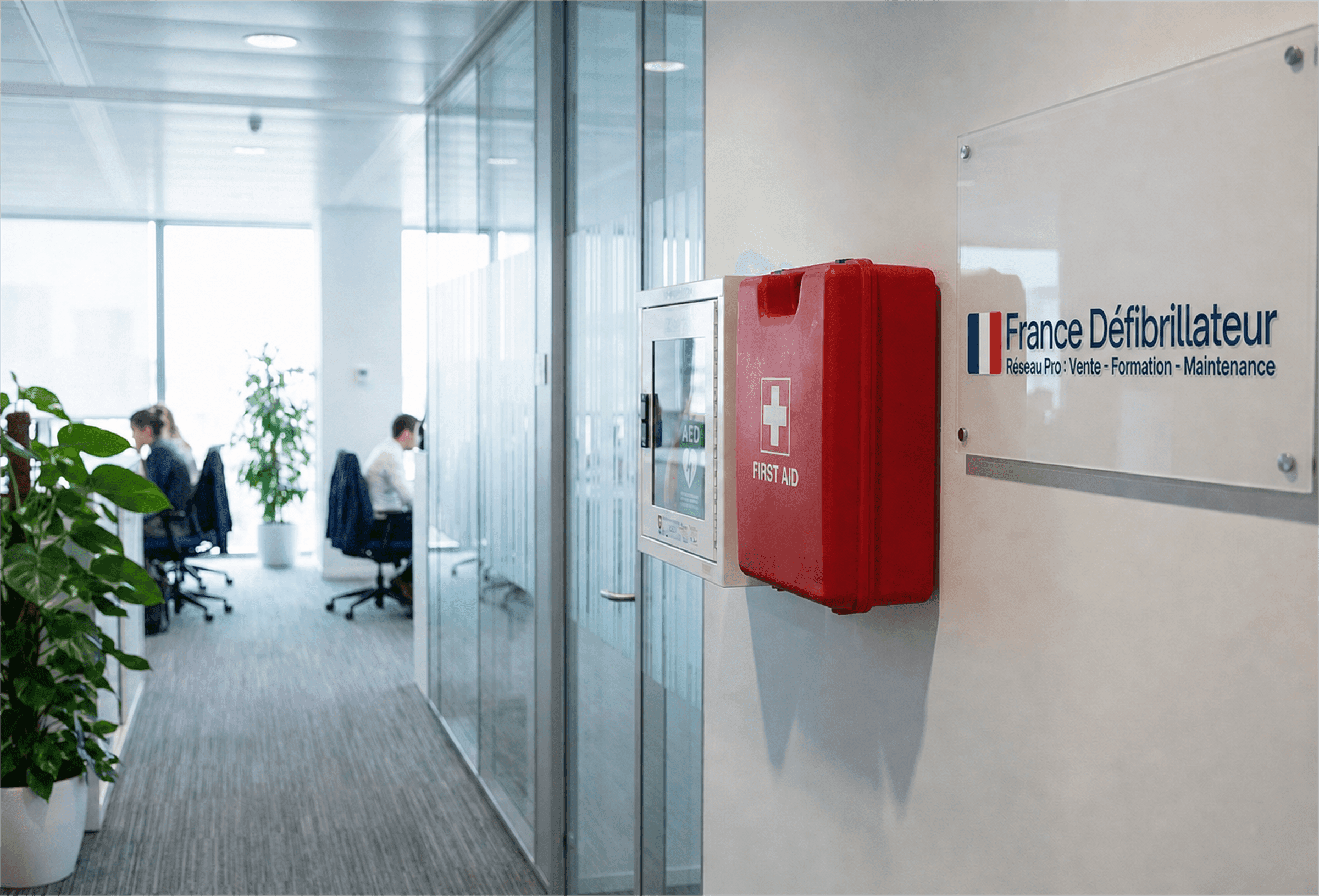
Fix the device at the planned location, at a reasonable height so it can be grabbed in one movement, then put up the signage compliant with the arrêté du 29 novembre 2018 (the French order of 29 November 2018 on AED signage). Directional signs from the entrance and the main corridors prevent a bystander from losing precious seconds searching.
Registration on GéoDAE, the French national AED database, is mandatory. It makes the device visible to the emergency services, who can then direct a caller to it. Do it right after installation, with the real access hours, and note the registration date in your register.
Think also about blind spots: a device installed in a lobby that is locked in the evening, or behind a locked door, is of no use outside opening hours. State these limits as they are, rather than suggesting permanent availability.
Inform the teams and open the follow-up
A defibrillator nobody knows about is useless. Announce its arrival to staff, mark its location on the evacuation plans and add it to the briefing given to new arrivals. A short demonstration, even a brief one, removes the fear of pressing the button.
Finally, open the device's register: serial number, delivery date, expiry dates, name of the person in charge. The table below summarises the benchmarks to record.
Maintenance remains the operator's responsibility under article R. 5212-25 du Code de la santé publique (the French Public Health Code). If you prefer to delegate it, rental from 50 € excl. VAT per month includes maintenance.
| Item | Typical duration | To record in the register |
|---|---|---|
| Pads | 2 to 5 years | Printed expiry date |
| Battery | 3 to 5 years | Expiry date and start-up date |
| Device | 8 to 10 years and more | Serial number and delivery date |
Frequently asked questions
Should the defibrillator be tested as soon as it arrives?
You should check its self-test, not trigger it on anyone. When the battery is fitted, the device checks its own condition and reports it with a light or a message. Record the result, keep the pads in their sealed pouch and use a training device only to train teams.
What if something is missing from the parcel?
Report it to the seller immediately with a photo of the contents and the delivery note. If the packaging was damaged, written reservations made at receipt make the claim easier. Do not install an incomplete device in its public location before receiving the missing part.
Who must register the device on GéoDAE?
Registration is mandatory and falls to the operator or owner of the device. It is done online, with the precise address, the exact location and the access hours. It is best done on the day of installation, then updated if the device is moved.
How soon after delivery should the device be installed?
As soon as possible. No particular deadline matters: while the device stays in its box or in an office, it protects nobody. Plan the installation, the signage and the registration in the same week as receipt.
Planning an AED project?
Purchase, rental from 50 EUR excl. VAT per month, installation with GéoDAE registration, servicing and training: our team replies within 24 hours.