Drowning and cardiac arrest: rescue breaths and the AED
Written by Cyrille GAGNAIRE, France Défibrillateur. Published on 2 November 2026.
When someone is pulled unconscious from the water, the cardiac arrest does not have the same cause as on a sports field. The heart stops because oxygen ran out, not because its rhythm went haywire. That difference changes the order of the actions and the role of the defibrillator. Here is what to know before facing the situation at a pool, a lake or a beach.
Why drowning causes cardiac arrest
Underwater, breathing is blocked. The blood gradually loses its oxygen, the brain suffers, then the heart slows and stops. This is called asphyxial, or hypoxic, cardiac arrest.
In an adult with a cardiac emergency on land, the usual cause is a rhythm disorder that a defibrillator shock can correct. In drowning, the starting problem is the lack of air. Correcting the rhythm without giving oxygen back to the blood is therefore not enough.
First actions at the water's edge
The rescuer's safety comes first: do not jump into the water without the skills or rescue equipment. If the victim is out of reach, call emergency services immediately and, on a supervised site, the lifeguard staff.
Once the person is out of the water and lying on their back on a hard surface, check whether they respond and breathe. If they do not respond and are not breathing normally, call emergency services, then start resuscitation without waiting. Every minute of delay worsens the brain's lack of oxygen.
A second rescuer, if there is one, fetches the defibrillator while the first starts the actions. Sharing roles this way saves time, because the victim must never be left without resuscitation. If you are alone and the AED is close, call first, then fetch it only if it is a few moments' walk away.
Why rescue breaths matter here
In most adult cardiac arrests, chest compressions alone are an acceptable response for an untrained bystander. Drowning is the exception: the blood lacks oxygen, and only rescue breaths can supply it again.
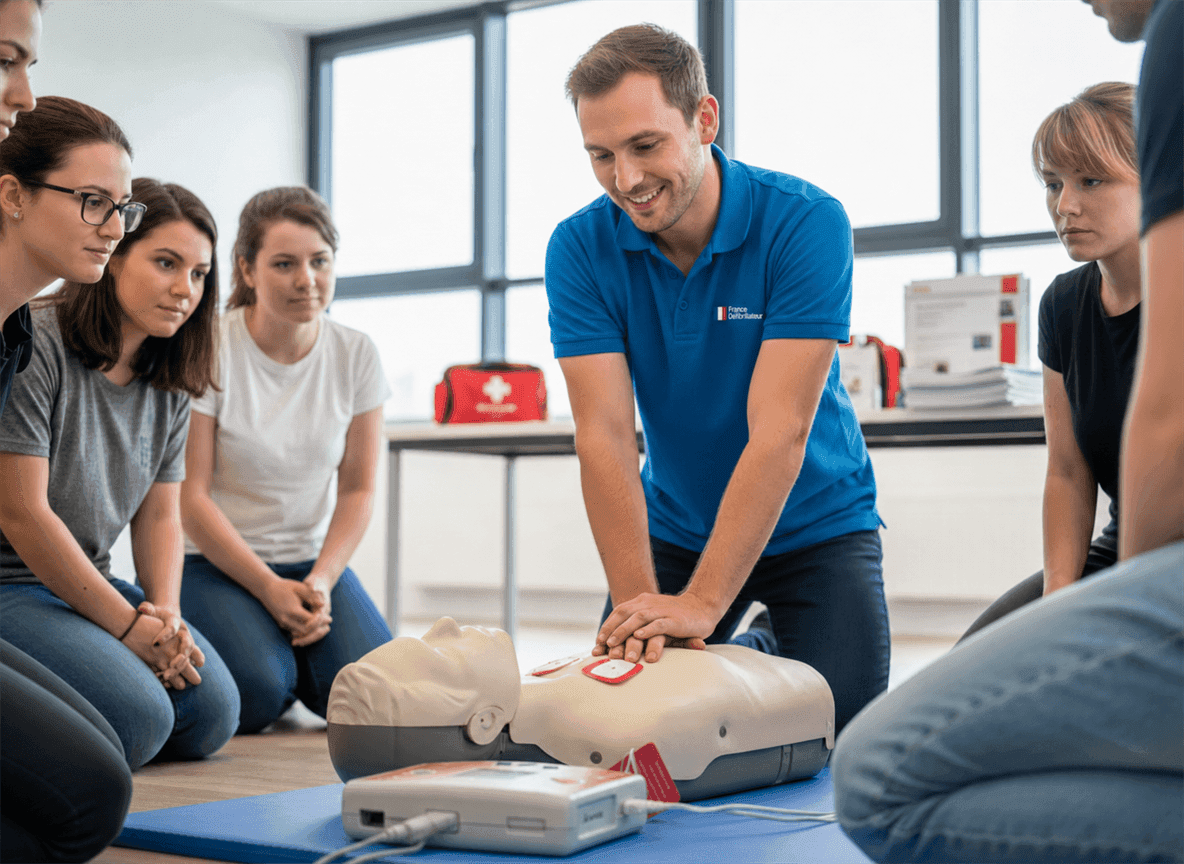
First aid courses therefore teach, for drowning, to ventilate the victim at the start of resuscitation, then to alternate breaths and compressions according to the method learned. Someone who has never learned to give breaths can at least call for help, compress the chest and use the defibrillator: acting is better than doing nothing.
In children, drowning is a frequent cause of cardiac arrest, and rescue breaths matter even more. An AED with paediatric pads, or a suitable mode, is valuable on a site welcoming families.
When and how to attach the defibrillator
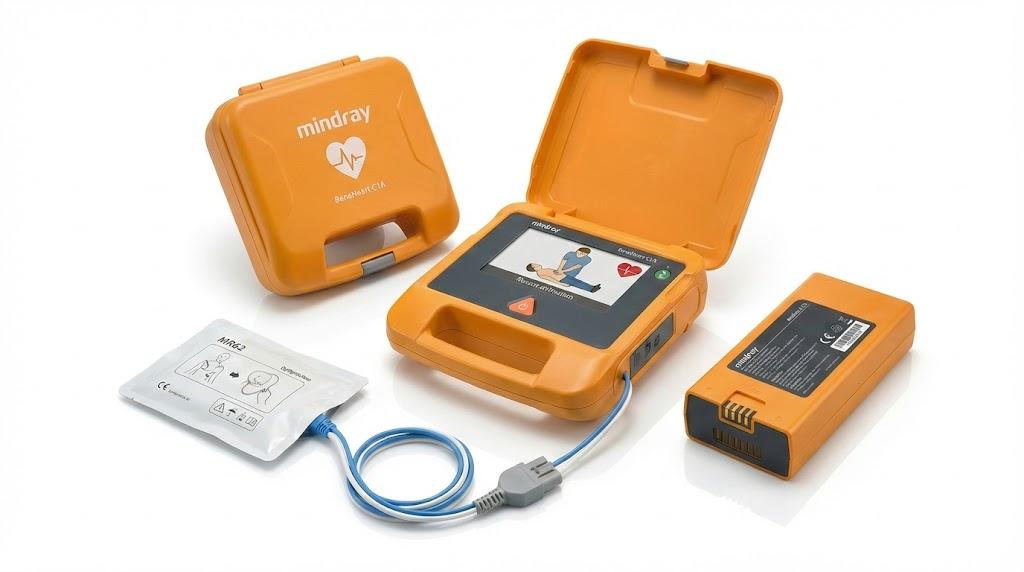
The automated external defibrillator (AED, known in France as DAE) is useful even after drowning, because the device analyses the rhythm itself and delivers a shock only if one is indicated. Bring it as soon as it is available, without interrupting the actions under way.
Water and electricity are nothing to fear, provided the victim is prepared. Move them away from any puddle, quickly dry the chest with a towel or cloth, then stick the pads on dry skin, as the pictograms show. Wet skin hinders adhesion and can disturb the analysis.
During analysis and the shock, nobody touches the victim. The AED then guides the resumption of compressions by voice.
| Step | Action to take |
|---|---|
| Get the victim out | Lay them on their back on a hard surface, away from the water |
| Call for help | Alert emergency services and ask for an AED |
| Resuscitate | Breaths then compressions, according to the training received |
| Prepare the chest | Dry the skin before placing the pads |
| Follow the AED | Obey the voice instructions, do not touch during the shock |
What the operator of an aquatic site can prepare
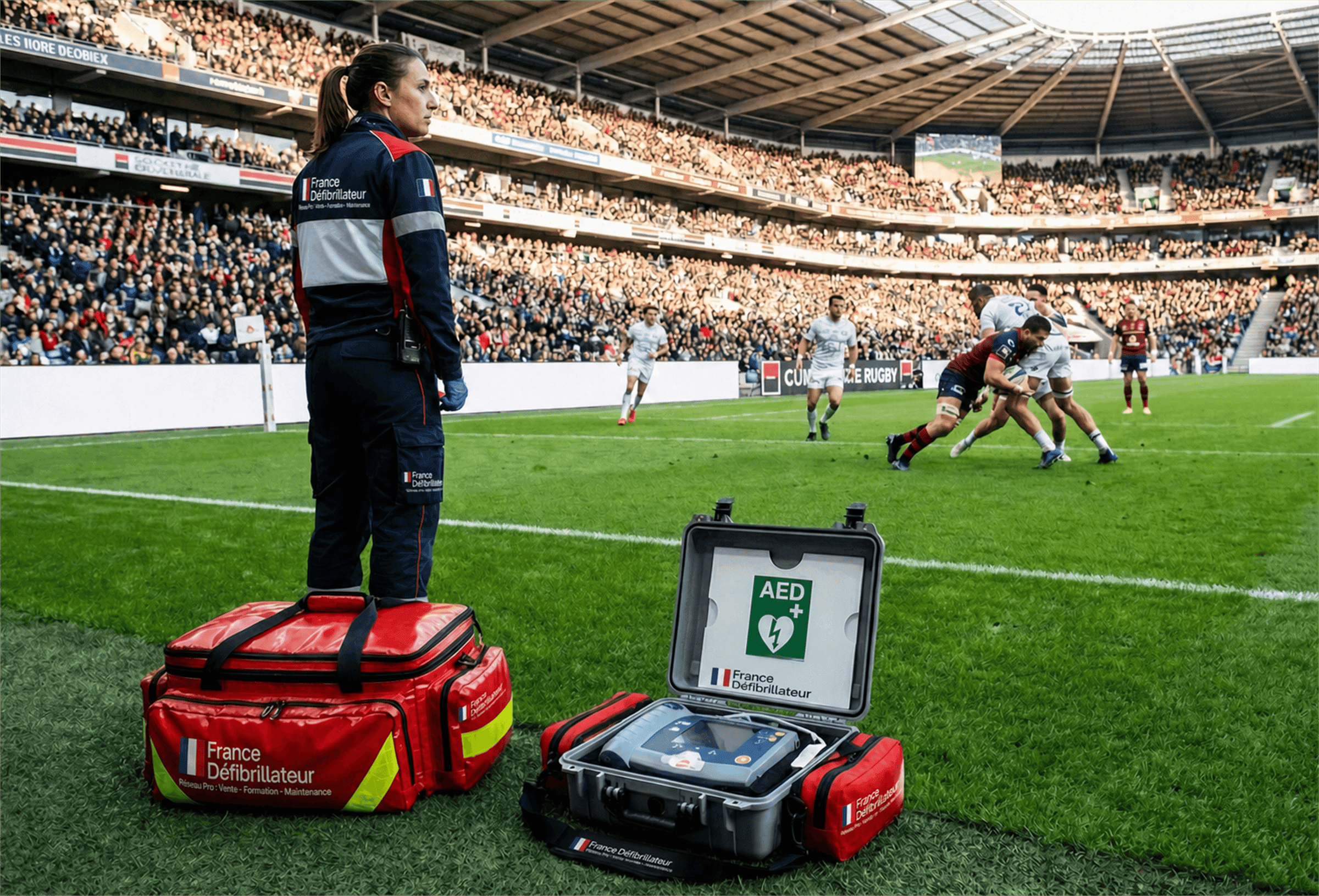
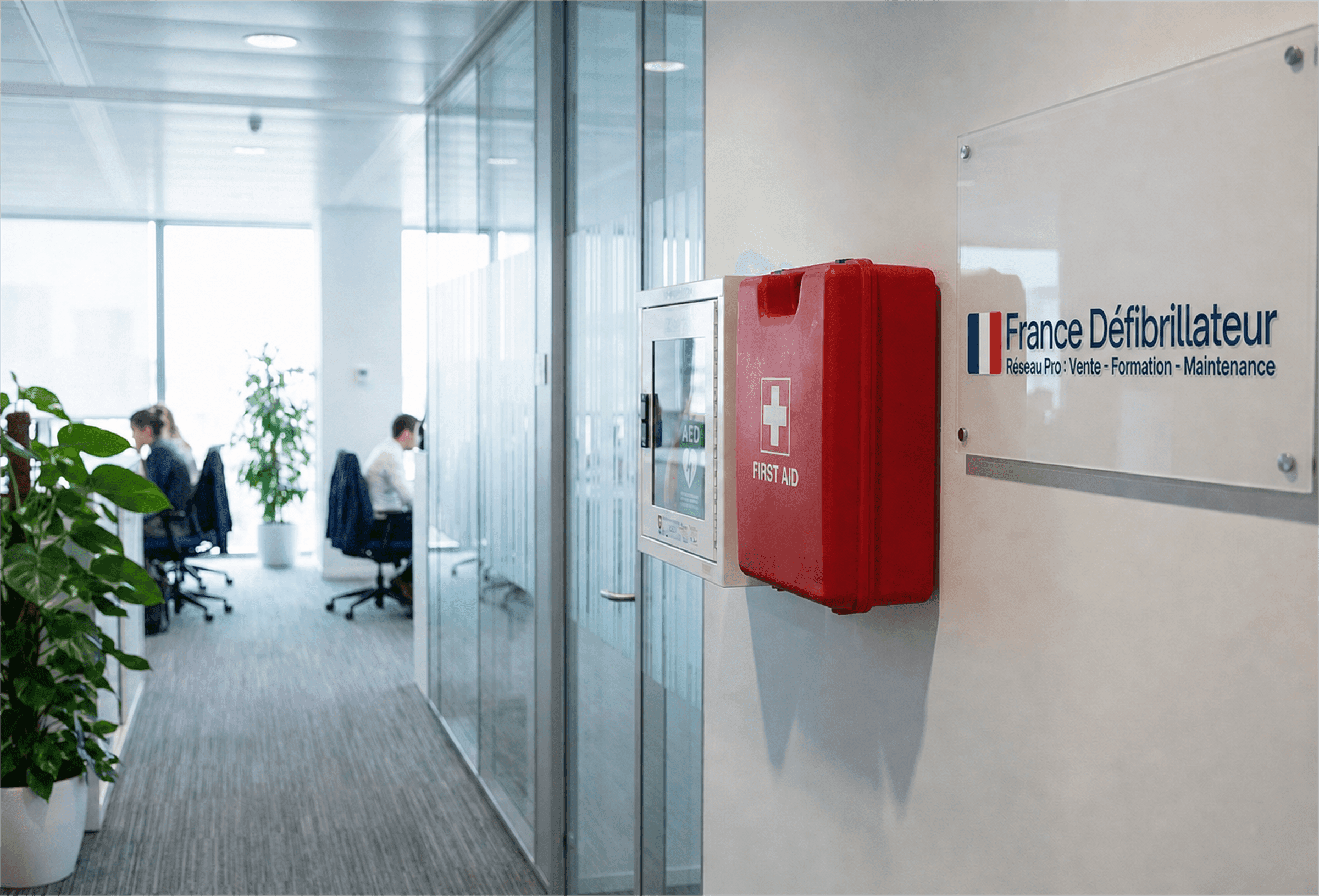
For a swimming pool, a leisure area, a campsite with a pond or a hotel with a pool, preparation matters more than equipment alone. The AED must be visible, reachable within moments from the poolside and protected from humidity by a suitable cabinet.
Keep next to the defibrillator what you need to dry the chest: an absorbent towel, even scissors to free a swimsuit. Teams must know where the AED is and train on the full sequence, breaths included. Maintenance of the equipment remains the operator's responsibility (article R. 5212-25 of the French Public Health Code), as does tracking the pads and the battery.
After resuscitation
Even if the victim regains consciousness, they must be examined at hospital: inhaled water can cause complications several hours later. Keep watching them, keep them warm and leave the pads in place until emergency services arrive.
After the intervention, follow the usual procedure for the defibrillator: replace the pads, check the device and record it in the safety register.
Frequently asked questions
Should rescue breaths be given in a drowning?
Yes, if you are trained. Drowning is a cardiac arrest caused by lack of oxygen, and rescue breaths return oxygen to the blood. If you do not know how to give breaths, call for help, do chest compressions and use the defibrillator without waiting.
Can a defibrillator be used on a wet person?
Yes, after moving the victim away from any puddle and quickly drying the chest. Pads stick poorly on wet skin. Once the pads are on, follow the voice instructions and do not touch the victim during the shock.
Does the defibrillator always deliver a shock after drowning?
No. The device analyses the heart rhythm and only triggers a shock if it is useful. If no shock is advised, it asks you to continue resuscitation. You cannot do harm by attaching it.
Must someone revived after drowning go to hospital?
Yes, always. Breathing complications can appear several hours later, even if the person seems well. Emergency services decide on the care, and the pads stay in place until they arrive.
Planning an AED project?
Purchase, rental from 50 EUR excl. VAT per month, installation with GéoDAE registration, servicing and training: our team replies within 24 hours.